Level crossings in Romania. Comparing crossings before upgrade and removal decisions
Romania keeps modernising and removing its level crossings, with CFR managing the inventory, the Autoritatea de Siguranță Feroviară Română acting as the railway safety authority, and the Agenția de Investigare Feroviară Română investigating accidents.
The following sections present the accident record, the level crossing system, the public actors, the type-based regime, and the modernisation that rides the line upgrades. The last section covers the territorial context that SAMRoute models.
1. Accident history at level crossings
Across the European Union in 2024, level crossings accounted for 345 of the significant railway accidents and the deaths of 191 crossing users, and Romania ranked among the member states reporting the most railway accidents [8, ↗]. The fatal collisions of recent years cluster at the passive crossings, where the warning cross alone faces the road user:
- On 7 November 2025, a Regio passenger train struck a car at an unbarriered but signed crossing near Crețești, between Vidra and Jilava, killing the four passengers in the car [9, ↗].
- On 14 June 2025, a passenger train hit a car at an unbarriered crossing at Mășcăteni in Botoșani county, trapping and injuring the driver, with no deaths among the thirty-five passengers on board [10, ↗].
- In 2025, on the Gherla to Dej line, a 31-year-old driver was killed at the unbarriered Mintiu Gherlii crossing after passing the warning sign [11, ↗].
2. The Romanian level crossing system
CFR, the Compania Națională de Căi Ferate, is the state infrastructure manager. It runs about 10,600 kilometres of operational line and owns the level crossing inventory [3, ↗]. The network carries about 5,040 level crossings [1, ↗]. Much of the network runs under speed restrictions, so the train speed at a crossing, and the warning time it allows, varies more than the timetable suggests [3, ↗].
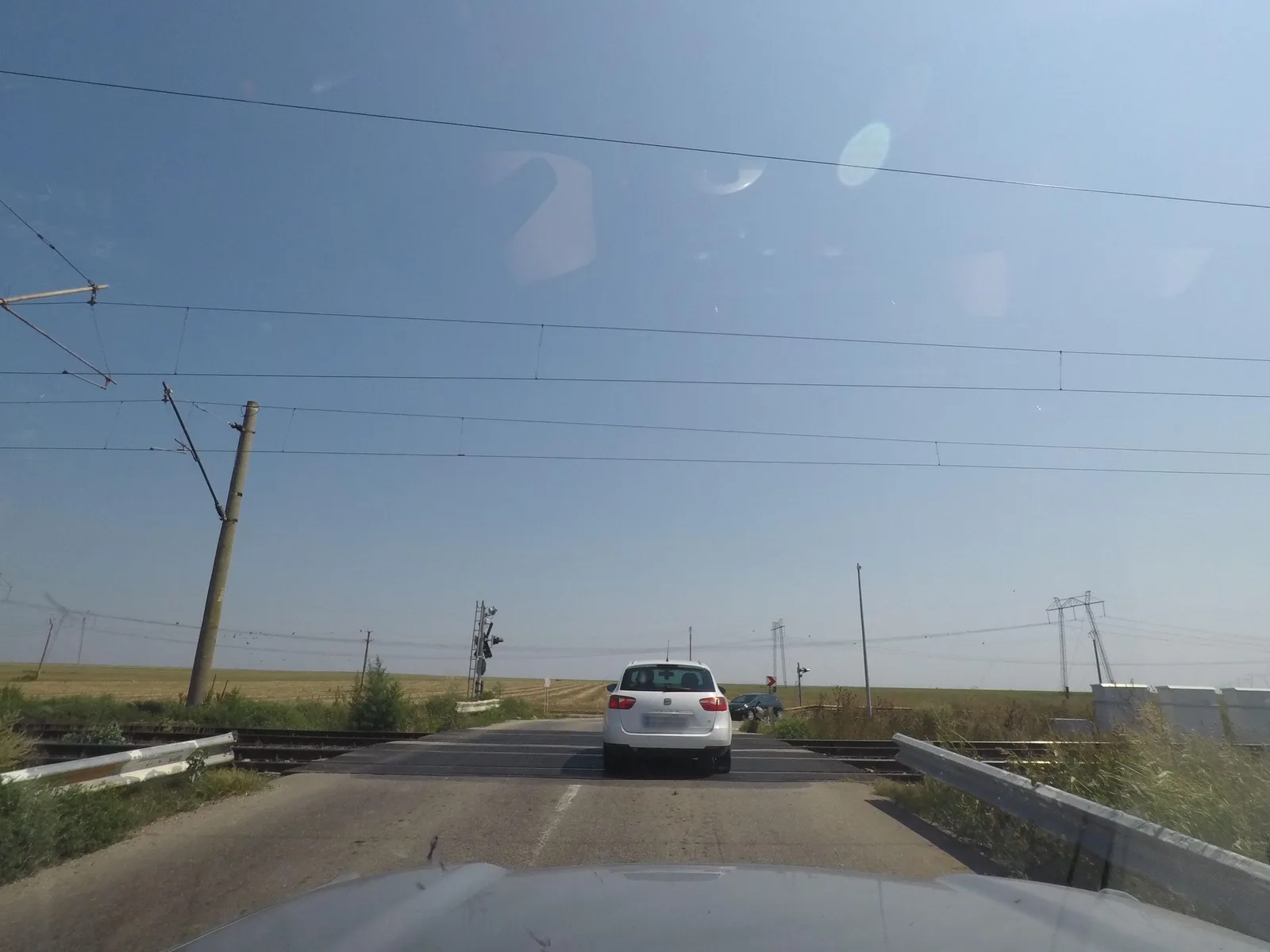
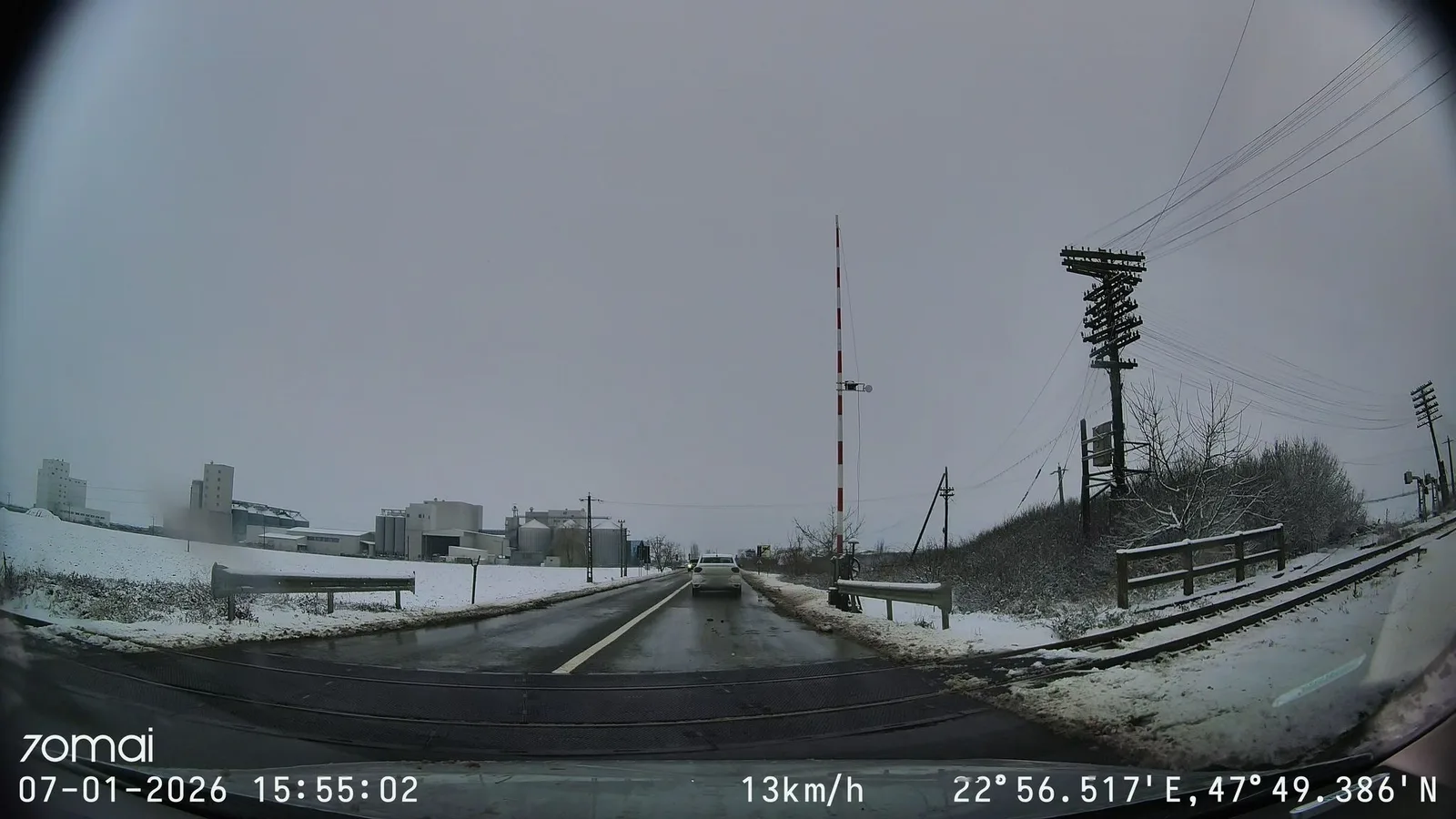
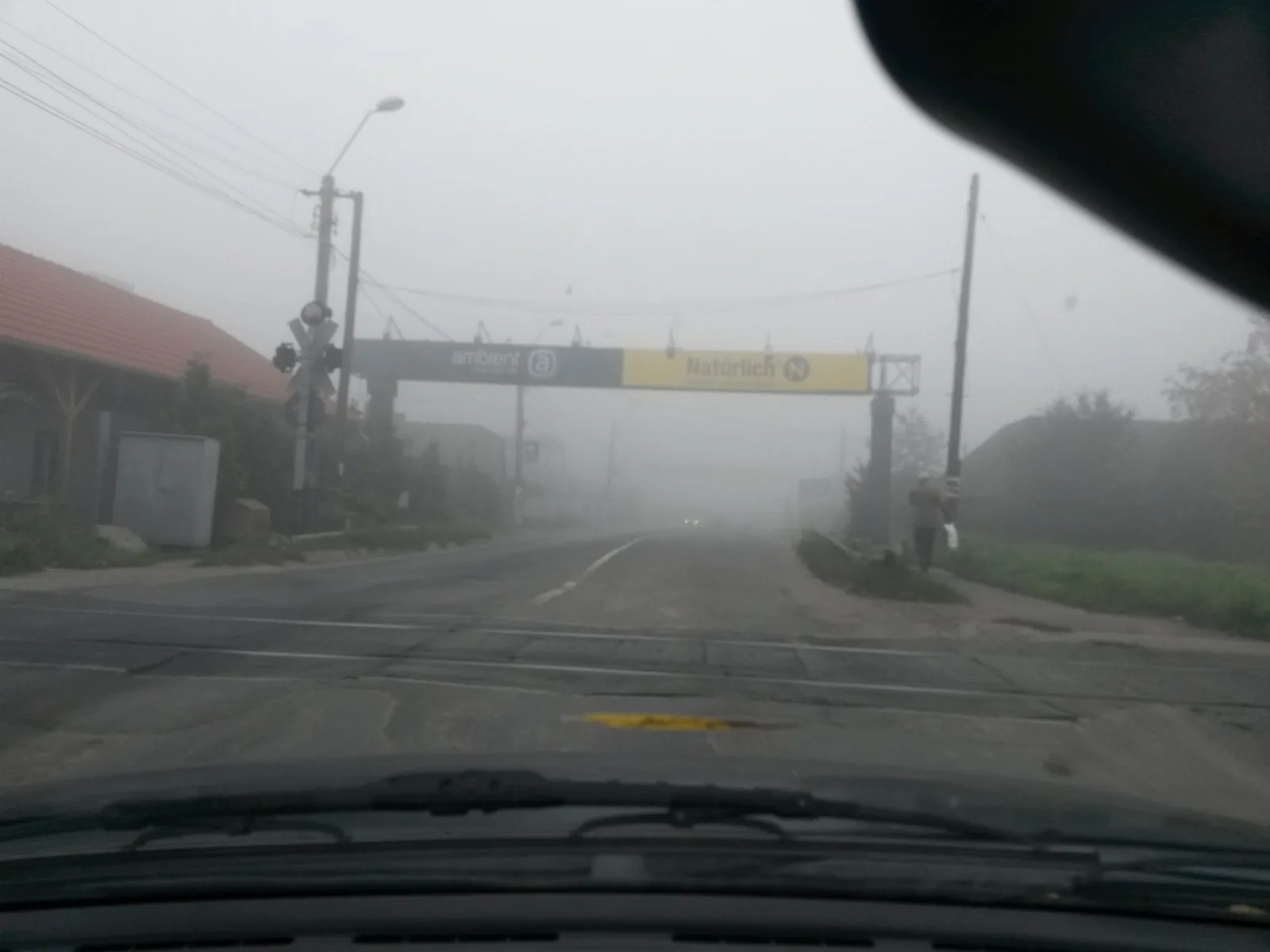
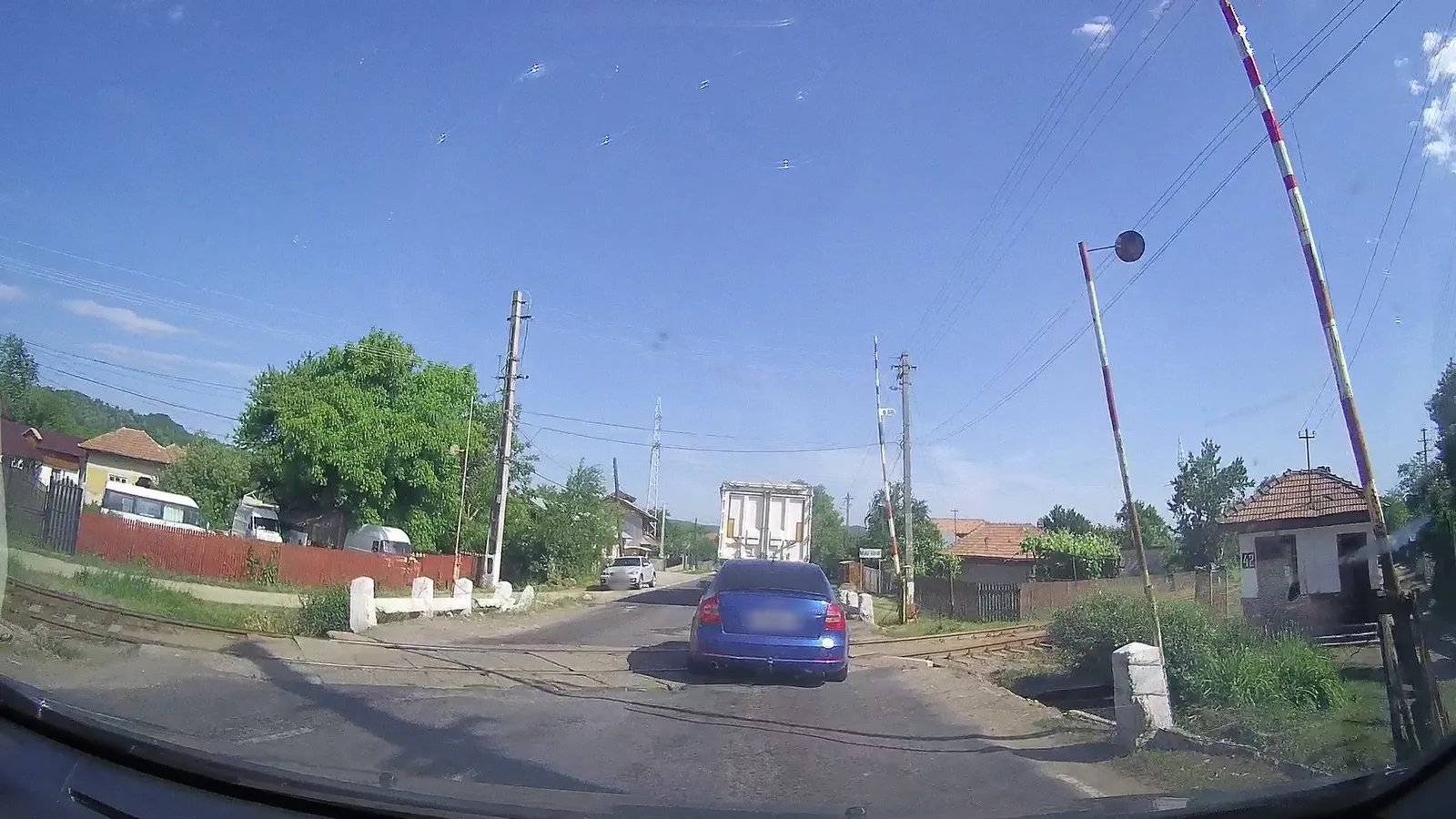
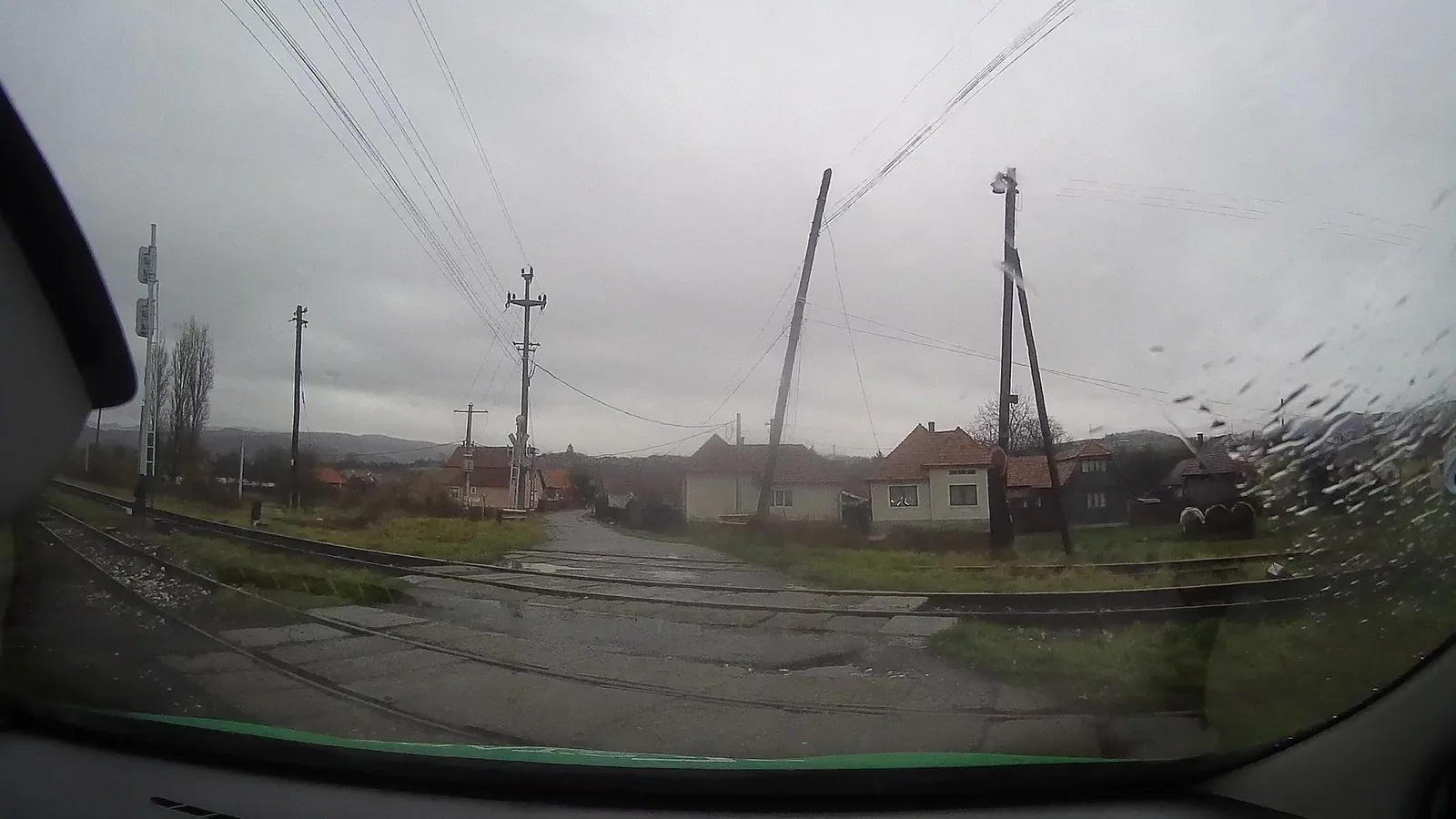
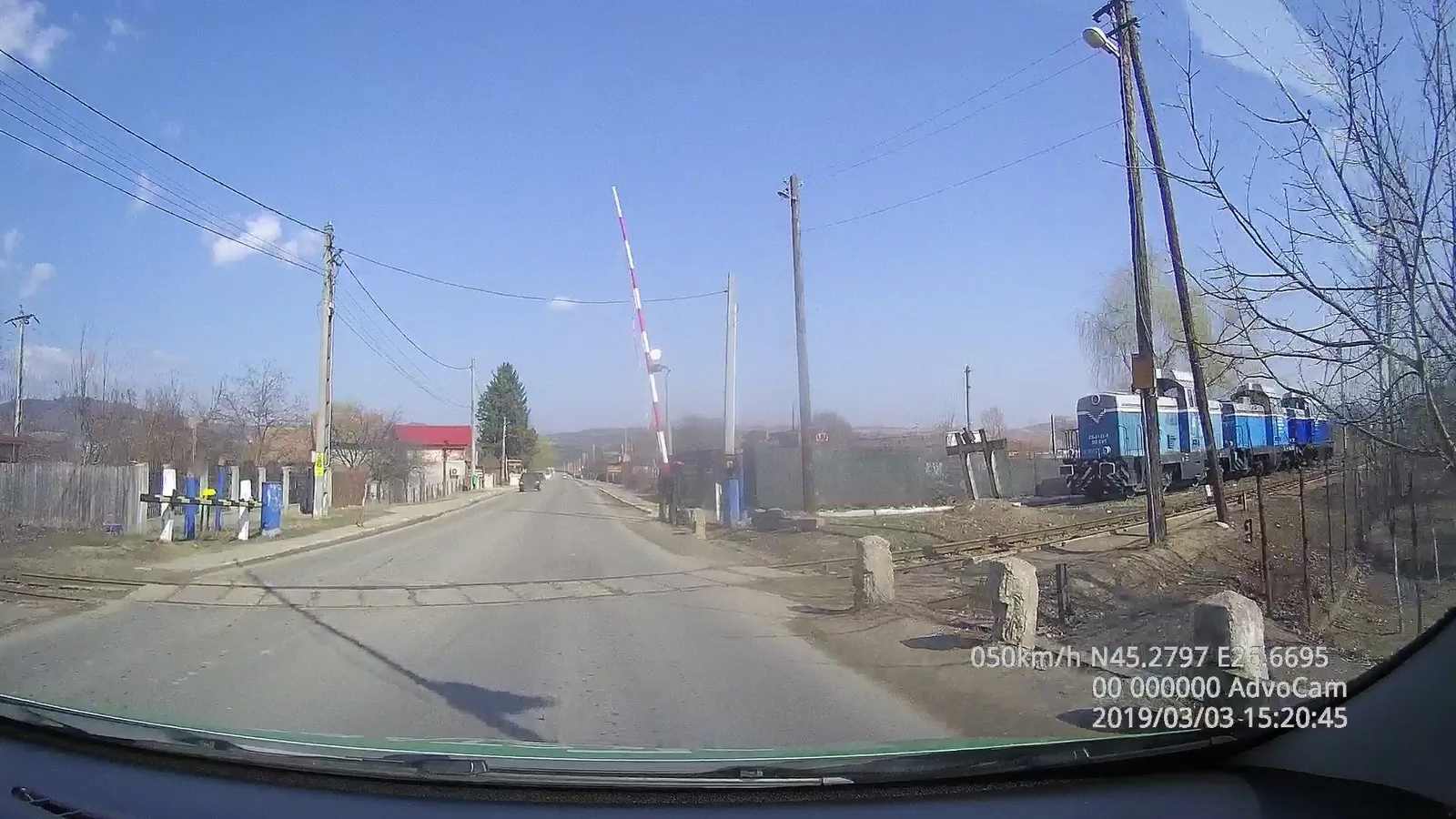
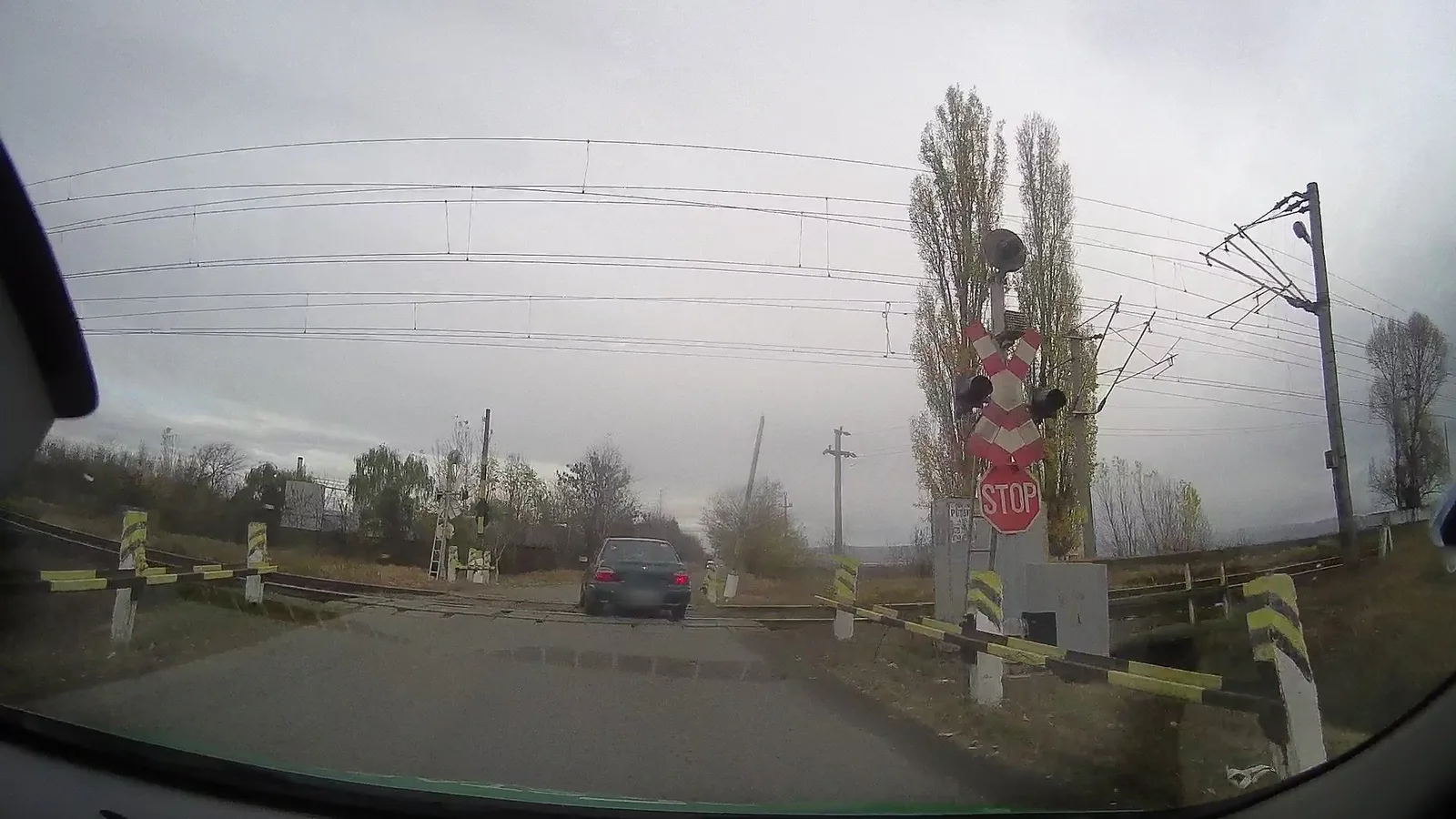
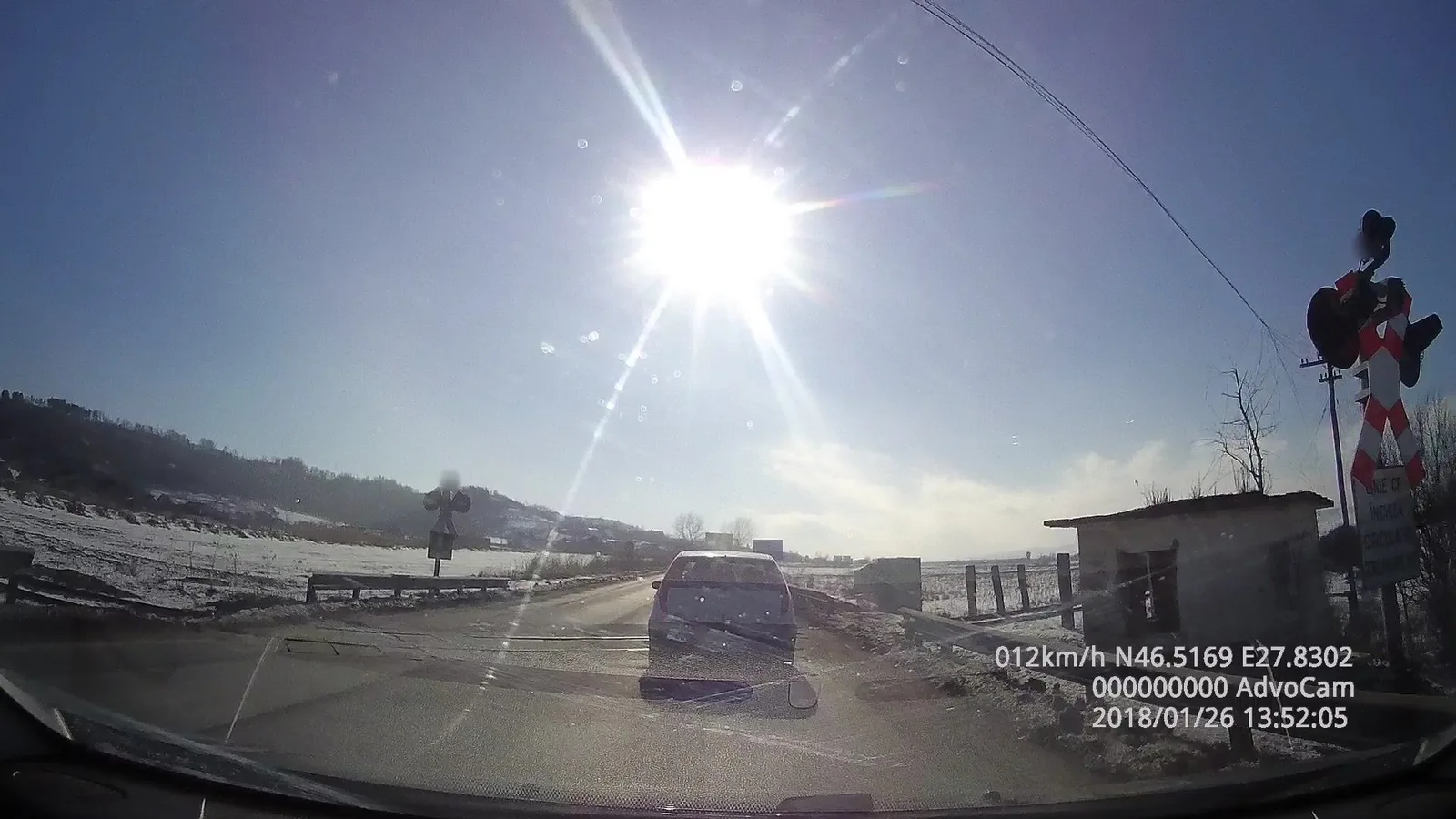
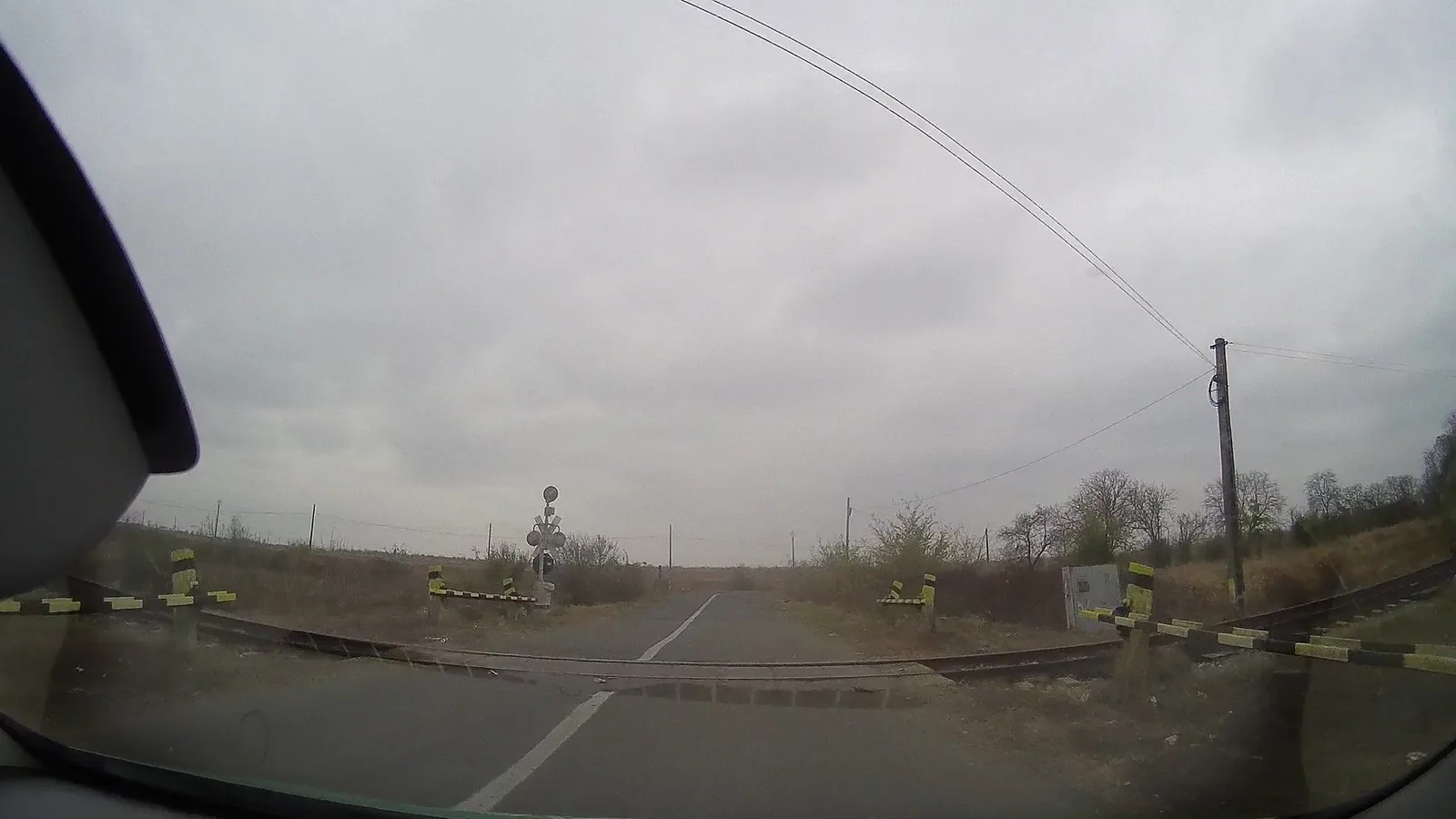
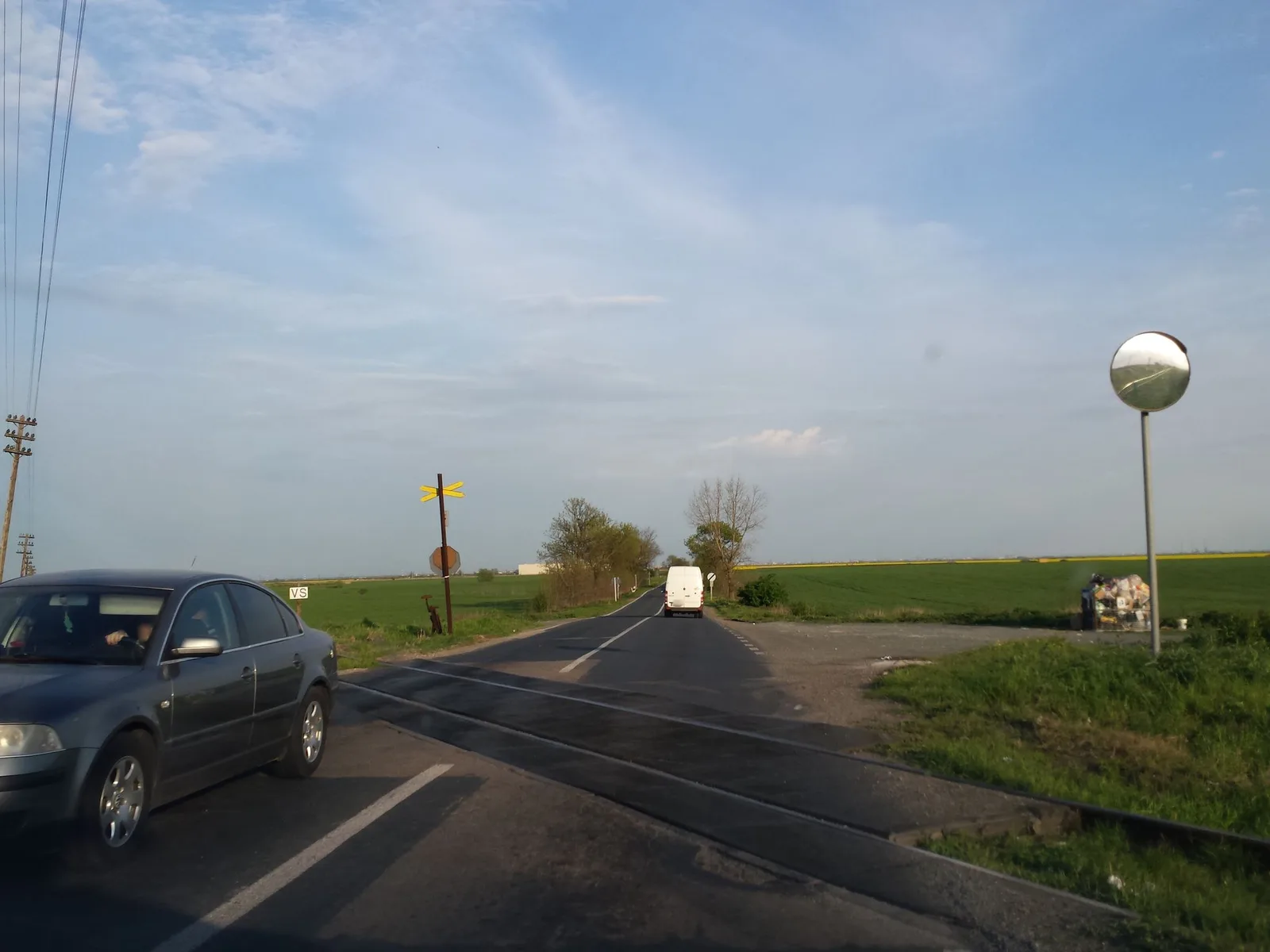
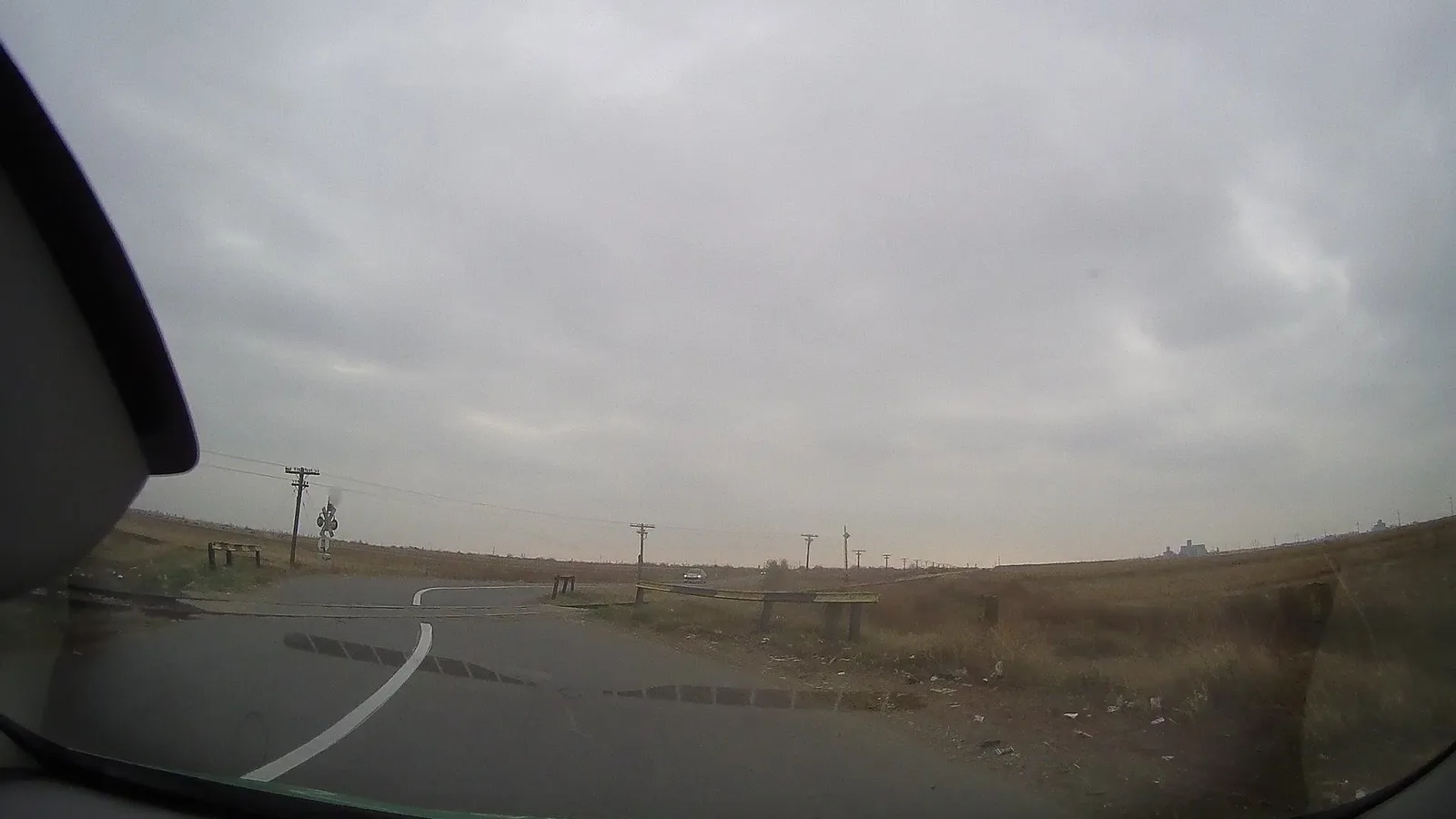
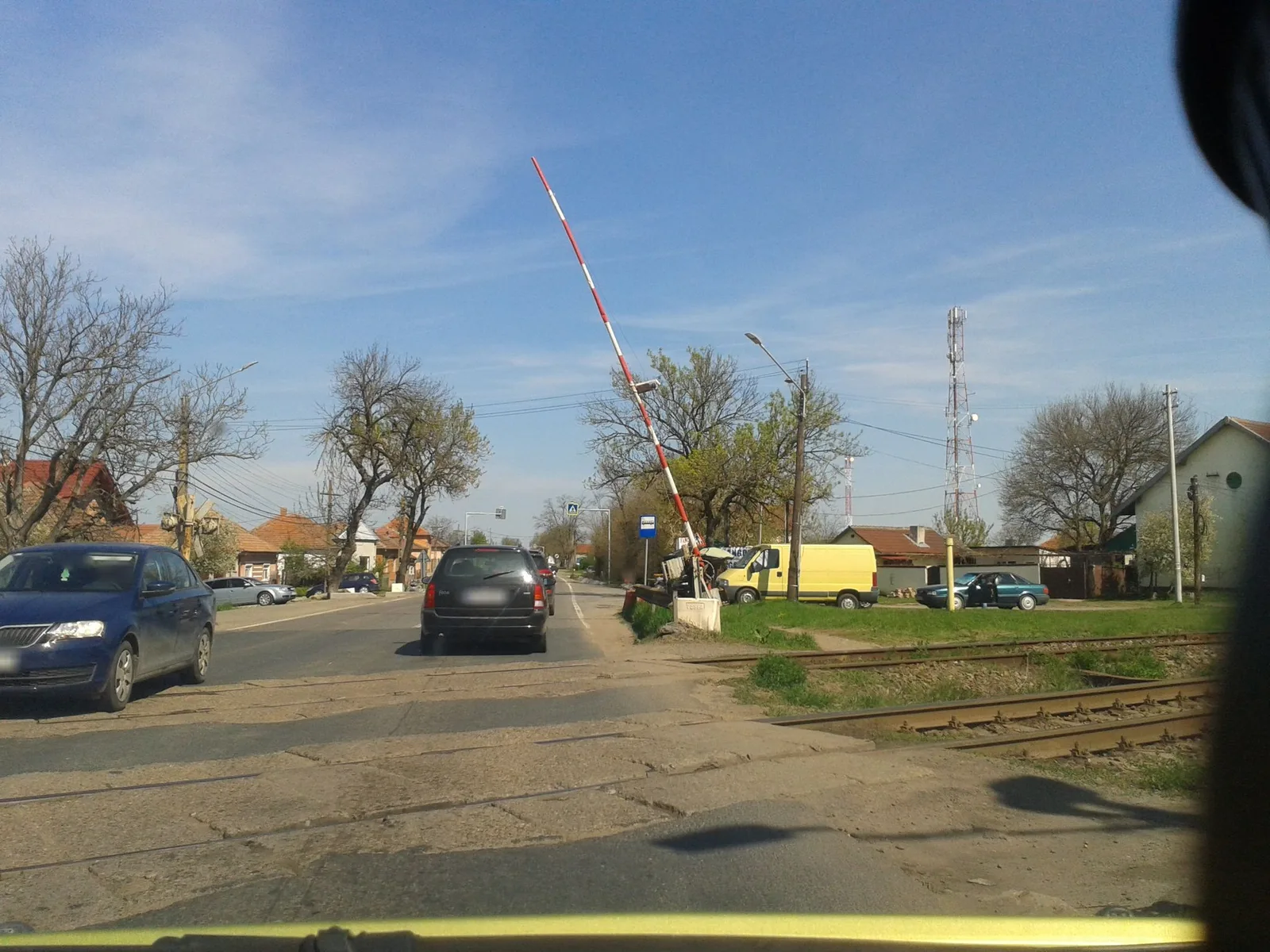
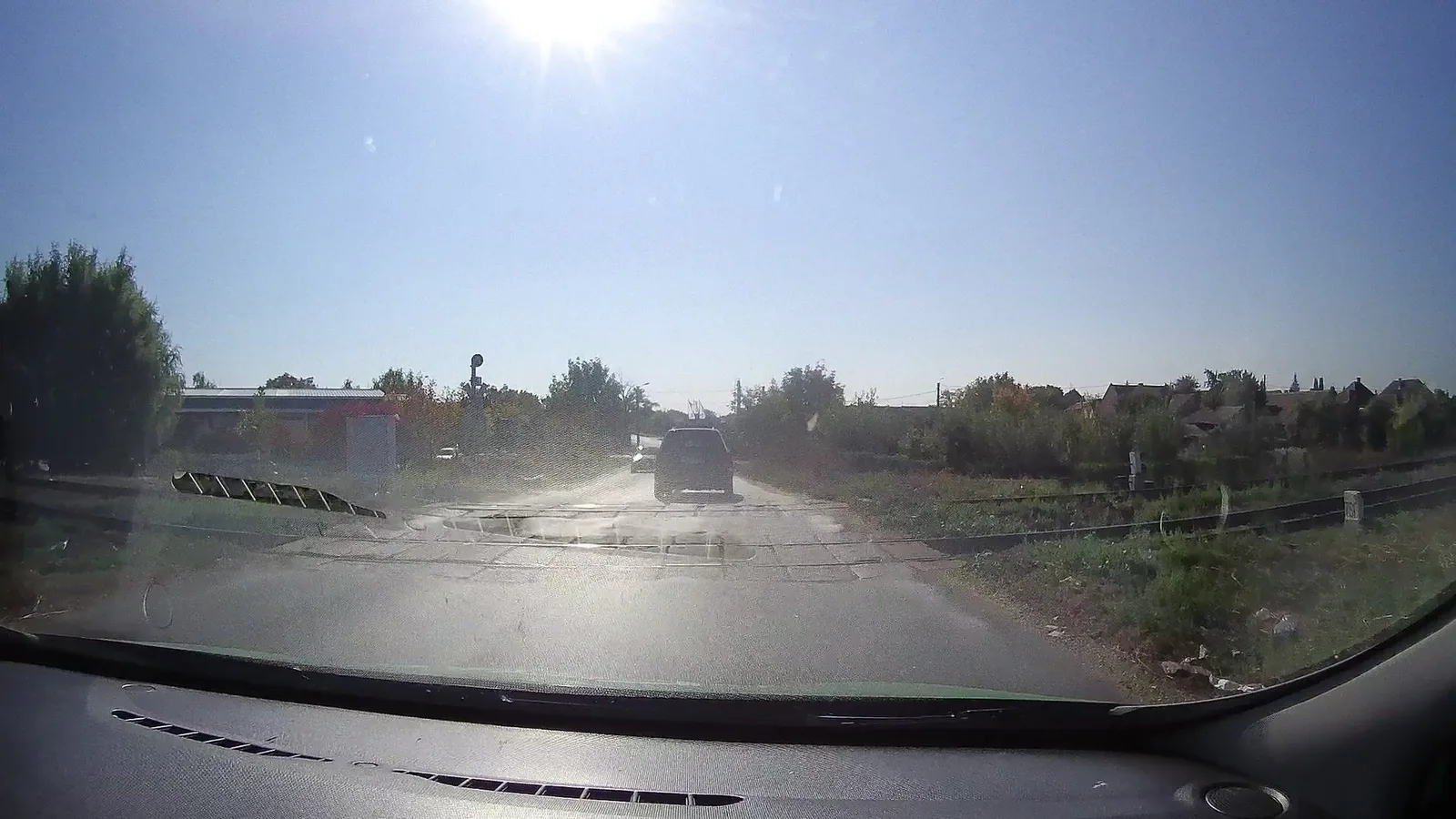
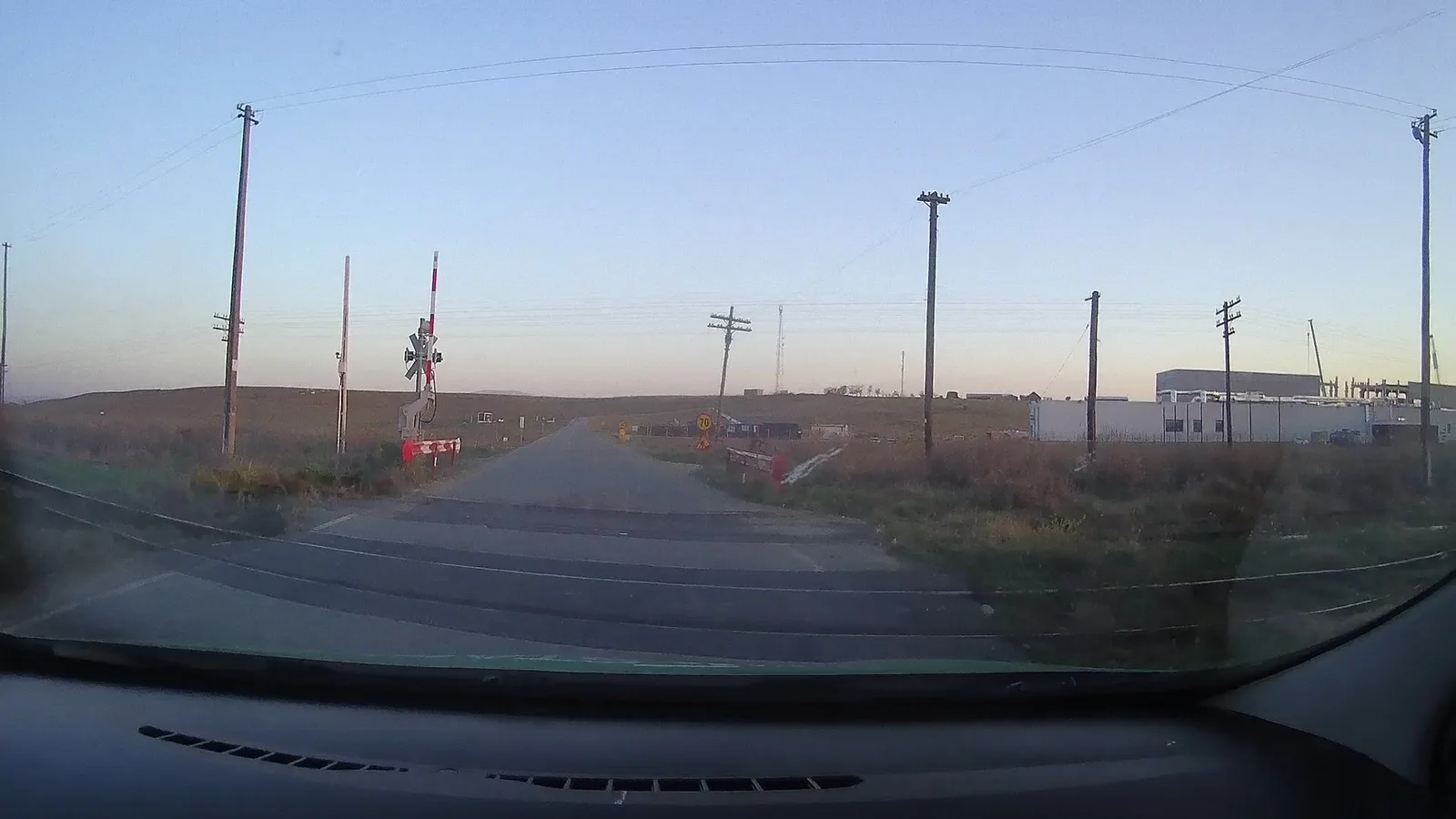
The street-level views below show crossings in rural, small-town and road-access settings on the same network, where local settings differ widely.
3. The infrastructure manager, safety authority and accident investigator
CFR maintains the crossing inventory and carries out the modernisations and removals as the state infrastructure manager [3, ↗].
The Autoritatea de Siguranță Feroviară Română (ASFR), the Romanian Railway Safety Authority, is the railway safety authority that Directive (EU) 2016/798 requires of every Member State [6, ↗]. It supervises railway safety, licenses the operators and reports the Common Safety Indicators, independent in its decisions from any infrastructure manager or railway undertaking [4, ↗].
The Agenția de Investigare Feroviară Română (AGIFER), the Romanian Railway Investigation Agency, investigates serious rail accidents independently, including collisions between trains and road vehicles at level crossings, and publishes its findings [5, ↗]. A 2024 cooperation agreement formalised the exchange of information between AGIFER and ASFR [4, ↗].
4. A type-based regime
Romanian operating regulations set the protection a crossing must carry by type, from the railway line category, the road category, the train speed and the traffic [2, ↗]. The types run from barrier crossings, through crossings with automatic road signalling and half-barriers and crossings with automatic signalling and no half-barriers, to passive crossings that carry only the warning cross [2, ↗]. The type and the regulations drive the protection, a prescriptive approach that a comparative per-crossing reading can extend.
5. Modernising crossings through line upgrades
Romania modernises its crossings inside the wider line upgrades, funded mostly from European programmes rather than a standalone crossing budget [3, ↗]. On the corridor rehabilitations, crossings are removed by overpass or underpass and others fully automated with signals, barriers and sirens, with dozens addressed on a single corridor such as Curtici to Constanța [3, ↗].
Because the modernisation rides the corridor rehabilitations, the crossings on the priority freight and passenger corridors reach automation or grade separation first, while the dispersed rural passive crossings, the larger share of the inventory and the ones the recent fatal collisions fell on, wait for their line's turn [3, ↗]. The yearly count of level crossing incidents has trended down across recent years [4, ↗].
6. Comparing the surroundings of crossings
A crossing is both a point of risk and a point of access.
- For the crossings that stay, the risk they carry depends on the nearby population, the emergency access, and the local routes that rely on them.
- For the crossings moving toward upgrade or removal, the same surroundings set the access question, where road users and pedestrians go once the crossing closes or gains an overpass, and rural sites are often constrained.
Some crossings have simple alternatives. Others touch emergency access, pedestrian and farm circulation, nearby population or the local road network that the route through the crossing connects. Where the network runs under speed restrictions, the warning a crossing gives shifts with the line, and comparing the surroundings of each crossing on the same reference helps rank where to modernise or remove first, as much as field review, detailed engineering and budget commitment on those moving toward a project.
That is the territorial layer SAMRoute structures around crossings, with a common geography, repeatable indicators, a regular refresh and traceable sources, so one crossing can be compared with another [7, ↗].
7. References
Infrastructure manager and inventory
[1] Wikipedia. Level crossings by country (Wikipedia, after UNECE data). The number of level crossings on the Romanian network. Read
[3] CFR. Network Statement 2026, Annex 19 (Compania Națională de Căi Ferate). The infrastructure manager role, the network and the level crossing modernisation projects. Read
The regime
[2] Ministerul Transporturilor. Regulament 005, railway operating regulation (OMTCT). The classification of level crossings by type and the protection each type carries. Read
Safety authority and investigation
[4] Autoritatea de Siguranță Feroviară Română. ASFR (Romanian Railway Safety Authority). The national safety authority, its independence and the cooperation agreement with AGIFER. Read
[5] Agenția de Investigare Feroviară Română. Annual Report 2020 (AGIFER). The independent investigation of accidents, including level crossing collisions between trains and road vehicles. Read
Accident history
[8] Eurostat. Railway safety statistics in the EU (European Commission). The 2024 level crossing accidents and fatalities and the ranking of member states by railway accidents. Read
[9] Antena 3 CNN. Accident feroviar cu patru morți, lângă București (7 November 2025). The collision at the unbarriered crossing between Vidra and Jilava. Read
[10] Adevărul. Mașină lovită de un tren de călători, la o trecere fără barieră (14 June 2025). The collision at the unbarriered Mășcăteni crossing in Botoșani county. Read
[11] Știrile ProTV. Un șofer de 31 de ani a murit lovit de tren (Știrile ProTV, 2025). The fatal collision at the unbarriered Mintiu Gherlii crossing on the Gherla to Dej line. Read
European framework
[6] European Parliament and Council. Directive (EU) 2016/798 of 11 May 2016 on railway safety (OJ L 138, 26.5.2016). Requires each Member State to set up a national safety authority and an independent investigating body. Read
[7] SAMRoute. Rail cadence, level crossings and emergency access (position page). Open