Level crossings in Luxembourg. Reading territorial exposure before removal decisions
Luxembourg keeps removing level crossings, with the Société Nationale des Chemins de Fer Luxembourgeois (CFL) managing the inventory and replacing crossings with road under and overpasses, the Administration des chemins de fer acting as the national safety authority, and the Administration des enquêtes techniques investigating accidents on the network.
- For the crossings that remain in service, the nearby population, emergency access, village and farm circulation, and local routes form the territorial context.
- For the crossings that move toward removal, the crossing is replaced by an under or overpass. Road users, cyclists and local traffic then rely on the new structure or on different routes.
The following sections present the level crossing system, the safety regime that governs it, the public actors, and the removal programme that replaces crossings rather than scoring them. The last section covers the territorial context that SAMRoute models.
1. The Luxembourg level crossing system
CFL manages the national rail network in Luxembourg. The State entrusts it with maintaining and modernising the infrastructure. CFL owns the level crossing inventory [1, ↗]. A CFL count put 117 level crossings on the network in mid-2019 [3, ↗], and a 2021 account recorded 116 [4, ↗], a total that has fallen steadily as crossings come out one or two a year [2, ↗]. Heritage, private and industrial crossings carry their own inventories outside this managed perimeter, so the perimeter has to be set before the totals are read.
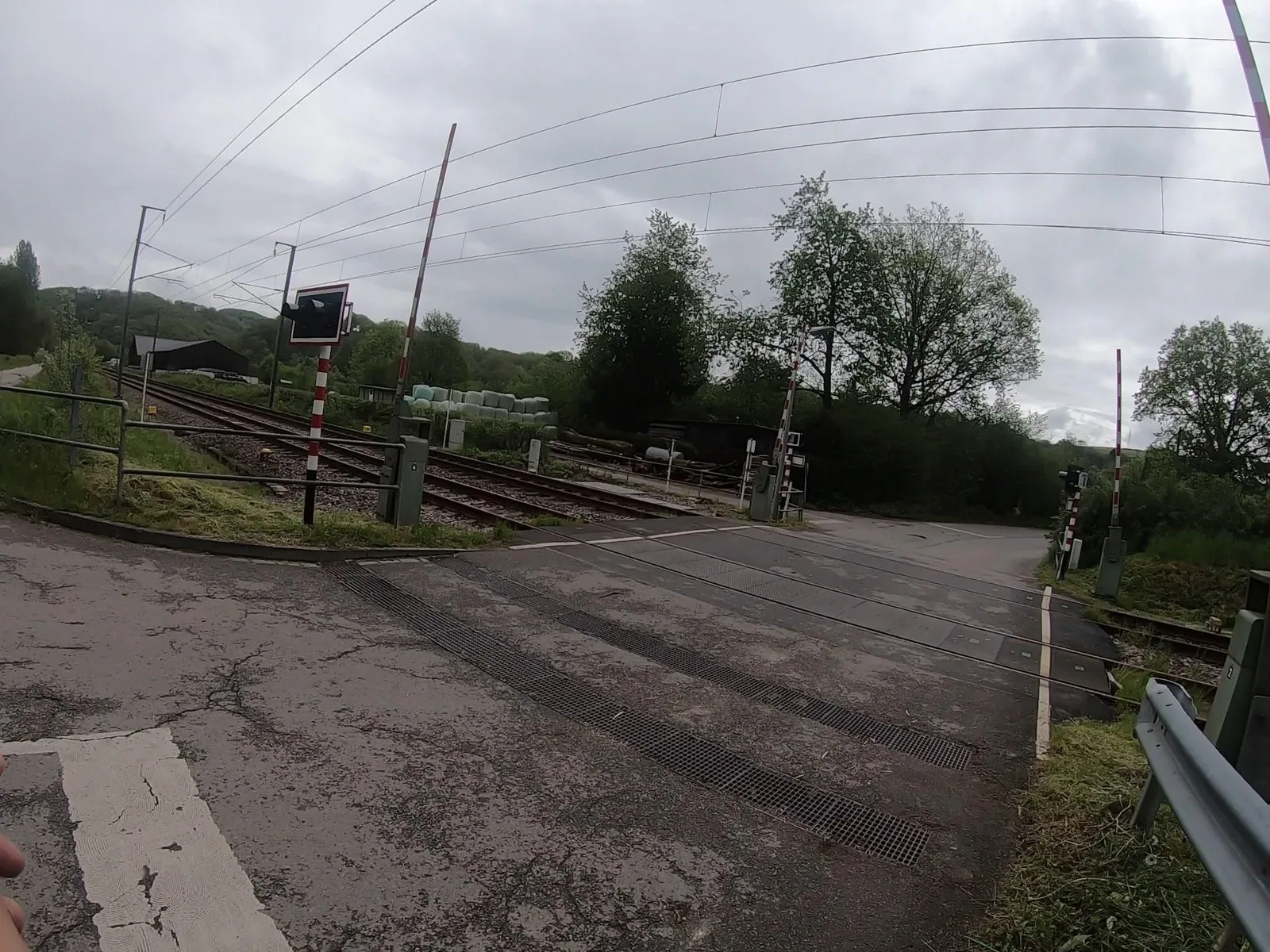
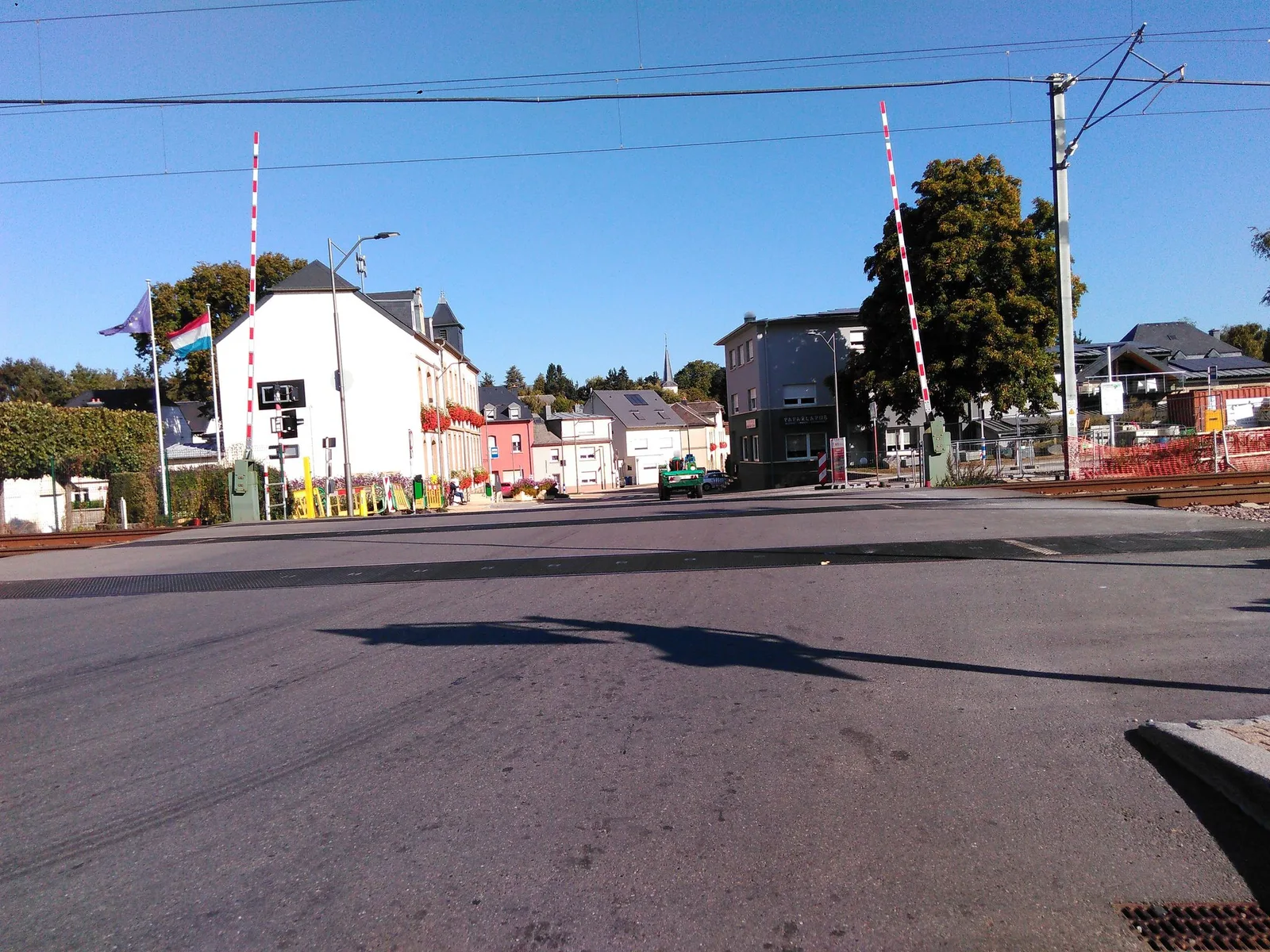
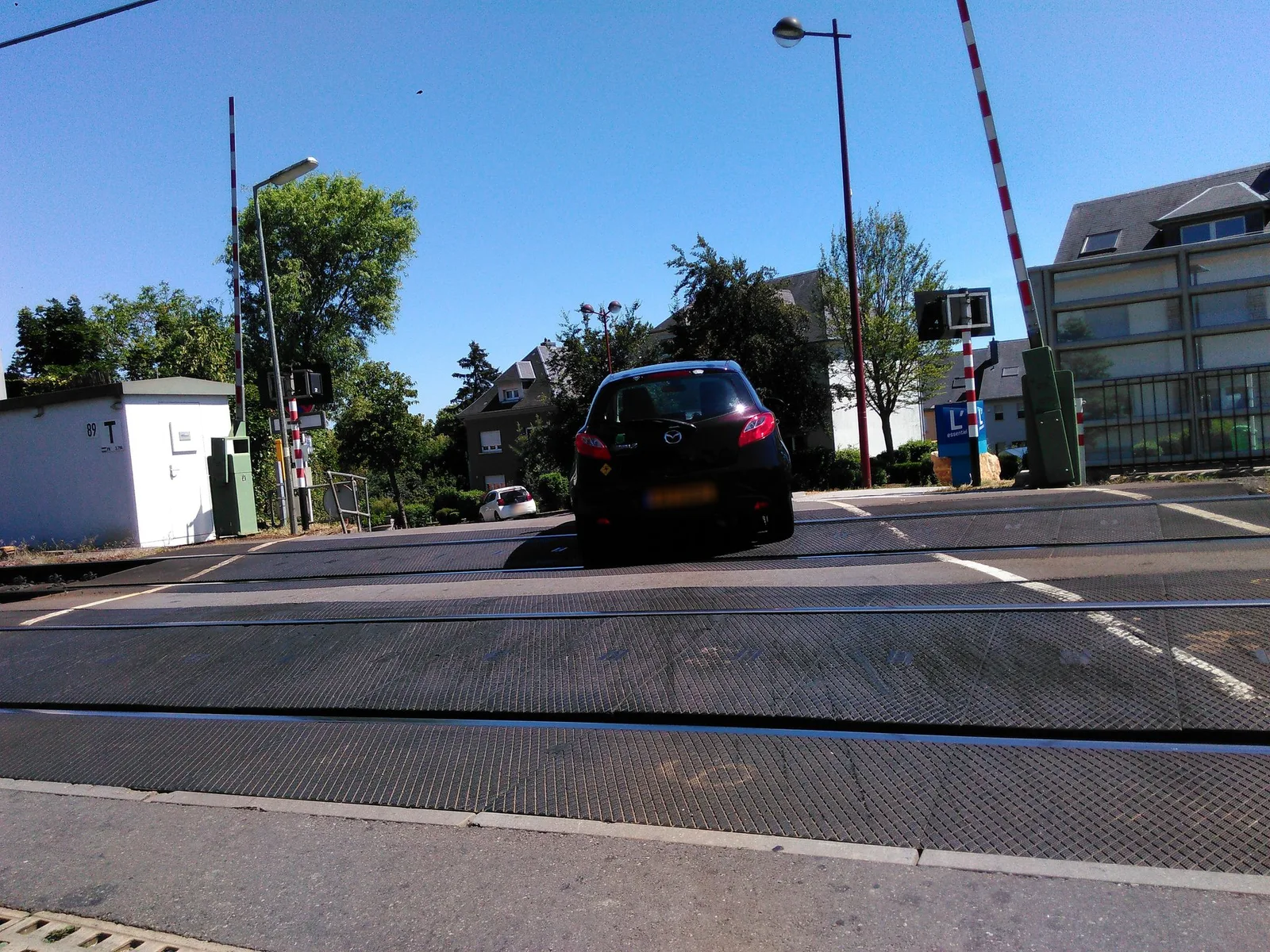
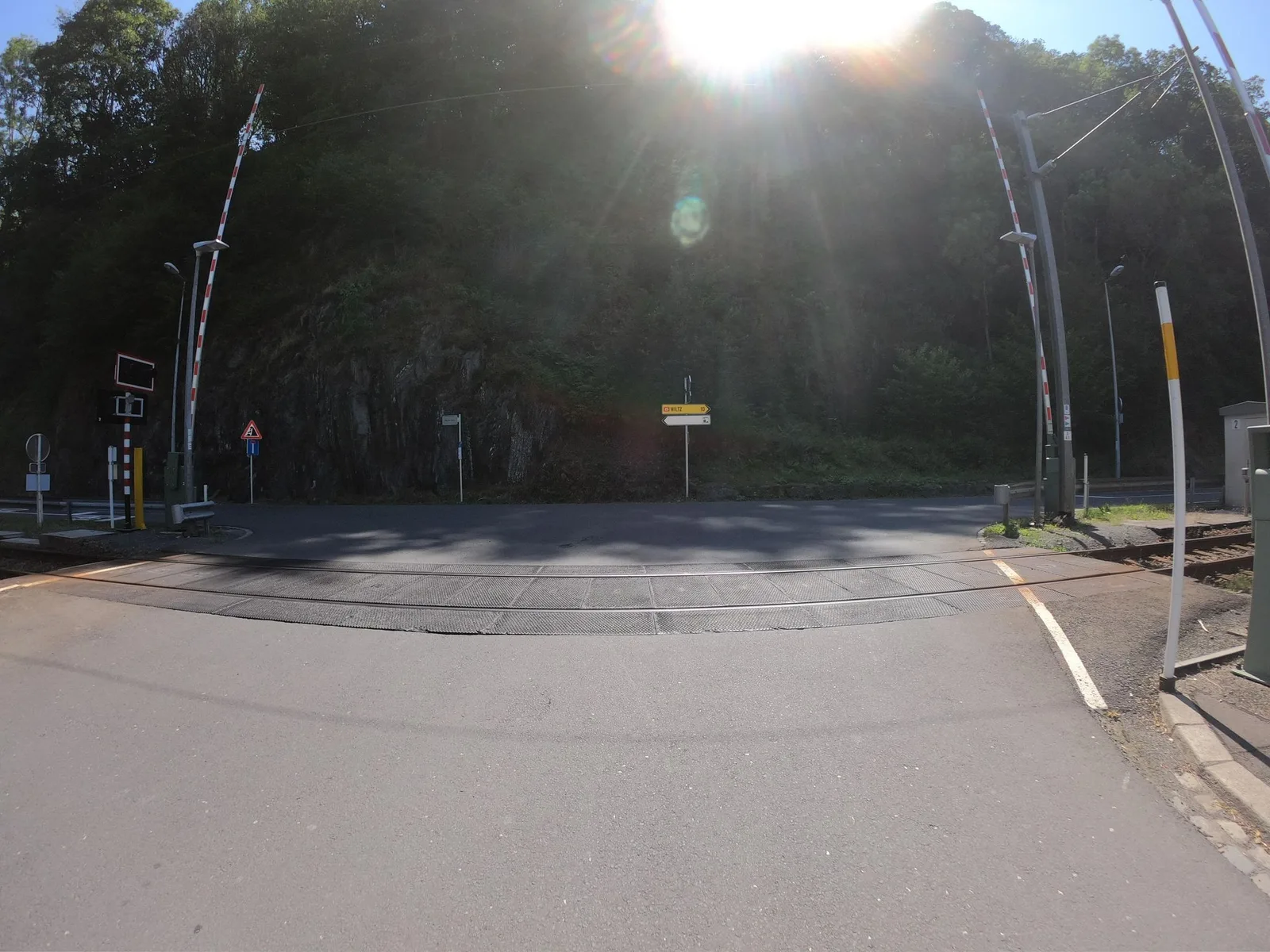
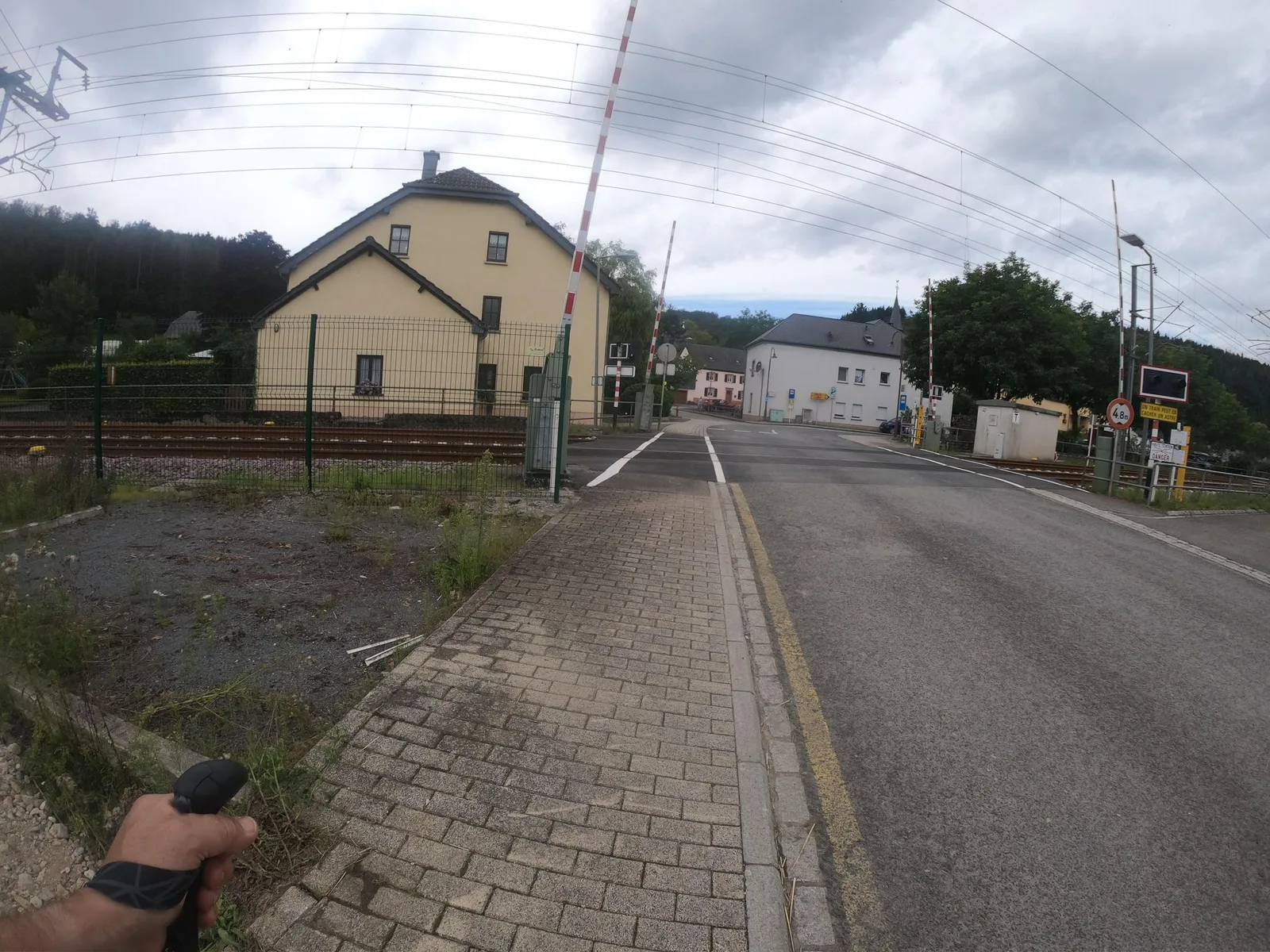
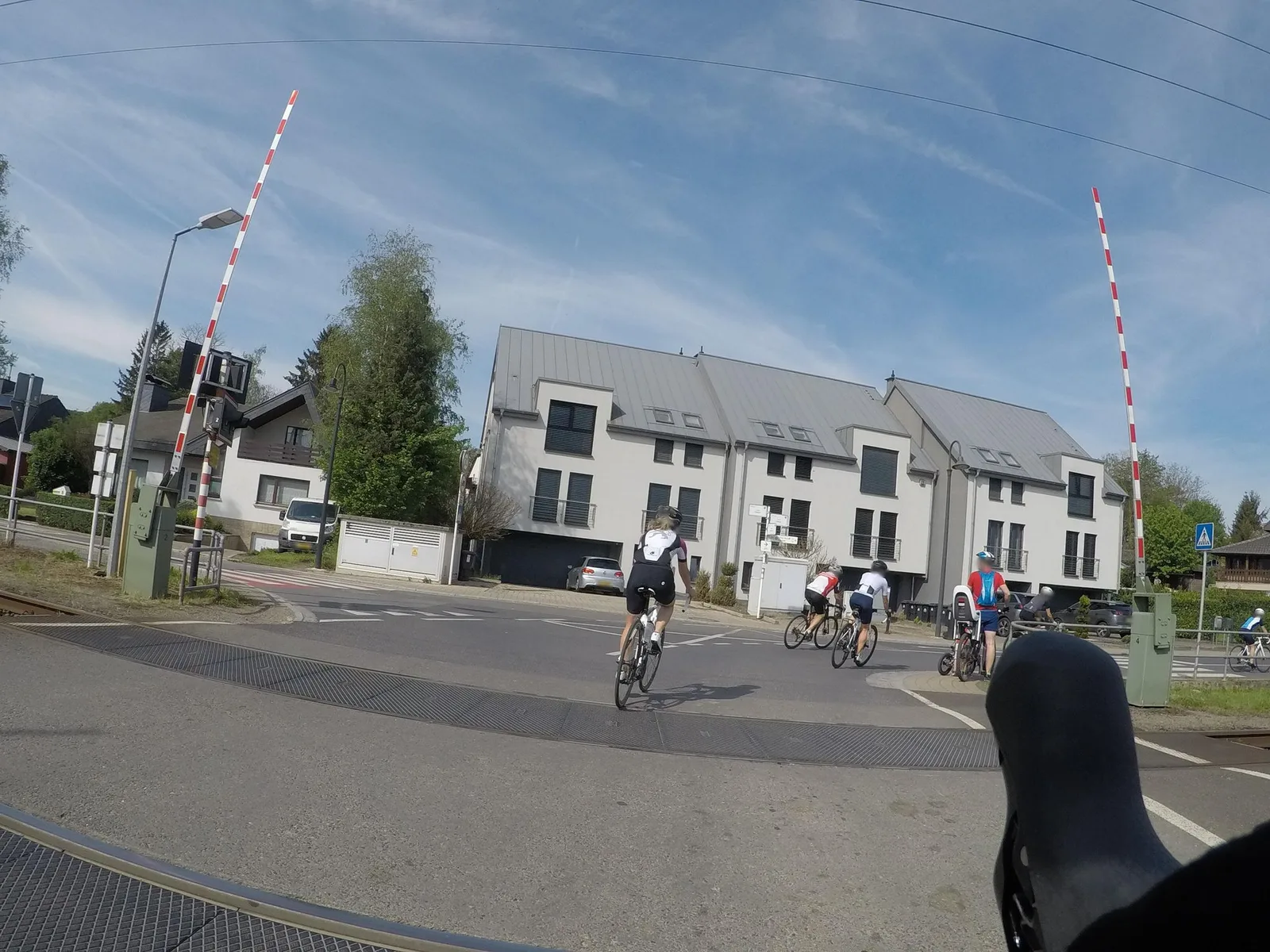
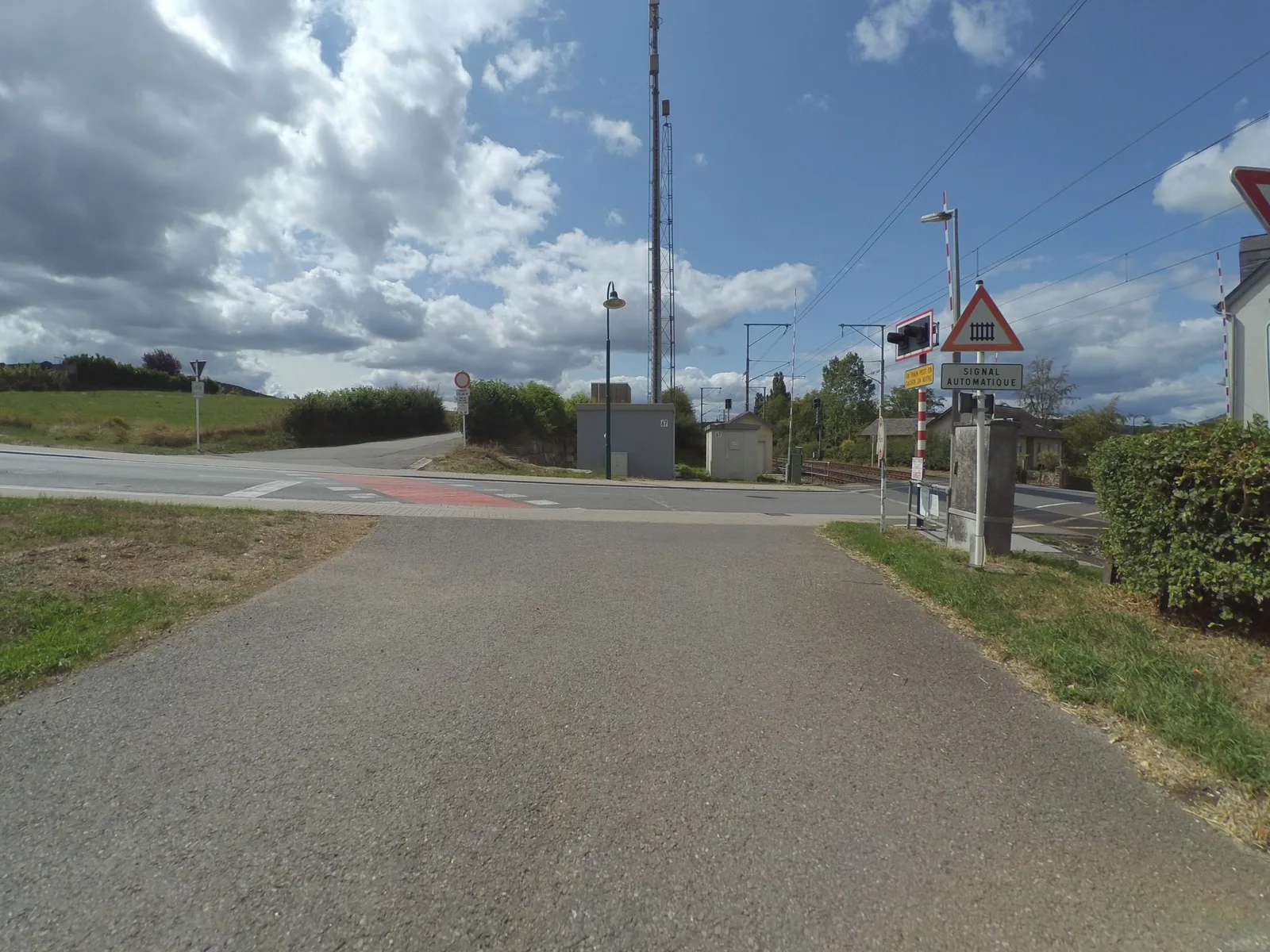
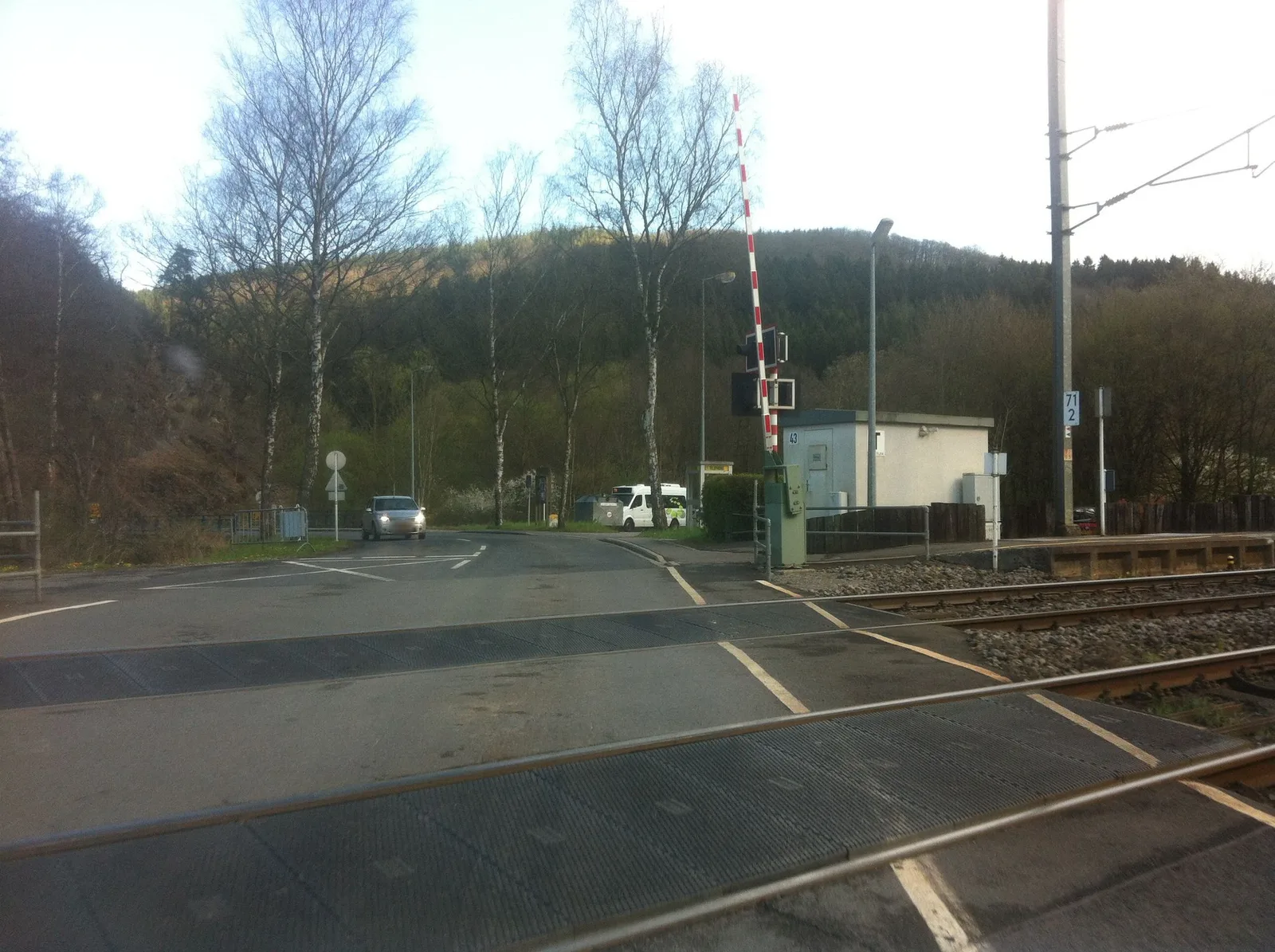
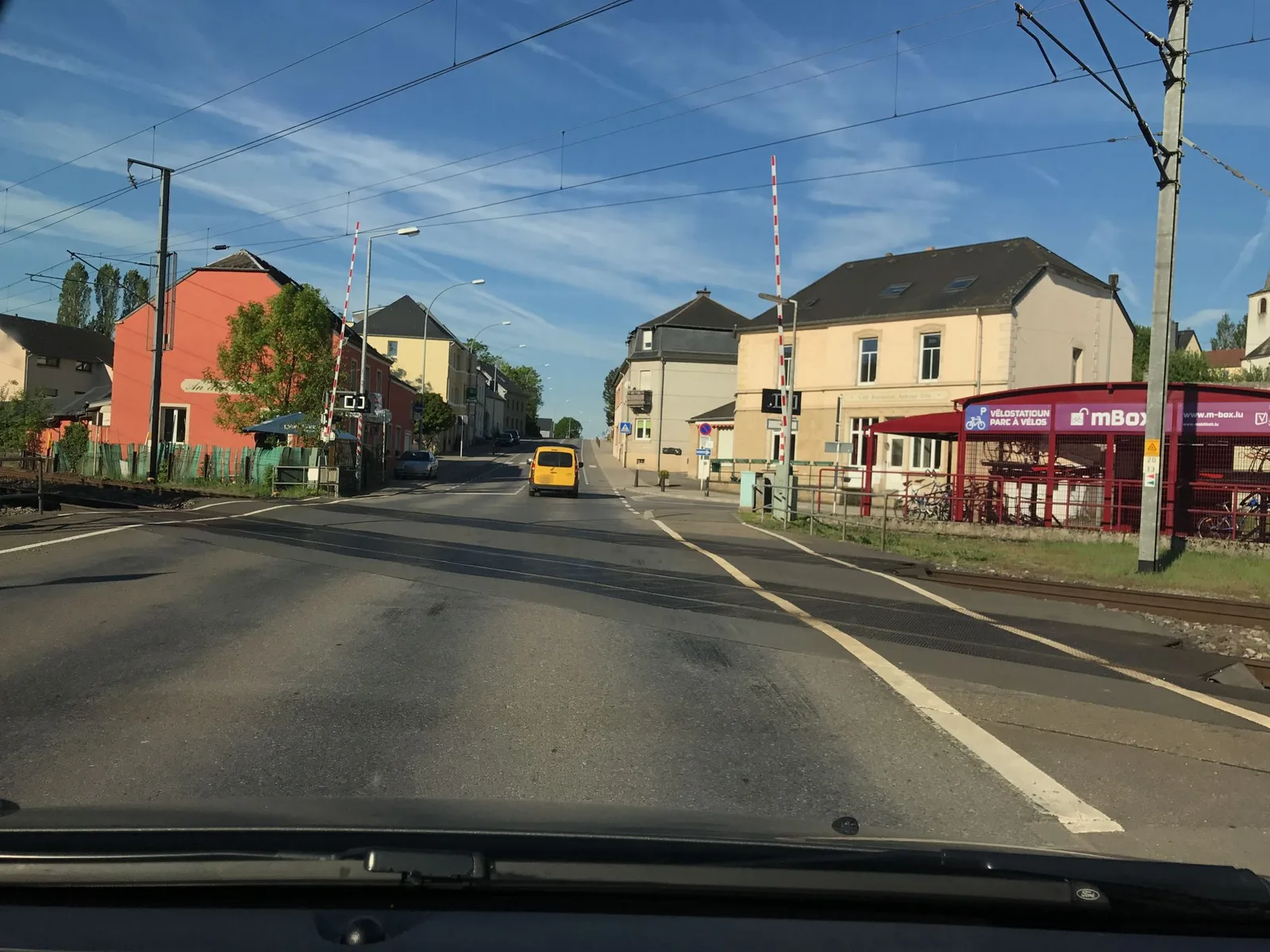
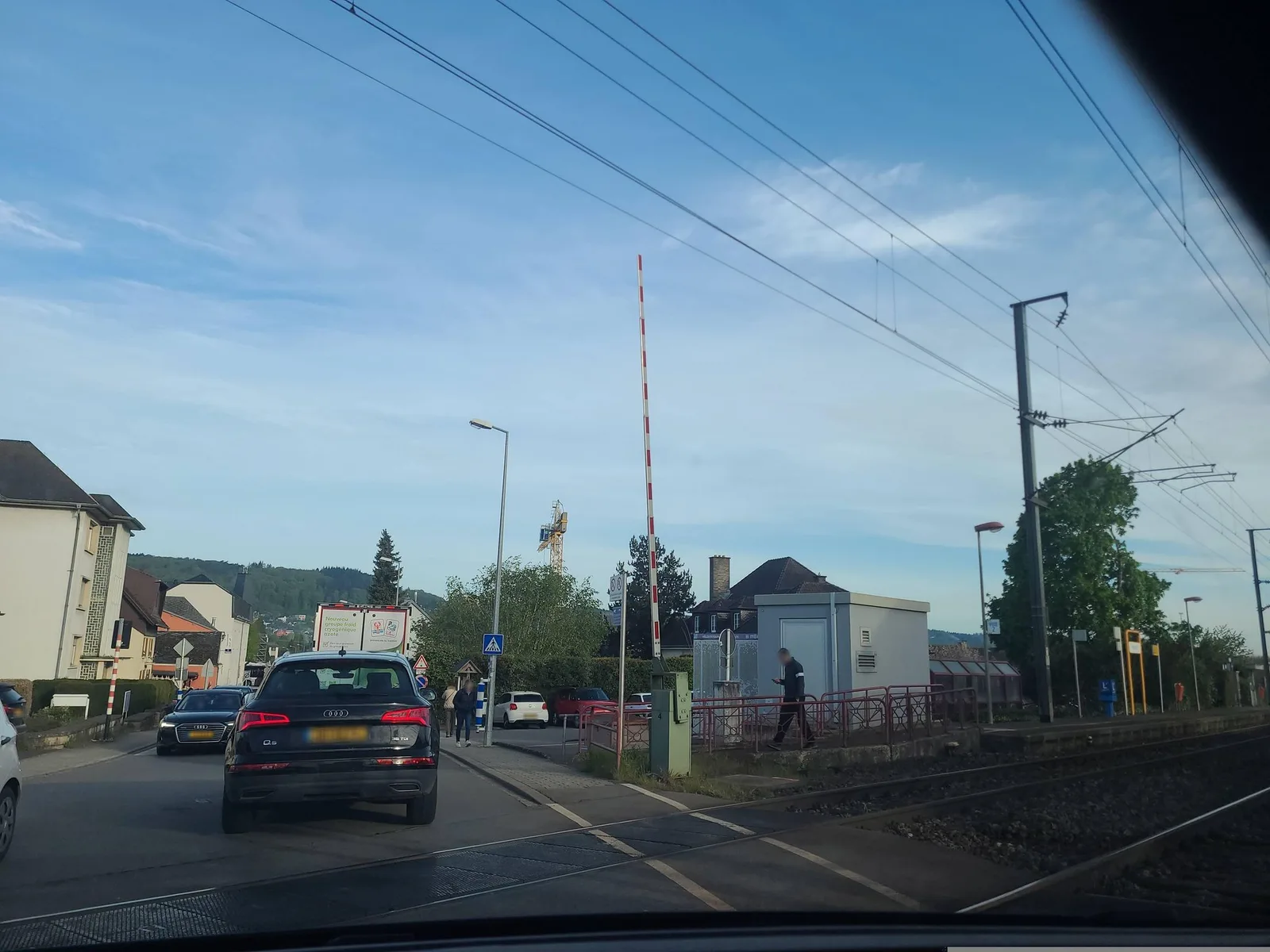
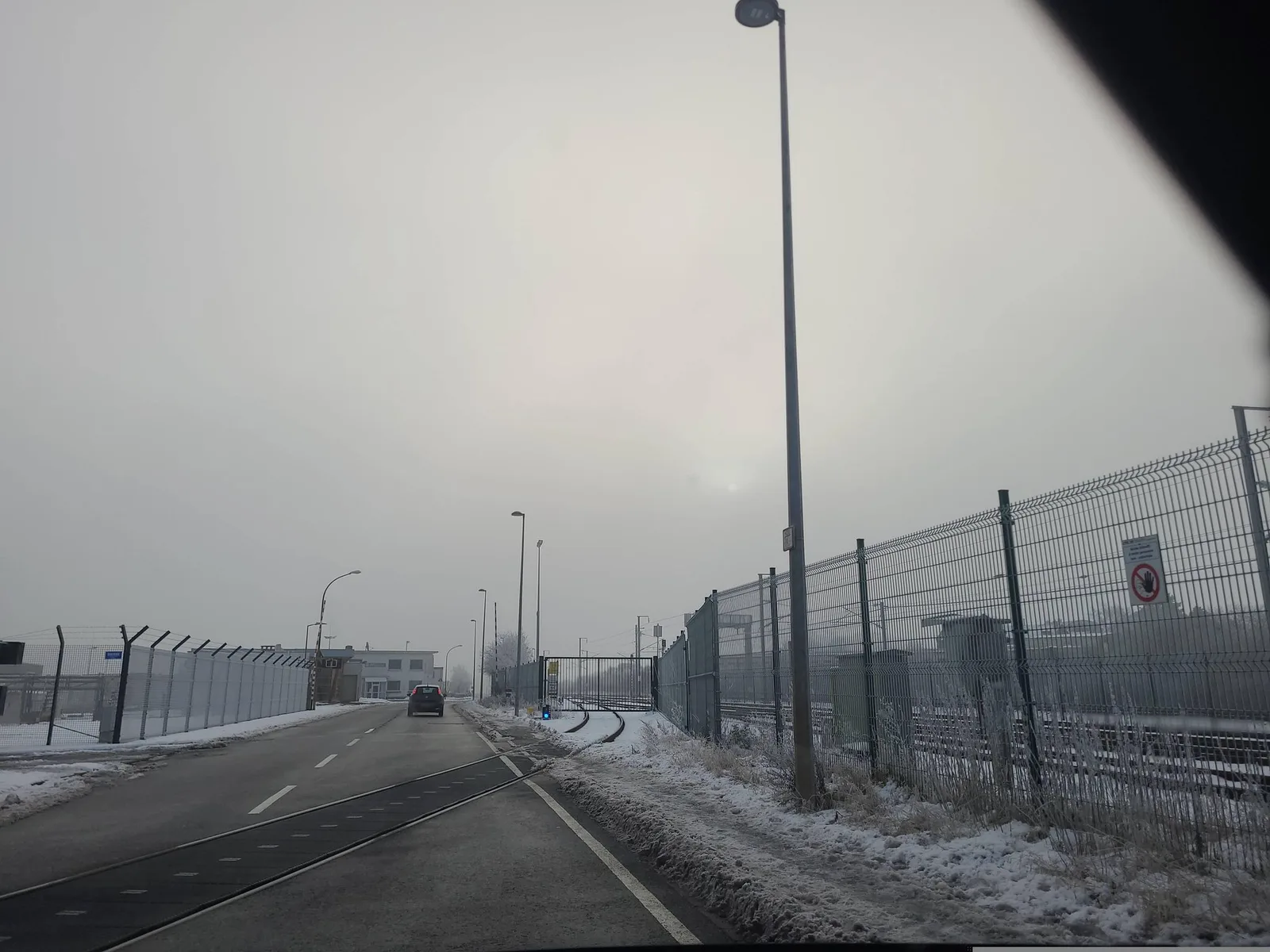
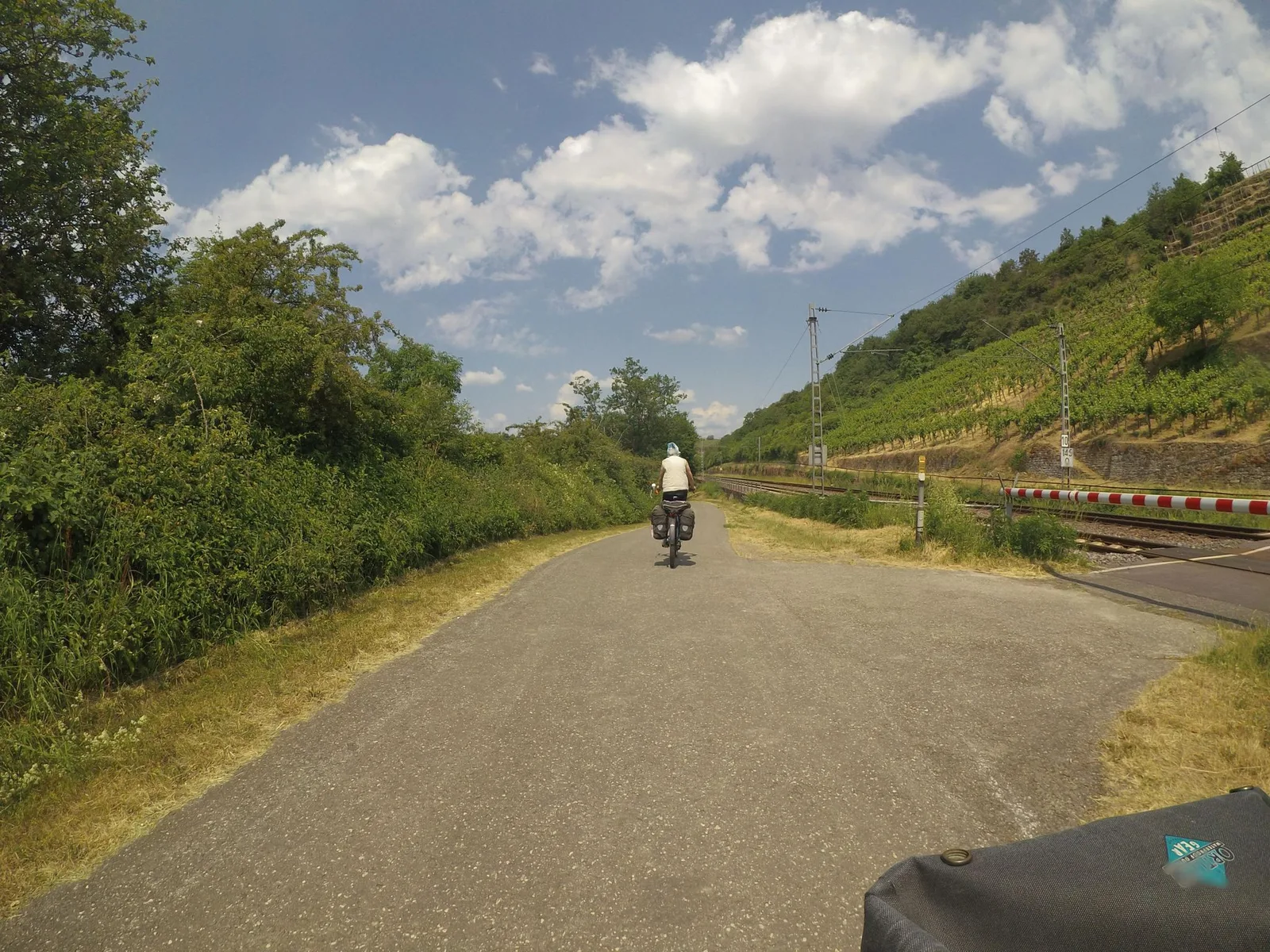
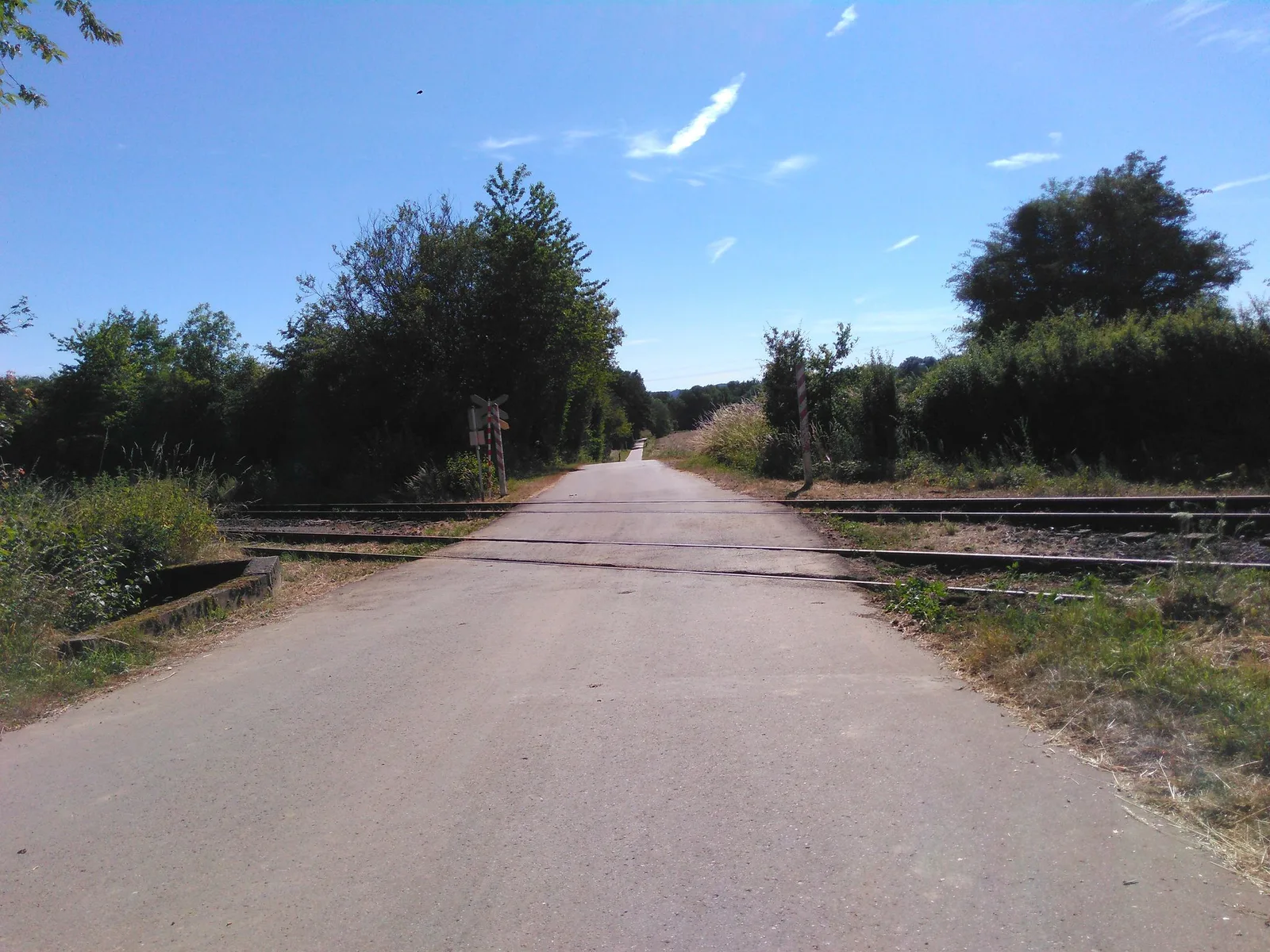
The street-level views below show crossings in village, rural and road-access settings on the same compact network, where local settings differ widely.
2. A safety regime under the 2009 law
The railway safety law of 22 July 2009 set up the Administration des chemins de fer (ACF) as the national safety authority and fixed how the network is supervised [6, ↗], inside the Union framework of Directive (EU) 2016/798, which requires every Member State to maintain a national safety authority and an independent accident investigation body [11, ↗]. The crossings on the managed network fall under that regime, with CFL accountable for the infrastructure and the ACF for its supervision.
Level crossings cause about one percent of road fatalities yet close to a third of railway fatalities across the Union, the European Commission's thematic review records [13, ↗], and the EU Agency for Railways finds level crossing safety broadly flat since 2017, with passive crossings eliminated only slowly [12, ↗]. Luxembourg's answer is removal rather than a graded protection standard.
3. CFL, the ACF and the AET
CFL, the infrastructure manager named in the network statement, maintains the crossing inventory and carries out the removal works [5, ↗] [1, ↗].
The ACF issues the safety authorisations, supervises railway safety and interoperability, and publishes the network statement that names CFL as infrastructure manager and counts about 100 kilometres of single track and 160 kilometres of double track [5, ↗]. The EU Agency for Railways lists the ACF as Luxembourg's national safety authority [6, ↗] [7, ↗].
The Administration des enquêtes techniques (AET) investigates rail accidents and serious incidents independently and publishes its findings [8, ↗]. After a pedestrian was struck by a passenger train at crossing PN111 in Ingeldorf in October 2016, the AET issued two safety recommendations [9, ↗]. The 14 February 2017 head-on collision between a passenger and a freight train near Bettembourg, which killed one driver, drew eleven [10, ↗].
4. Removal over scoring
CFL's logic is categorical, not scored. The safest crossing is the one taken out, so the programme replaces crossings with road under and overpasses [2, ↗], and Luxembourg runs no quantitative ranking model of the kind larger networks operate.
CFL removed 24 crossings between 2014 and mid-2019 [3, ↗], and 25 between 2015 and 2020 [4, ↗], a steady one to two a year. The Milbech replacement is due at the end of July 2026 and the Dommeldange one in spring 2027, each funded project by project rather than under a single published multi-year envelope [2, ↗].
The replacement structure carries the road over or under the railway, and where a crossing simply closes, road users, cyclists and local traffic fall back on other routes. The setting of each crossing, and what depends on the route through it, is part of the decision before works begin.
5. What sits around the crossing
A crossing is both a point of risk and a point of access. For the crossings that stay, the surroundings set the stakes of an incident, who lives nearby, how emergency vehicles reach the site, and which local routes depend on it. For the crossings moving toward removal, the same surroundings set the access question, where road users go once the crossing closes, and village, farm and industrial sites are often constrained.
Some crossings have simple alternatives. Others touch emergency access, village or farm circulation, nearby population or the local road network that the route through the crossing connects.
Comparing those surroundings on the same reference can support prioritisation on the crossings that stay, as much as field review, detailed engineering and budget commitment on those moving toward a project.
That is the territorial layer SAMRoute structures around crossings, with a common geography, repeatable indicators, a regular refresh and traceable sources, so one crossing can be compared with another [14, ↗].
6. References
Infrastructure manager and removal programme
[1] CFL. La gestion des infrastructures ferroviaires (CFL, 2026). The State entrusts management, maintenance and modernisation of the national rail network to CFL, which owns the level crossing inventory. Read
[2] CFL. Suppressions de passages à niveau (CFL, 2026). The programme replaces level crossings with road under and overpasses, with works under way at Dommeldange and Milbech. Read
[3] CFL. Fewer barriers, more safety and higher service quality (Blog CFL, 2019). Records 117 level crossings on the network and 24 removed between 2014 and June 2019. Read
[4] L'essentiel. Les passages à niveau sont peu à peu supprimés (Edita, 10 June 2021). Reports 116 level crossings remaining and 25 removed between 2015 and 2020. Read
[5] Administration des chemins de fer. Luxembourg Railway Network Statement 2026 (DRR 2026) (ACF, 2024). Designates the CFL infrastructure manager and details the network. Read
Safety authority
[6] Administration des chemins de fer. Railway Administration (ACF) (Le gouvernement luxembourgeois, 2026). The ACF is responsible for railway safety and interoperability in Luxembourg, under the 2009 railway safety law. Read
[7] European Union Agency for Railways. National Safety Authorities (NSAs) (ERA, 2026). Lists the Administration des chemins de fer as Luxembourg's national safety authority. Read
Independent accident investigation
[8] Administration des enquêtes techniques. Chemins de fer (Le gouvernement luxembourgeois, 2026). The AET conducts a technical investigation for qualifying rail accidents and publishes its reports. Read
[9] Administration des enquêtes techniques. Rapport final, accident au passage à niveau PN111, Ingeldorf, 6 octobre 2016 (AET, 2017). A pedestrian struck at level crossing PN111, with two safety recommendations. Read
[10] Administration des enquêtes techniques. Rapport final, collision ferroviaire du 14 février 2017, Dudelange et Bettembourg (AET, 2019). Head-on collision between a passenger and a freight train, one driver killed, eleven safety recommendations. Read
European framework and benchmarking
[11] European Parliament and Council. Directive (EU) 2016/798 of 11 May 2016 on railway safety (OJ L 138, 26.5.2016). Requires each Member State to set up a national safety authority and an independent investigating body. Read
[12] European Union Agency for Railways. Safety Overview 2025 (ERA, 2025). Level crossing safety has been broadly flat since 2017, with passive crossings eliminated slowly across the Union. Read
[13] European Commission. Road safety thematic report, railway level crossings (European Road Safety Observatory, 2021). Crossings account for about one percent of road fatalities and close to a third of railway fatalities. Read
[14] SAMRoute. Rail cadence, level crossings and emergency access (position page). Open