Level crossings in Slovenia. Comparing crossings before upgrade and removal decisions
Slovenia keeps protecting, modernising and closing its level crossings, with SŽ-Infrastruktura managing the inventory, the Public Agency for Railway Transport acting as the safety authority, and the national investigation service examining accidents.
The following sections present the accident record, the level crossing system, the public actors, the regime, and the modernisation programme. The last section covers the territorial context that SAMRoute models.
1. Accident history at level crossings
Nearly a third of all railway accidents in Slovenia happen at level crossings, and the railway safety agency recorded three fatal level crossing accidents in each of 2022 and 2023, after two a year through 2019 to 2021 and a peak of five in 2017 [9, ↗]. The toll tracks the protection, because of the 672 crossings on the public network only about 335 carry signals and barriers, which leaves roughly half guarded by the St Andrew's cross alone [9, ↗].
On 10 June 2026, a car crossed an unbarriered crossing near Vodmat station in Ljubljana as a passenger train arrived, and the collision left material damage but no injuries [10, ↗].
2. The Slovenian level crossing system
SŽ-Infrastruktura, the state infrastructure manager, runs the public rail network on the territory of the Republic of Slovenia and owns the level crossing inventory [1, ↗]. The network statement classes the crossings by their protection, separating barrier crossings, controlled by automatic, remotely controlled or mechanical barriers, from open crossings that carry road traffic signs alone [2, ↗]. A substantial share of the inventory remains open, marked by the Andrejev križ, the St Andrew's cross, without active warning, while the rest carry light and sound signals and, on some, barriers or half barriers [2, ↗].
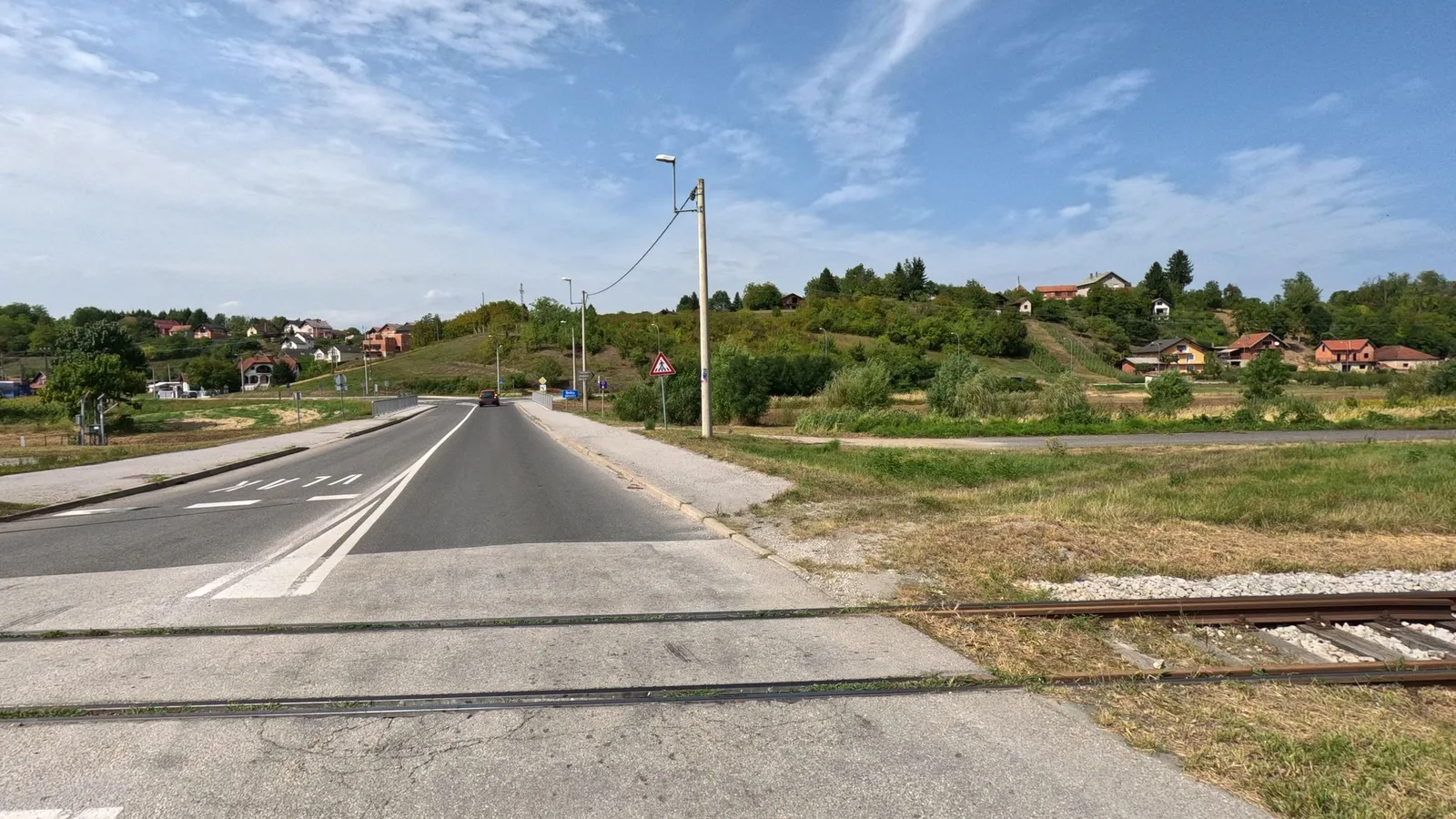
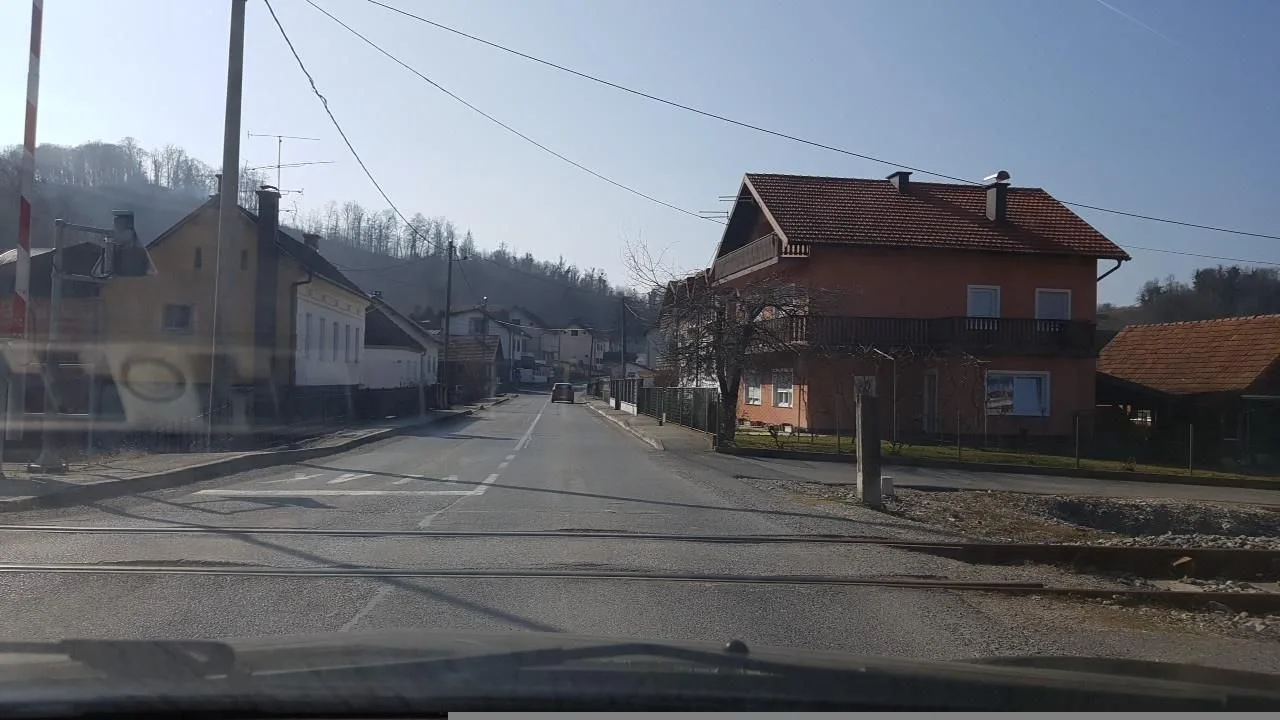
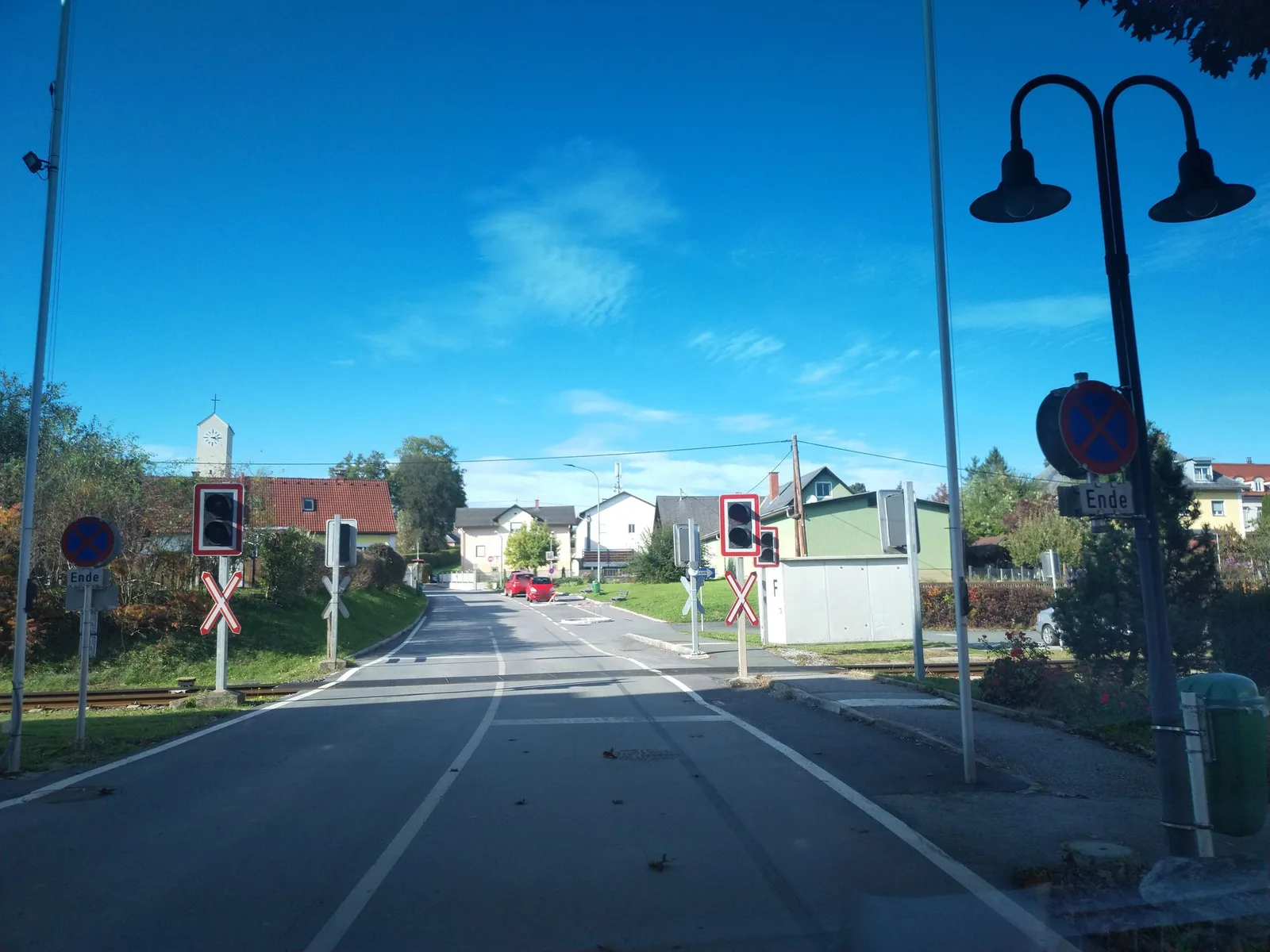
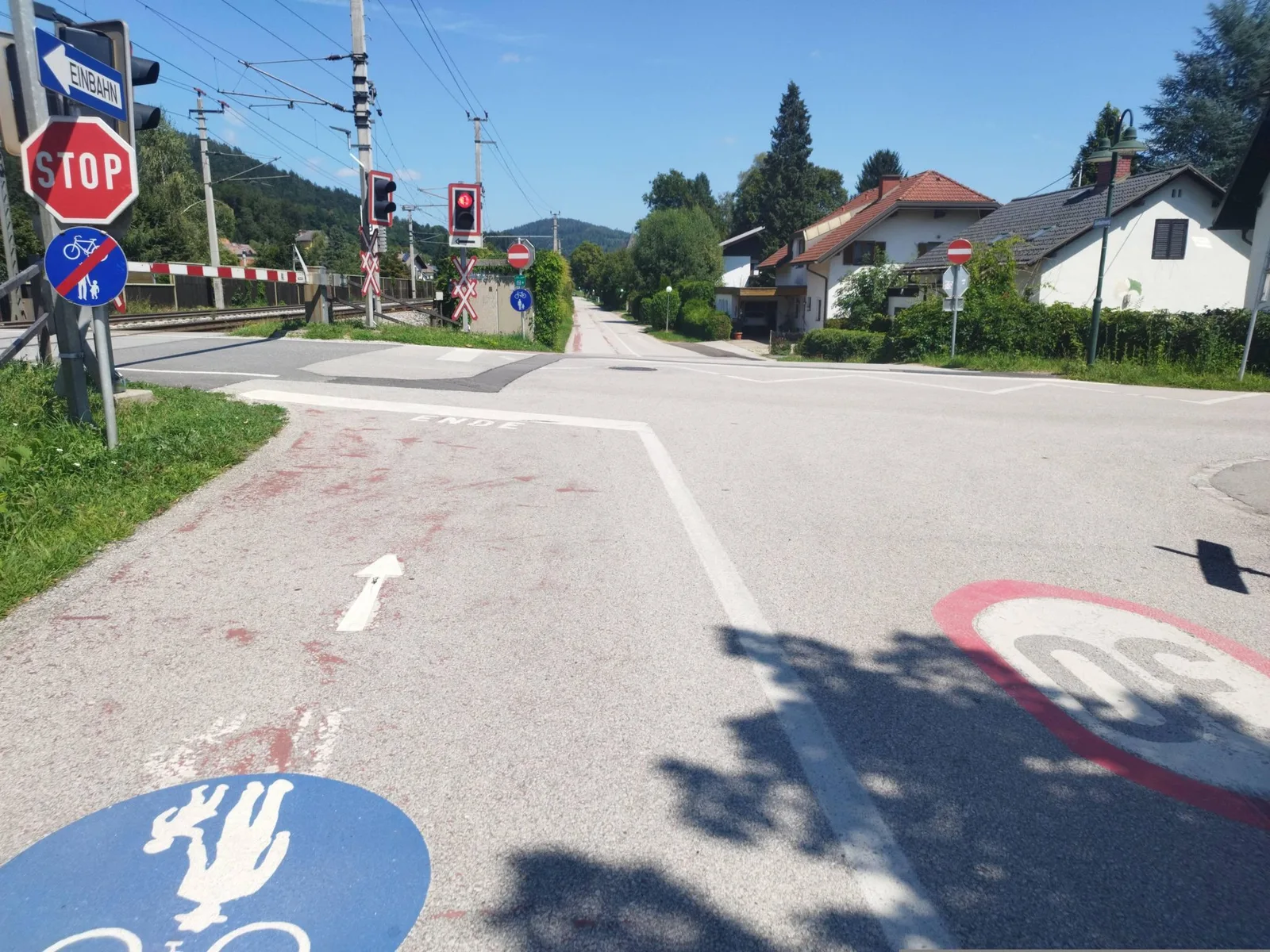
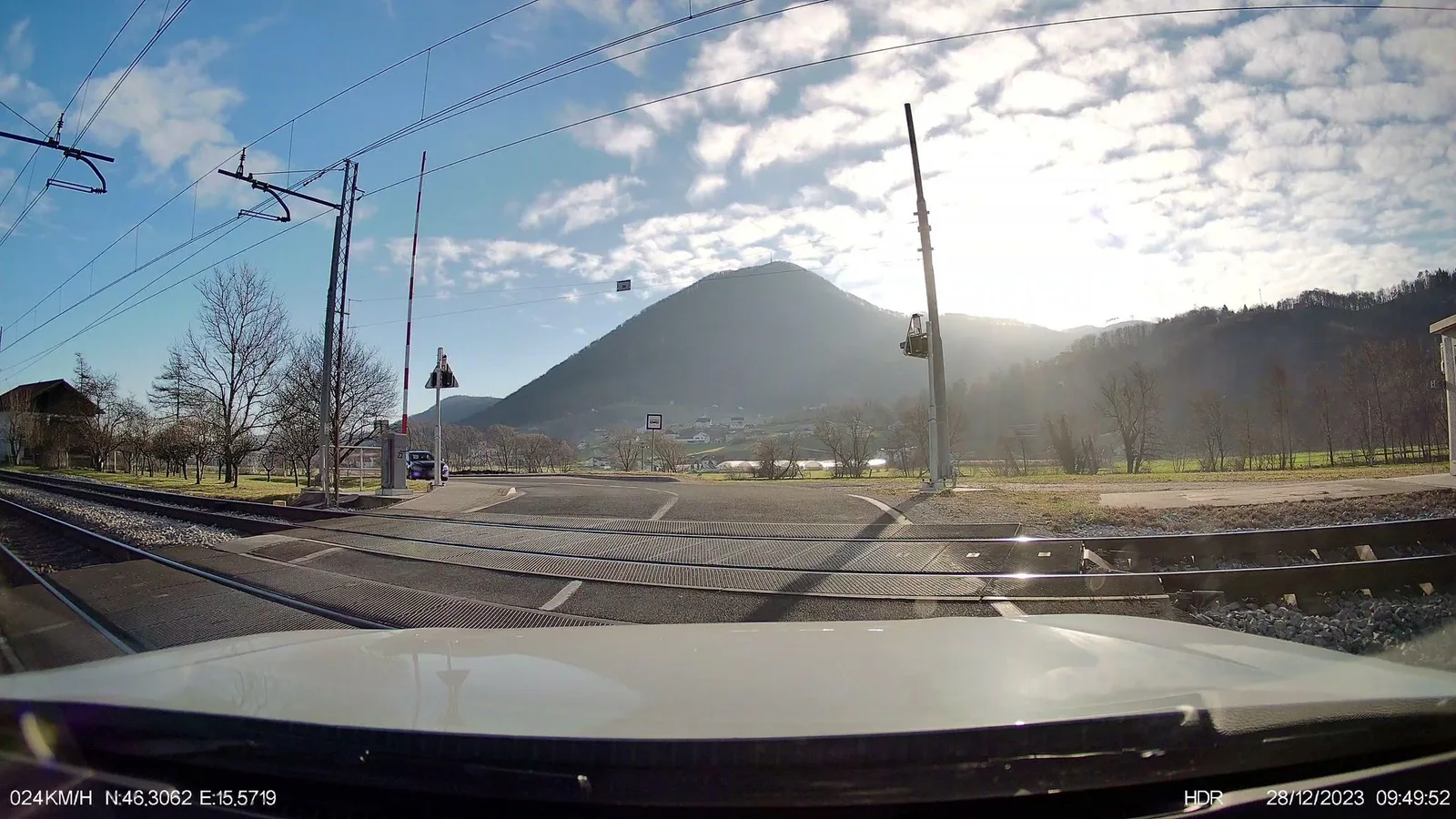
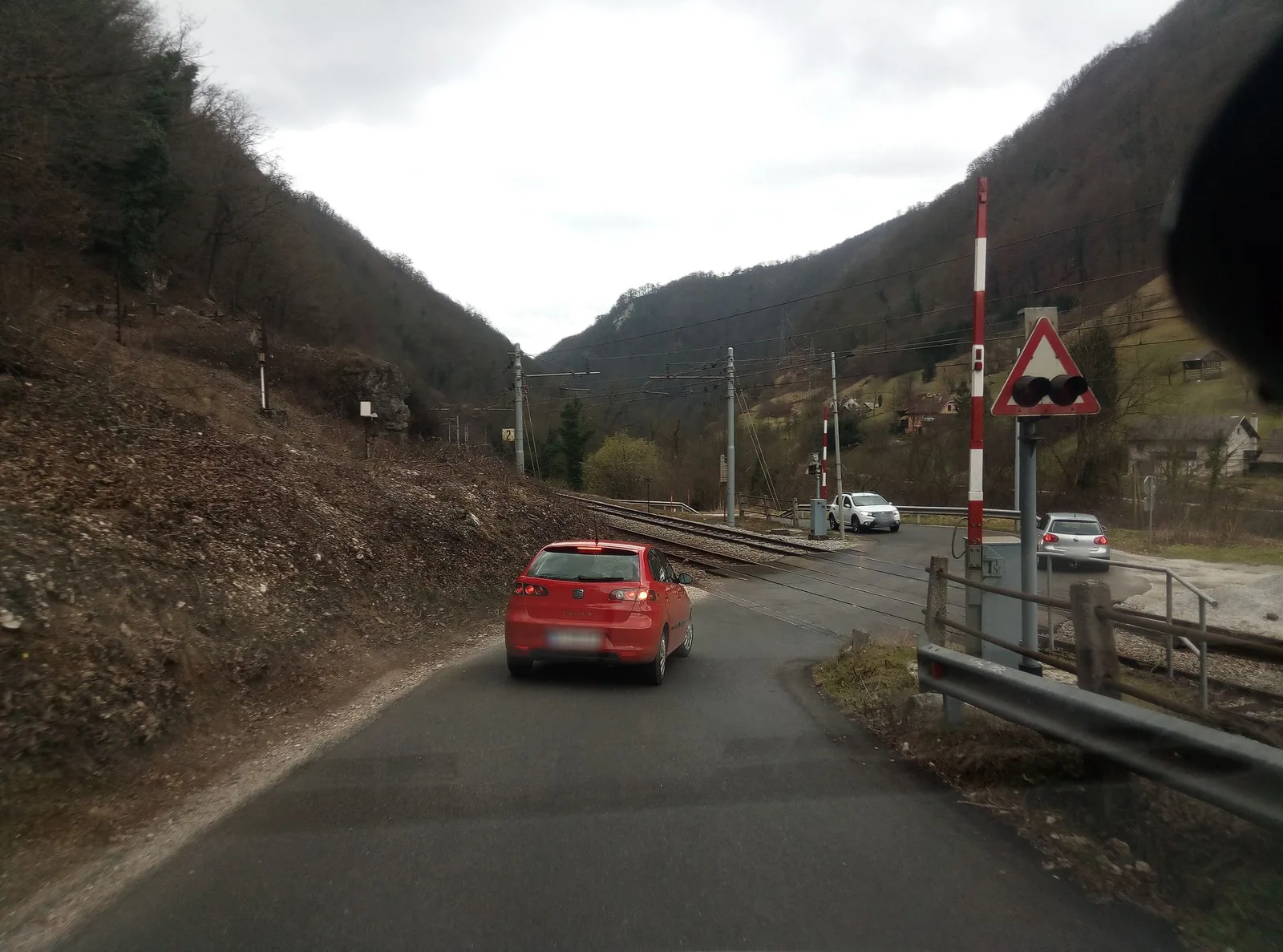
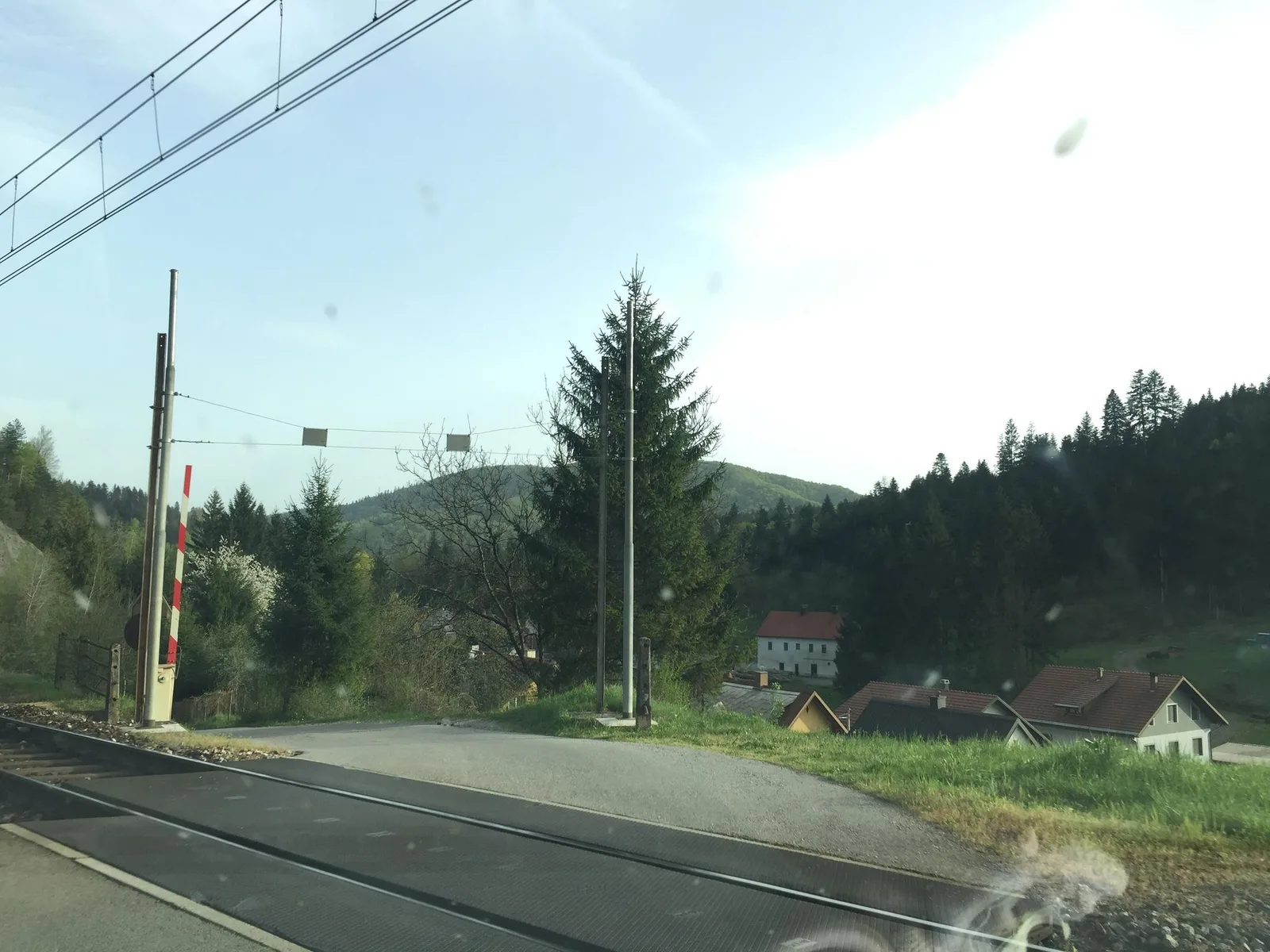
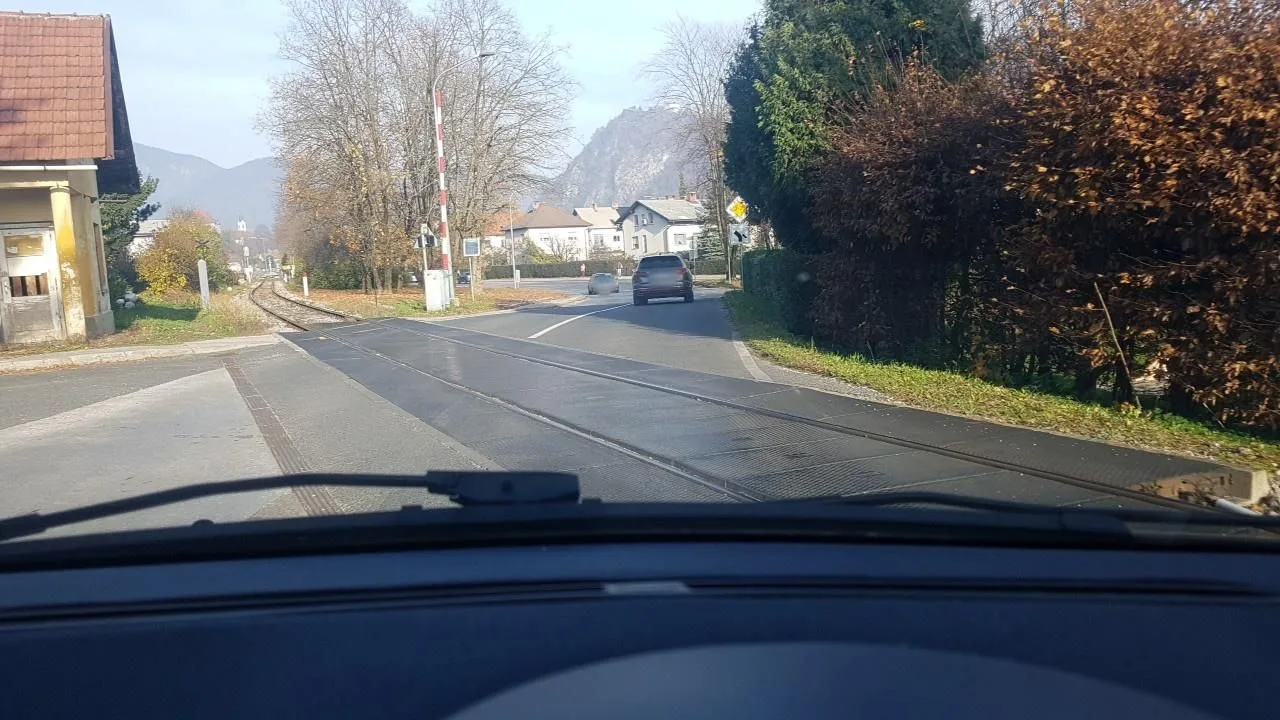
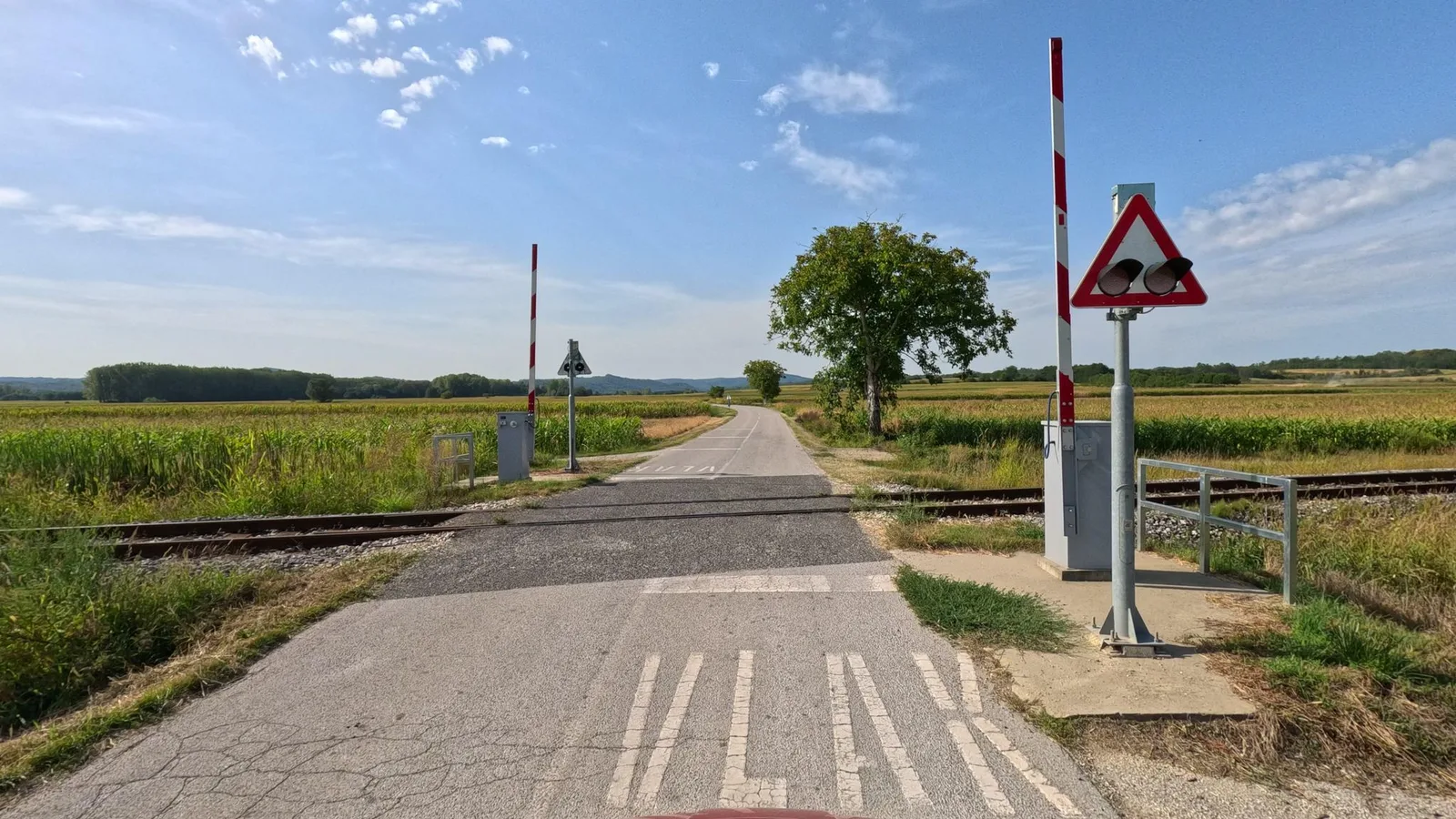
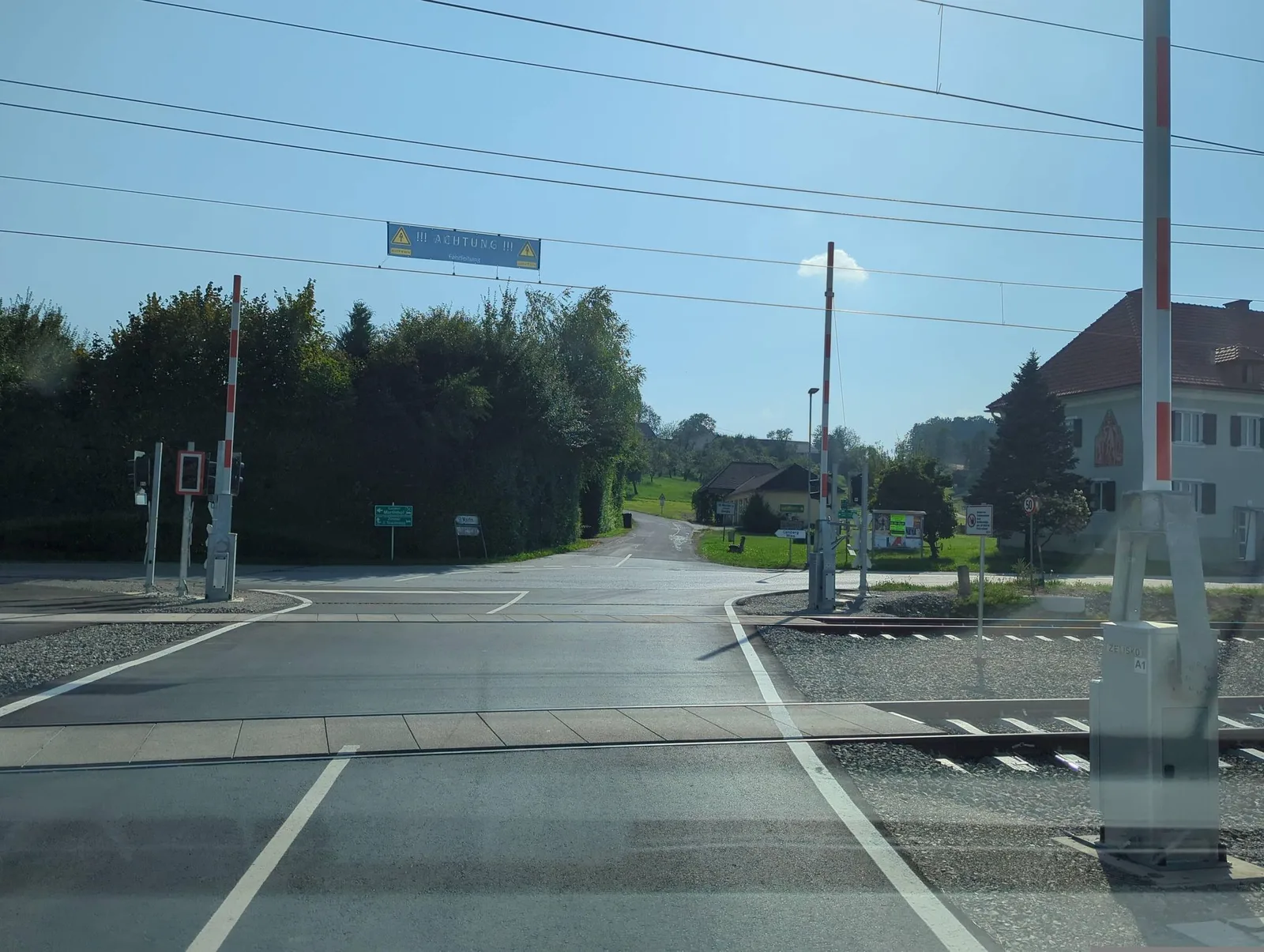
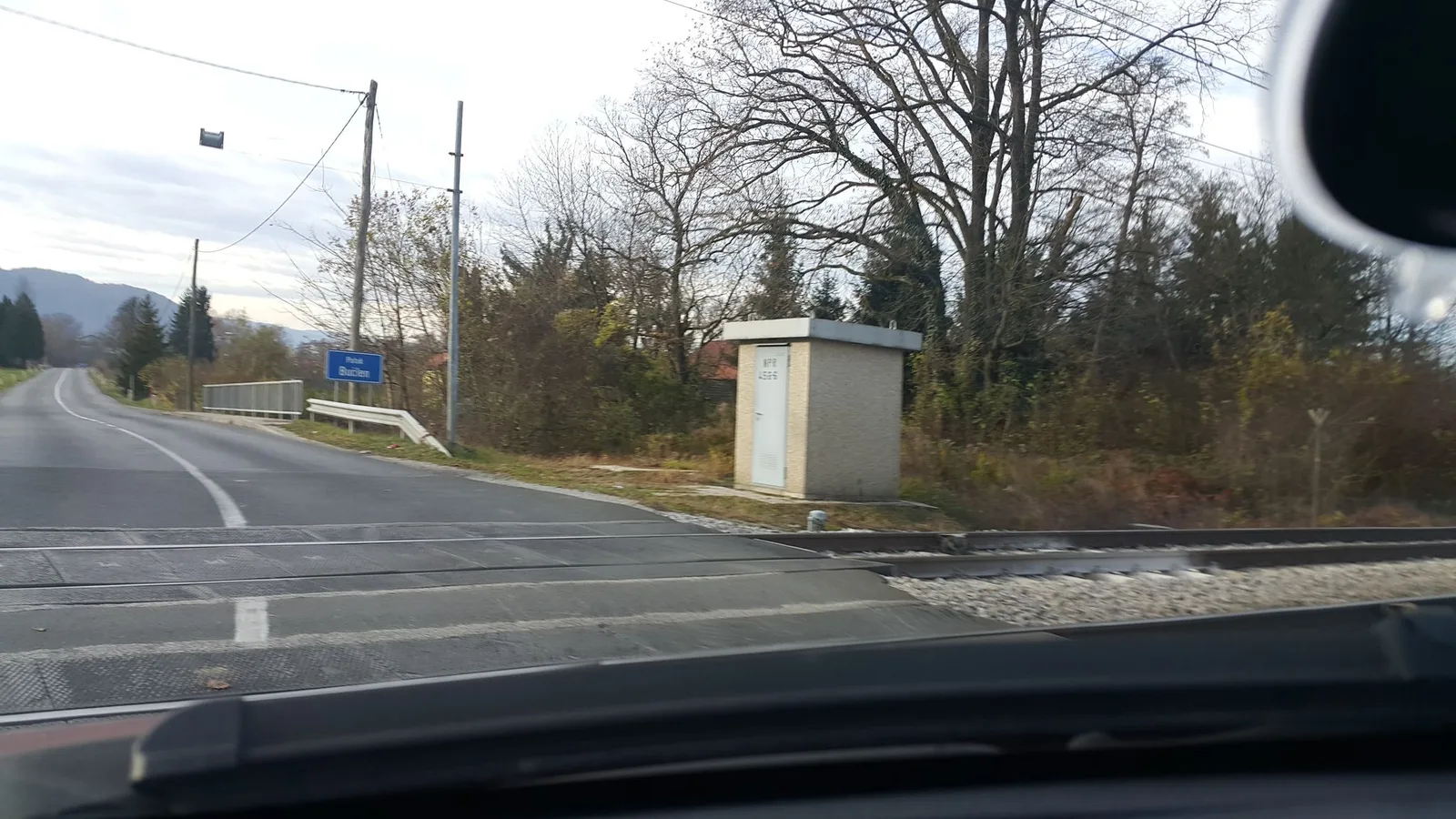
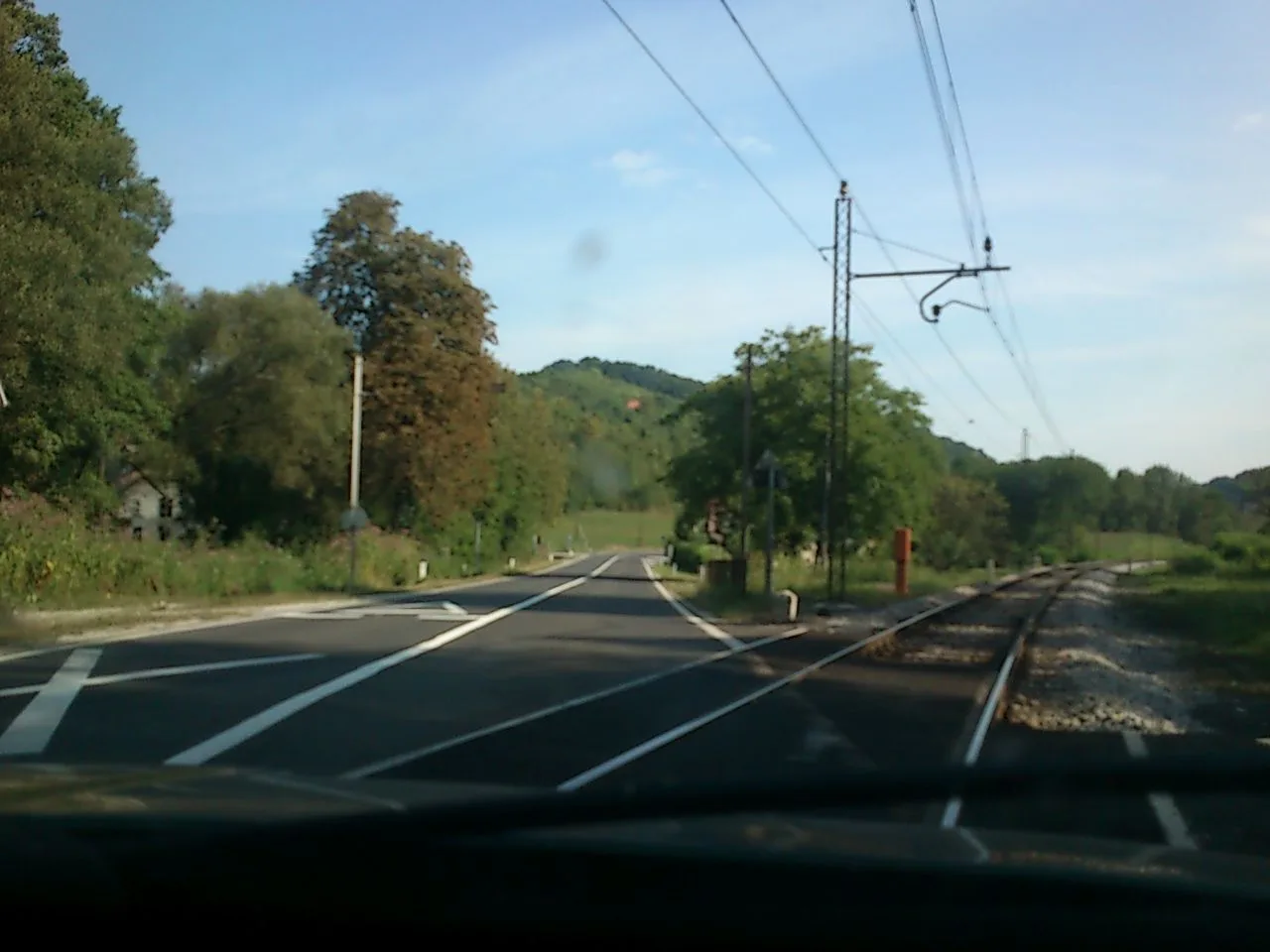
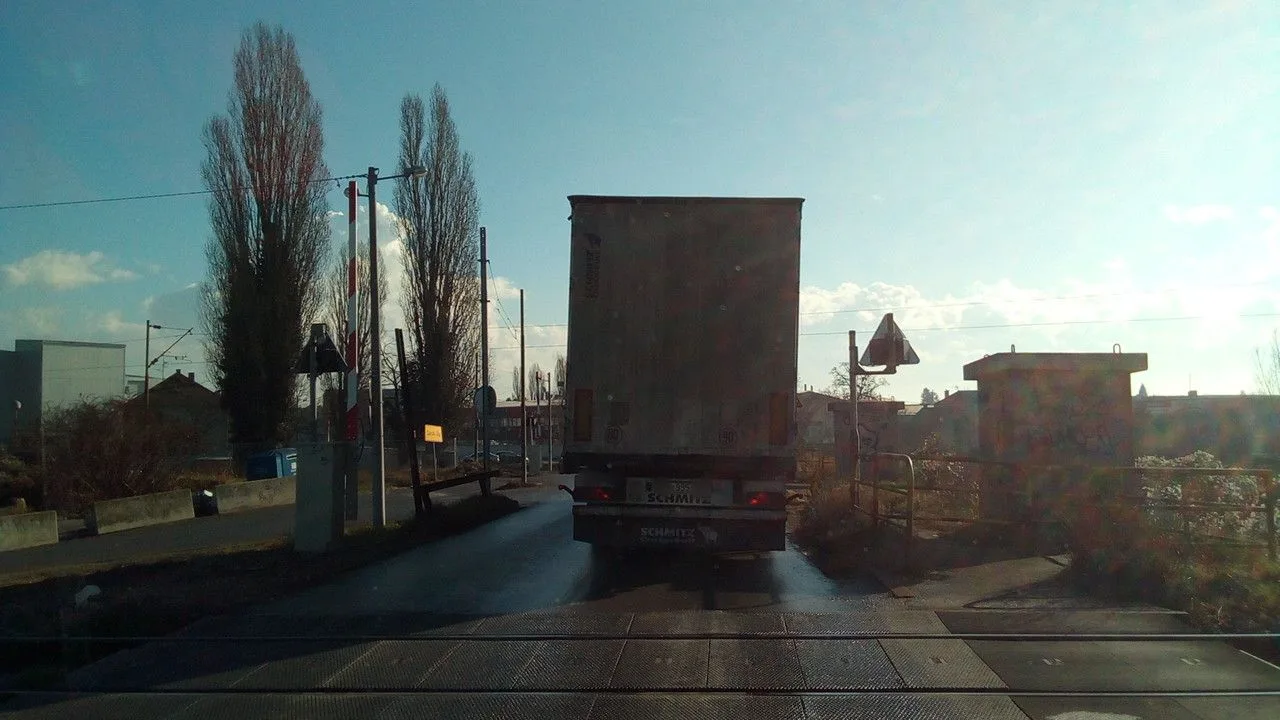
The street-level views below show crossings in rural, small-town and road-access settings on the same network, where local settings differ widely.
3. The infrastructure manager, safety authority and accident investigator
SŽ-Infrastruktura, a company within the Slovenske železnice group, maintains the crossing inventory and carries out the protection, modernisation and closure work as the state infrastructure manager [1, ↗].
The Public Agency for Railway Transport, the Javna agencija za železniški promet RS, is the railway safety authority that Directive (EU) 2016/798 requires of every Member State [6, ↗]. It issues safety certificates and authorisations and supervises railway safety [3, ↗].
The accident investigation service within the Ministry of Infrastructure investigates serious rail accidents and incidents independently of the safety authority and the infrastructure manager [4, ↗].
4. A prescriptive regime
Slovenian railway safety law sets the protection a crossing must carry from the road type, the traffic volume, the train speed and the visibility conditions, and it separates guarded crossings, with barriers, half barriers or light and sound signals, from unguarded crossings that rely on traffic signs and a guaranteed visibility space [2, ↗]. At an unguarded crossing the infrastructure manager keeps the visibility space clear within the track corridor while the road manager keeps it clear outside, and a commission for level crossings appointed by the Ministry of Infrastructure decides case by case on the protection required and on closures, with road operators, SŽ-Infrastruktura, local communities and the interior ministry represented [5, ↗]. This prescriptive approach is one that a comparative per-crossing reading can extend.
The commission ranks the crossings it reviews, weighing the road and rail traffic, the train speed and the sight distances to decide which passive crossings to protect or close first [5, ↗]. With about half the 672 crossings still passive, that prioritisation runs well ahead of what the modernisation budget reaches in any given year [9, ↗].
5. Modernising and closing crossings
SŽ-Infrastruktura modernises the signalling and the crossing protection across the network, and the network statement lists the installation of protection systems on open level crossings and the closure of certain open crossings among the major projects underway or in the pipeline [2, ↗]. The work sits inside broader line upgrades on the Rail Freight Corridor routes, where second tracks, axle-load increases and line speeds up to 160 kilometres per hour bring improved safety at level crossings alongside the signalling renewal [7, ↗].
6. Comparing the surroundings of crossings
A crossing is both a point of risk and a point of access.
- For the crossings that stay, the risk they carry depends on the nearby population, the emergency access, and the local routes that rely on them.
- For the crossings moving toward upgrade or removal, the same surroundings set the access question, where road users and pedestrians go once the crossing closes or gains protection, and rural sites are often constrained.
Some crossings have simple alternatives. Others touch emergency access, pedestrian and farm circulation, nearby population or the local road network that the route through the crossing connects. On a network with a large share of open crossings, comparing the surroundings of each crossing on the same reference helps rank where to protect, modernise or close first, as much as field review, detailed engineering and budget commitment on those moving toward a project.
That is the territorial layer SAMRoute structures around crossings, with a common geography, repeatable indicators, a regular refresh and traceable sources, so one crossing can be compared with another [8, ↗].
7. References
Infrastructure manager and inventory
[1] SŽ-Infrastruktura. Level crossings (SŽ-Infrastruktura). The infrastructure manager role and the crossing inventory. Read
[2] SŽ-Infrastruktura. Network Statement 2024 (SŽ-Infrastruktura). The crossing protection taxonomy, the guarded and unguarded distinction, and the open-crossing protection and closure projects. Read
[7] SŽ-Infrastruktura. Network Programme 2025 (SŽ-Infrastruktura). The corridor line upgrades, the speed and axle-load targets, and the safety improvements at level crossings. Read
Safety authority and investigation
[3] Javna agencija za železniški promet RS. About us (Public Agency for Railway Transport). The railway safety authority that issues certificates and authorisations. Read
[4] Ministry of Infrastructure. Investigation of railway accidents and incidents (Republic of Slovenia). The independent rail accident investigation service. Read
[5] Uradni list RS. Pravilnik o nivojskih prehodih (Official Gazette of the Republic of Slovenia). The level crossing regulation, the protection rules, the visibility space and the commission for level crossings. Read
Accident history
[9] Siol.net. Smrtno nevarno prečkanje tirov za marsikoga dnevna rutina (29 September 2025). The 672 crossings and the 335 with barriers, and the railway safety agency's count of fatal level crossing accidents by year. Read
[10] RTV SLO. V Ljubljani trčenje vlaka in osebnega avtomobila (10 June 2026). The collision at the unbarriered crossing near Vodmat station in Ljubljana. Read
European framework
[6] European Parliament and Council. Directive (EU) 2016/798 of 11 May 2016 on railway safety (OJ L 138, 26.5.2016). Requires each Member State to set up a national safety authority and an independent investigating body. Read
[8] SAMRoute. Rail cadence, level crossings and emergency access (position page). Open