Level crossings in Portugal. Comparing sites before removal and modernisation decisions
Portugal keeps removing, automating and reclassifying its level crossings, with Infraestruturas de Portugal managing the network and the inventory, the Instituto da Mobilidade e dos Transportes acting as the national safety authority, an independent unit investigating accidents, and a 2024-2030 plan funding the work.
- For the crossings that remain in service, the nearby population, emergency access, agricultural and pedestrian access, local circulation and development pressure form the territorial context.
- For the crossings that move toward removal, grade separation or automation, the crossing is closed, grade-separated or automated. Road users, pedestrians and agricultural traffic then rely on different routes.
The following sections present the level crossing system, the public actors, the way crossings are classified and prioritised, as well as the removal, automation and awareness strategy. The last section covers the territorial context that SAMRoute models.
1. The Portuguese level crossing system
Since the 2015 merger of REFER and Estradas de Portugal, Infraestruturas de Portugal (IP) has managed the national rail network and owns the level crossing inventory [2, ↗]. The network carries about 2,562 kilometres of operational railway, and 785 level crossings (passagens de nível, PN) remained on it at the end of 2024 [4, ↗]. That figure has fallen steeply, from 2,469 crossings in 1999 to 810 at the end of 2023 and 785 a year later, so more than 1,600 crossings have left the network over twenty-five years [5, ↗].
Portuguese crossings carry one of two protection classes. Around 471 are Type A, with active protection such as automatic barriers or half-barriers, luminous and acoustic signals, or staffing. About 314 are Type B, with passive protection only, where road signs and sight lines govern the crossing [6, ↗]. IP publishes the crossing overview and the removal plan through its public pages [1, ↗] [2, ↗].
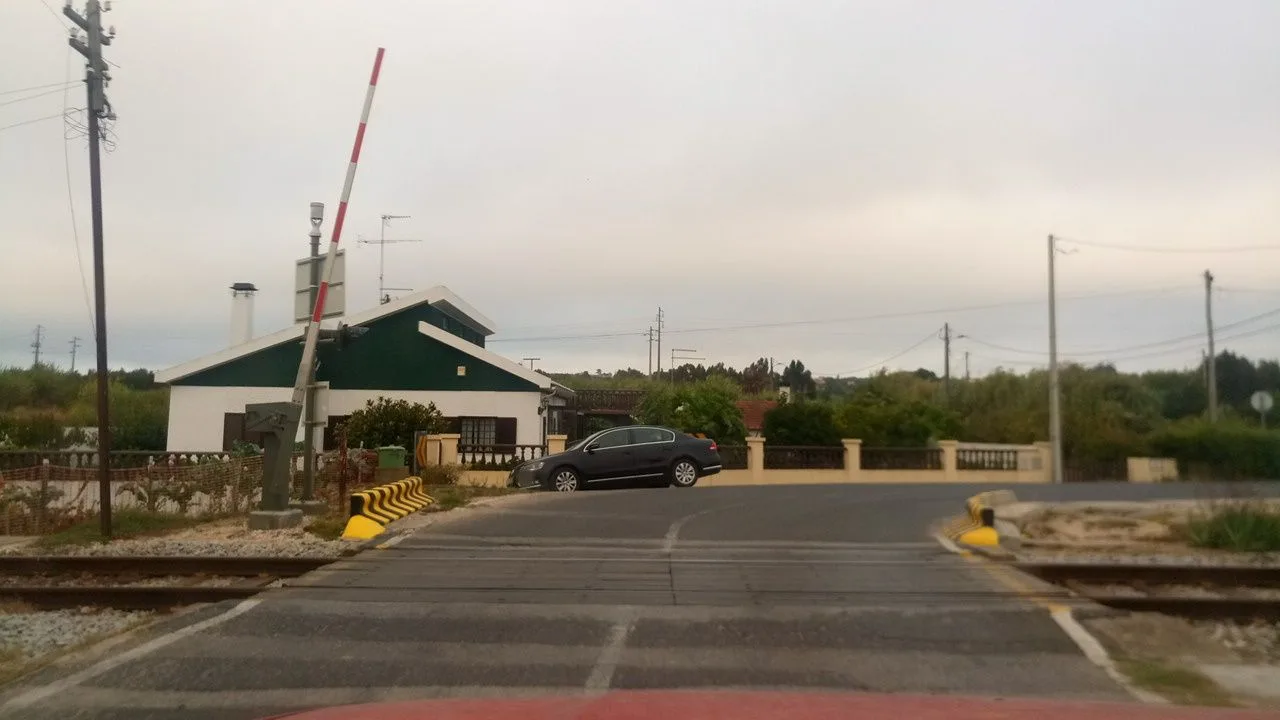
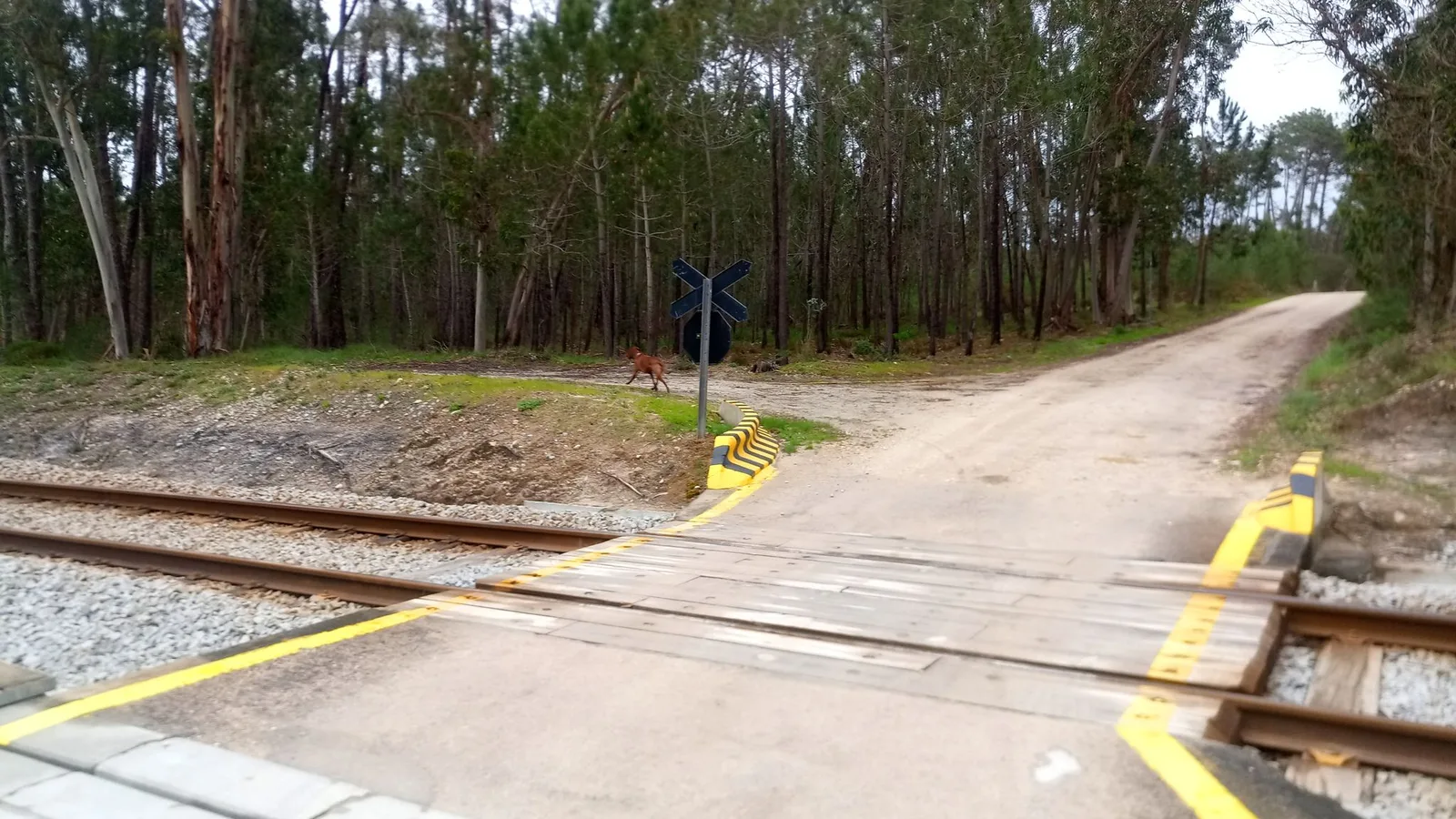
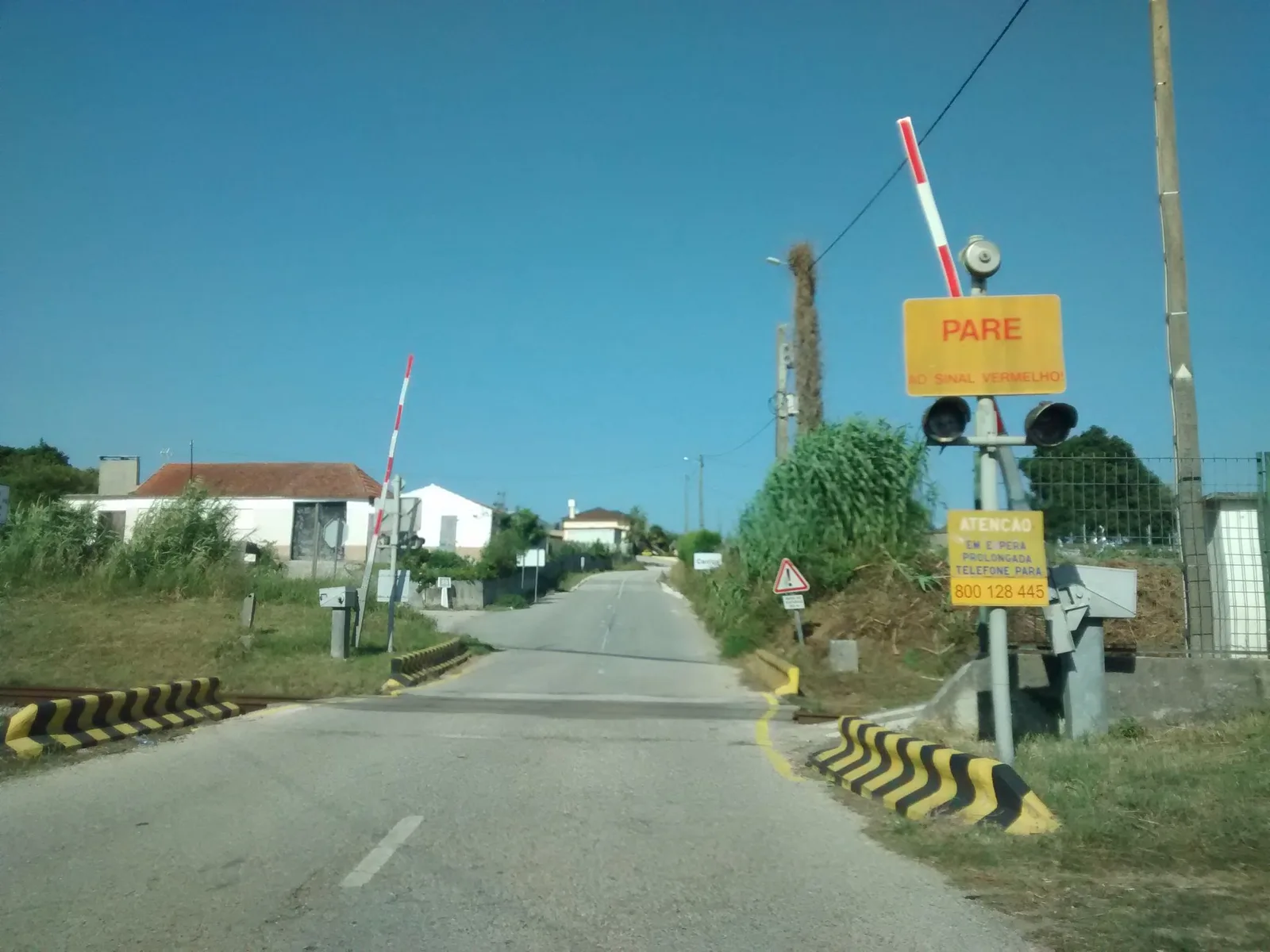
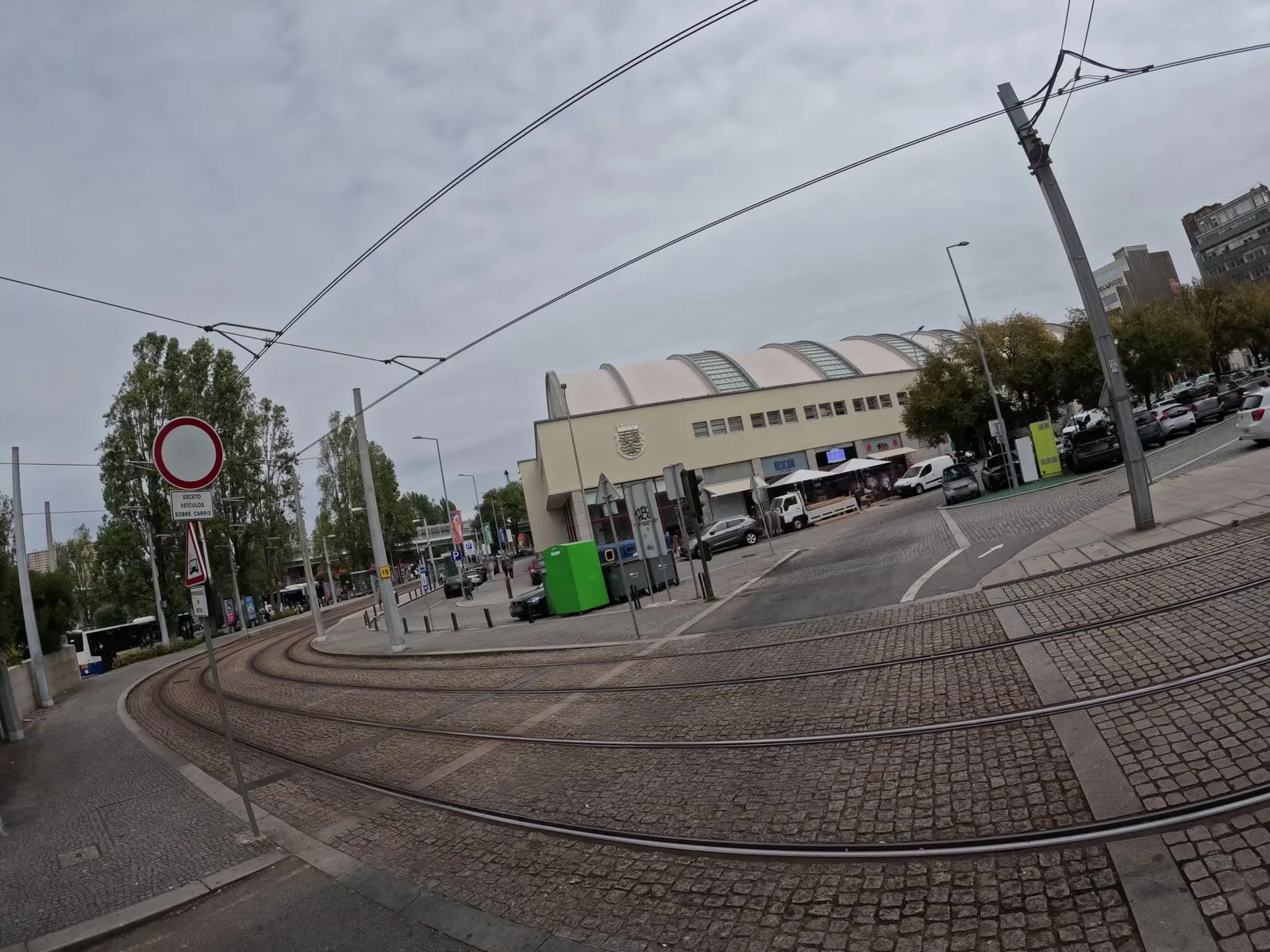
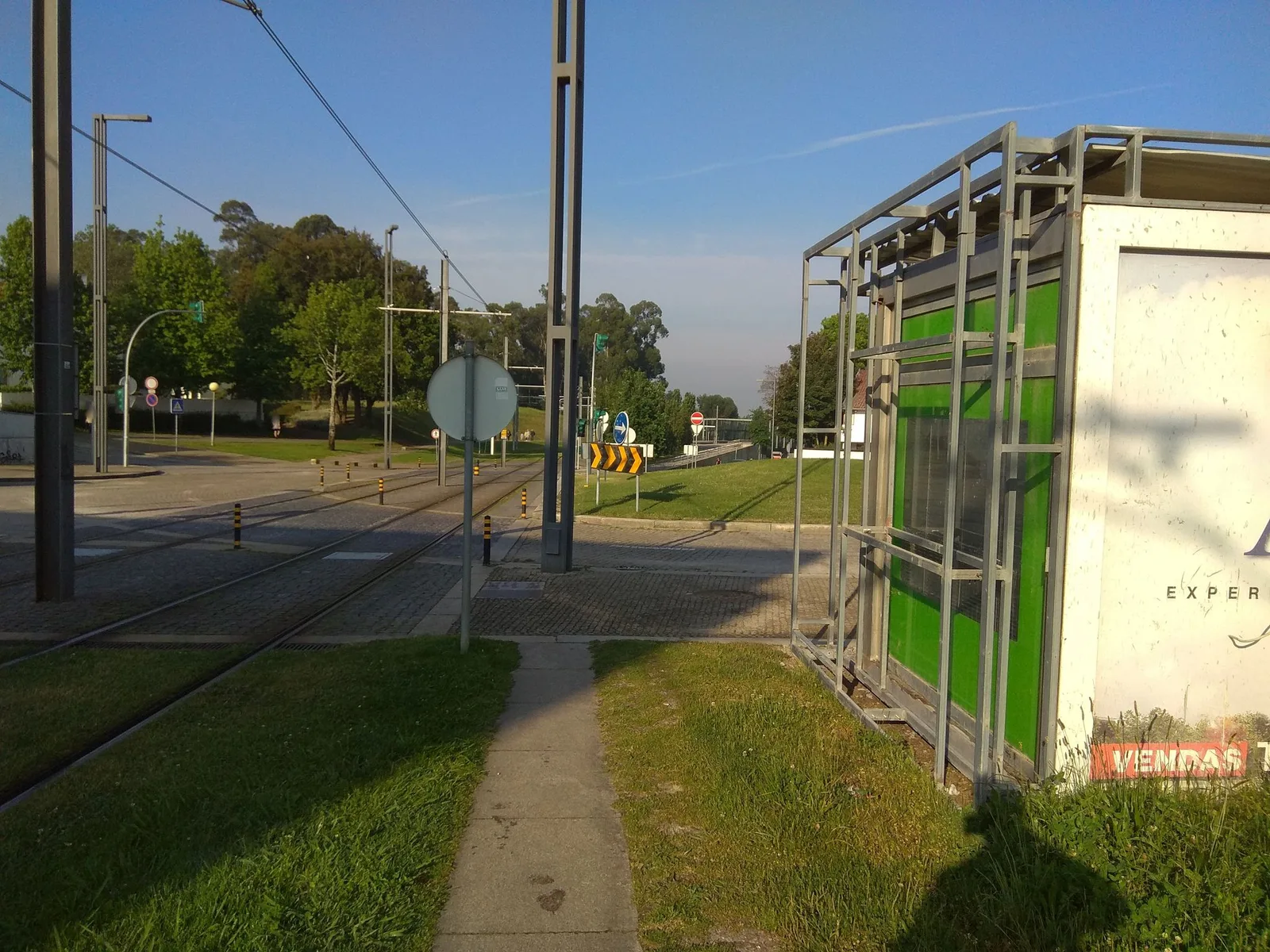
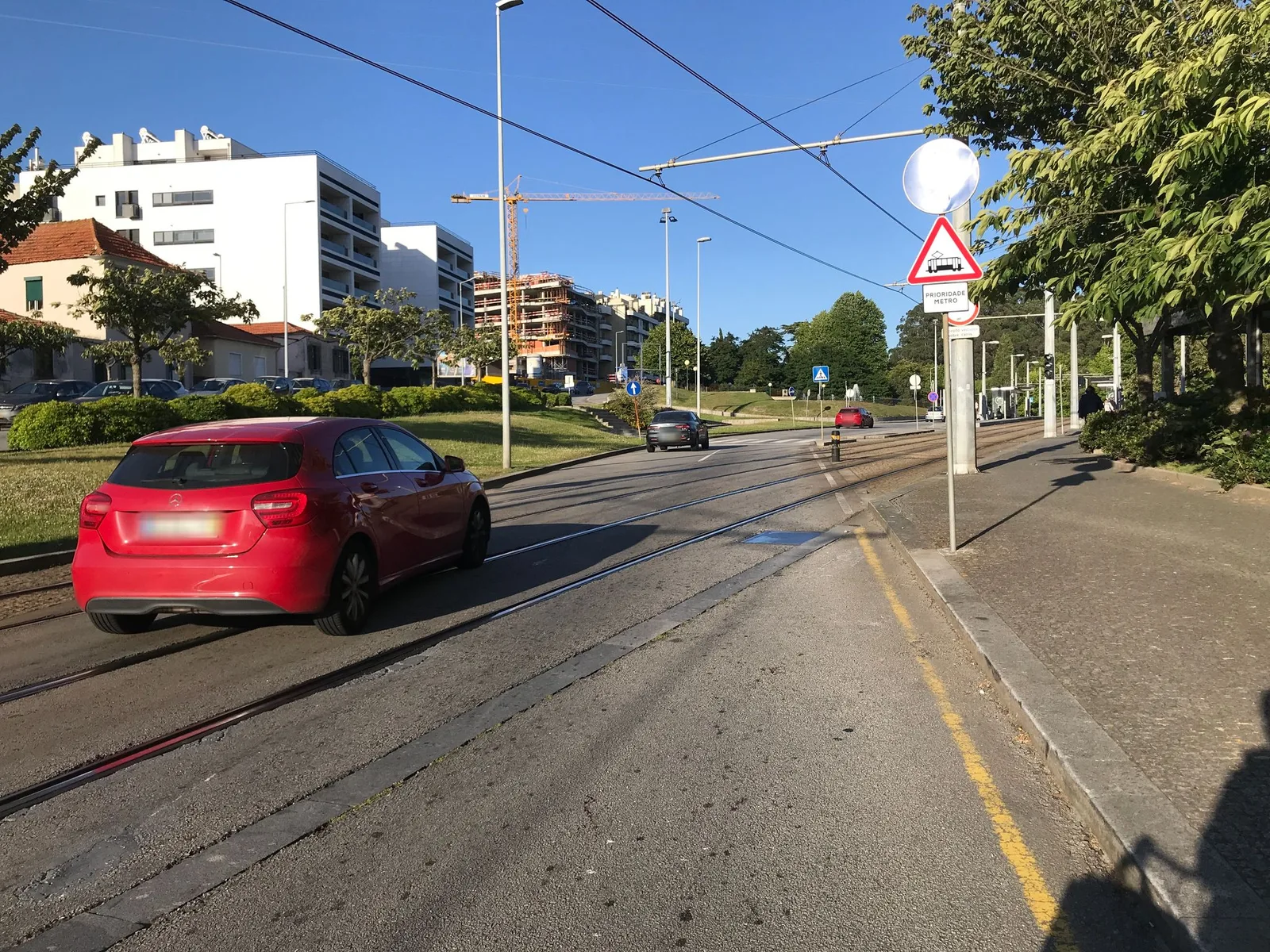
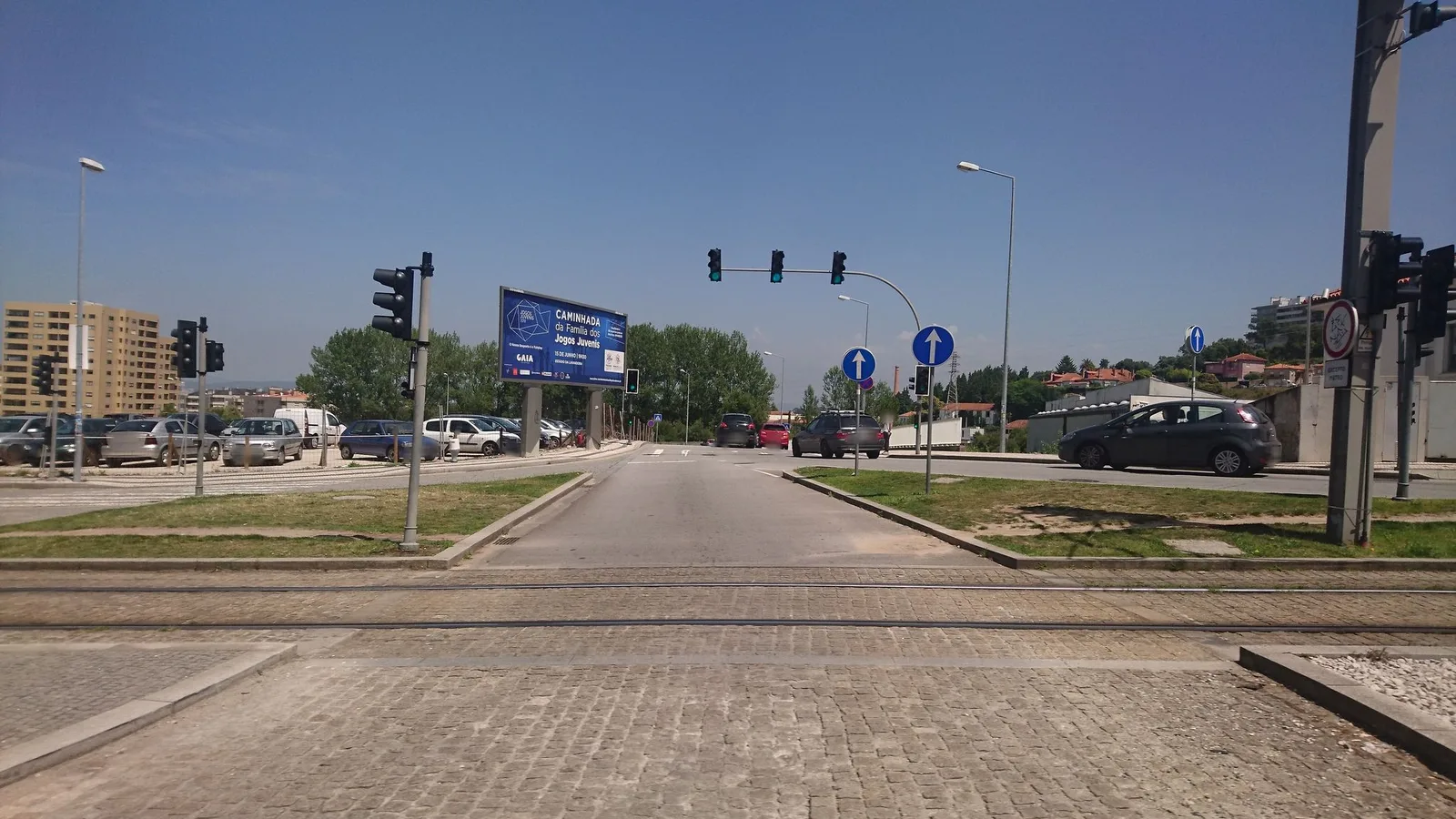
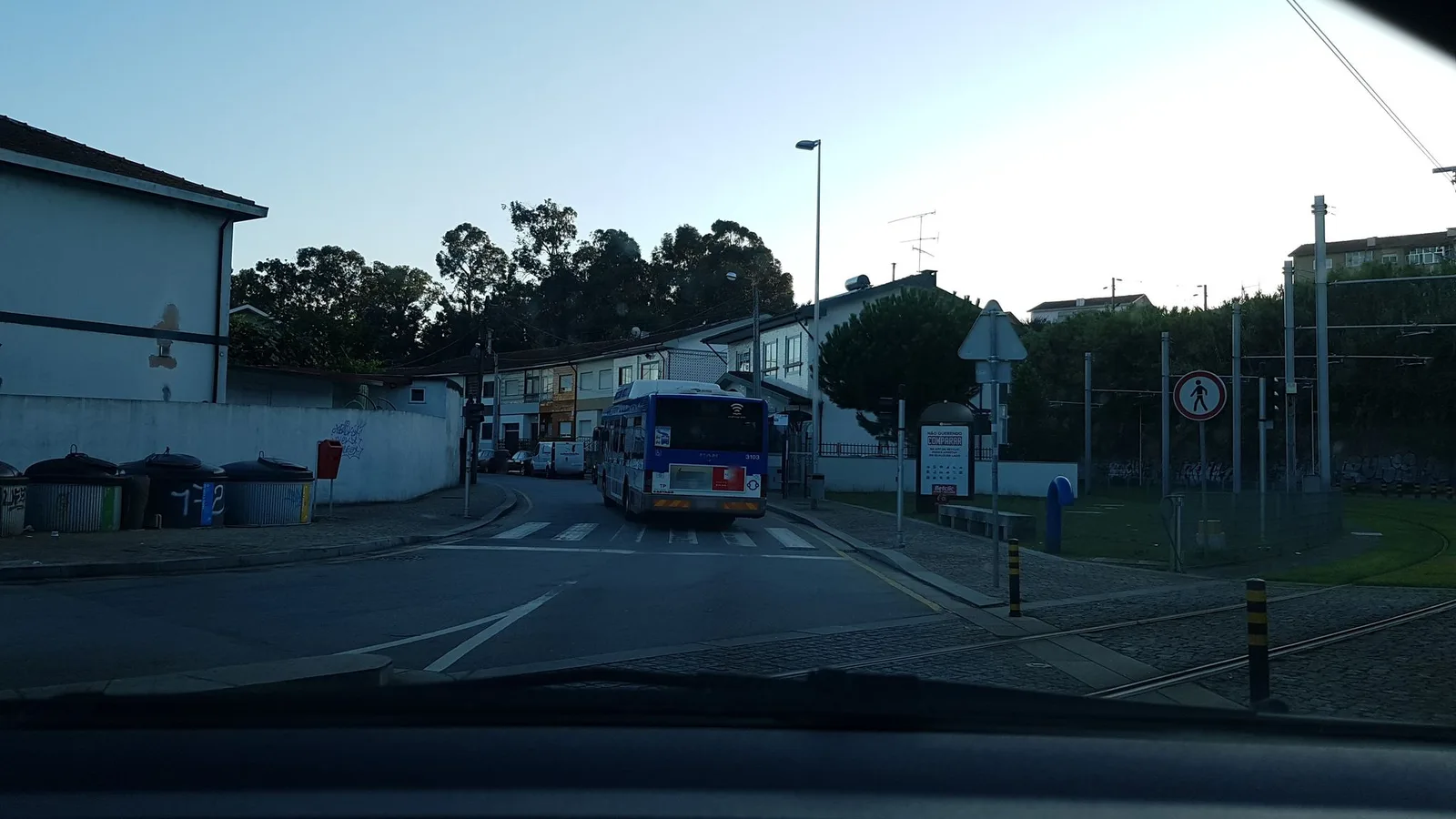
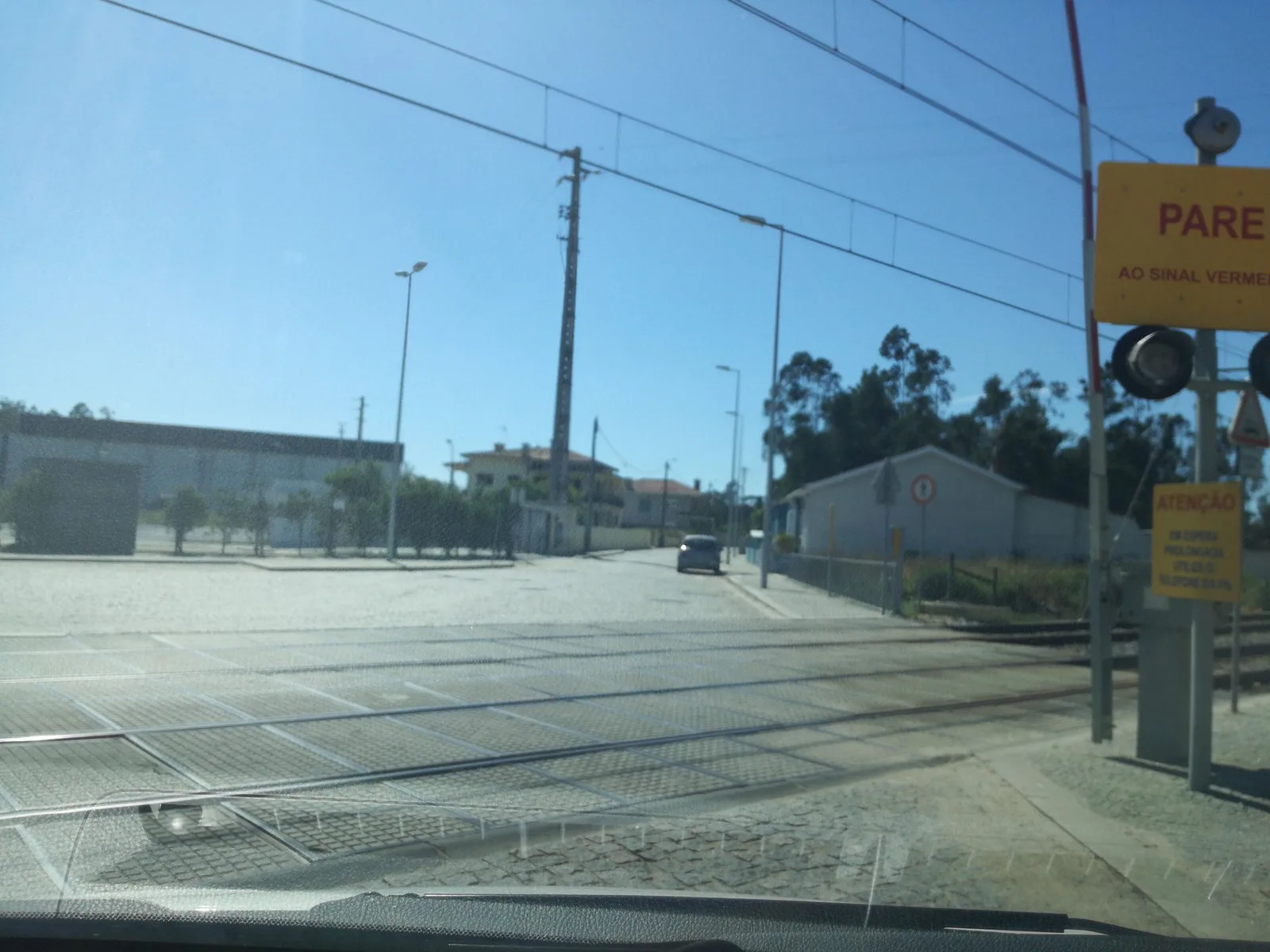
The nine street-level views below show crossings in urban, suburban, rural and industrial contexts on the same network, where local settings vary widely.
2. IP, the IMT and the investigation unit
Infraestruturas de Portugal, the national infrastructure manager, owns the crossing inventory, runs the removal and reclassification programme, and reports on the rail network it operates [1, ↗].
The Instituto da Mobilidade e dos Transportes (IMT) is the national safety authority. It supervises the safety and interoperability of the Portuguese railway system and publishes the annual railway safety report (Relatório Anual de Segurança Ferroviária), within the European framework where the European Union Agency for Railways (ERA) tracks common safety indicators across member states [8, ↗] [12, ↗] [13, ↗] [11, ↗].
The Autoridade da Mobilidade e dos Transportes (AMT) is the economic regulator. It monitors the conservation of the rail infrastructure and the conditions of access to it, a separate role from the safety supervision carried by the IMT [9, ↗].
The Gabinete de Prevenção e Investigação de Acidentes com Aeronaves e de Acidentes Ferroviários (GPIAAF) investigates accidents independently. It examines the causes of accidents to feed safety learning back, separately from the safety authority and the operators [10, ↗]. Comboios de Portugal (CP) runs passenger services and other undertakings run freight on the network.
3. Classifying and prioritising the crossings
Portugal prioritises its crossings through classification and expert judgement. IP sorts crossings by protection type and weighs accident history, train and road traffic, road type and the protection already in place, while the European Common Safety Method (Regulation (EU) 402/2013) frames how changes are assessed [6, ↗]. The 2024-2030 plan organises the work along four lines, removal, automation, awareness and inspection [1, ↗].
Beyond those criteria, the road environment, land use and the route the crossing carries between the places on either side belong to a separate reading.
4. Removal, automation and awareness
The 2024-2030 plan (Plano para a Redução da Sinistralidade em Passagens de Nível) directs about 316 million euros toward level crossing safety, with 135 crossings to be removed and 237 reclassified, and a target below ten accidents a year by 2030 [1, ↗]. The plan sets out to eliminate every road-rail crossing on the Linha do Norte, the Beira Alta, the Alentejo and the Évora lines by 2030, with about 50 million euros directed to the Santarém and Cartaxo stretch from October 2025, and the first works opening in Abrantes in January 2026 [1, ↗]. Alongside removal, IP automates protection at remaining crossings and runs awareness campaigns, including the International Level Crossing Awareness Day [7, ↗].
In 2023, Portugal recorded 22 level crossing accidents and 8 fatalities, and in 2024, 22 accidents and 4 fatalities, with more than half of the 2024 accidents at crossings that already carried active protection [2, ↗]. At those protected crossings, the national signalling guidance targets road-user non-compliance with deterrent measures alongside the equipment [6, ↗].
In January 2026, the Council of Ministers approved a decree-law to replace Decreto-Lei 568/99 with a new level crossing regulation (Regulamento de Passagens de Nível), setting firmer criteria, norms for video surveillance and a clearer split of responsibilities between the railway and road managers [3, ↗].
Removal closes the at-grade interface and moves road users, pedestrians and local traffic onto another route, which brings the road authority and sometimes the landowner into the project alongside IP. A crossing decision is therefore as much an access decision as a safety one.
5. What sits around the crossing
Infraestruturas de Portugal classifies and prioritises the crossings, and the strategy moves selected sites toward protection, automation or removal.
A crossing is both a point of risk and a point of access. For the crossings that stay, the surroundings set the stakes of an incident, who lives nearby, how emergency vehicles reach the site, and which local routes depend on it. For the crossings moving toward removal or grade separation, the same surroundings set the access question, where road users, pedestrians and agricultural traffic go once the crossing closes.
Some crossings have simple alternatives. Others touch emergency response, agricultural or pedestrian access, local circulation, nearby population or development pressure around the road network.
Comparing those surroundings on the same reference can support safety prioritisation on the crossings that stay, as much as field review, detailed engineering and budget commitment on those moving toward a project.
That is the territorial layer SAMRoute structures around crossings, with a common geography, repeatable indicators, a regular refresh and traceable sources, so one crossing can be compared with another.
6. References
National programme and regulation
[1] Infraestruturas de Portugal. Plano para a Redução da Sinistralidade em Passagens de Nível 2024-2030 (IP, 2024). Programme budget, removals, reclassifications and 2030 targets. Read
[2] Infraestruturas de Portugal. Passagens de nível (level crossings overview, IP). Inventory, classification and recent accident figures. Read
[3] Government of Portugal. Comunicado do Conselho de Ministros de 22 de janeiro de 2026 (new level crossing regulation replacing Decreto-Lei 568/99). Read
Infrastructure manager reporting and awareness
[4] Instituto da Mobilidade e dos Transportes. Relatório Anual de Segurança Ferroviária 2022 (IMT railway safety report, 2023). Crossing counts, protection split and accident data. Read
[5] Instituto da Mobilidade e dos Transportes. Relatório Anual de Segurança Ferroviária 2021 (IMT railway safety report, 2022). Read
[6] Instituto da Mobilidade e dos Transportes. Sinalização de Passagens de Nível (IMT, 2025). Type A and Type B classification and signalling. Read
[7] Infraestruturas de Portugal. Dia Internacional para a Segurança em Passagens de Nível (ILCAD 2024) (IP awareness campaign). Read
Safety authority, economic regulator and independent investigation
[8] Instituto da Mobilidade e dos Transportes. National safety authority for railways (IMT, I.P.). Read
[9] Autoridade da Mobilidade e dos Transportes. Relatório de Monitorização da Conservação da Infraestrutura Ferroviária (AMT, economic regulator). Read
[10] Gabinete de Prevenção e Investigação de Acidentes com Aeronaves e de Acidentes Ferroviários. Rail accident investigation (GPIAAF). Independent investigator that examines the causes of accidents to improve safety. Read
European framework and benchmarking
[11] European Parliament and Council. Directive (EU) 2016/798 of 11 May 2016 on railway safety (OJ L 138, 26.5.2016). Read
[12] European Union Agency for Railways. Railway Safety Overview 2025 (ERA, data to 2023). Read
[13] European Commission, Eurostat. Railway safety statistics in the EU (Eurostat, statistics explained). Read