Level crossings in Lithuania. Comparing crossings before upgrade and removal decisions
Lithuania keeps modernising and grade-separating its level crossings, with AB LTG Infra managing the inventory, the Lietuvos transporto saugos administracija acting as the railway safety authority, and the Transport Accident and Incident Investigation Division investigating accidents.
The following sections present the level crossing system, the public actors, the prescriptive regime and its risk model, and the modernisation programme. The last section covers the territorial context that SAMRoute models.
1. The Lithuanian level crossing system
AB LTG Infra, the state infrastructure manager within the Lietuvos geležinkeliai (LTG) group, manages the national rail network and owns the level crossing inventory [4, ↗]. The network is almost entirely 1,520 millimetre broad gauge inherited from the Soviet period [1, ↗], and carries 543 level crossings [8, ↗]. A separate Rail Baltica line, built to the 1,435 millimetre European gauge, runs alongside it under construction and carries no level crossings, since it is grade-separated by design [2, ↗]. The crossing stock falls year by year as modernisation, grade separation and elimination move it [1, ↗].
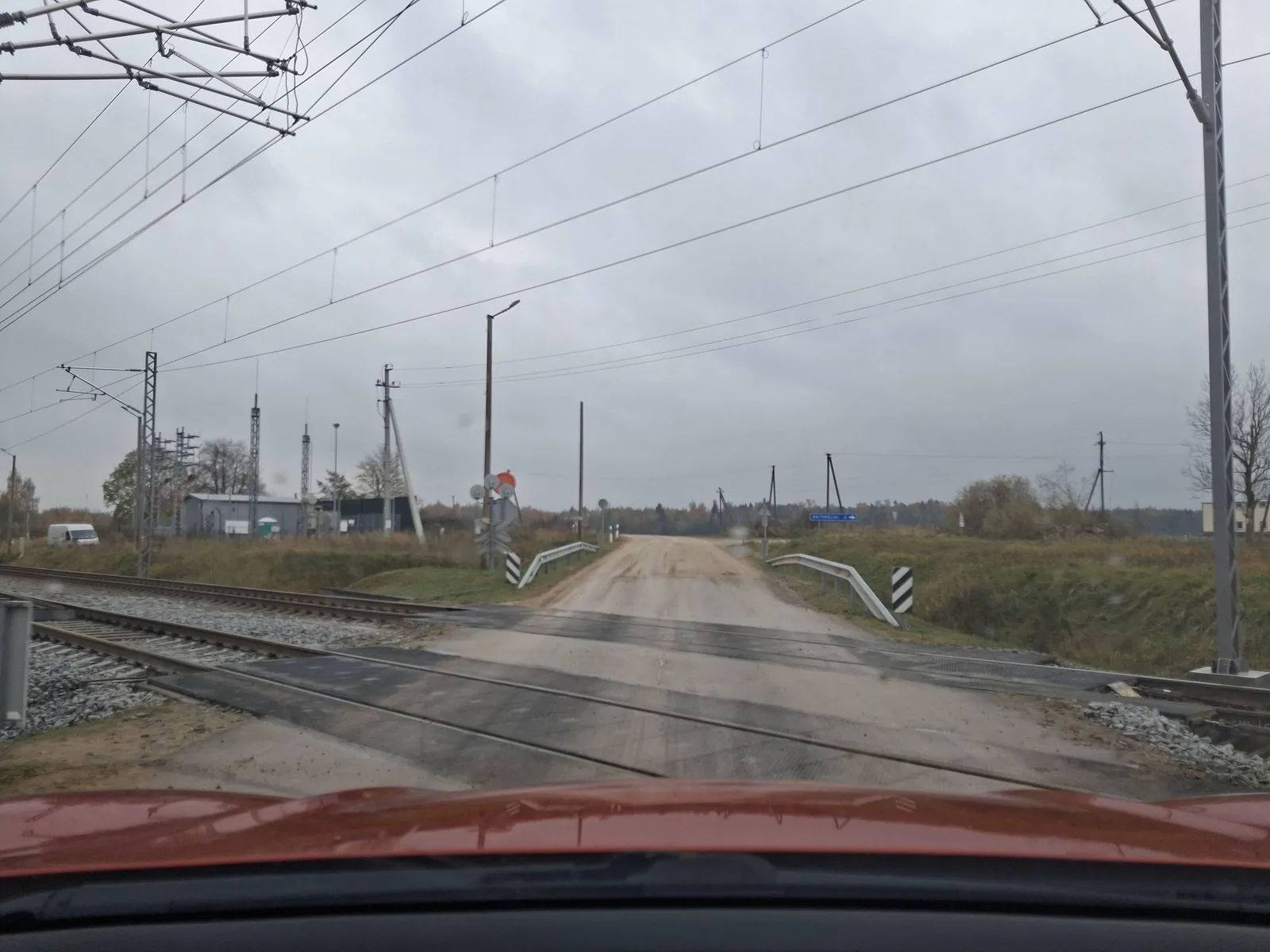
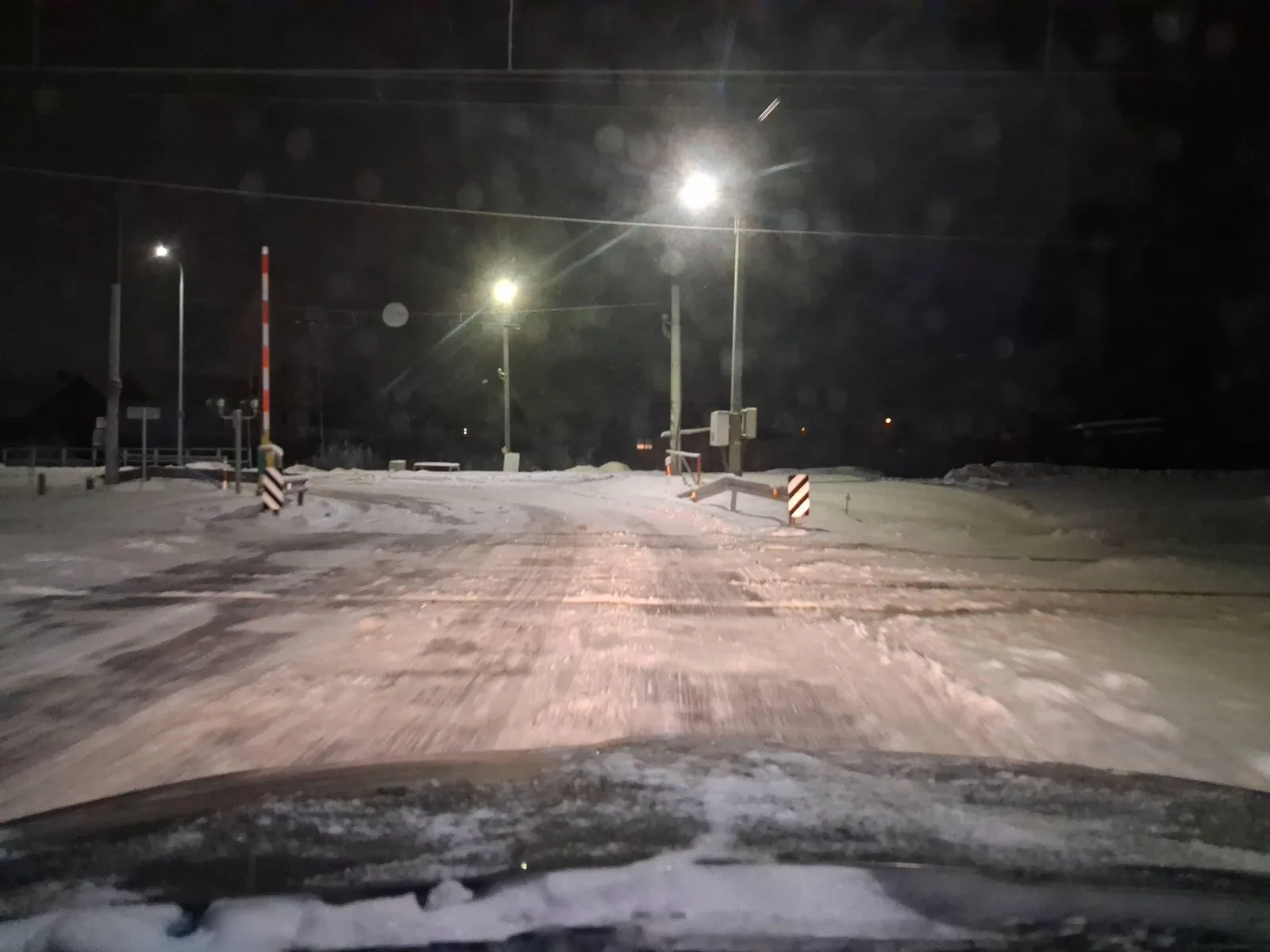
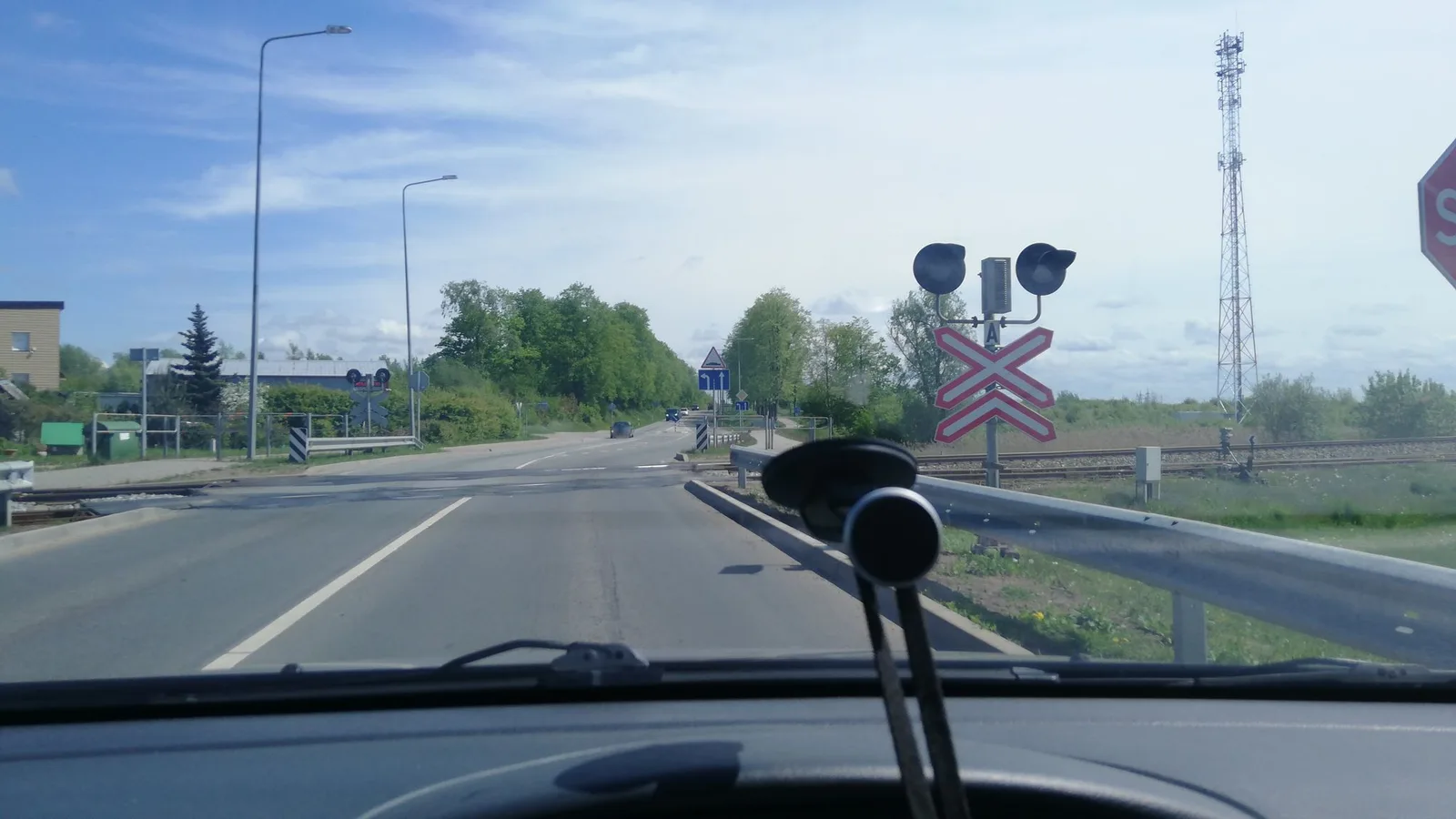
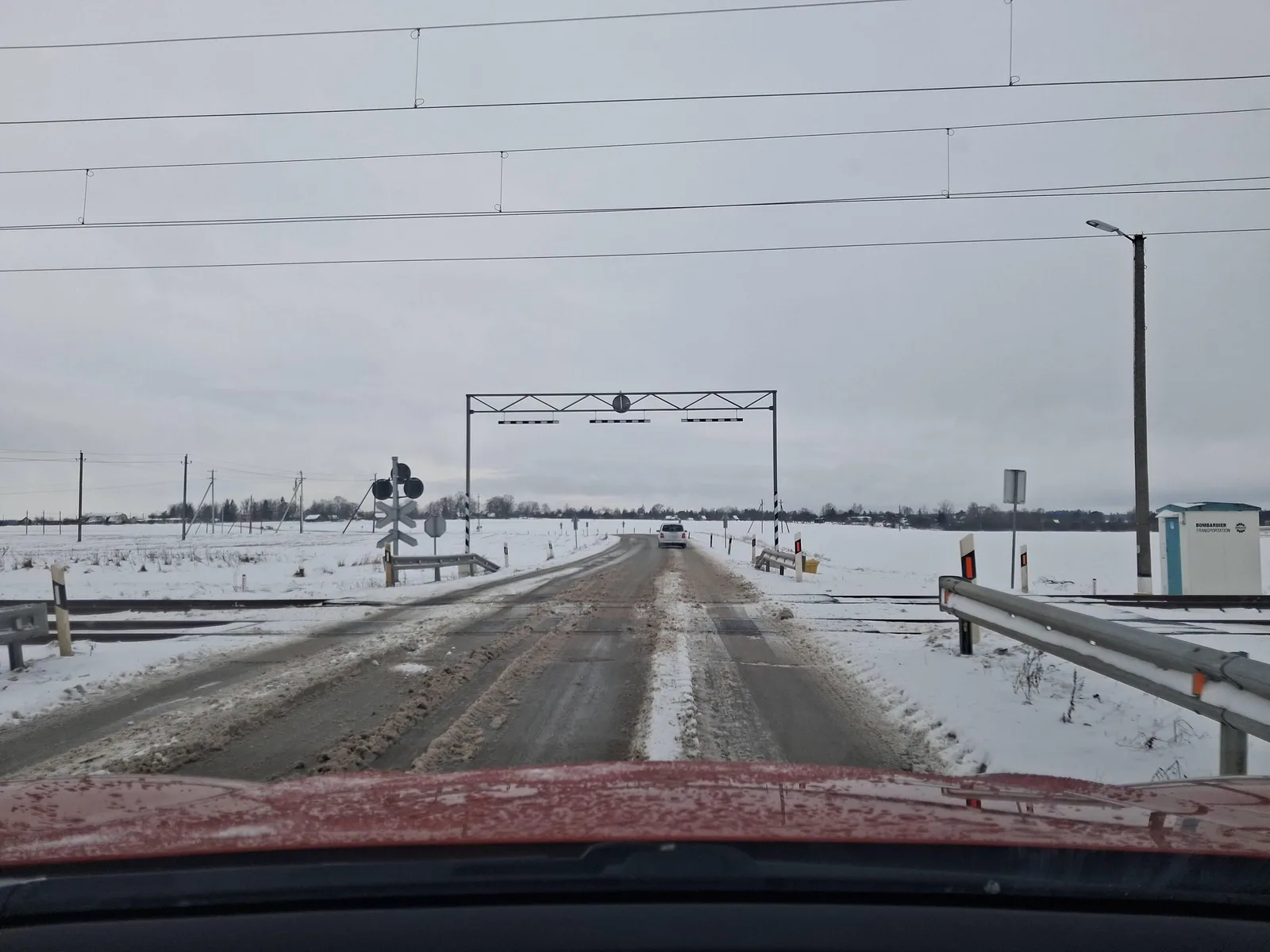
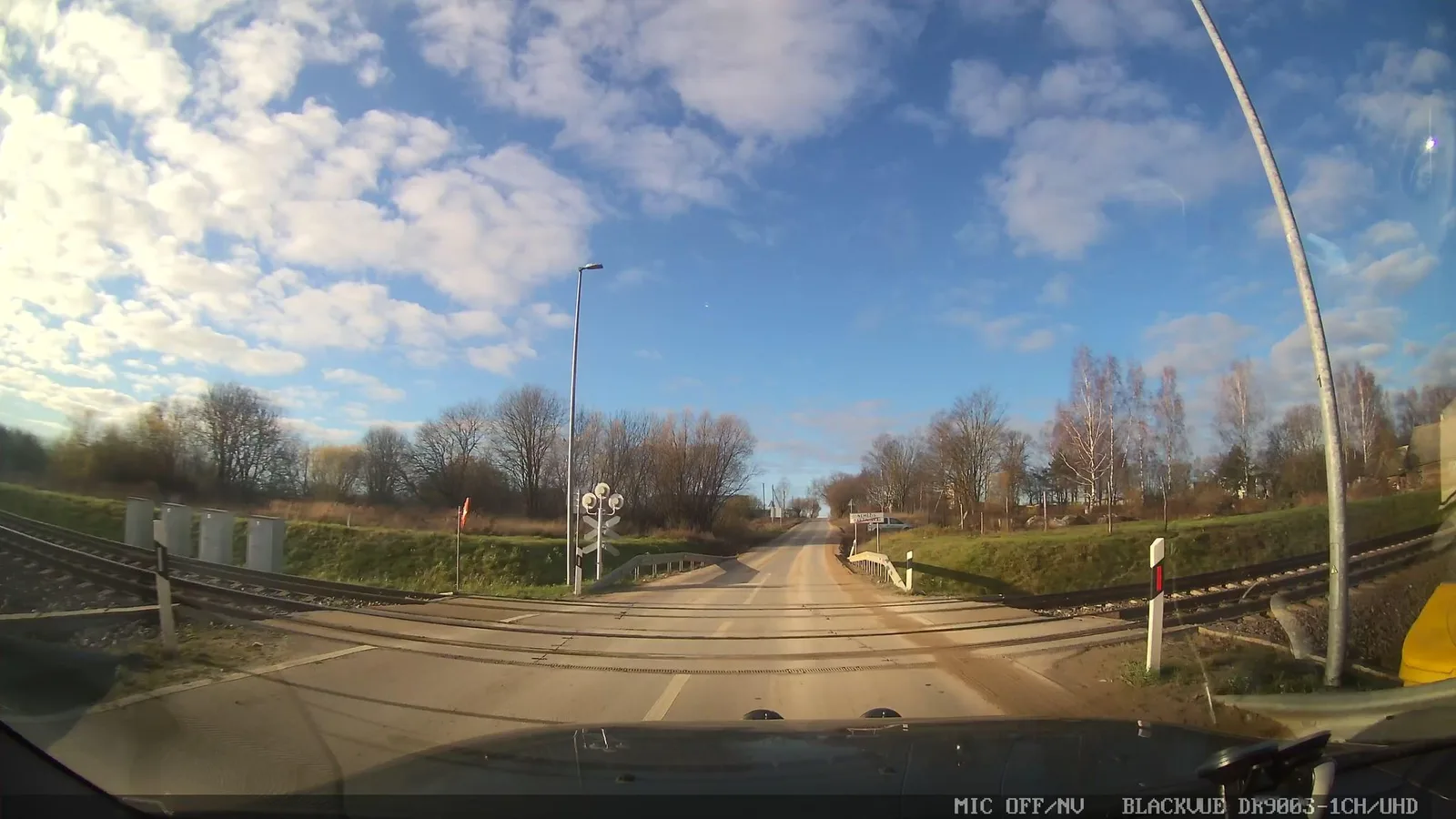
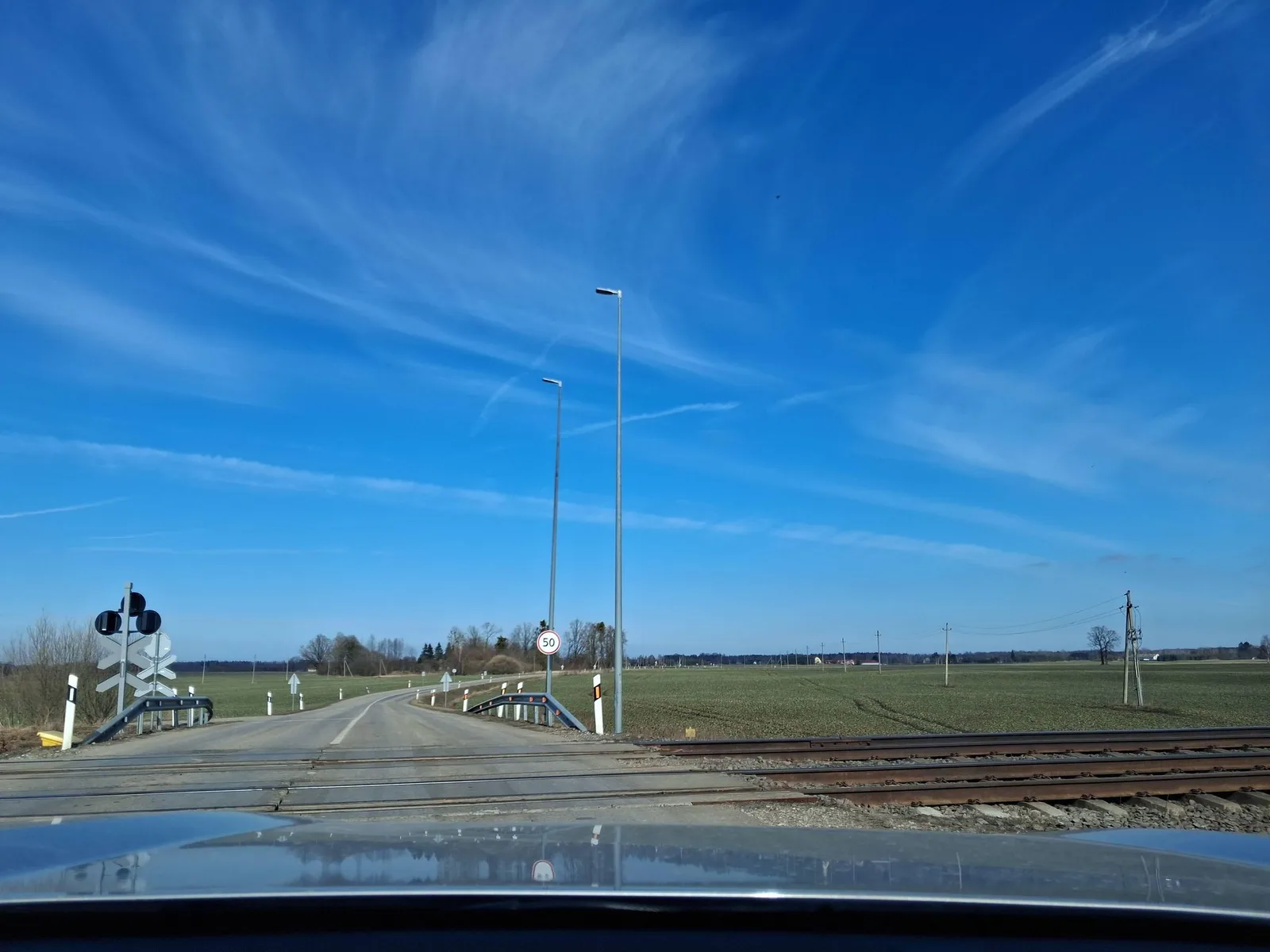
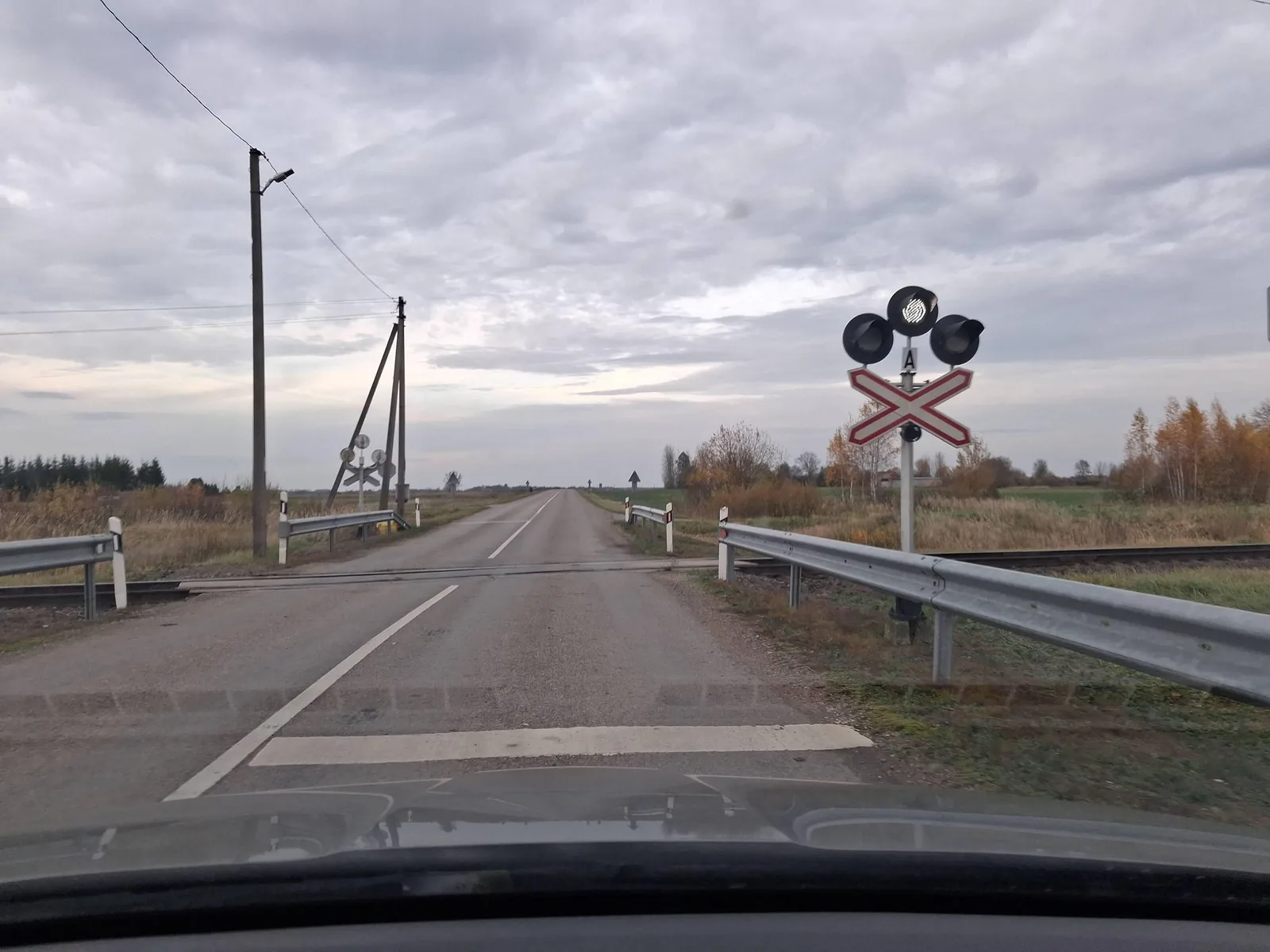
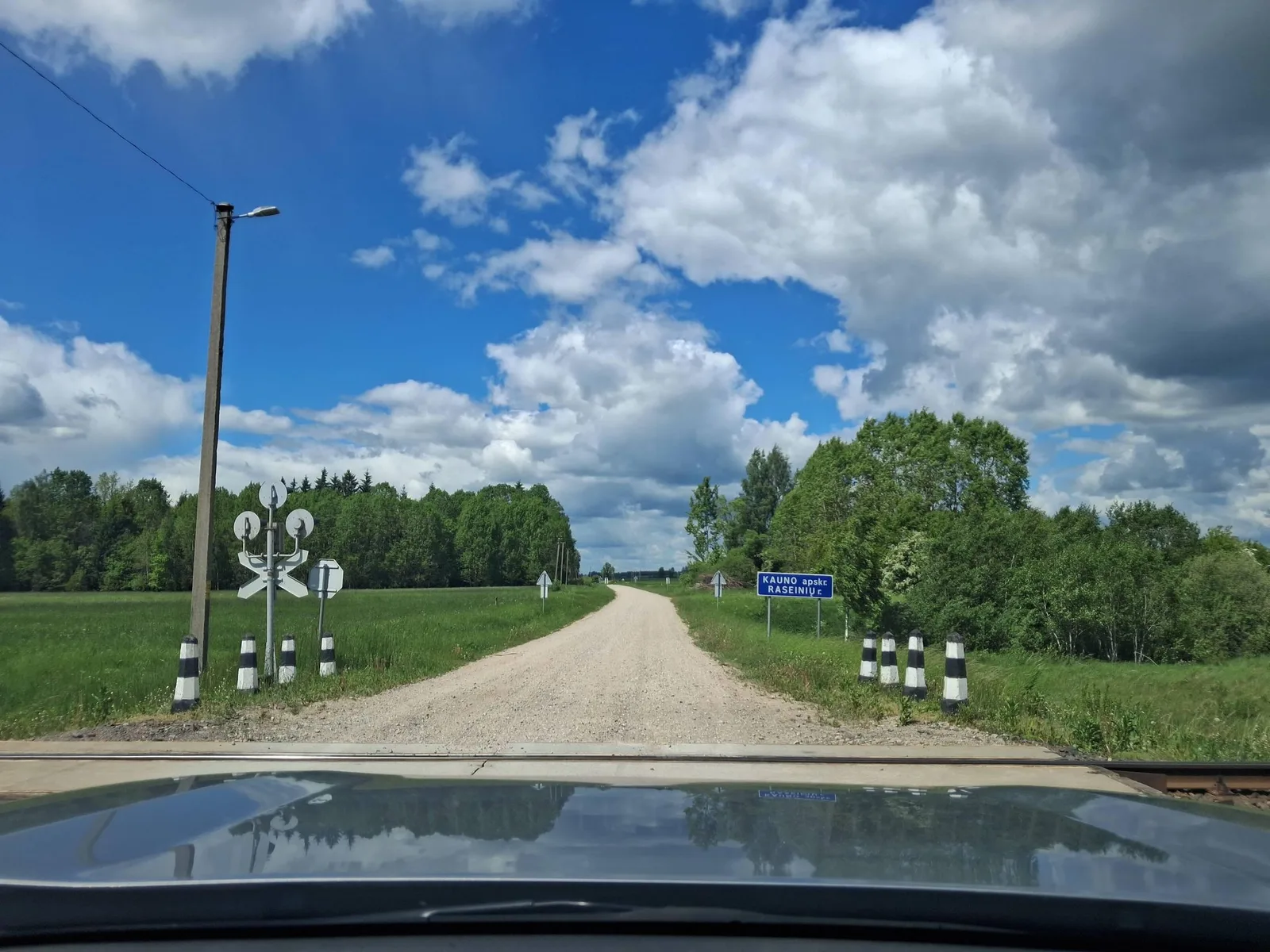
The street-level views below show crossings in rural, small-town and road-access settings on the same broad-gauge network, where local settings differ widely.
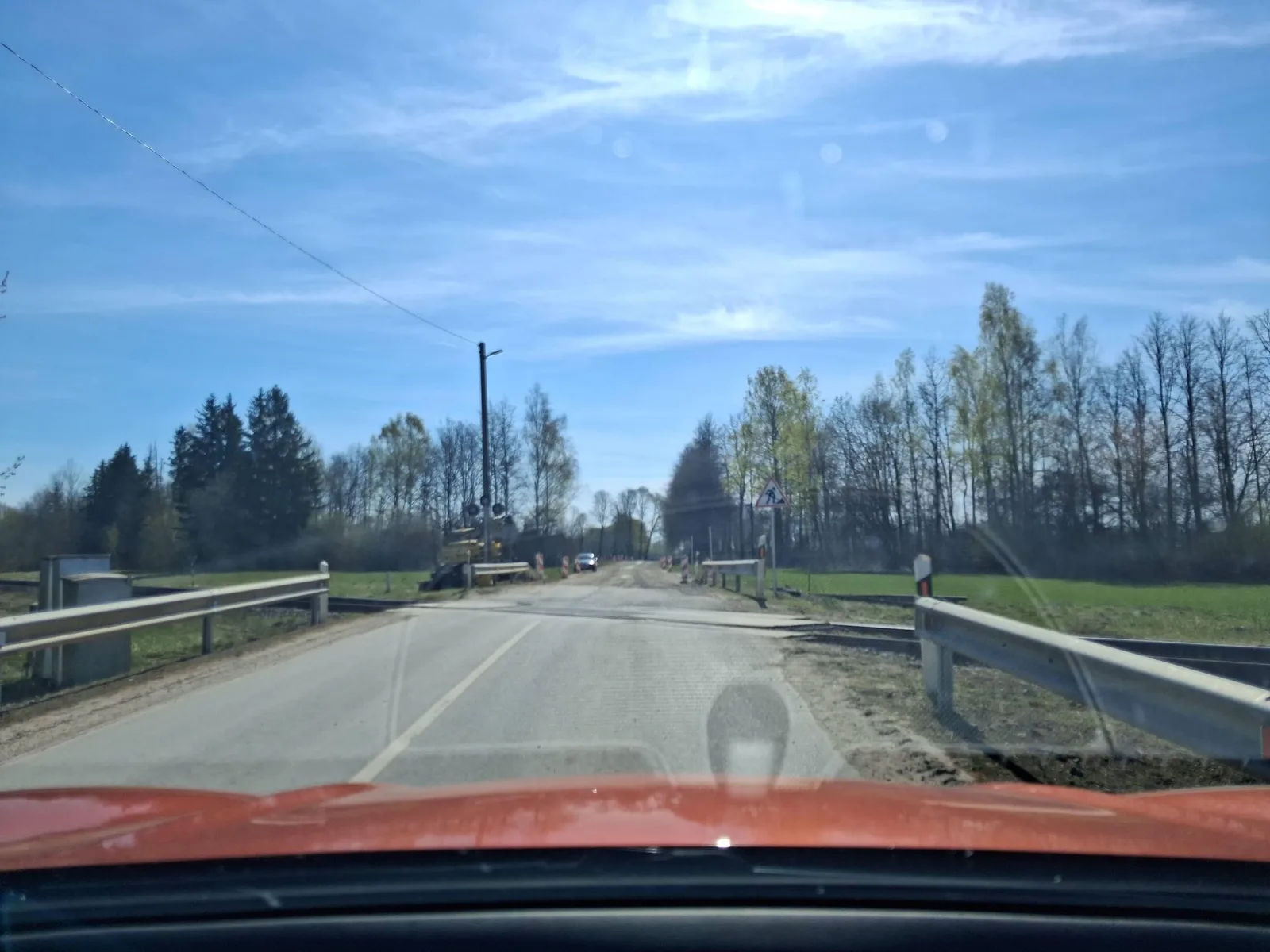
2. The infrastructure manager, safety authority and accident investigator
AB LTG Infra maintains the crossing inventory and carries out the modernisation and grade-separation works as the state infrastructure manager within the LTG group [4, ↗].
The Lietuvos transporto saugos administracija (LTSA), the Lithuanian Transport Safety Administration, is the railway safety authority that Directive (EU) 2016/798 requires of every Member State [9, ↗]. It supervises railway safety and reports the Common Safety Indicators, and since December 2017 it has carried this role as a multimodal authority covering rail, road, aviation and water transport [5, ↗].
The Transport Accident and Incident Investigation Division, within the Ministry of Justice, investigates serious rail accidents independently and publishes its findings [6, ↗].
3. A prescriptive regime and a published risk model
Lithuania sets the protection a crossing must carry from the Rules for the Installation and Use of Level Crossings, and LTSA supervises that compliance and reports the safety indicators [5, ↗]. Those rules drive the protection at the operational level, a prescriptive approach.
Lithuanian researchers have, however, published a quantitative crossing risk model that few networks can show. A binary logistic regression developed at Vilnius Gediminas Technical University ranked 337 crossings by accident probability at about 86 percent validity, identified 22 with a critical risk value, and read each crossing from its train speed, its road and rail traffic, its width and the driver's sightlines, together with the area population density around it [7, ↗]. The model stays a research instrument rather than an operationally deployed tool, yet its population-density variable reaches toward the surroundings that a territorial reading makes explicit.
4. Modernising and grade-separating crossings
LTG Infra works toward zero railway accidents and runs a steady programme of crossing upgrades and grade separation [3, ↗]. In 2023, four level crossing modernisation projects covering 37 crossings in total were under way, and that year LTG Infra repaired five level crossings and three bridges within a 42.6 million euro railway infrastructure renewal [1, ↗]. The upgrades fit automatic alarms and barriers, pedestrian crossing signals and video surveillance at the crossings reached [1, ↗].
Where a crossing carries heavy train and road traffic, LTG Infra replaces it with grade separation. The Marių and Palemono streets crossing in Kaunas was taken off the level, and the problematic crossing on the Lentvaris–Vievis section is being replaced by a tunnel [2, ↗]. The new Rail Baltica line removes the question entirely on its alignment, since it is built without level crossings [2, ↗].
5. Comparing the surroundings of crossings
A crossing is both a point of risk and a point of access.
- For the crossings that stay, the risk they carry depends on the nearby population, the emergency access, and the local routes that rely on them.
- For the crossings moving toward upgrade or removal, the same surroundings set the access question, where road users and pedestrians go once the crossing closes or gains a tunnel, and rural sites are often constrained.
Some crossings have simple alternatives. Others touch emergency access, pedestrian and farm circulation, nearby population or the local road network that the route through the crossing connects. The published Lithuanian model already reads area population density at the crossing, and comparing the wider surroundings on the same reference extends that reach, supporting prioritisation as much as field review, detailed engineering and budget commitment on those moving toward a project.
That is the territorial layer SAMRoute structures around crossings, with a common geography, repeatable indicators, a regular refresh and traceable sources, so one crossing can be compared with another [10, ↗].
6. References
Infrastructure manager and inventory
[1] AB LTG Infra. Annual Report 2023 (LTG Infra, 2024). The four modernisation projects covering 37 crossings, the five crossings and three bridges repaired, and the 42.6 million euro infrastructure renewal. Read
[2] AB LTG Infra. Annual Report 2020 (LTG Infra, 2021). The Lentvaris–Vievis tunnel, the Marių and Palemono grade separation and the Rail Baltica alignment. Read
[3] AB LTG Infra. Safety (LTG Infra). The infrastructure manager role and the goal of zero railway accidents. Read
[4] AB LTG Infra. Activity and functions (LTG Infra). The state infrastructure manager within the Lietuvos geležinkeliai group. Read
Safety authority and investigation
[5] Lietuvos transporto saugos administracija. About LTSA (LTSA). The multimodal transport safety authority formed in December 2017. Read
[6] Ministry of Justice of the Republic of Lithuania. Railway transport accident and incident investigation (Ministry of Justice). The independent rail accident investigation. Read
The regime and the risk model
[7] G. Bureika, A. Gaidamauskas, J. Kupinas, M. Bogdevičius, G. Steišūnas. Modelling the assessment of traffic risk at level crossings of Lithuanian railways (Transport, Vol 32 No 3, 2017). The logistic-regression model over 337 crossings, the about 86 percent validity, the 22 critical crossings and the population-density variable. Read
Crossing count and European framework
[8] Wikipedia. Level crossings by country (Wikipedia, after UNECE data). The 543 level crossings on the Lithuanian network. Read
[9] European Parliament and Council. Directive (EU) 2016/798 of 11 May 2016 on railway safety (OJ L 138, 26.5.2016). Requires each Member State to set up a national safety authority and an independent investigating body. Read
[10] SAMRoute. Rail cadence, level crossings and emergency access (position page). Open