Level crossings in Estonia. Comparing crossings before upgrade and removal decisions
Estonia keeps upgrading and removing its level crossings, with AS Eesti Raudtee (EVR) managing the inventory, the Tarbijakaitse ja Tehnilise Järelevalve Amet acting as the railway safety authority, and the Ohutusjuurdluse Keskus investigating accidents.
The following sections present the accident history, the public actors, the level crossing system, the category-based regime, and the upgrade programme. The last section covers the territorial context that SAMRoute models.
1. Accident history at level crossings
The accident investigator recorded four level crossing accidents in 2024 [7, ↗]. Across the Union, level crossings cause about one percent of road fatalities yet close to a third of railway fatalities, so each Estonian crossing carries weight out of proportion to its traffic [12, ↗].
The investigated accidents of recent years fell on both protected and unprotected crossings:
- On 11 March 2022, a passenger train and a truck collided at the automated Ropka level crossing near Tartu, which the investigators classified as a serious accident for damages above two million euros [15, ↗].
- In 2019, a cyclist was struck and killed at the ungated Veerenni pedestrian crossing in central Tallinn, after which Eesti Raudtee pledged to fit warning lights [11, ↗].
2. The infrastructure manager, safety authority and accident investigator
AS Eesti Raudtee, the state infrastructure manager, runs about 1,200 kilometres of railway and carries out the crossing upgrades [2, ↗].
The Tarbijakaitse ja Tehnilise Järelevalve Amet (TTJA), the Consumer Protection and Technical Regulatory Authority, is the railway safety authority that Directive (EU) 2016/798 requires of every Member State [13, ↗]. It supervises railway safety, certifies operators and regulates infrastructure access [5, ↗].
The Ohutusjuurdluse Keskus (OJK), the Estonian Safety Investigation Bureau, investigates rail accidents independently and publishes its findings [6, ↗].
3. The Estonian level crossing system
EVR manages the national rail network and owns the level crossing inventory [2, ↗]. The EVR safety count records 153 public level crossings, of which 116 carry automated traffic signals (ATS) and 34 of those also have automated barriers [1, ↗]. The 2020 annual report counted about 150 on the EVR infrastructure, so the total stays broadly stable as upgrades and closures move it [3, ↗]. The private Edelaraudtee network in the south-west carries a small further set outside this perimeter [1, ↗].
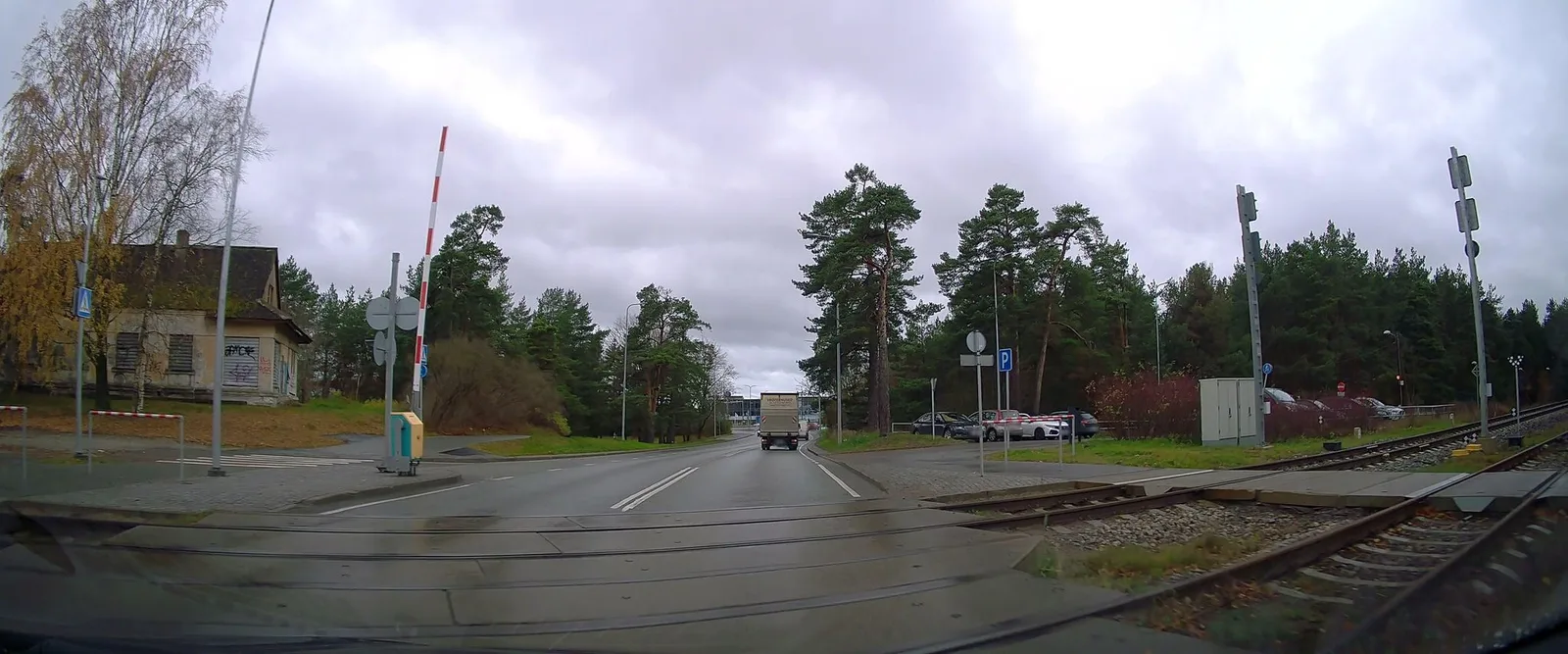
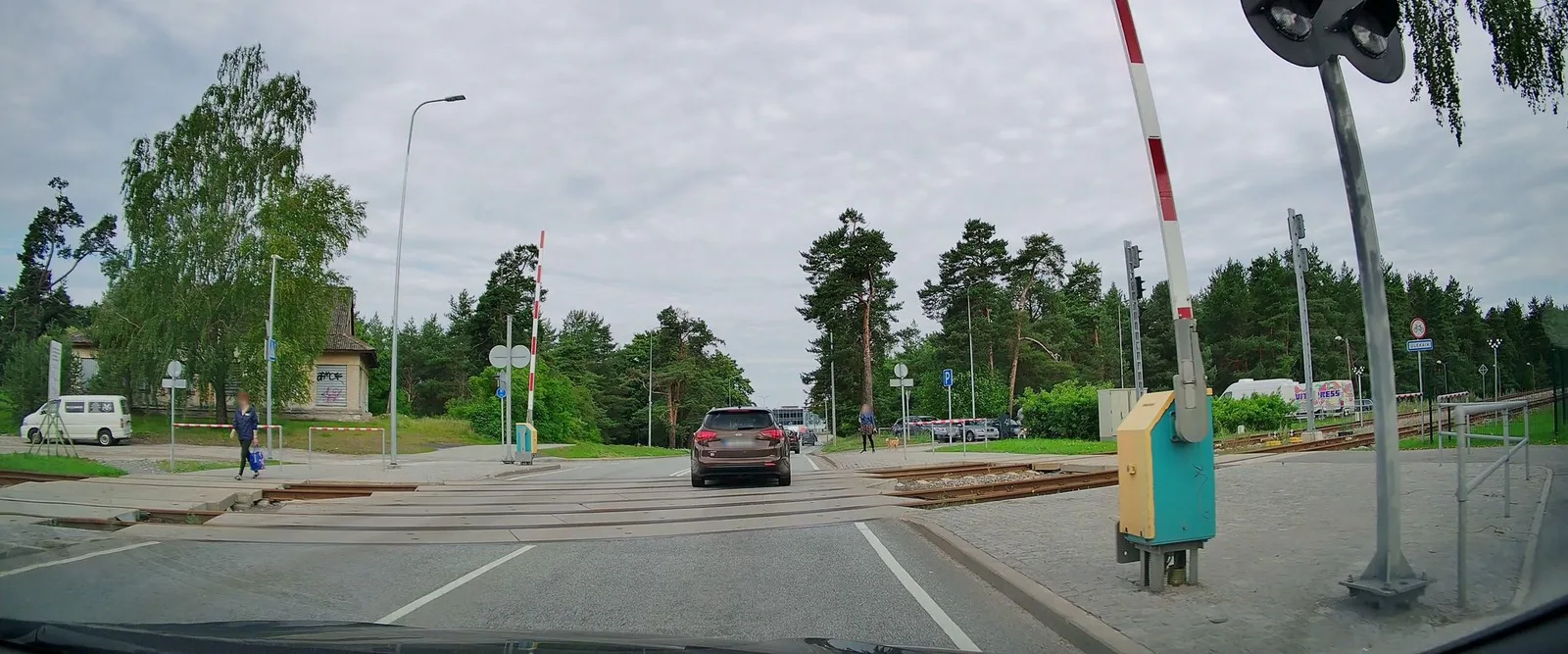
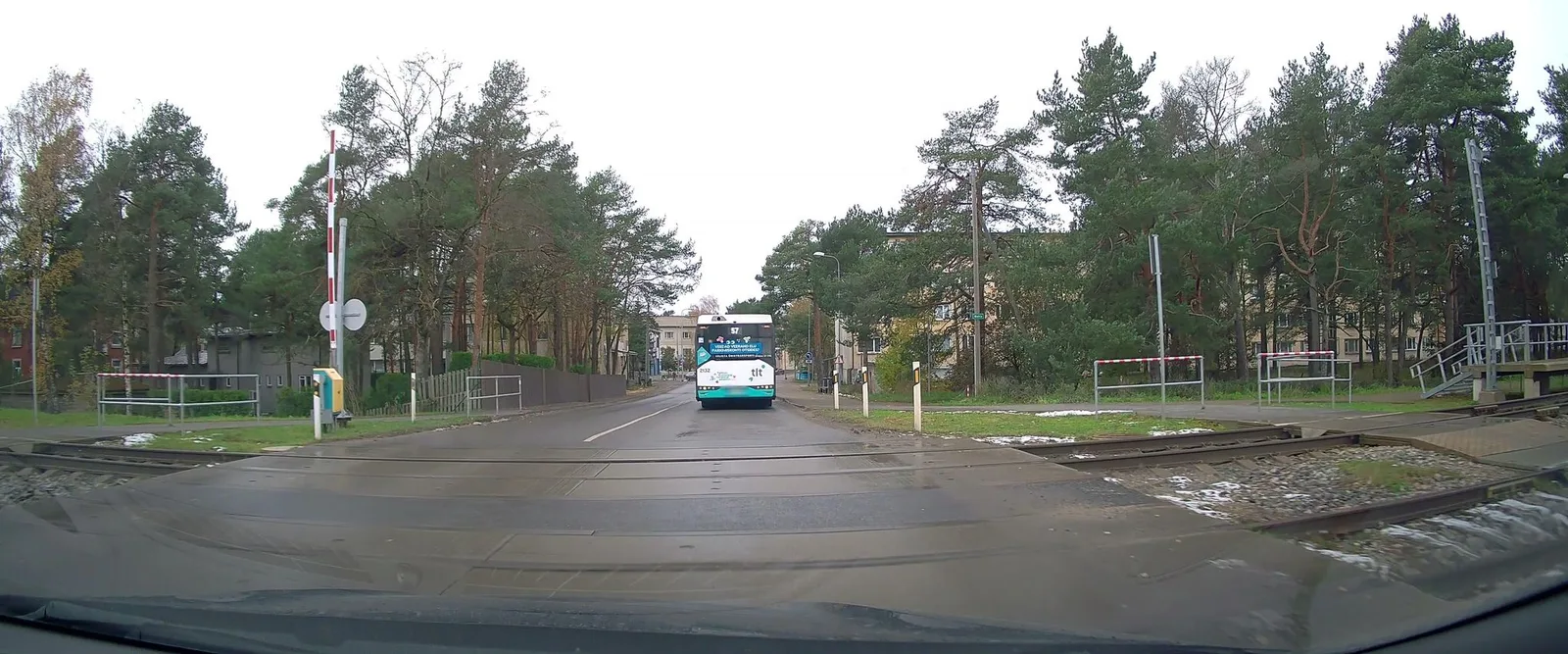
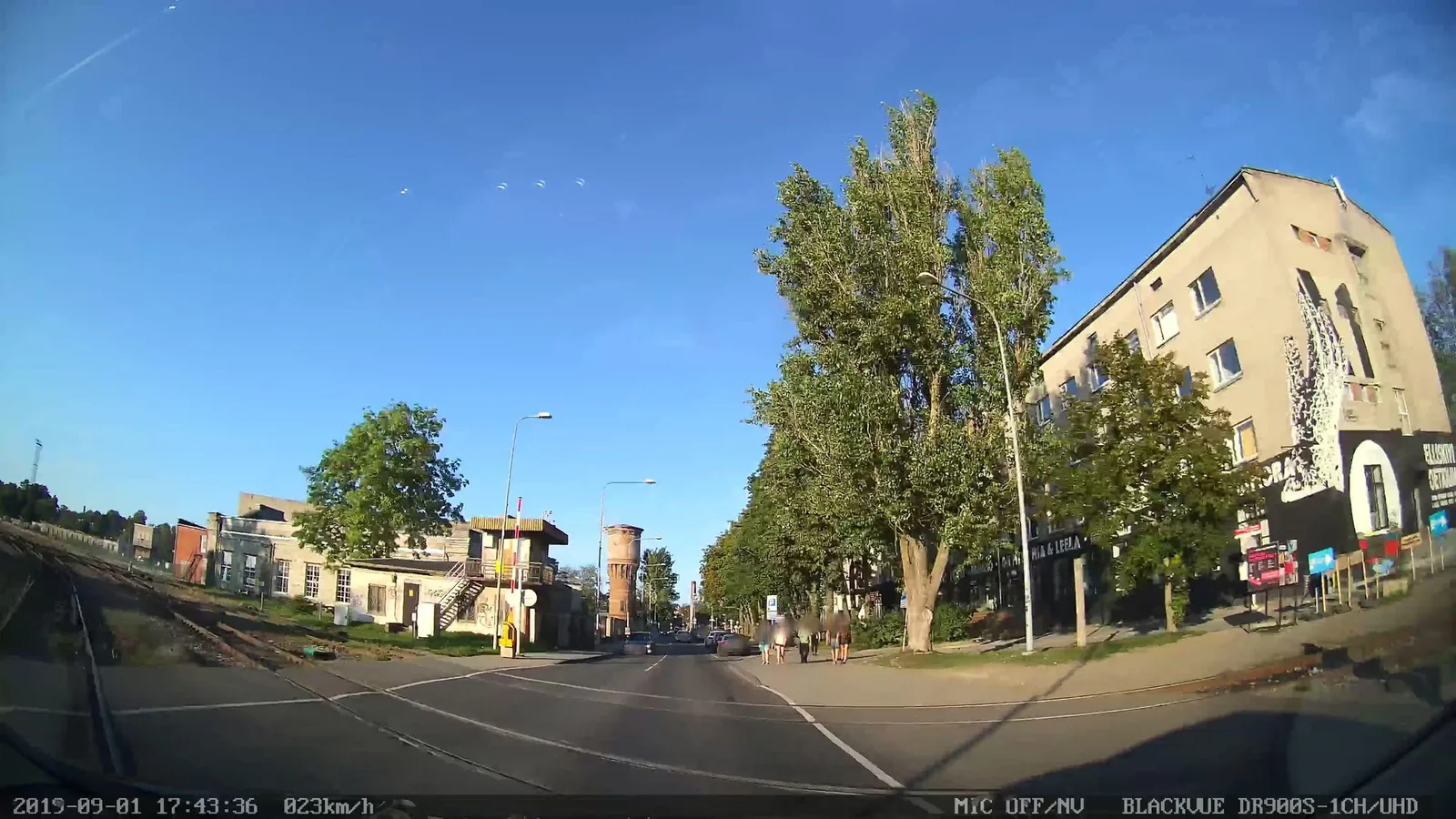
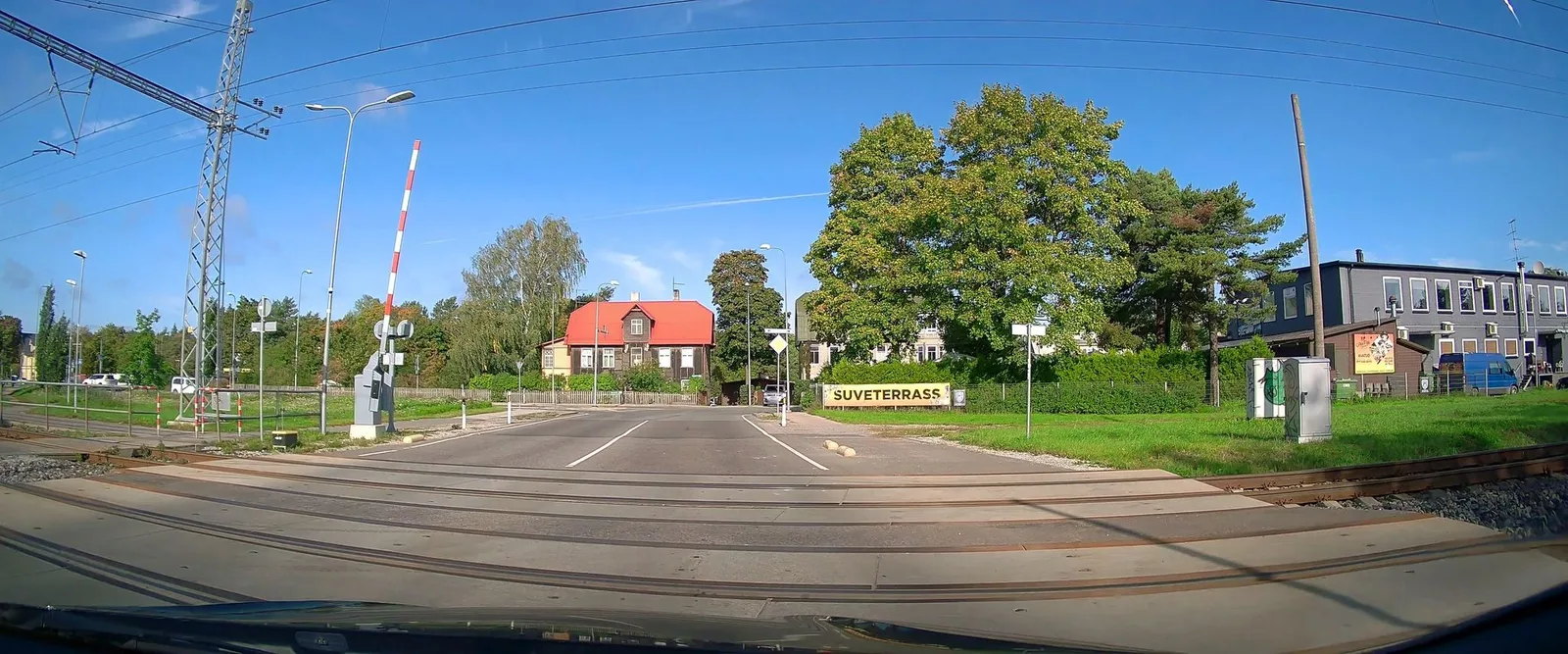
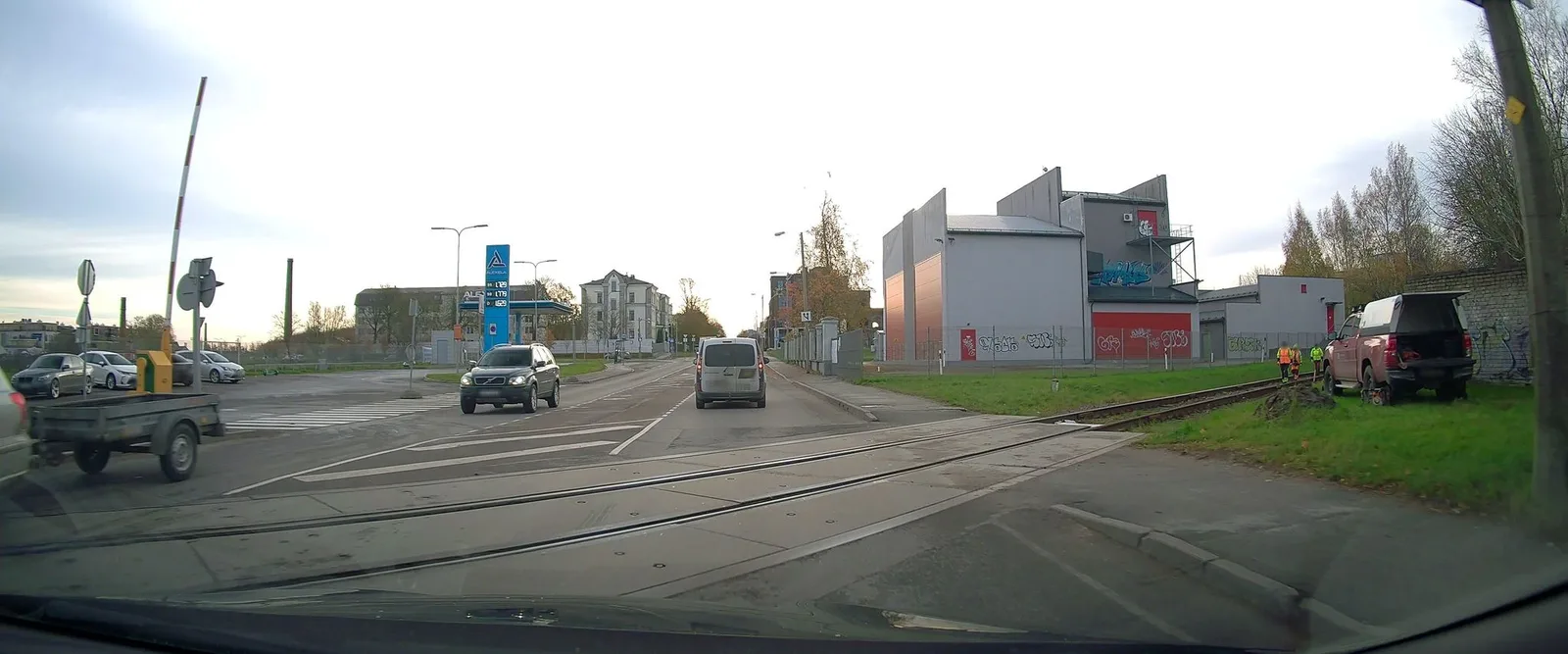
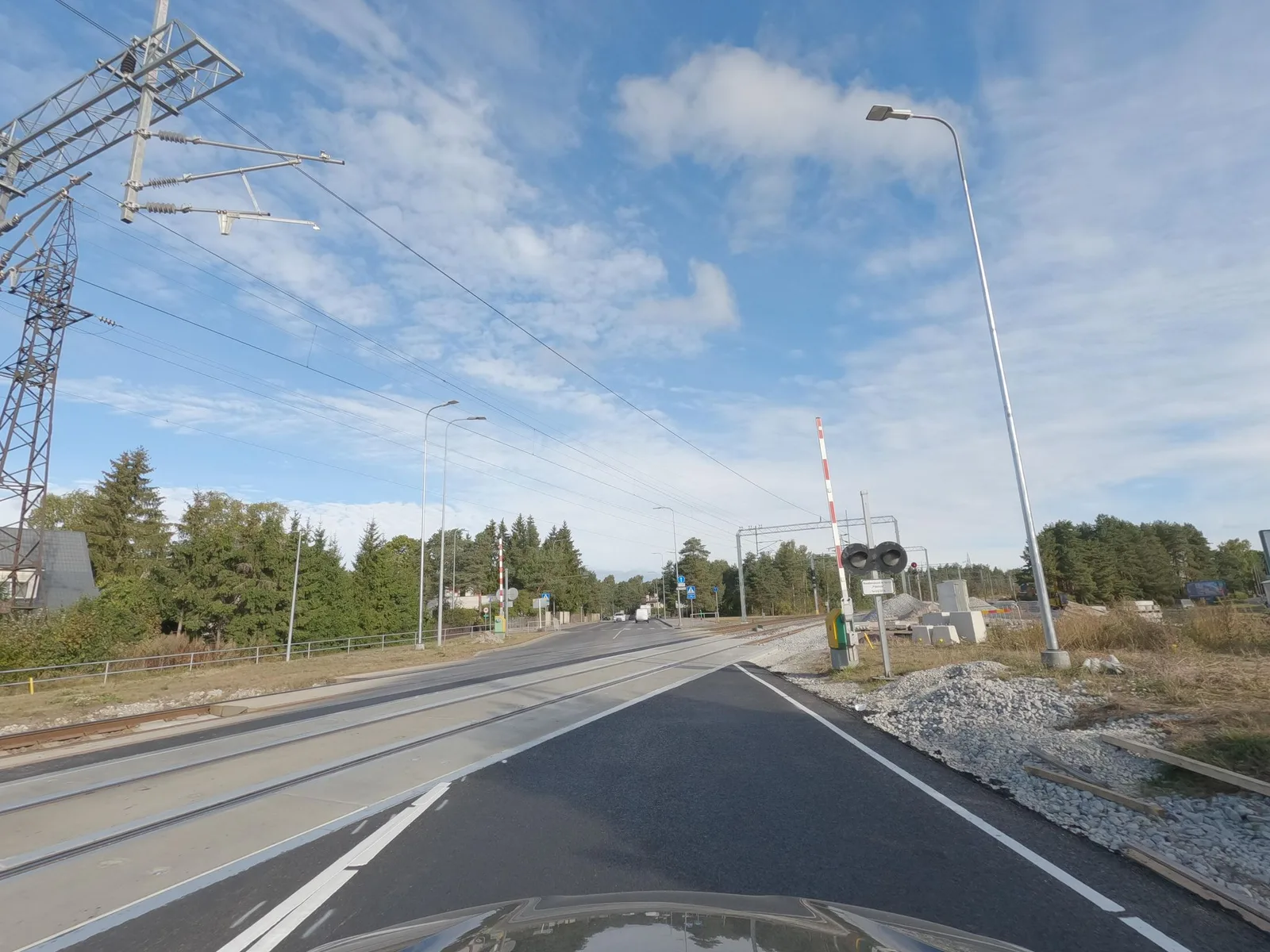
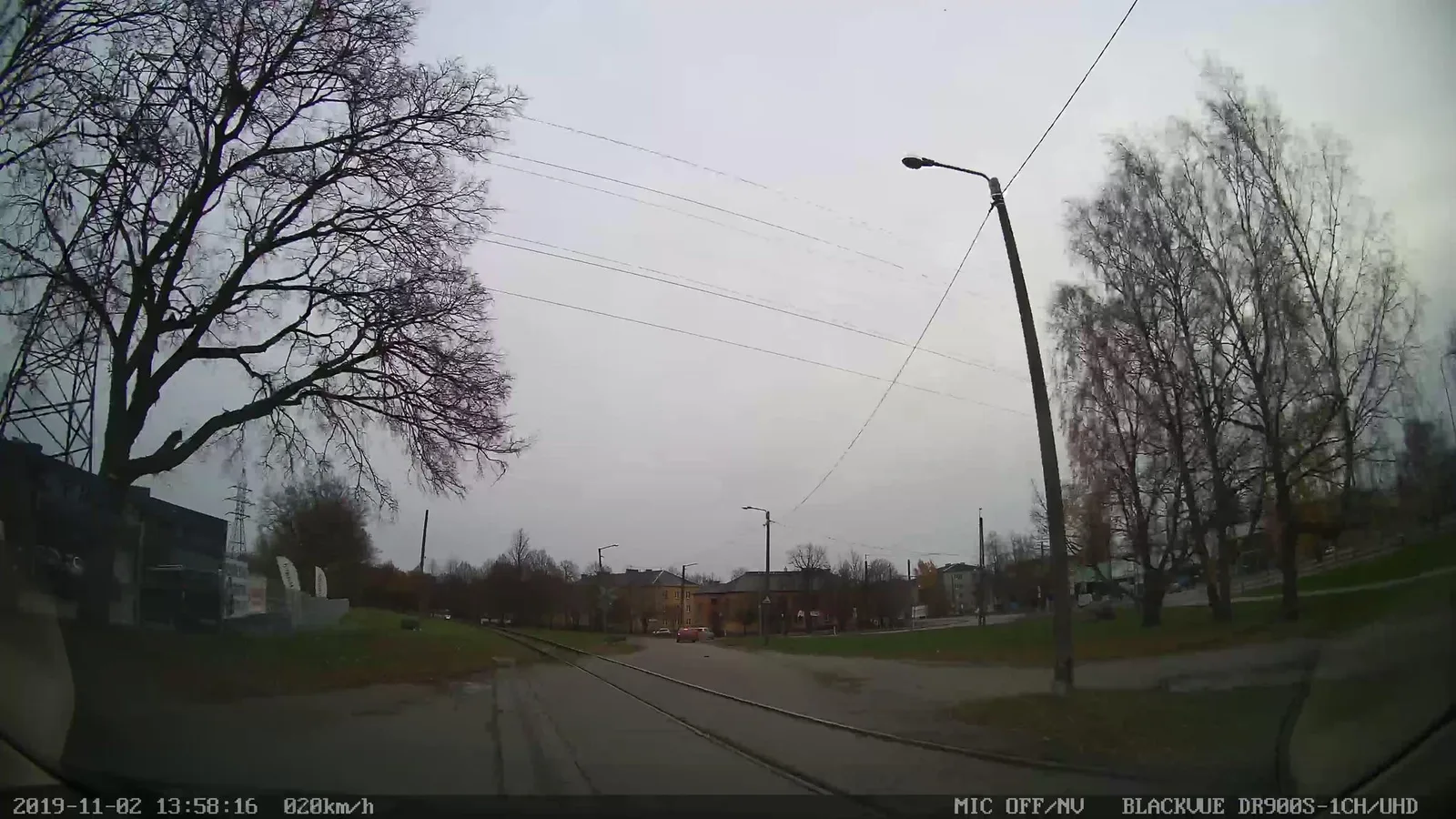
The street-level views below show crossings in rural, small-town and pedestrian-access settings on the same network, where local settings differ widely.
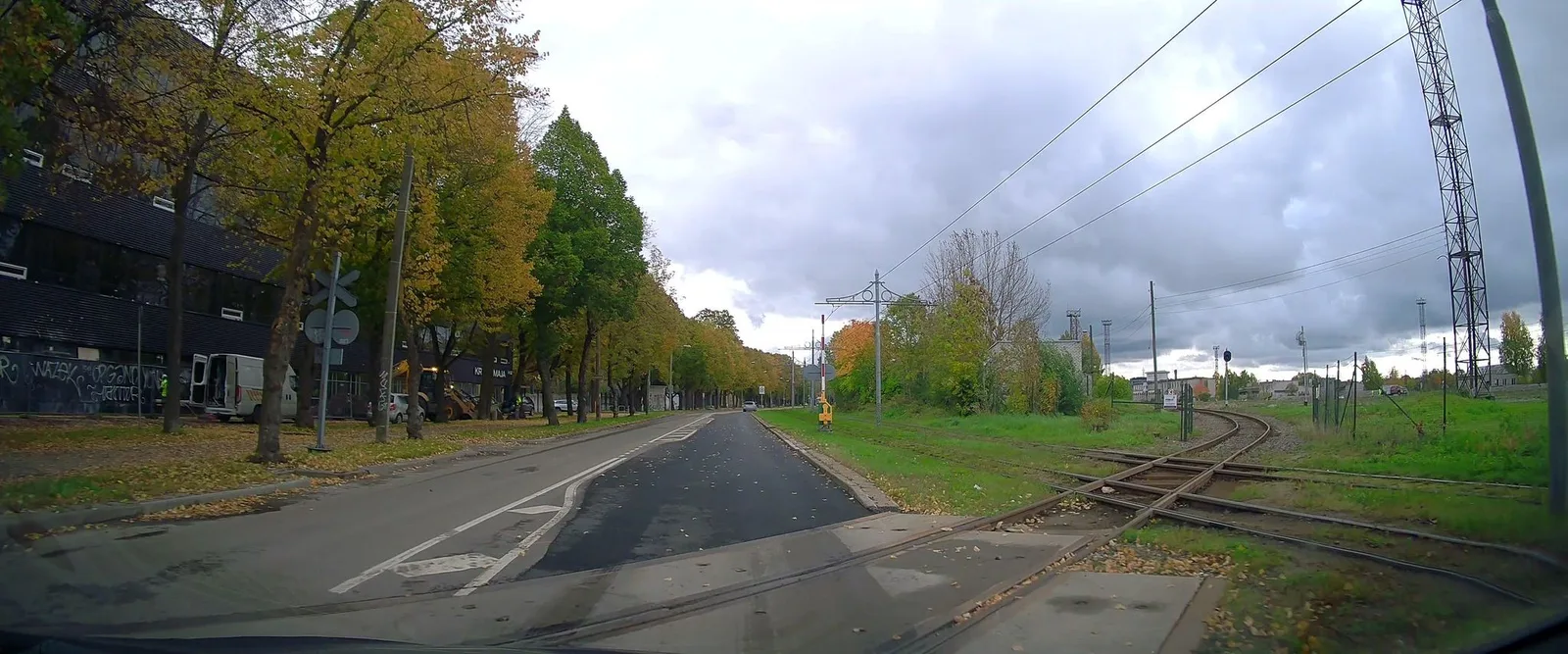
4. A category-based regime
The Rules for Technical Use of Railway sort crossings into three categories rather than scoring each one, and the required protection follows the category [4, ↗] [1, ↗]:
- Category I covers eight crossings with automated signals and barriers.
- Category II covers 39 crossings with signals, and barriers where needed.
- Category III leaves 106 crossings unregulated, with no automated signals.
Because the protection follows the category rather than a score for each crossing, the 106 Category III crossings, the ones with no automated signals, concentrate the exposure on the network [1, ↗]. Drawing on the safety authority, the local authority, the police, the road administration and EVR, an annual inspection committee checks each crossing against the rules, and that committee is where a single crossing can be moved up a category [1, ↗]. The committee and the three categories drive the protection, a structure that a comparative per-crossing reading can extend.
5. Upgrading the network
EVR is fitting modern lights and barriers across the network. An 11 million euro contract upgraded crossings with new lights and barriers by about 2024, and a further 10 million euro investment is fitting barriers, lights and audible signals at 107 vehicle crossings and 9 pedestrian crossings over four to five years [8, ↗] [9, ↗]. EVR has also built ten pedestrian tunnels over the past decade and more than 50 kilometres of lineside fencing [9, ↗]. The wider signalling renewal runs under a 115 million euro Siemens programme to 2030 [10, ↗].
6. Comparing the surroundings of crossings
A crossing is both a point of risk and a point of access.
- For the crossings that stay, the risk they carry depends on the nearby population, the emergency access, and the local routes that rely on them.
- For the crossings moving toward upgrade or removal, the same surroundings set the access question, where road users and pedestrians go once the crossing closes or gains a tunnel, and rural sites are often constrained.
Some crossings have simple alternatives. Others touch emergency access, pedestrian and farm circulation, nearby population or the local road network that the route through the crossing connects. Comparing those surroundings on the same reference can support prioritisation across the 106 unregulated crossings that carry most of the risk, as much as field review, detailed engineering and budget commitment on those moving toward a project.
That is the territorial layer SAMRoute structures around crossings, with a common geography, repeatable indicators, a regular refresh and traceable sources, so one crossing can be compared with another [14, ↗].
7. References
Infrastructure manager and inventory
[1] AS Eesti Raudtee. Safety (EVR). The 153 public crossings, the 116 with automated signals, the 34 with barriers, and the three-category split. Read
[2] AS Eesti Raudtee. About (EVR). The infrastructure manager role and the network. Read
[3] AS Eesti Raudtee. Annual Report 2020 (EVR, 2021). About 150 level crossings on the EVR infrastructure. Read
The regime
[4] Riigikogu. Railways Act (Raudteeseadus) and the Rules for Technical Use of Railway. The three-category crossing classification and the required protection. Read
Safety authority and investigation
[5] Tarbijakaitse ja Tehnilise Järelevalve Amet. Railway safety (TTJA). The national safety authority supervising railway safety and access. Read
[6] Ohutusjuurdluse Keskus. Estonian Safety Investigation Bureau (OJK). The independent rail accident investigation body. Read
[7] Ohutusjuurdluse Keskus. Report on railway accidents investigated in 2024 (OJK, 2025). The four level crossing accidents in 2024. Read
Upgrade programme and accidents
[8] AS Eesti Raudtee. Projects (EVR). The level crossing upgrade works, the pedestrian tunnels and the lineside fencing. Read
[9] Global Railway Review. Estonia level crossing safety (Global Railway Review). The 11 and 10 million euro upgrade investments, the ten tunnels and the fencing. Read
[10] Siemens. Modernizing Estonian Railways (Siemens). The 115 million euro signalling renewal to 2030. Read
[11] ERR News. Eesti Raudtee pledges action on rail crossing safety following fatality (ERR, 2019). The 2019 Veerenni crossing fatality and the response. Read
[15] Ohutusjuurdluse Keskus. Report of the railway accidents investigated in 2023 (OJK, 2024). The Ropka level crossing collision of 11 March 2022, classified a serious accident for damages above two million euros. Read
European framework
[12] European Commission. Road safety thematic report, railway level crossings (European Road Safety Observatory, 2021). Crossings account for about one percent of road fatalities and close to a third of railway fatalities. Read
[13] European Parliament and Council. Directive (EU) 2016/798 of 11 May 2016 on railway safety (OJ L 138, 26.5.2016). Requires each Member State to set up a national safety authority and an independent investigating body. Read
[14] SAMRoute. Rail cadence, level crossings and emergency access (position page). Open