Level crossings in Greece. Comparing crossings before upgrade and removal decisions
Greece keeps reducing and upgrading its level crossings, with OSE managing the inventory, the Regulatory Authority for Railways acting as the railway safety authority, and the national investigation body examining accidents.
The following sections present the accident history, the level crossing system, the public actors, the regime, and the way crossings come off the network. The last section covers the territorial context that SAMRoute models.
1. Accident history at level crossings
Level crossings were the largest single category of serious accidents on the Greek network in 2021, accounting for half of them, while the leading cause of serious railway accidents overall was people crossing or walking on the track away from any crossing [1, ↗]. Hundreds of crossings still stand unguarded, 269 on OSE's central and southern lines and 283 on the northern ones, which keeps the road user's judgement at the centre of crossing safety [9, ↗]. The collisions of recent years have hit guarded and unguarded crossings alike:
- On 28 May 2024, a train struck a car at a guarded crossing on Kolyriou street in Pyrgos, in the Peloponnese, and the driver was pulled from the wreck unconscious and died [10, ↗].
- On 15 January 2025, a suburban train hit a car at a crossing near Patra after, the driver said, the barriers had stayed up, a malfunction of the kind reported for years, and the driver was slightly injured [11, ↗].
- On 23 September 2025, a train struck an agricultural vehicle at an unguarded crossing near Soufli in the north-east, dragging it into a ditch and slightly injuring its driver [12, ↗].
2. The Greek level crossing system
OSE, the Organismos Sidirodromon Ellados, is the state infrastructure manager. It owns the level crossing inventory on the national network [2, ↗]. The network carries about 1,263 level crossings [3, ↗]. Each crossing is either active, protected by an automatic level crossing system or a manned barrier, or passive, carrying the St Andrew's cross and little else [1, ↗]. A large share stay passive, and the safety authority has pressed for the unprotected crossings to be reviewed and reduced [1, ↗].
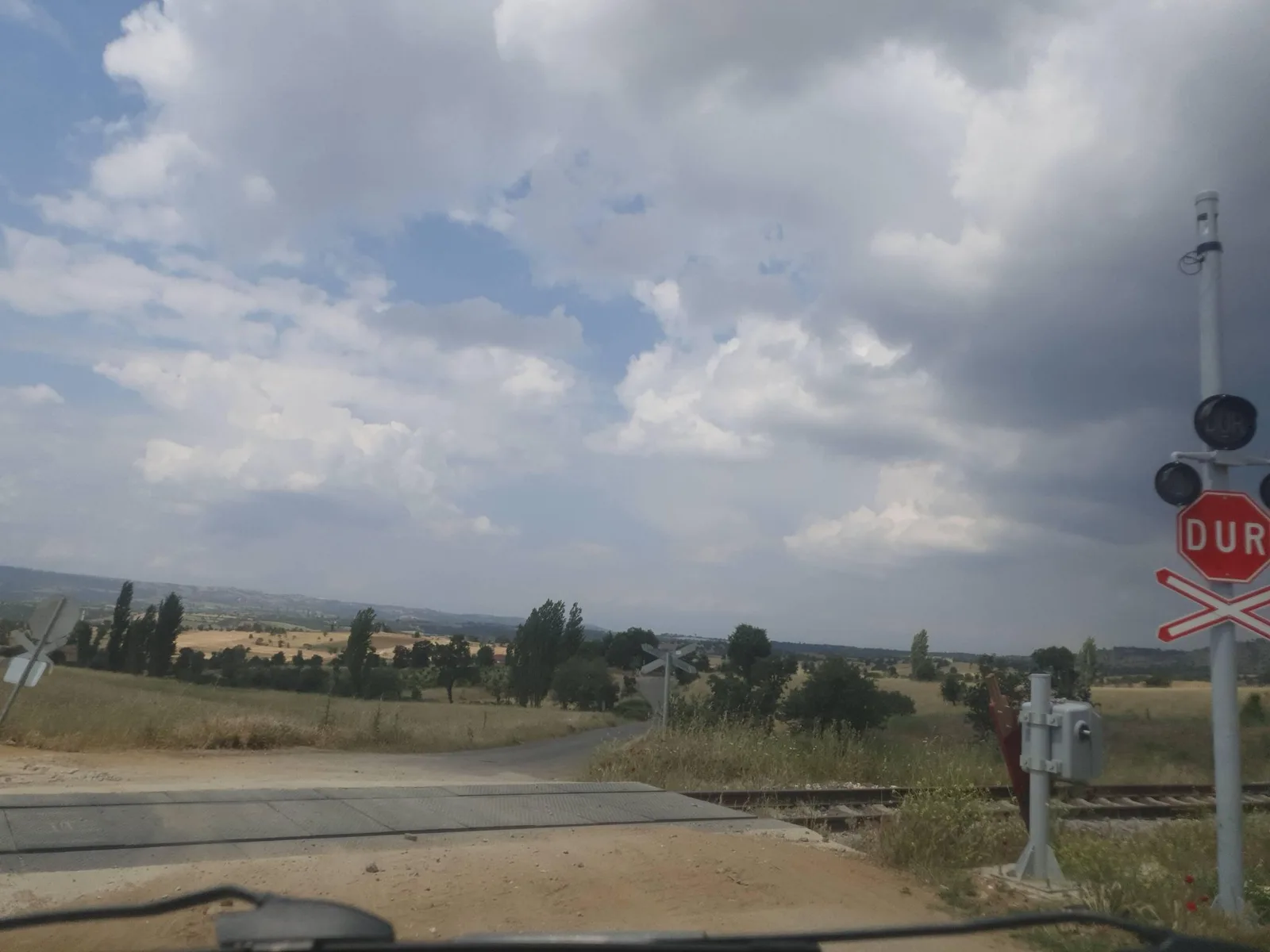
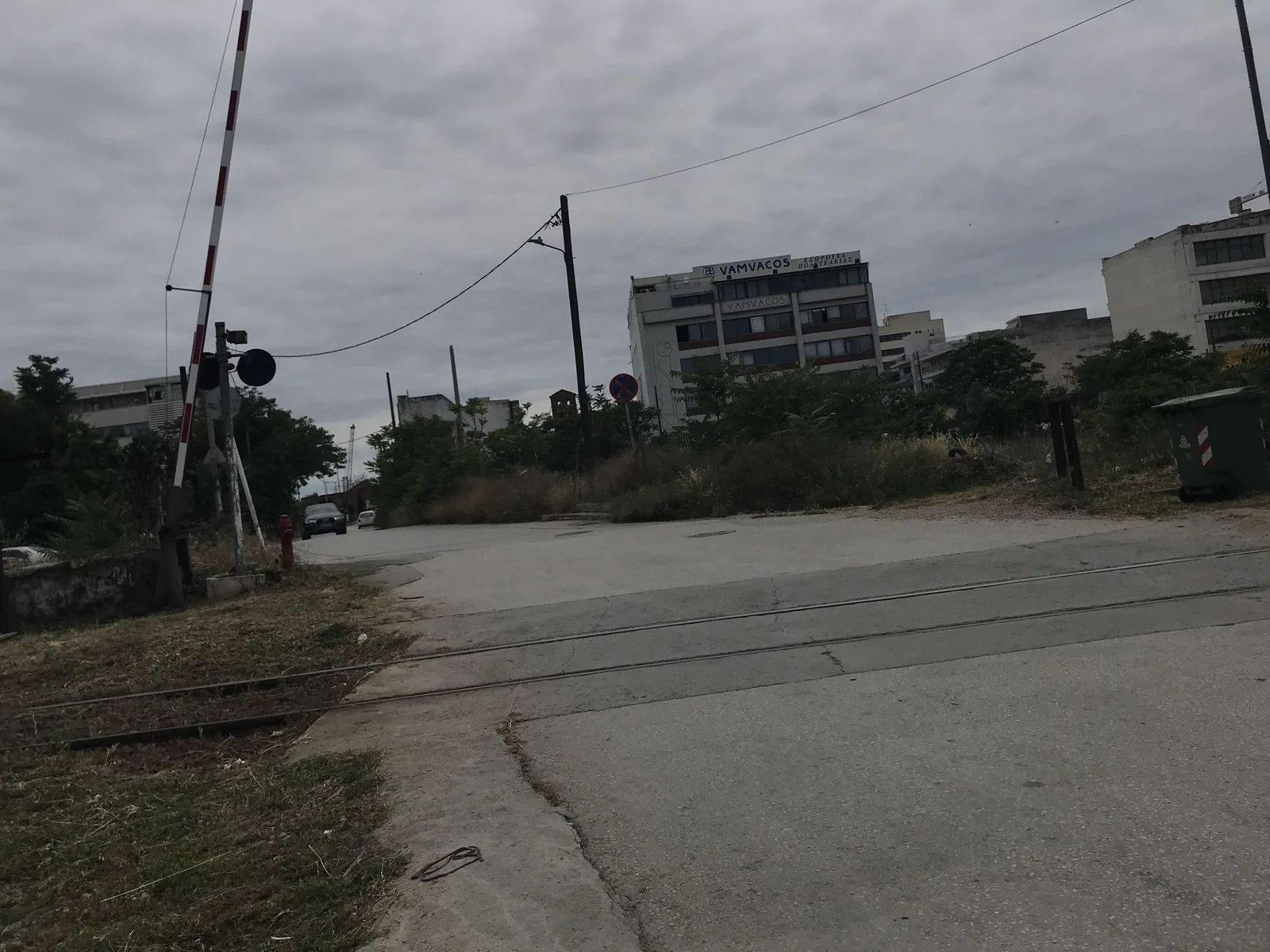
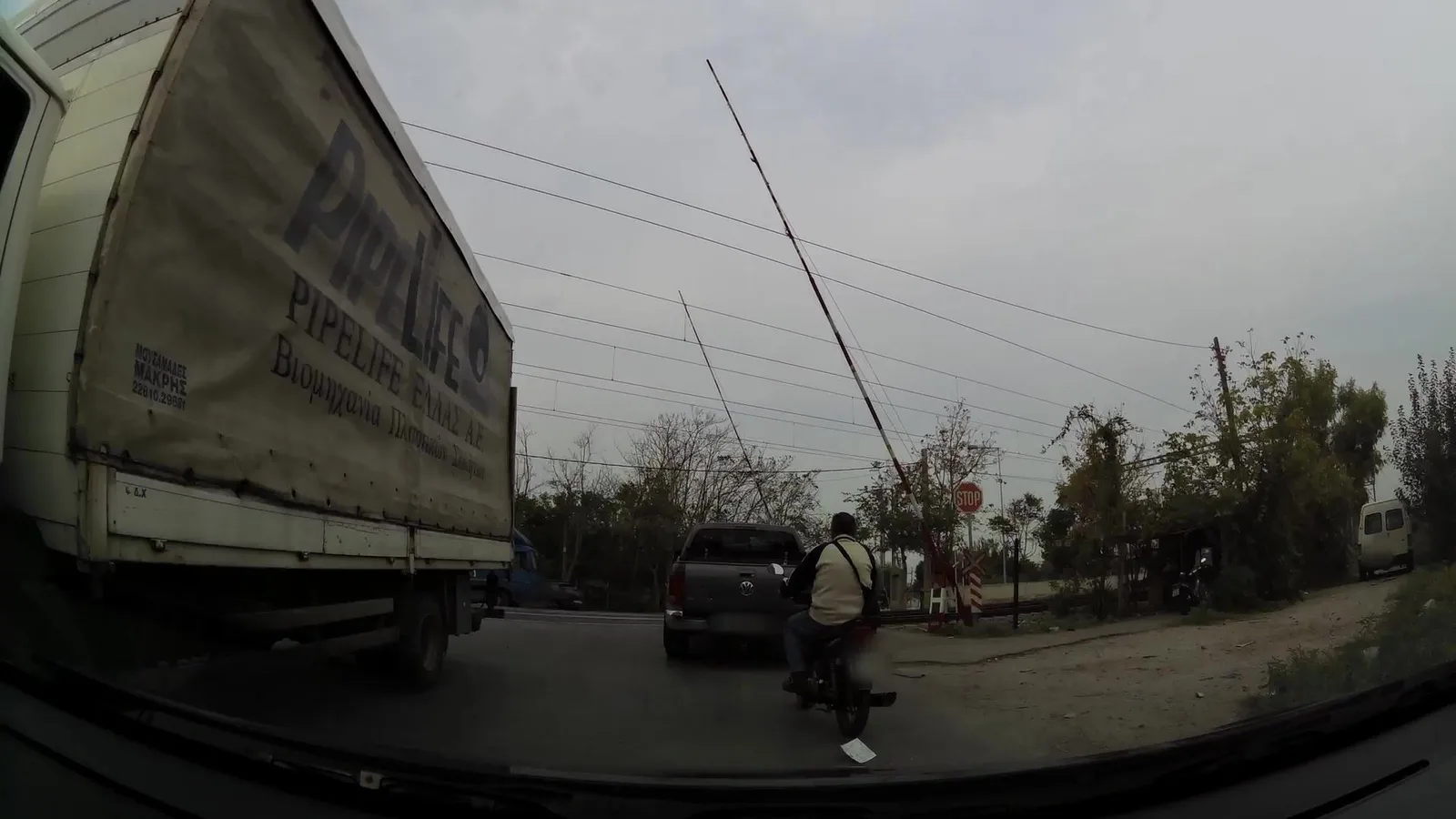
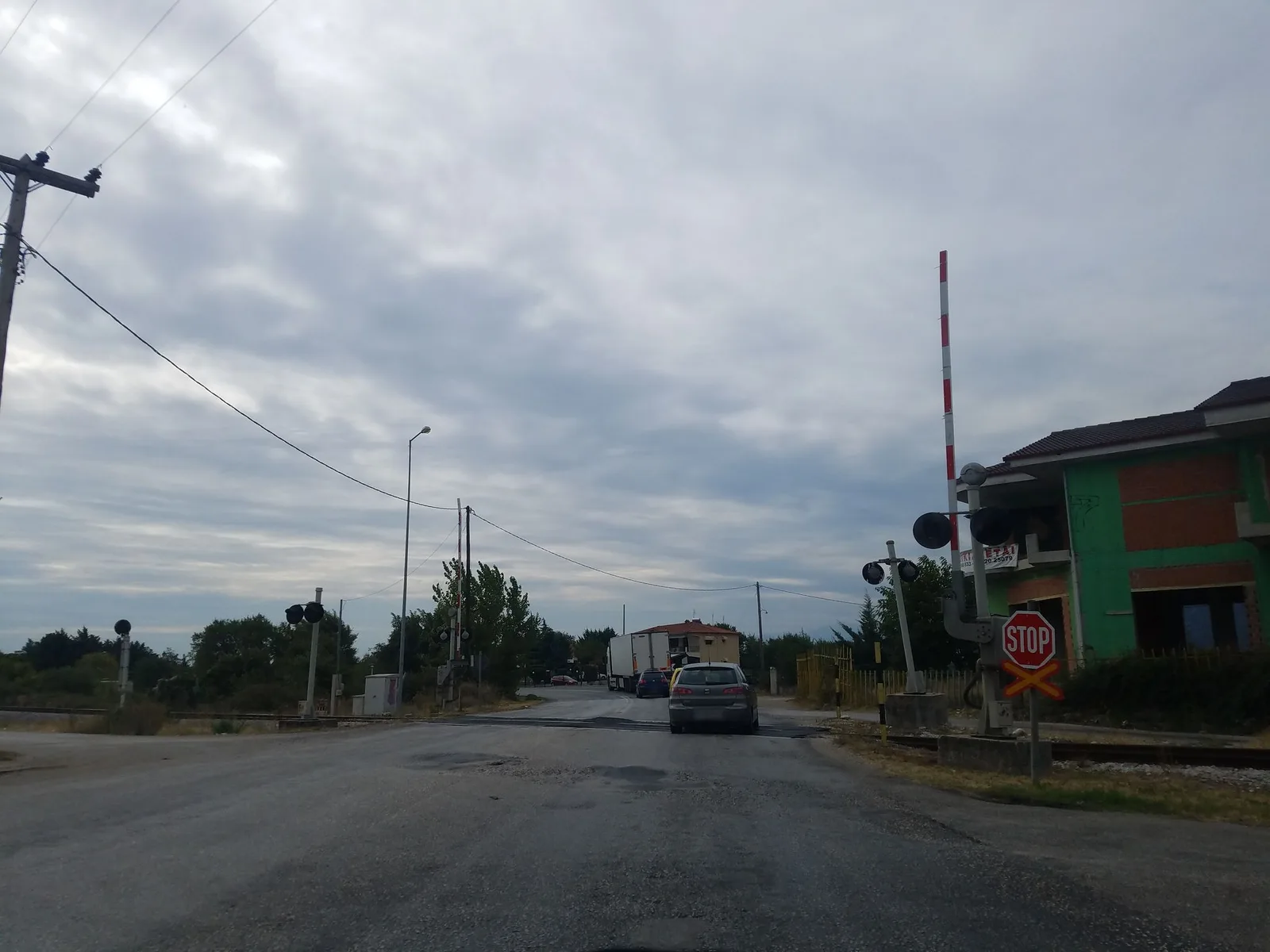
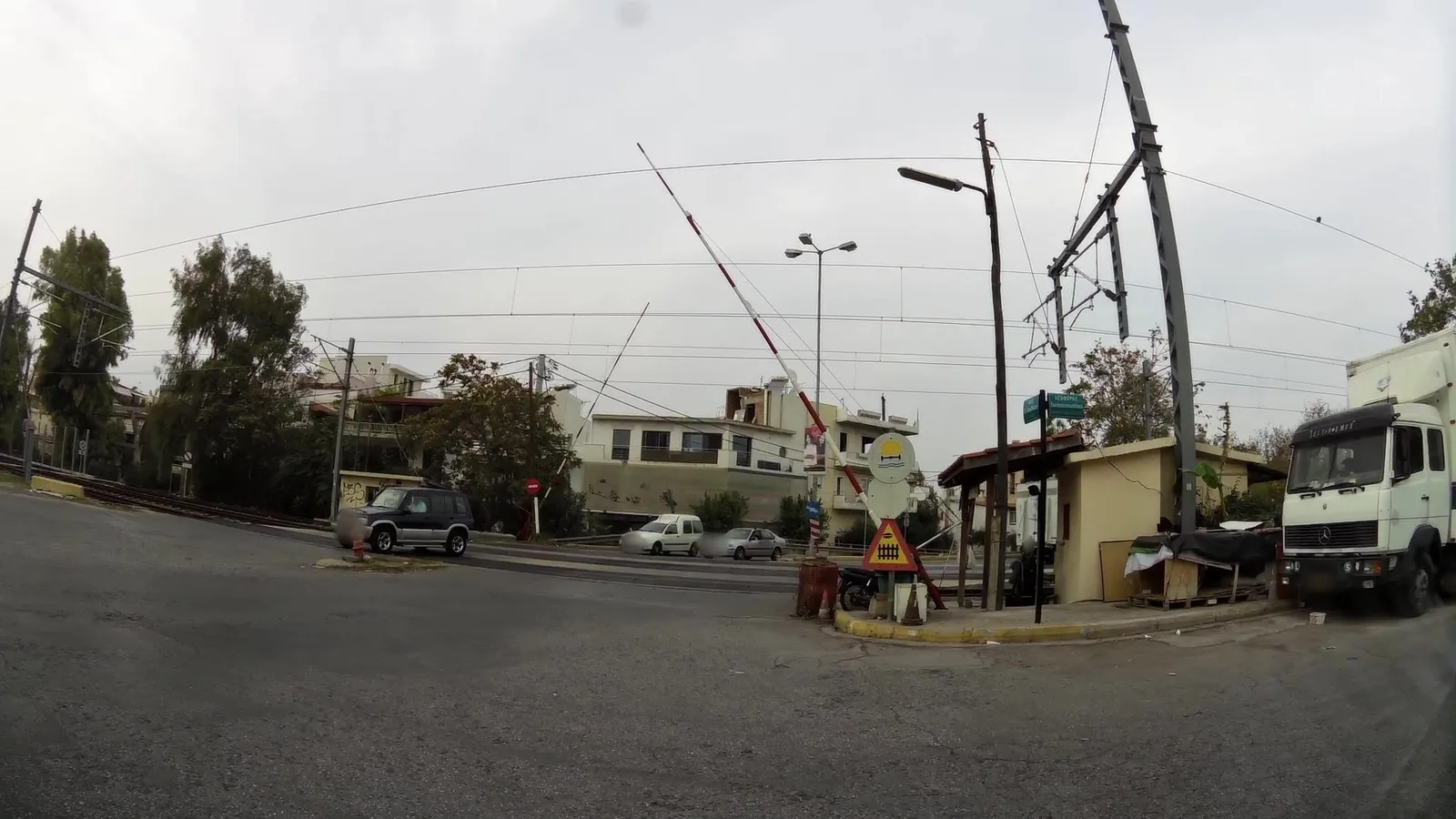
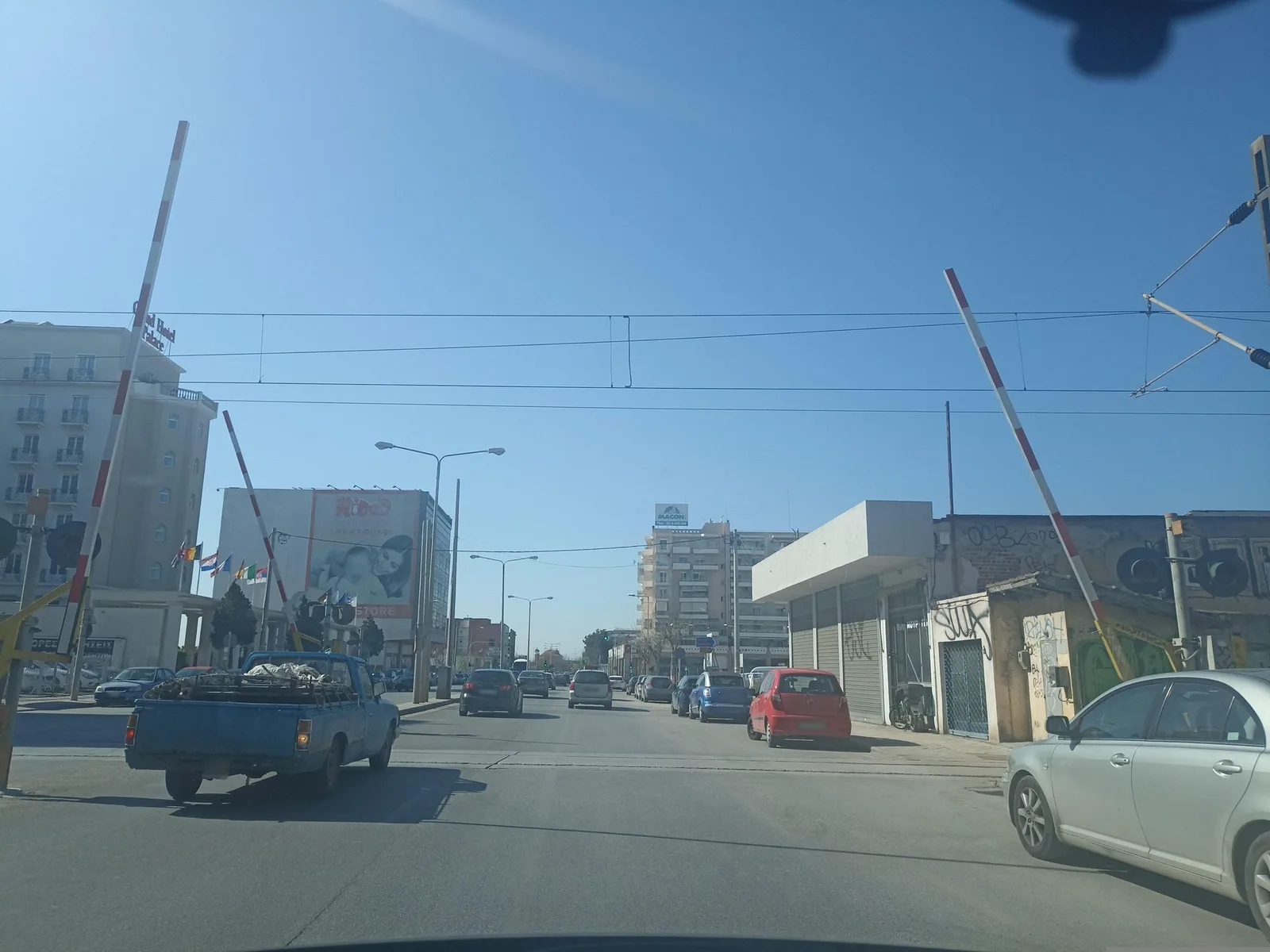
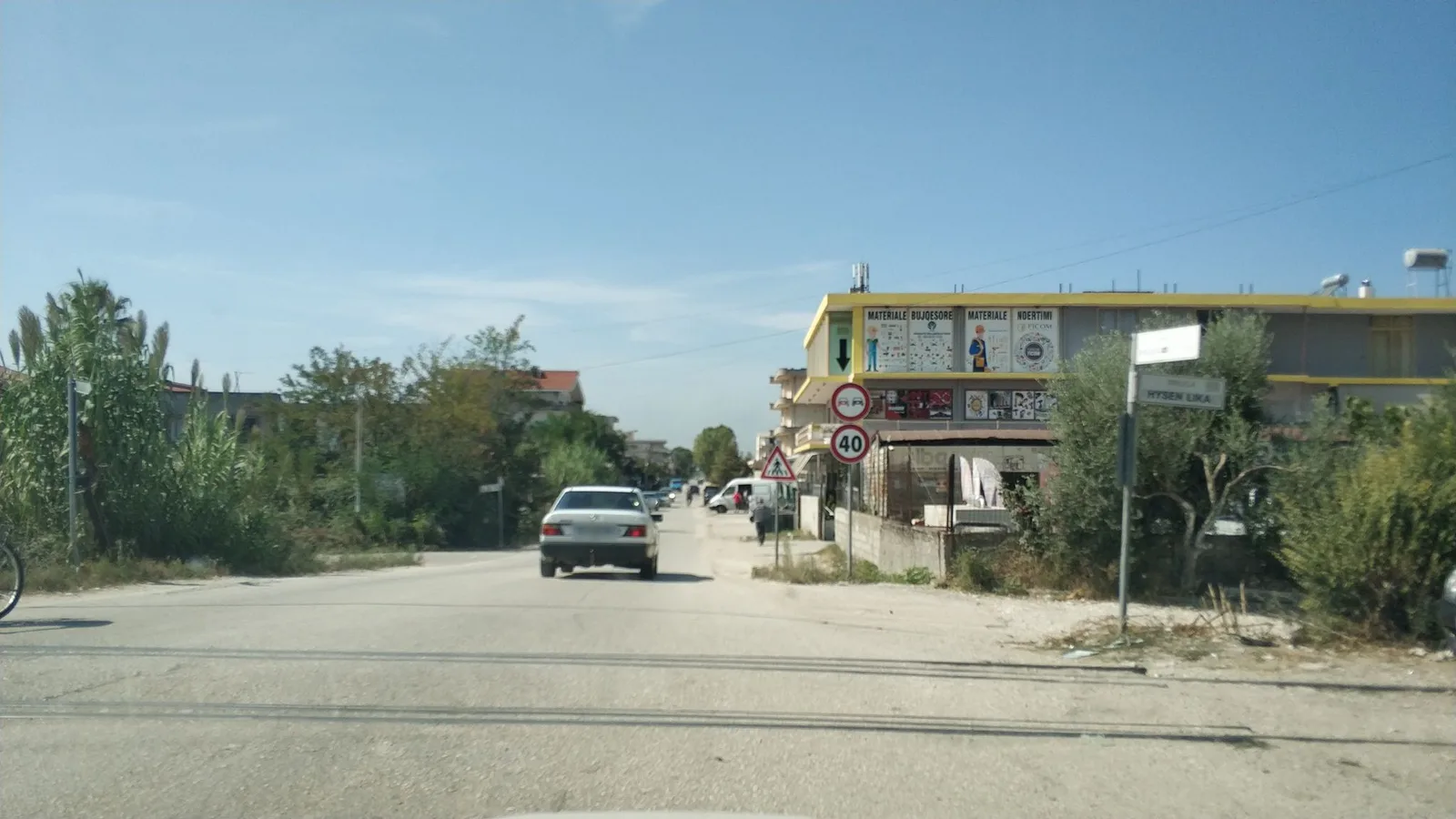
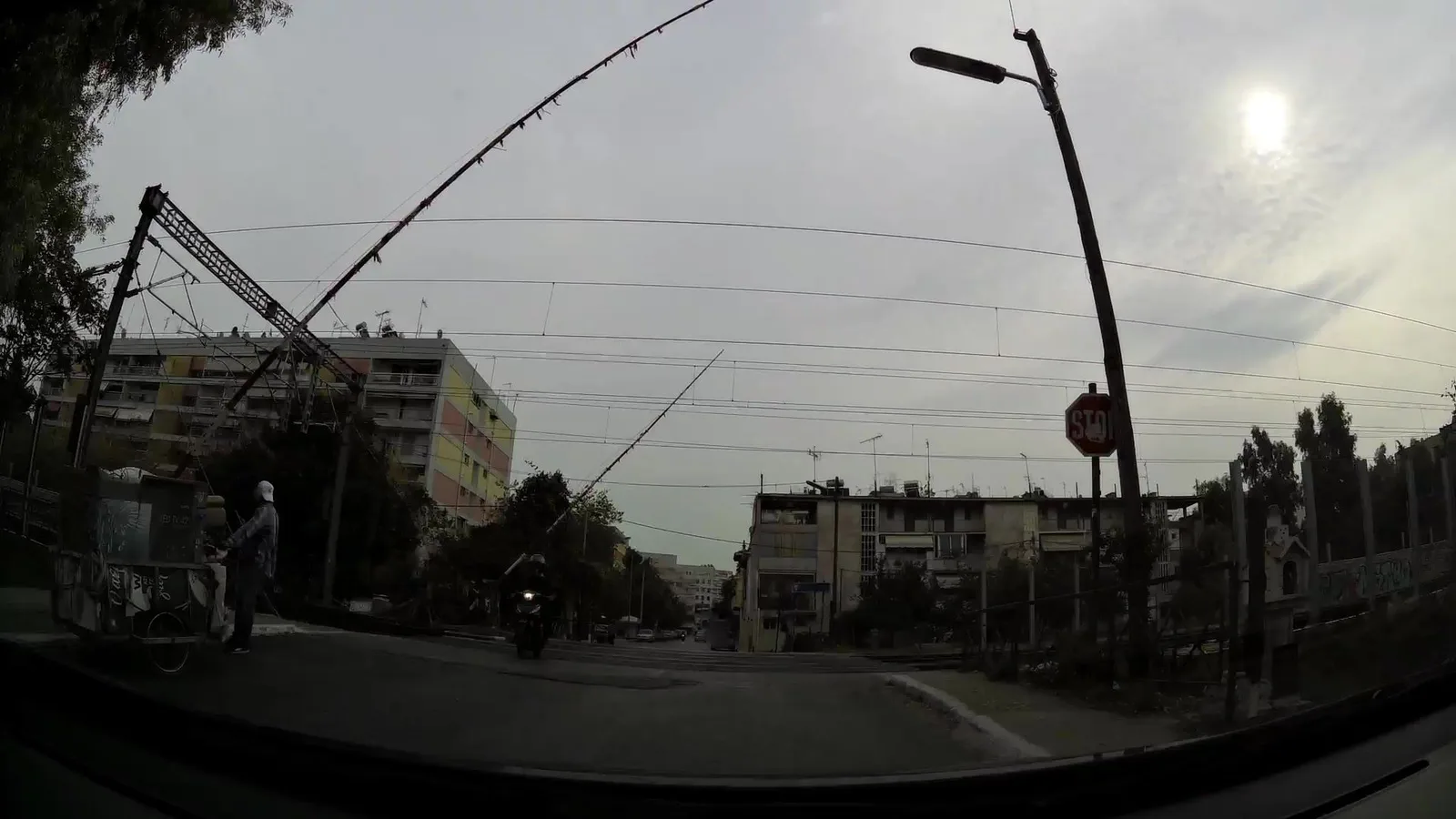
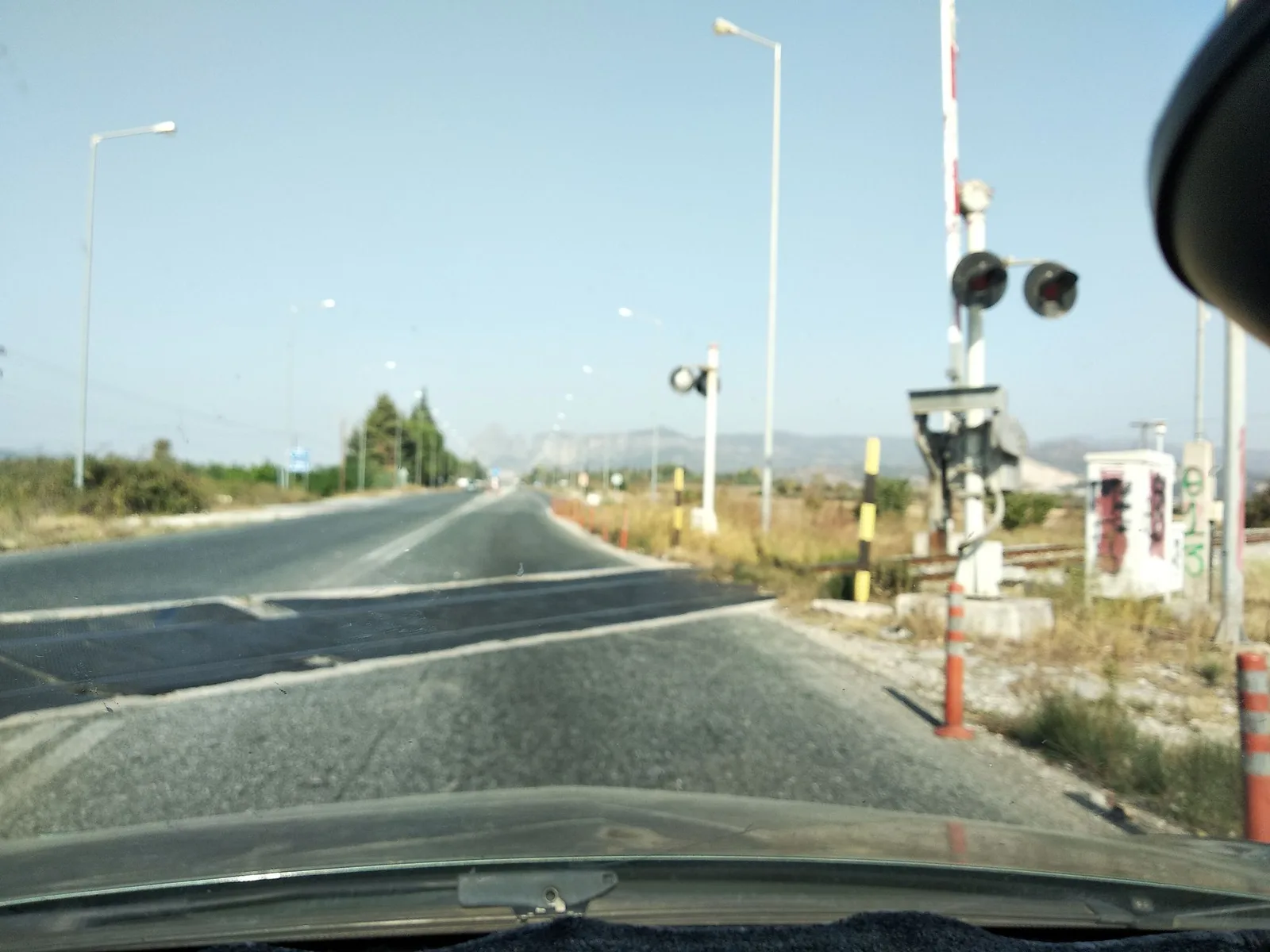
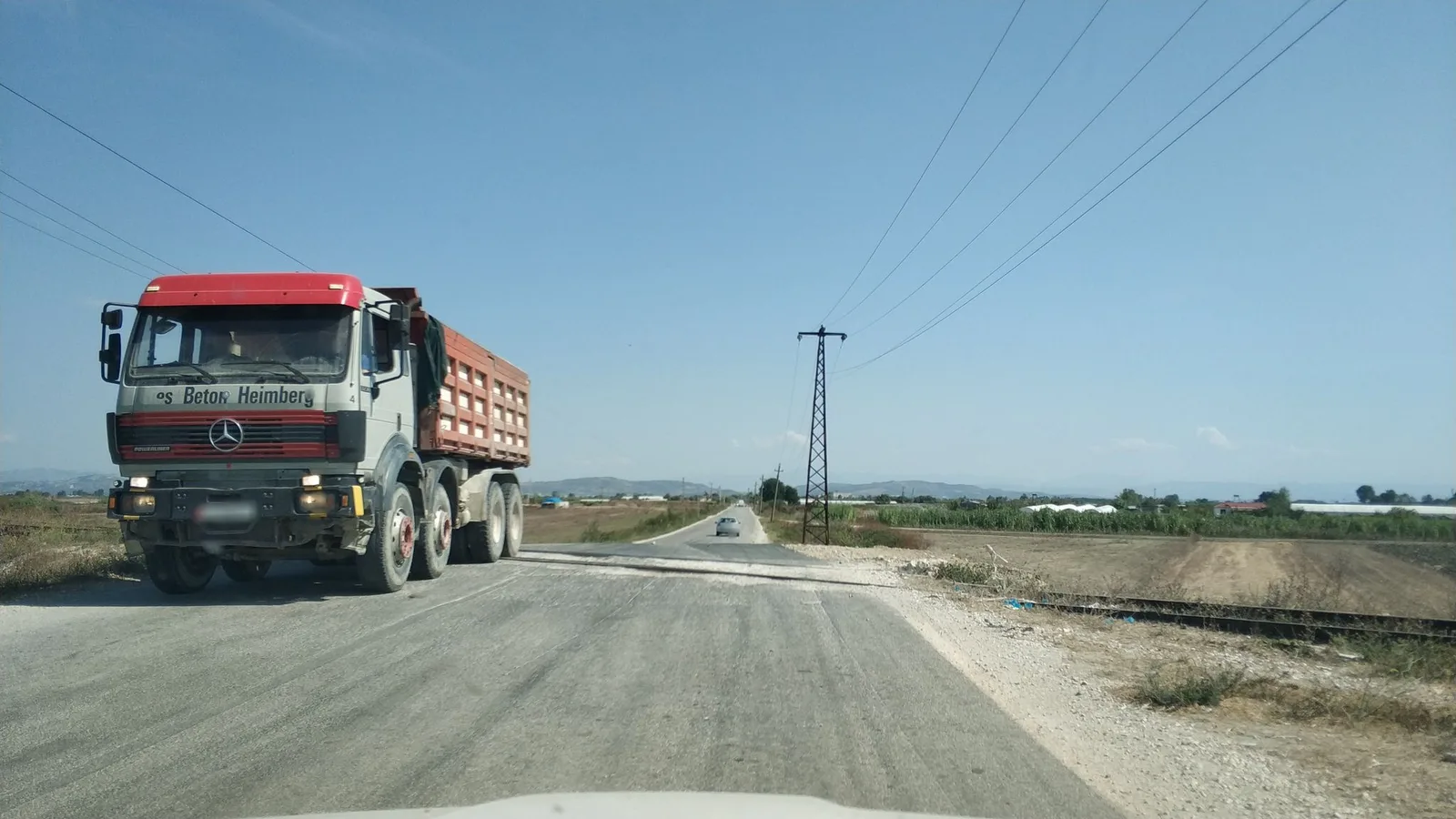
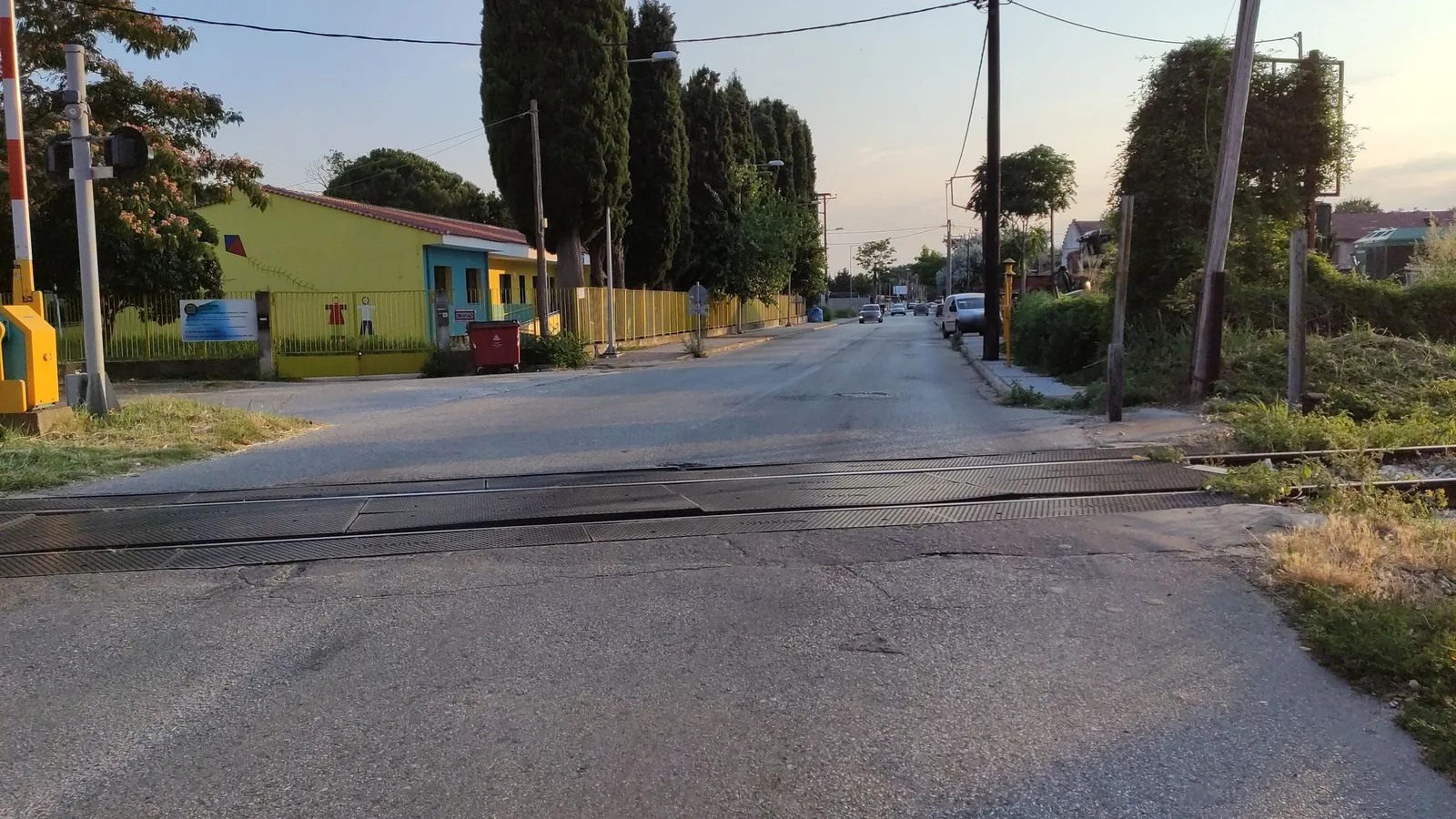
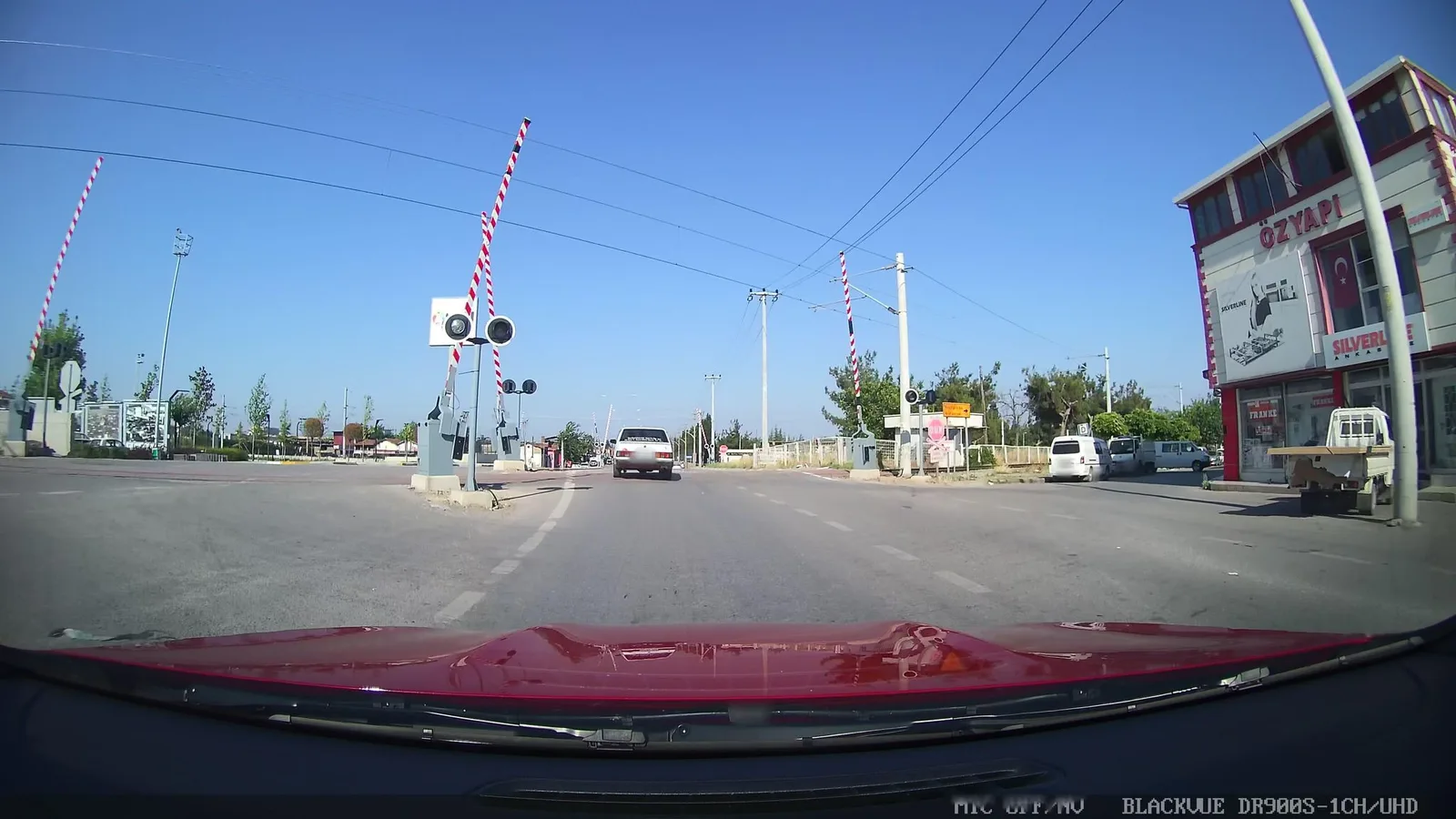
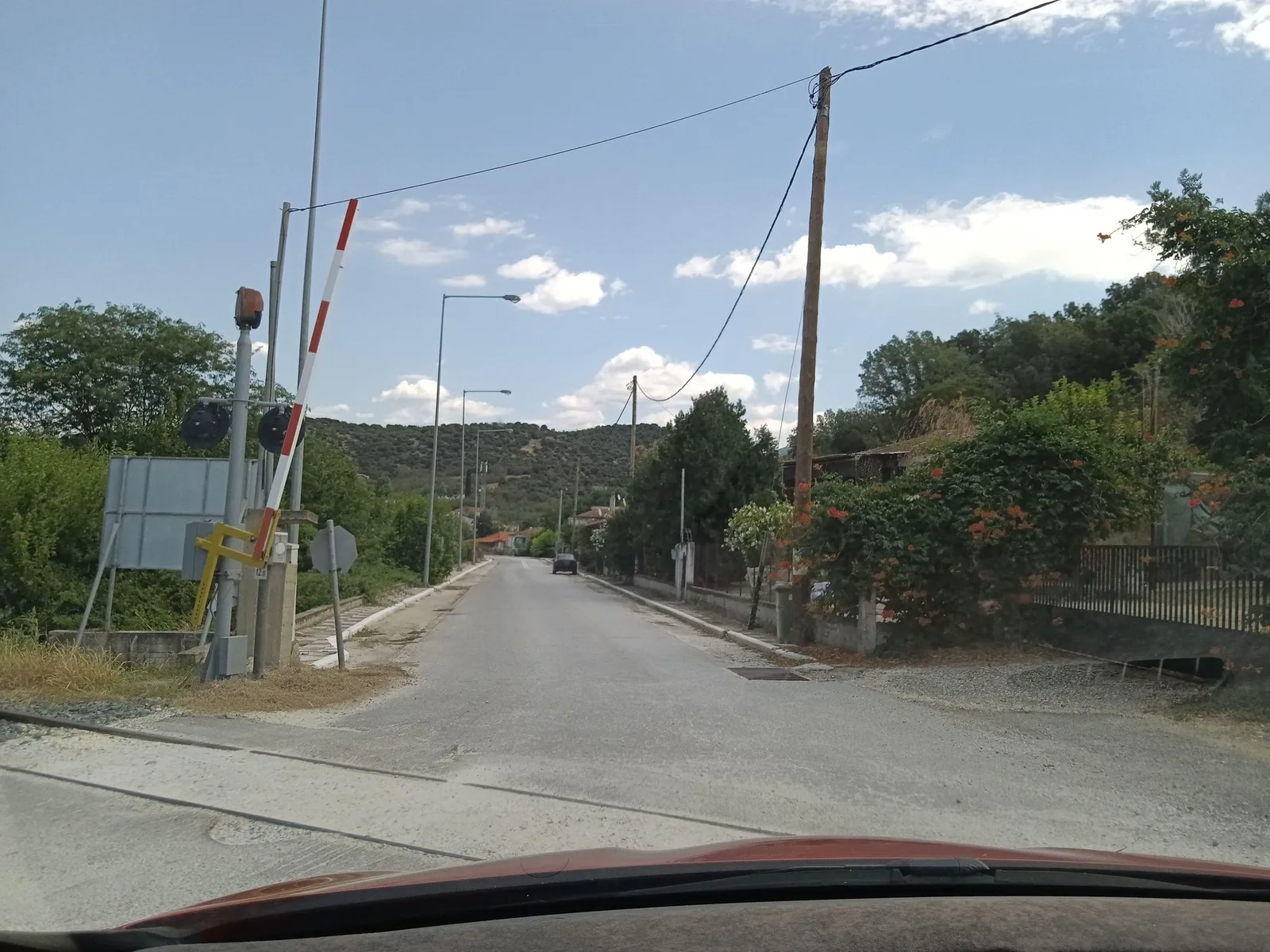
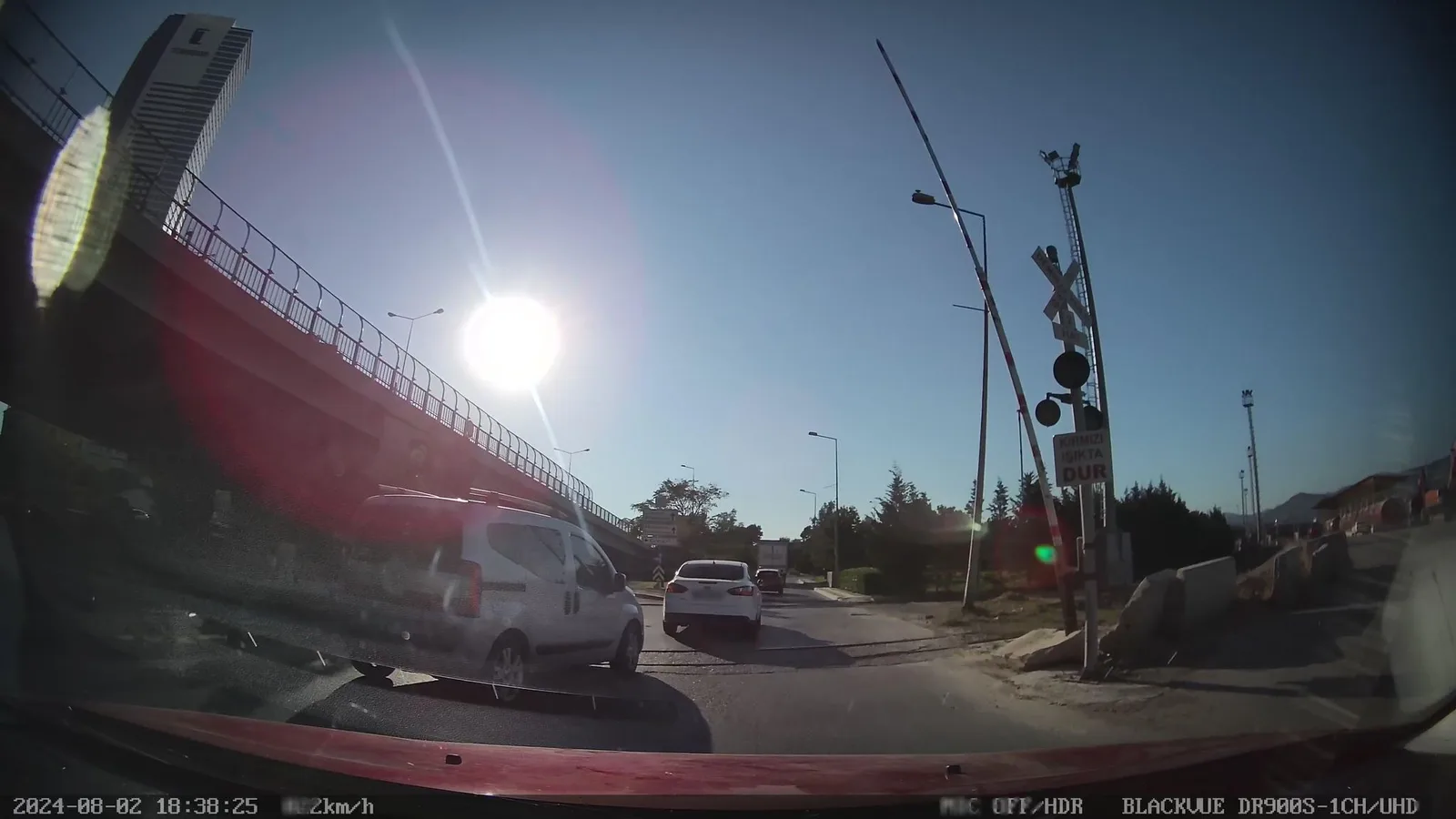
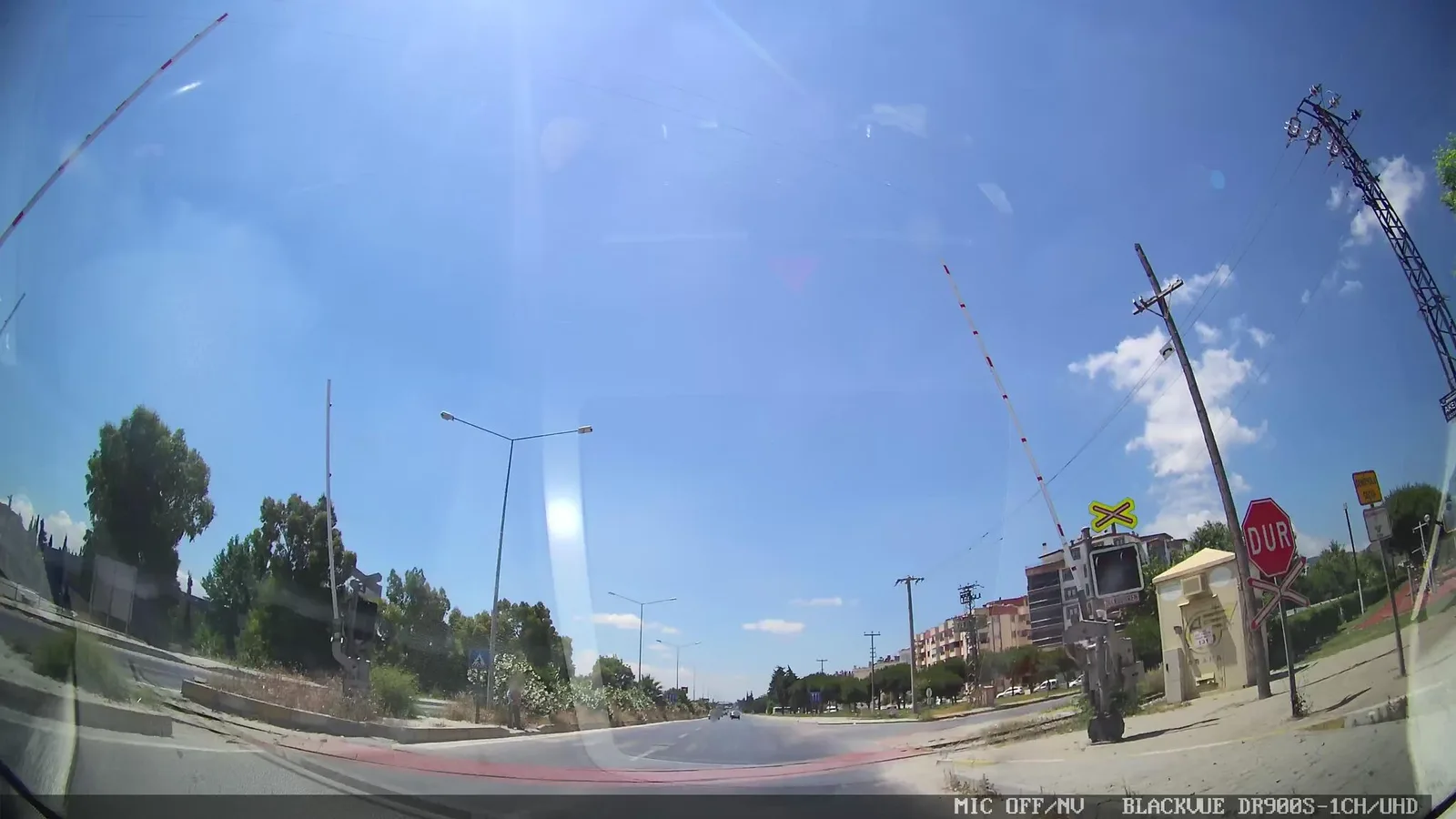
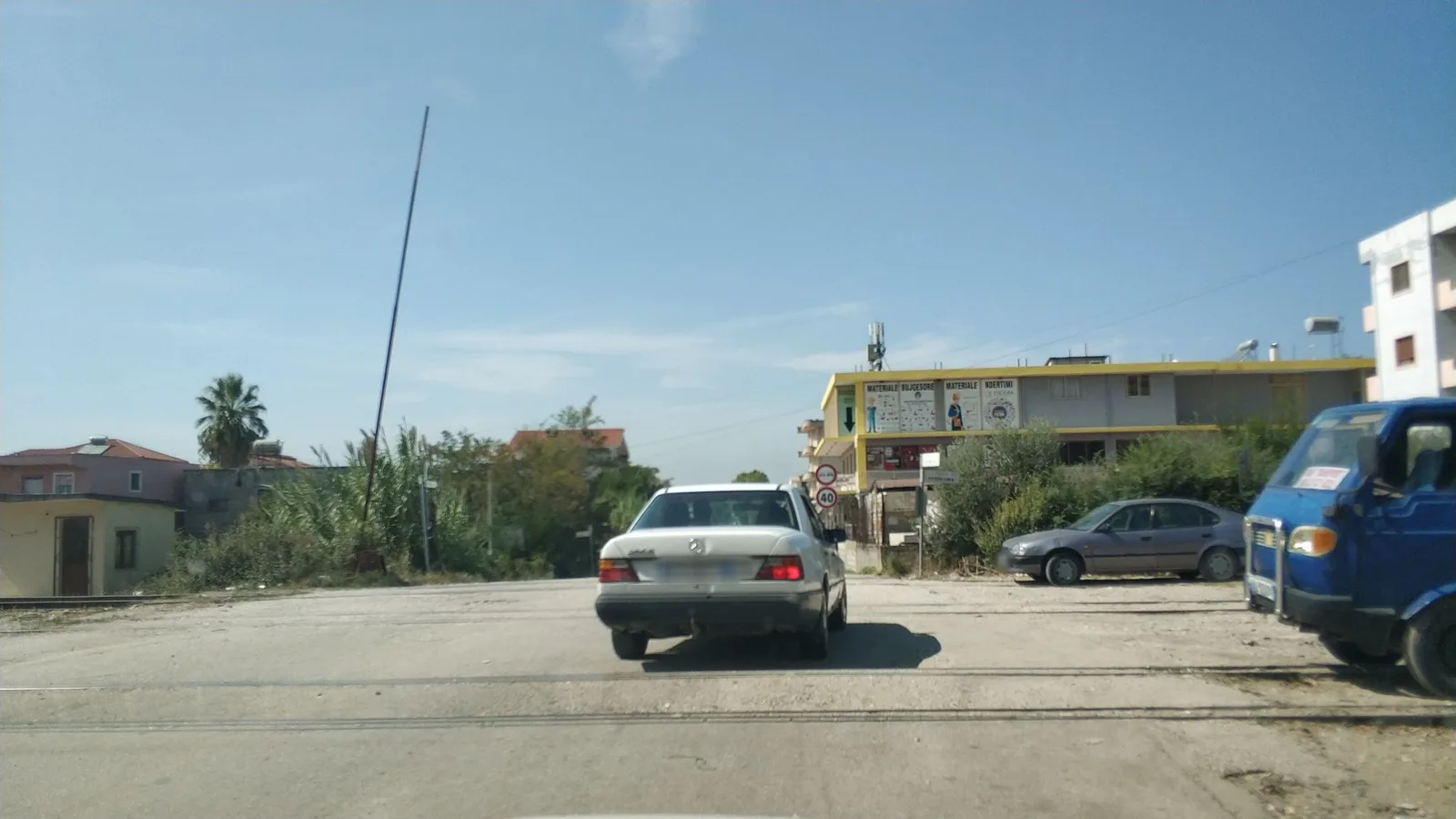
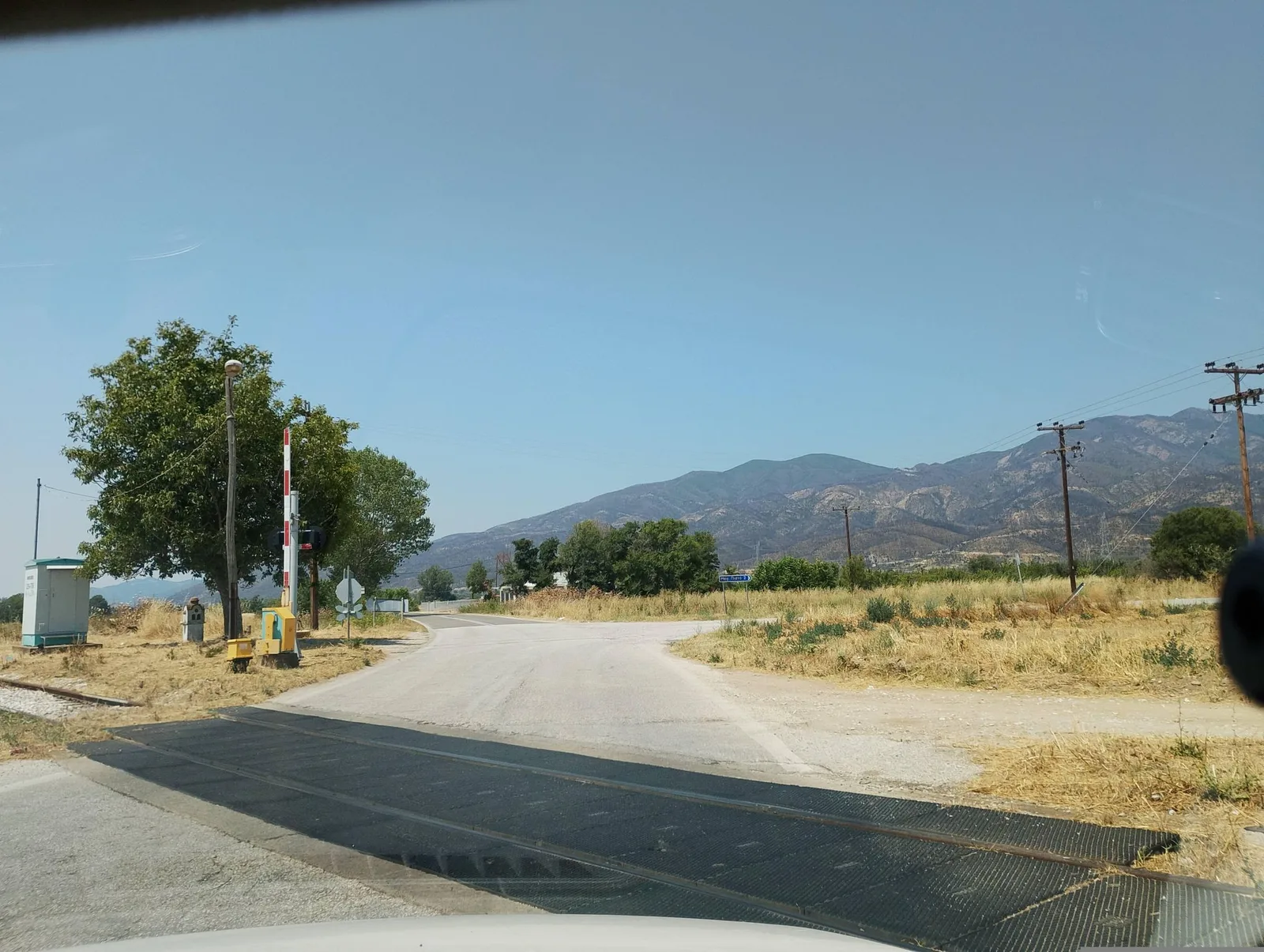
The street-level views below show crossings in rural, small-town and road-access settings on the same network, where local settings differ widely.
3. The infrastructure manager, safety authority and accident investigator
OSE maintains the crossing inventory and the Level Crossing Register, and carries out the upgrades and closures as the state infrastructure manager [2, ↗].
The Rythmistiki Archi Sidirodromon (RAS), the Regulatory Authority for Railways, is an independent authority and the railway safety authority that Directive (EU) 2016/798 requires of every Member State [4, ↗] [7, ↗]. It supervises railway safety, monitors the crossings against the Level Crossing Register and issues recommendations to the infrastructure manager and the operators [1, ↗].
A national investigation body examines serious rail accidents independently. A 2024 reform under Law 5167/2024 strengthened both that body and RAS, and merged OSE with its project and asset subsidiaries into a single railway entity [5, ↗].
That 2024 reform of OSE, RAS and the investigation body followed the head-on collision of two trains near Tempi on 28 February 2023, which killed 57 people. The collision was a dispatch and signalling failure rather than a level crossing accident, yet it reset the very institutions that govern crossing safety [6, ↗].
4. A category-based regime and the crossing register
Greece sets crossing protection by category, active or passive, and monitors each crossing against the OSE Level Crossing Register [1, ↗]. The category and the register drive the protection, a prescriptive approach shared with much of continental Europe, and a comparative per-crossing reading is the kind of layer that can extend it.
Against that record, RAS recommended an integrated system to record and manage the crossings, an automated system to prevent incidents, a committee to study the need for the unprotected crossings, an awareness campaign and clearer road marking on the approach [1, ↗].
5. How crossings come off the network
Crossings come off the network mainly as new, grade-separated lines replace older alignments and as the signalling and electrification works advance, so the count has fallen markedly over the past decade [2, ↗]. That reduction rides the line projects rather than a dedicated crossing budget. RAS has proposed a dedicated study, with the ministry, the infrastructure manager, the operators and local government, to rationalise the unprotected crossings rather than leave their reduction to line projects alone [1, ↗].
6. Comparing the surroundings of crossings
A crossing is both a point of risk and a point of access.
- For the crossings that stay, the risk they carry depends on the nearby population, the emergency access, and the local routes that rely on them.
- For the crossings moving toward upgrade or removal, the same surroundings set the access question, where road users and pedestrians go once the crossing closes or gains an automatic system, and rural sites are often constrained.
Some crossings have simple alternatives. Others touch emergency access, pedestrian and farm circulation, nearby population or the local road network that the route through the crossing connects. Comparing the surroundings of each crossing on the same reference gives the category-based regime a way to rank the passive crossings for attention, as much as field review, detailed engineering and budget commitment on those moving toward a project.
That is the territorial layer SAMRoute structures around crossings, with a common geography, repeatable indicators, a regular refresh and traceable sources, so one crossing can be compared with another [8, ↗].
7. References
Infrastructure manager and inventory
[2] OSE. Network Statement 2025 (OSE, 2025). The infrastructure manager role, the network and the Level Crossing Register. Read
[3] Wikipedia. Level crossings by country (Wikipedia, after UNECE data). The number of level crossings on the Greek network. Read
Safety authority and investigation
[1] Regulatory Authority for Railways. Annual Safety Report 2021 (RAS, 2022). The active and passive crossings, level crossings as the largest serious-accident category in 2021, and the recommendations on recording, prevention and unprotected crossings. Read
[4] Regulatory Authority for Railways. Regulatory Authority for Railways (RAS). The independent railway safety authority. Read
[5] Railway Gazette. Greece restructures railway infrastructure manager (Railway Gazette, 2025). The Law 5167/2024 merger of OSE with its subsidiaries and the strengthening of RAS and the investigation body. Read
[6] Railway Gazette. Tempi accident report exposes Greek railway safety failures (Railway Gazette, 2025). The 28 February 2023 Tempi collision and the safety reform it set in motion. Read
[7] European Parliament and Council. Directive (EU) 2016/798 of 11 May 2016 on railway safety (OJ L 138, 26.5.2016). Requires each Member State to set up a national safety authority and an independent investigating body. Read
Accident history
[9] Ethnos. Μεταφερόμενοι φύλακες για αφύλακτες διαβάσεις (Ethnos). The hundreds of unguarded crossings on OSE's network, 269 in the centre and south and 283 in the north. Read
[10] MEGA TV. Πύργος, ένας νεκρός μετά από παράσυρση ΙΧ από τρένο (MEGA, 28 May 2024). The fatal collision at a guarded crossing in Pyrgos. Read
[11] Protothema. Σύγκρουση με Προαστιακό στην Πάτρα (Protothema, 15 January 2025). The collision near Patra after the barriers reportedly stayed up. Read
[12] Prisma Radio. Σουφλί, τρένο παρέσυρε ΙΧ σε αφύλακτη διάβαση (Prisma Radio, 23 September 2025). The collision at an unguarded crossing near Soufli and the Hellenic Train statement. Read
[8] SAMRoute. Rail cadence, level crossings and emergency access (position page). Open