Level crossings in Slovakia. Comparing crossings before upgrade and removal decisions
Slovakia keeps upgrading and modernising its level crossings, with ŽSR managing the inventory, the Transport Authority acting as the railway safety authority, and the Unit for Investigation of Railway Accidents investigating accidents.
The following sections present the accident history, the level crossing system, the public actors, the regime, and the modernisation programme. The last section covers the territorial context that SAMRoute models.
1. Accident history at level crossings
On the Slovak network, the level crossing gathers more accident victims than any other railway location, and Slovak research traces those accidents above all to road users who cross against the warning rather than to the crossing equipment [10, ↗]. The recent fatal collisions span the protection range, from a stop-sign crossing to a barrier-protected one:
- On 16 April 2026, a regional passenger train struck a truck stranded on an uncontrolled crossing near Dunajská Streda and derailed, killing the truck driver and injuring twenty-one people on the train [11, ↗].
- On 27 June 2024, a EuroCity train struck a bus on a barrier-protected crossing near Nové Zámky, killing seven people aboard the bus and injuring others [7, ↗].
- On 21 February 2009, a train struck a coach carrying skiers at a crossing near Polomka that had only a stop sign, killing twelve and injuring about twenty [12, ↗].
2. The Slovak level crossing system
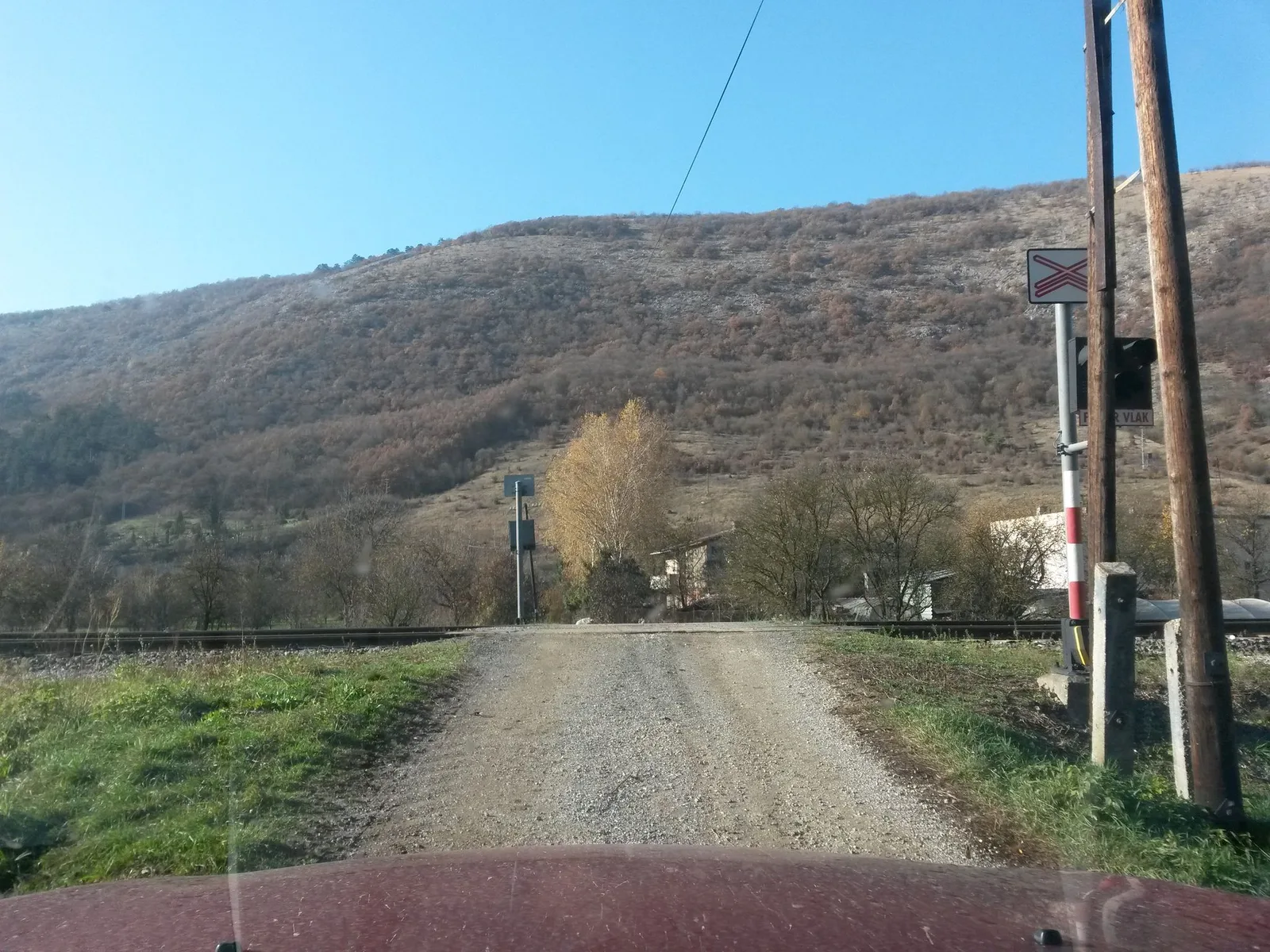
ŽSR, the state infrastructure manager, owns the railway lines, tunnels, bridges, stations and the level crossing inventory [1, ↗]. The network counted about 2,300 level crossings in the late 2000s, a stock that has fallen since through line modernisation [10, ↗]. The crossings range from passive sites marked by the warning cross alone to active sites carrying light signals and, on some, barriers [2, ↗]. Since June 2012, each crossing carries a JIC unique identification number that records its dispatcher contact, track section, kilometre position, road details and coordinates, so a caller or a dispatcher can place it precisely [2, ↗].
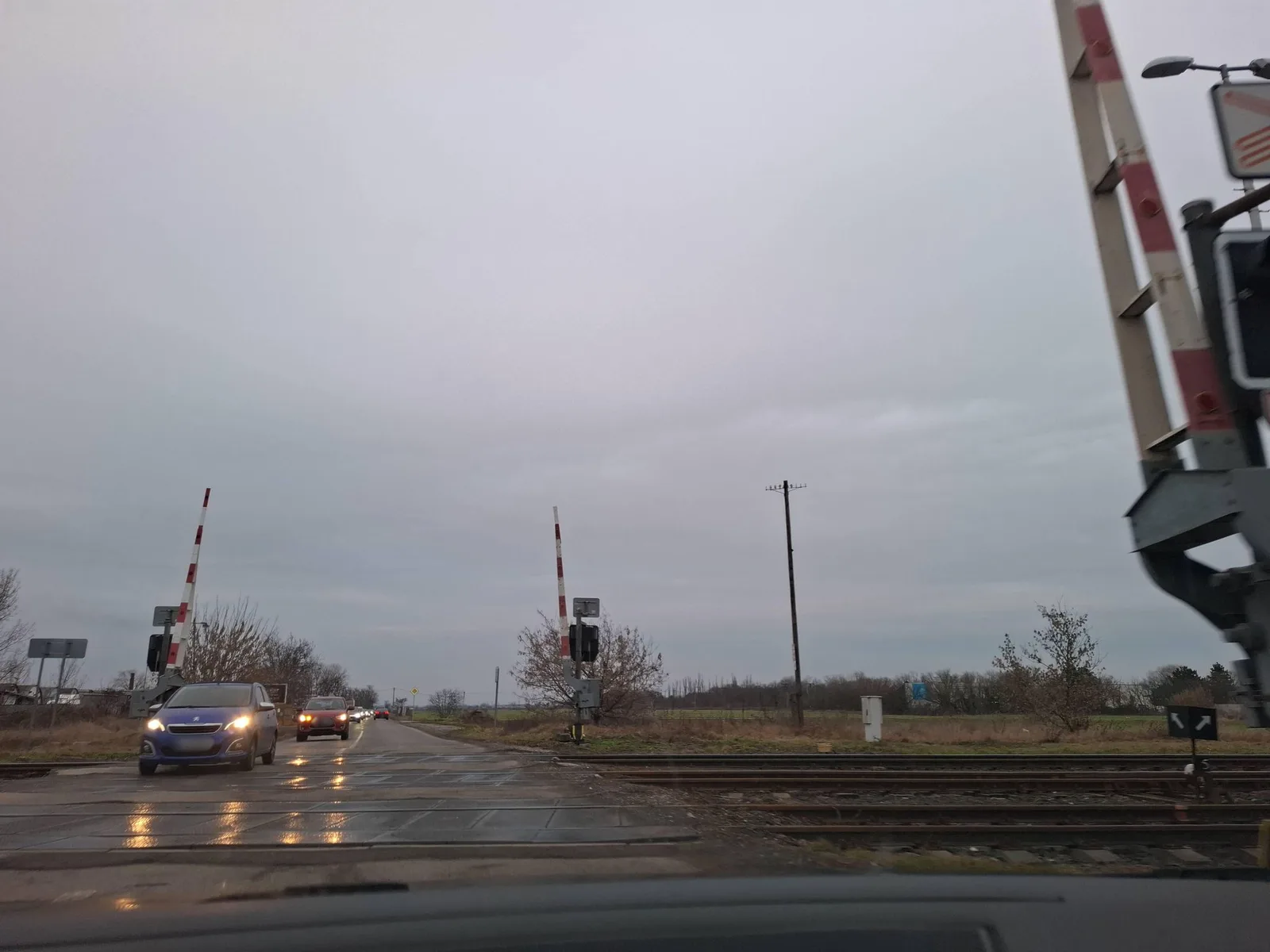
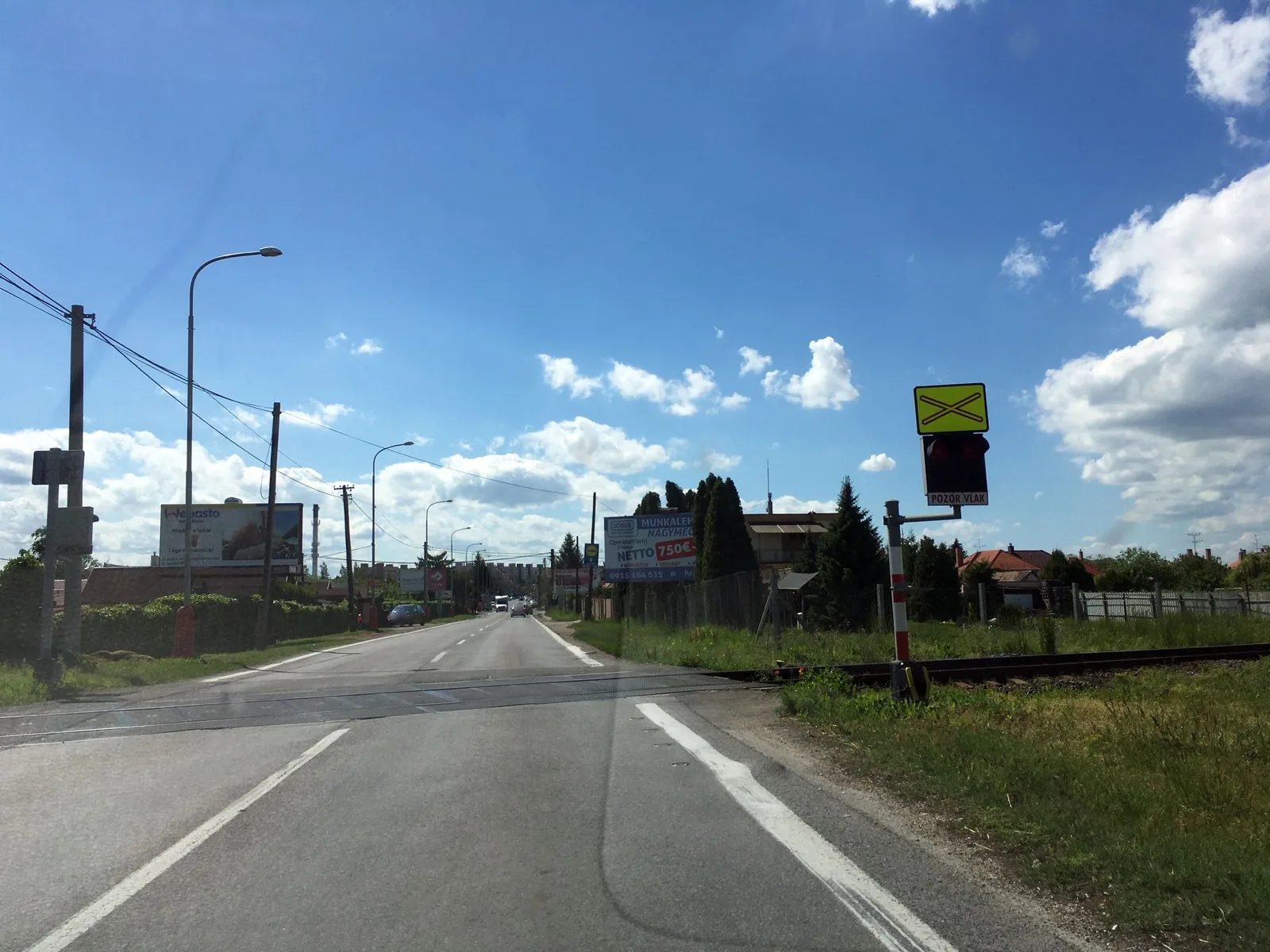
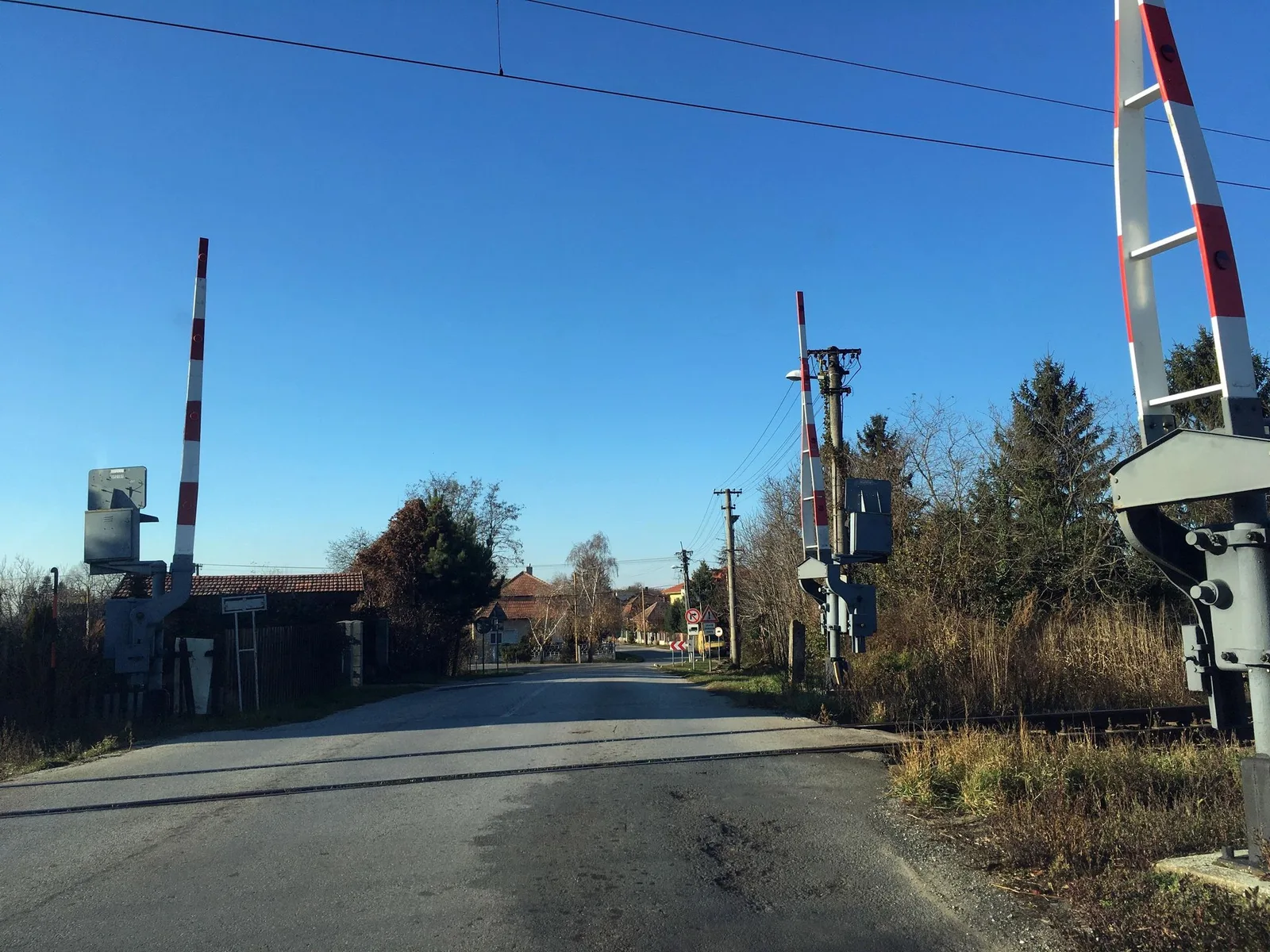
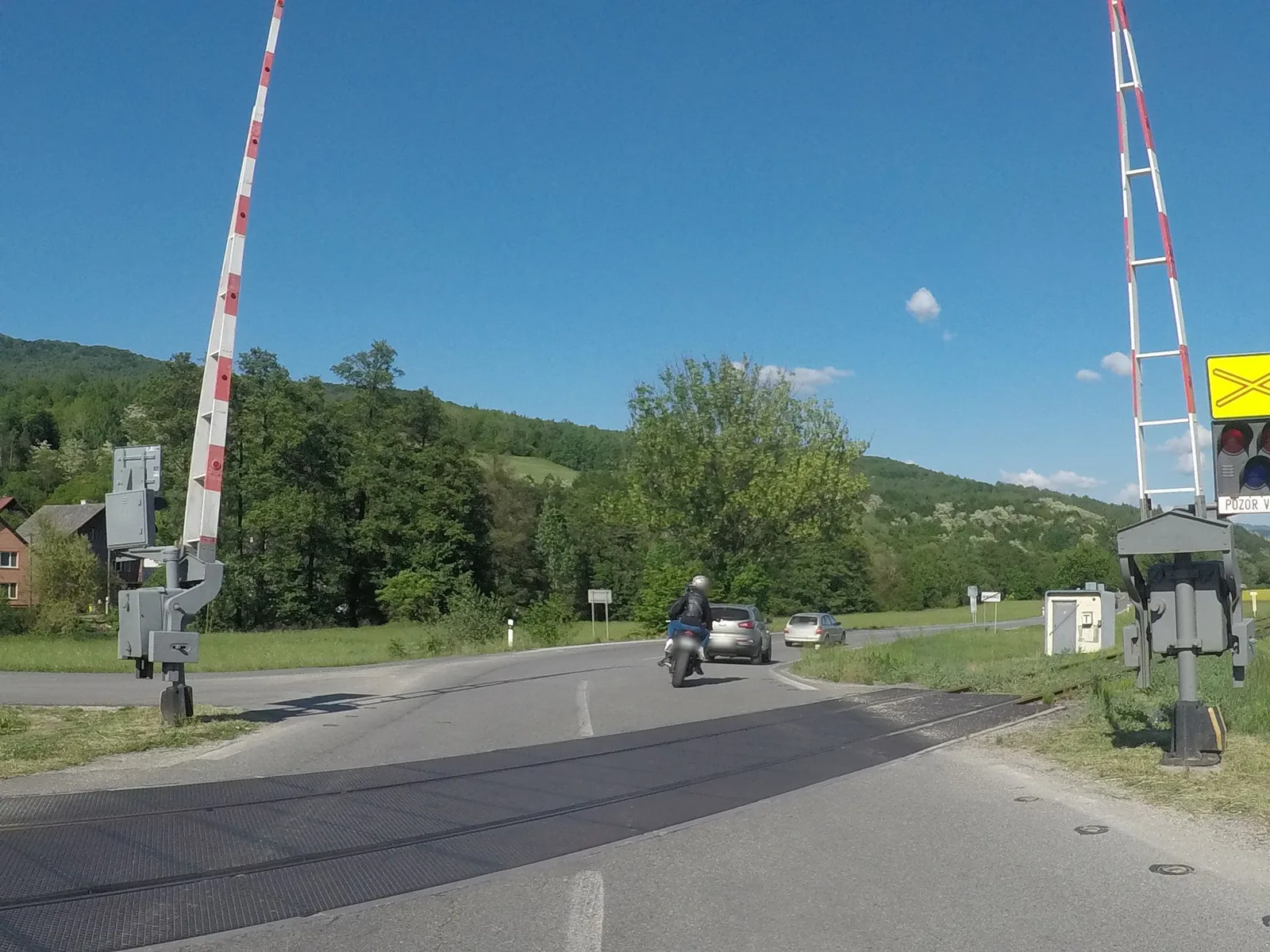
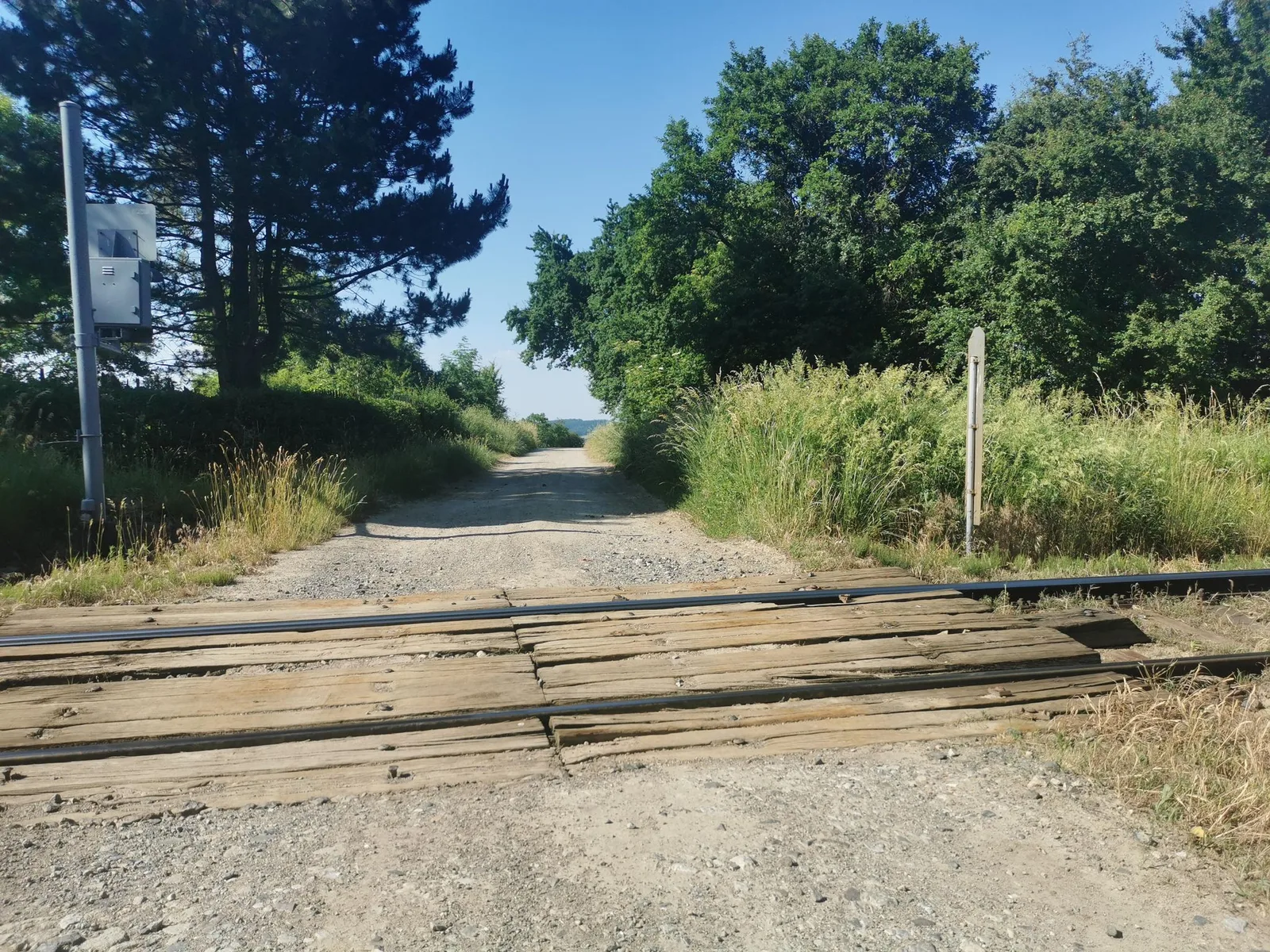
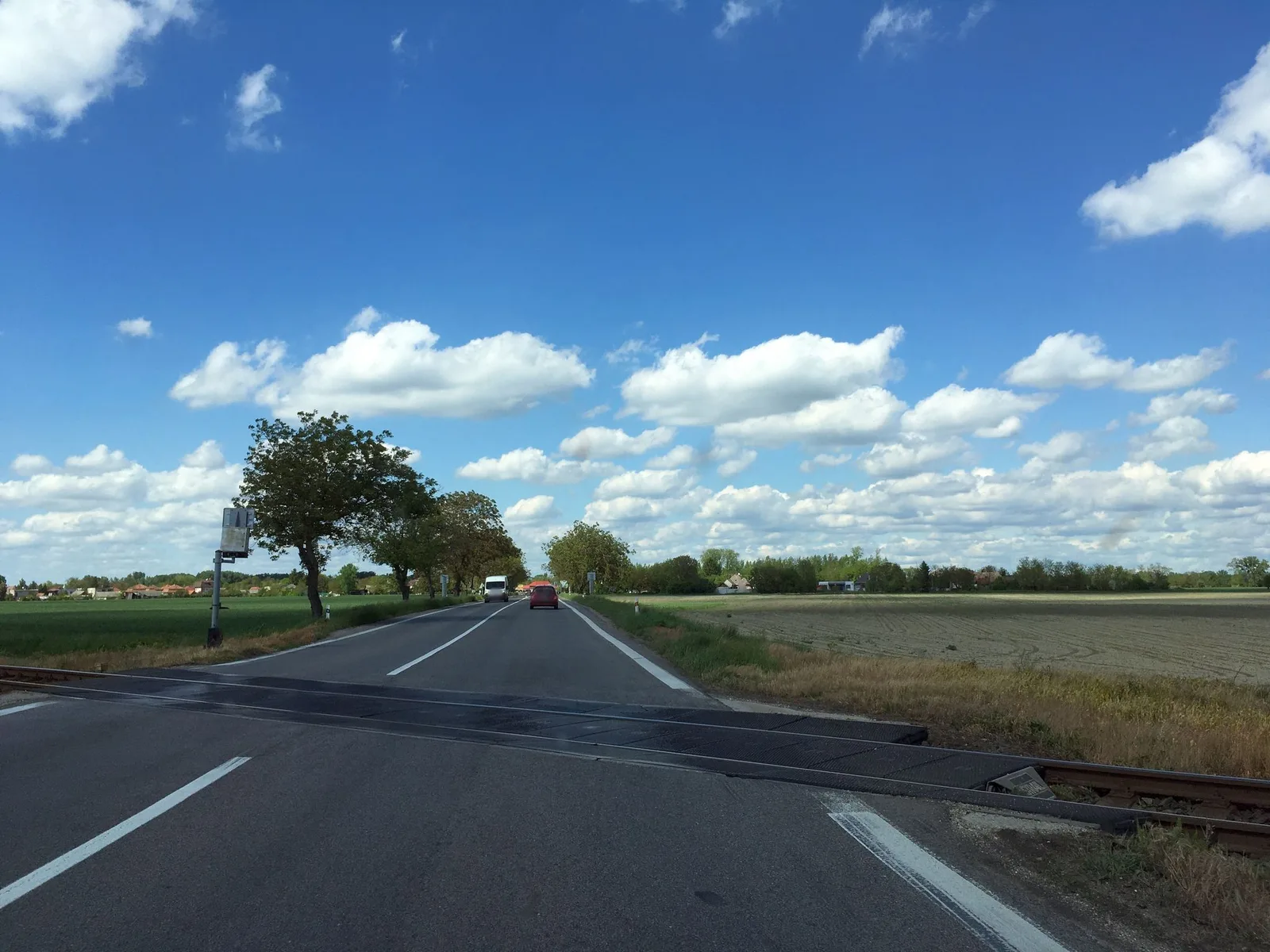
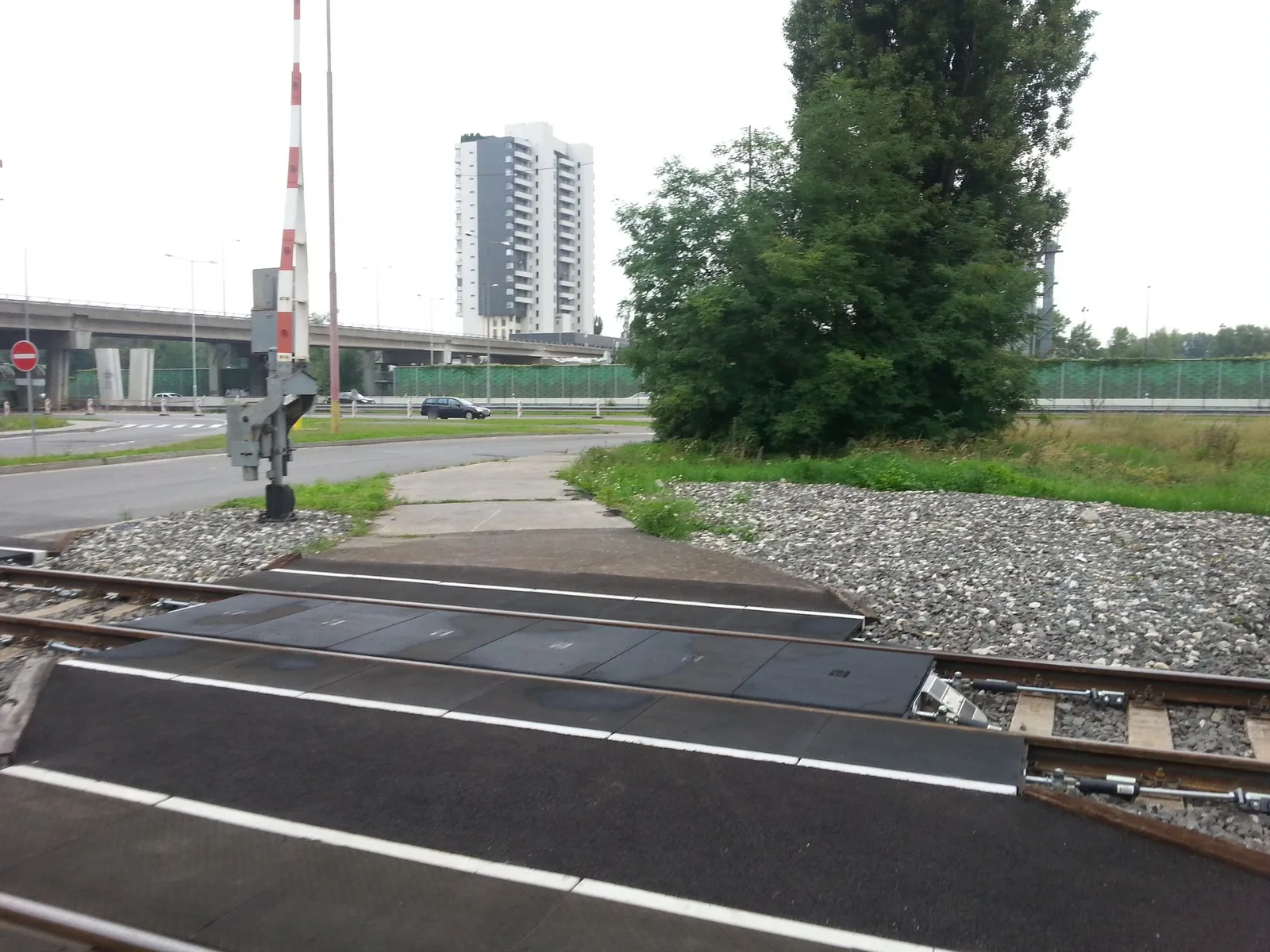
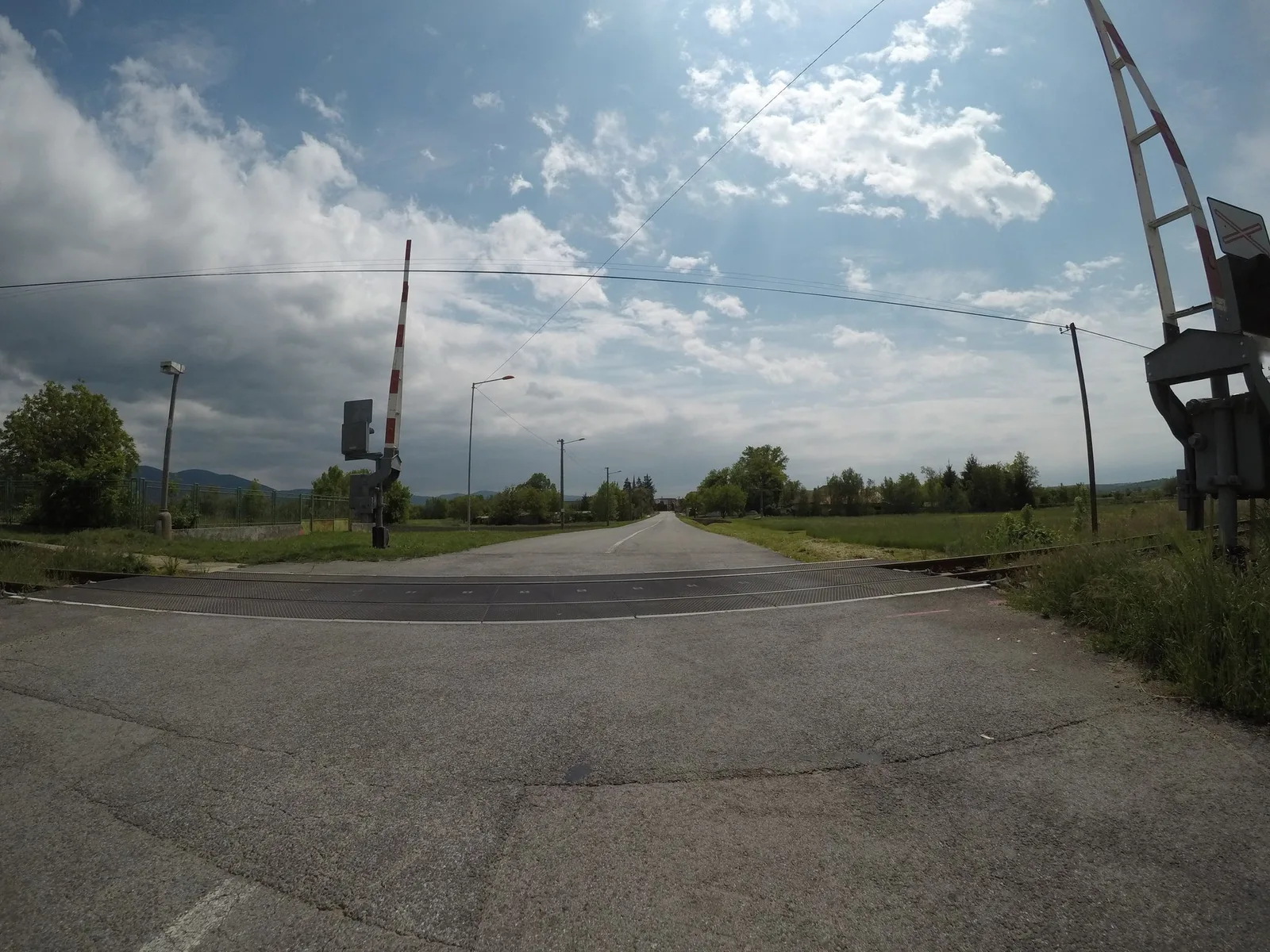
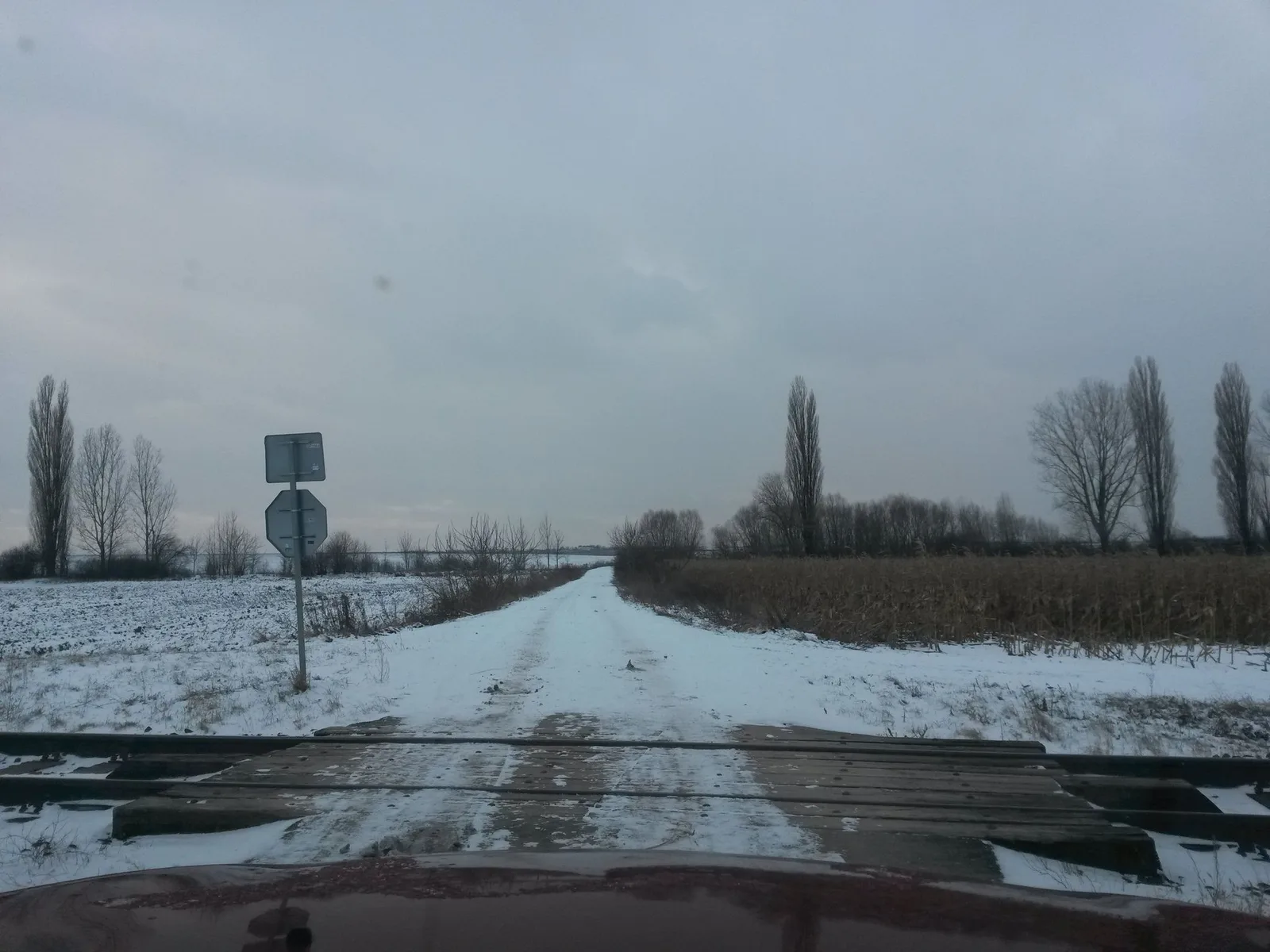
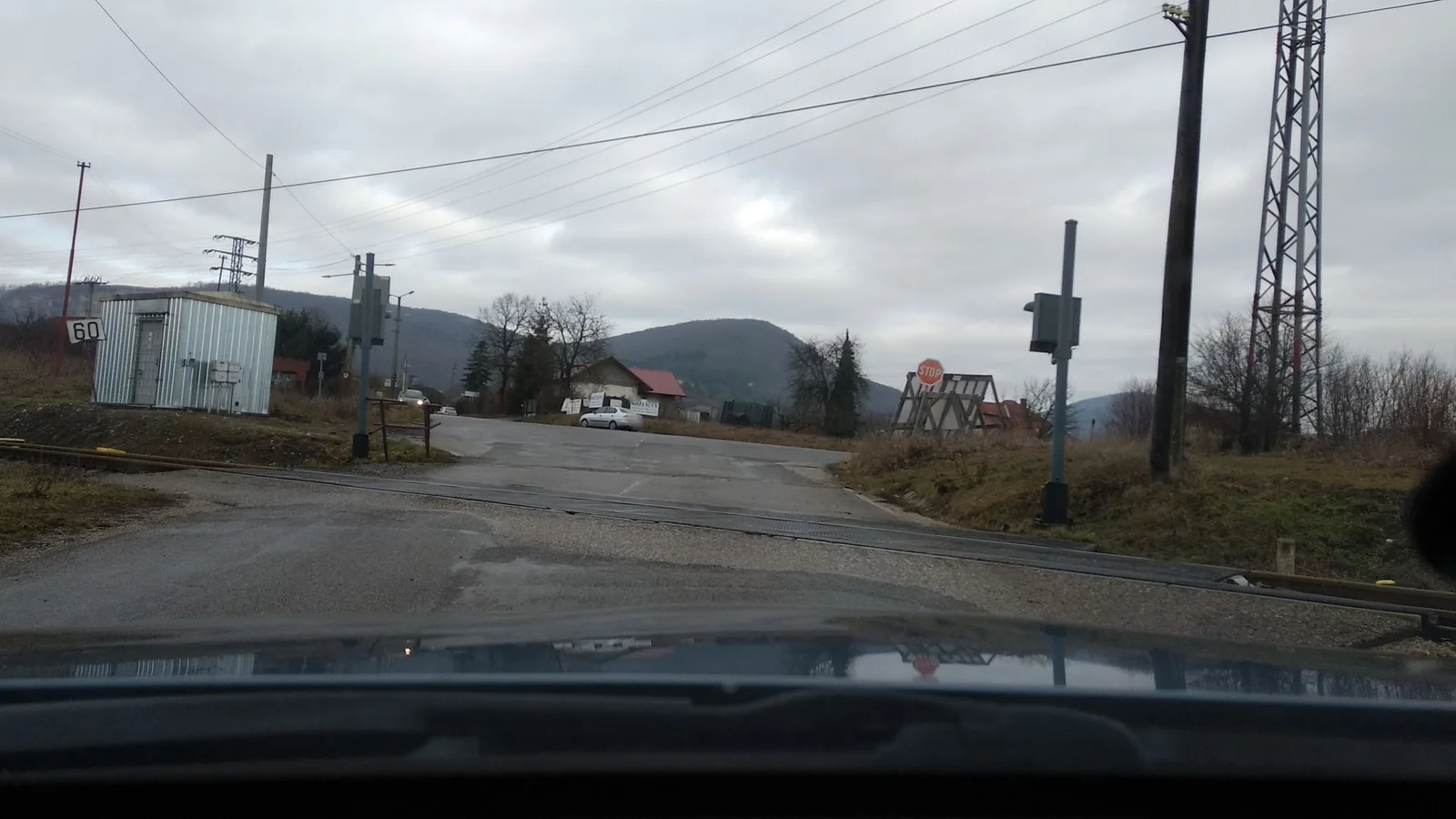
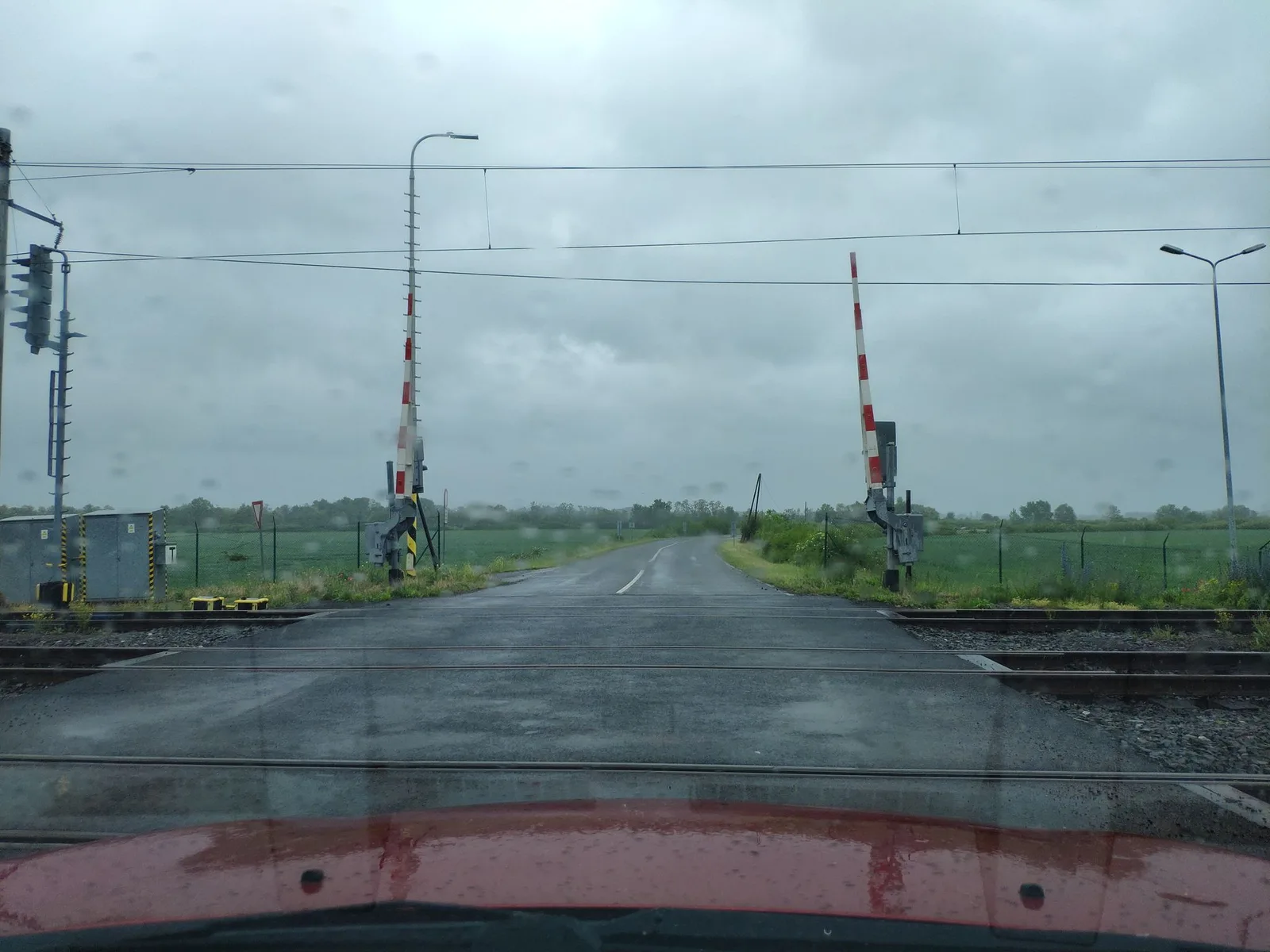
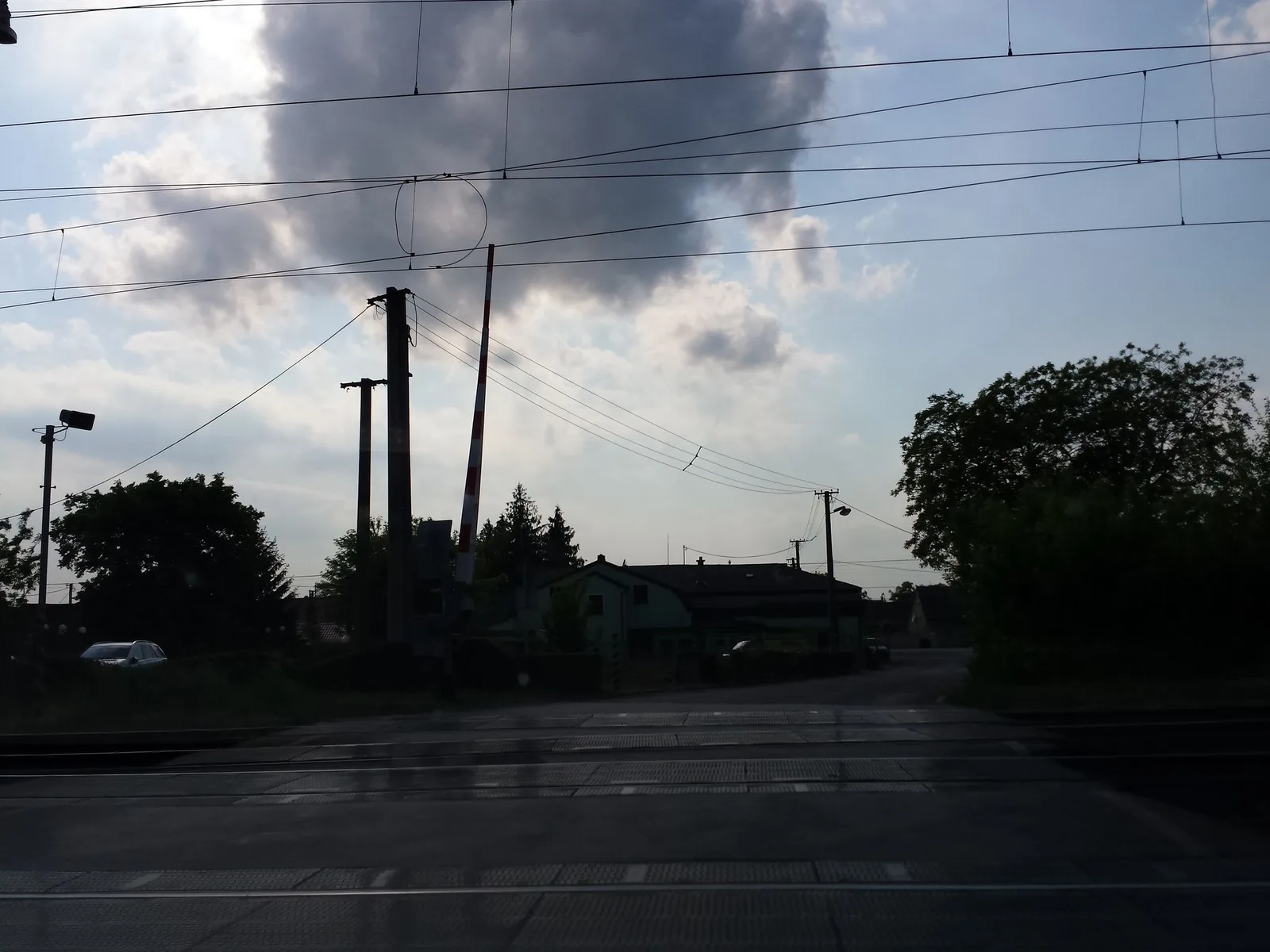
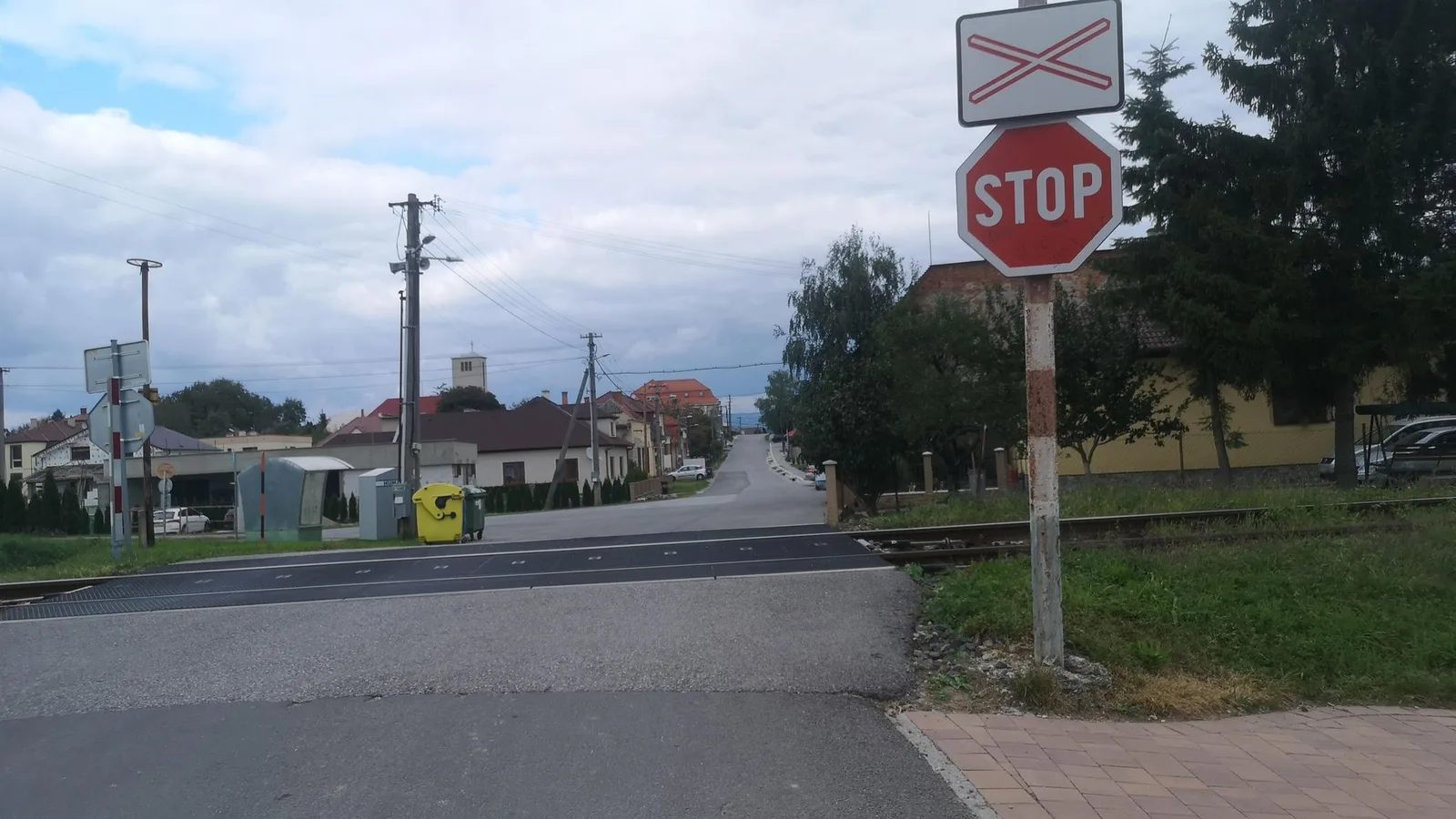
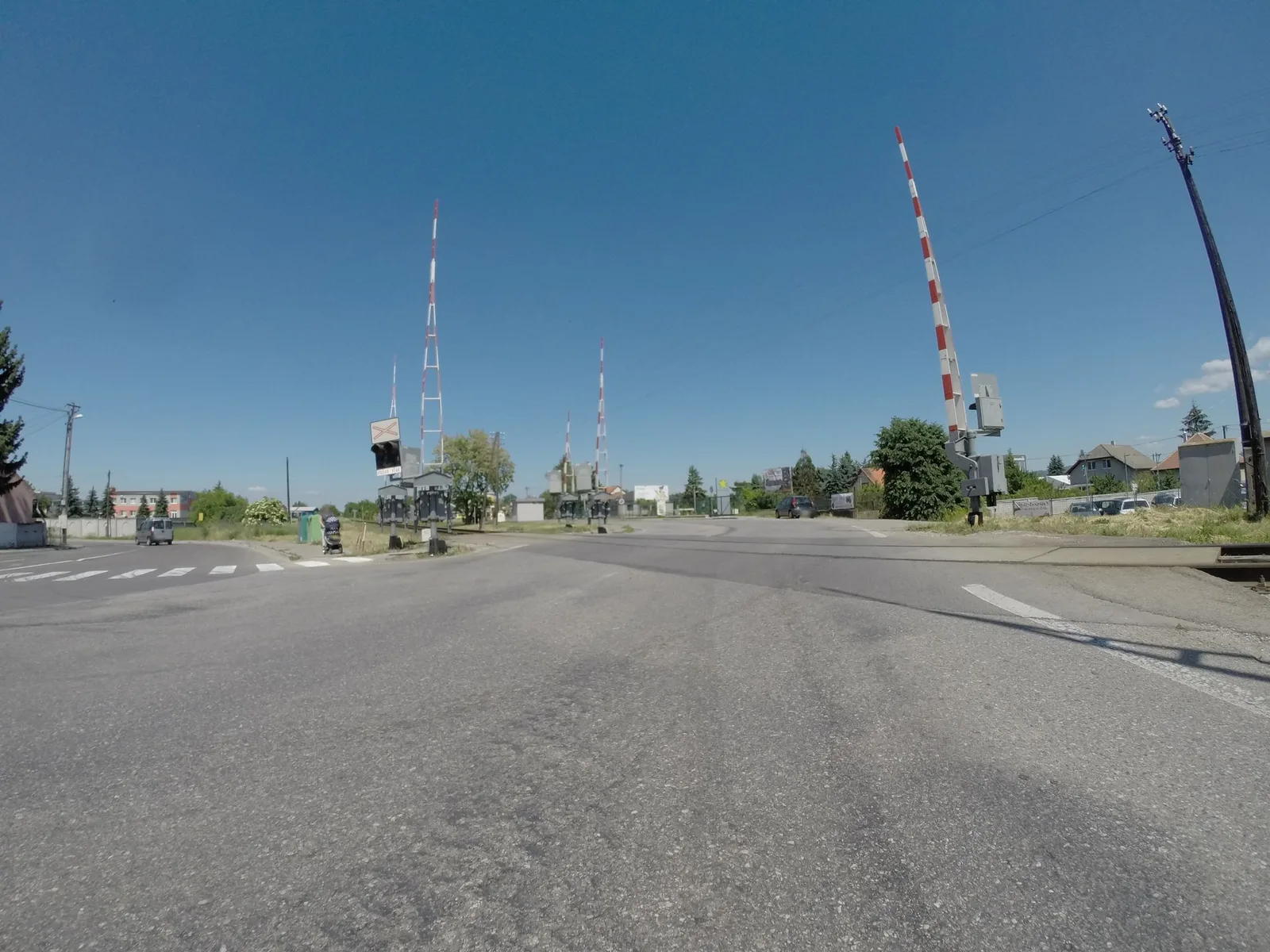
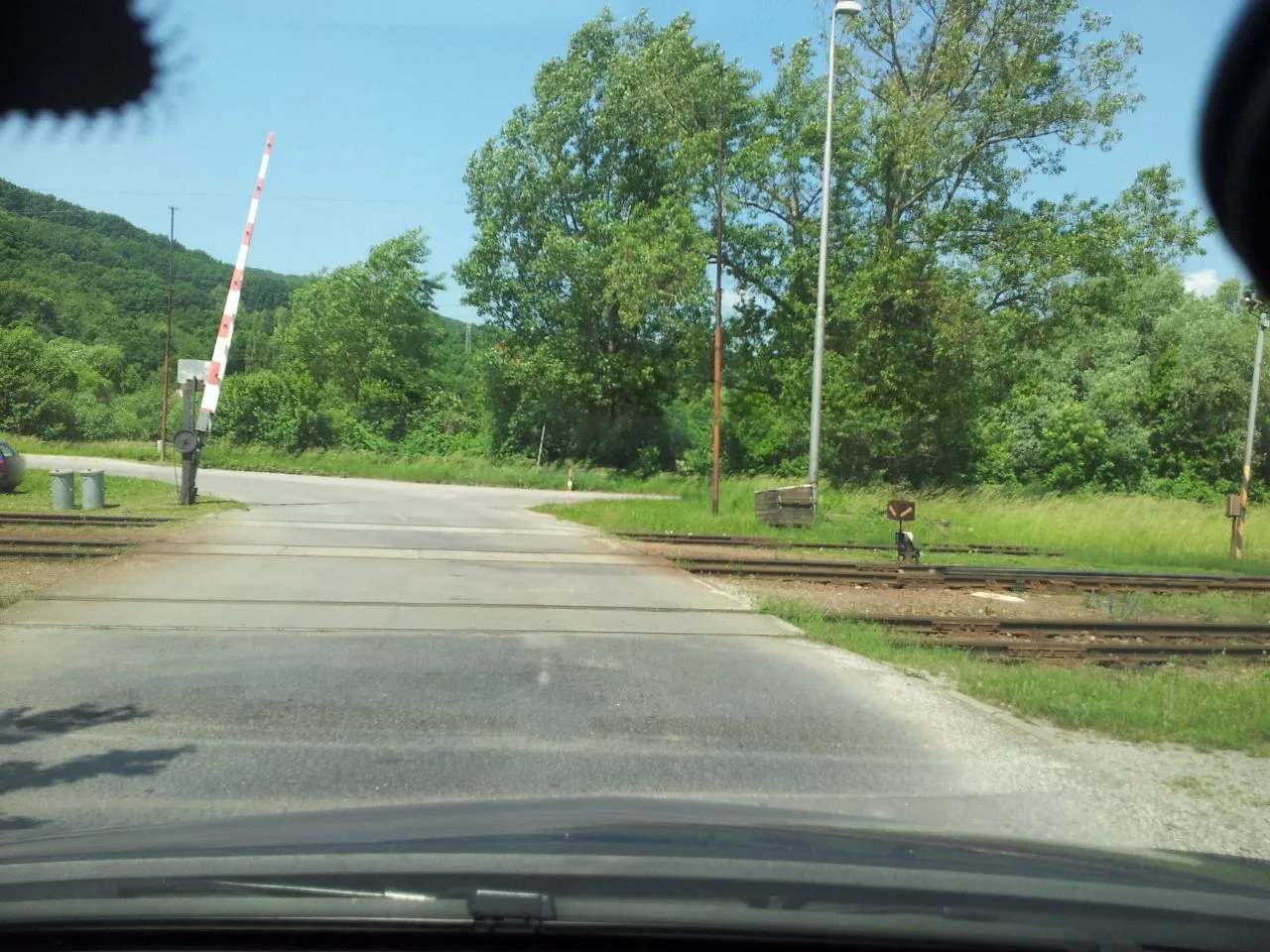
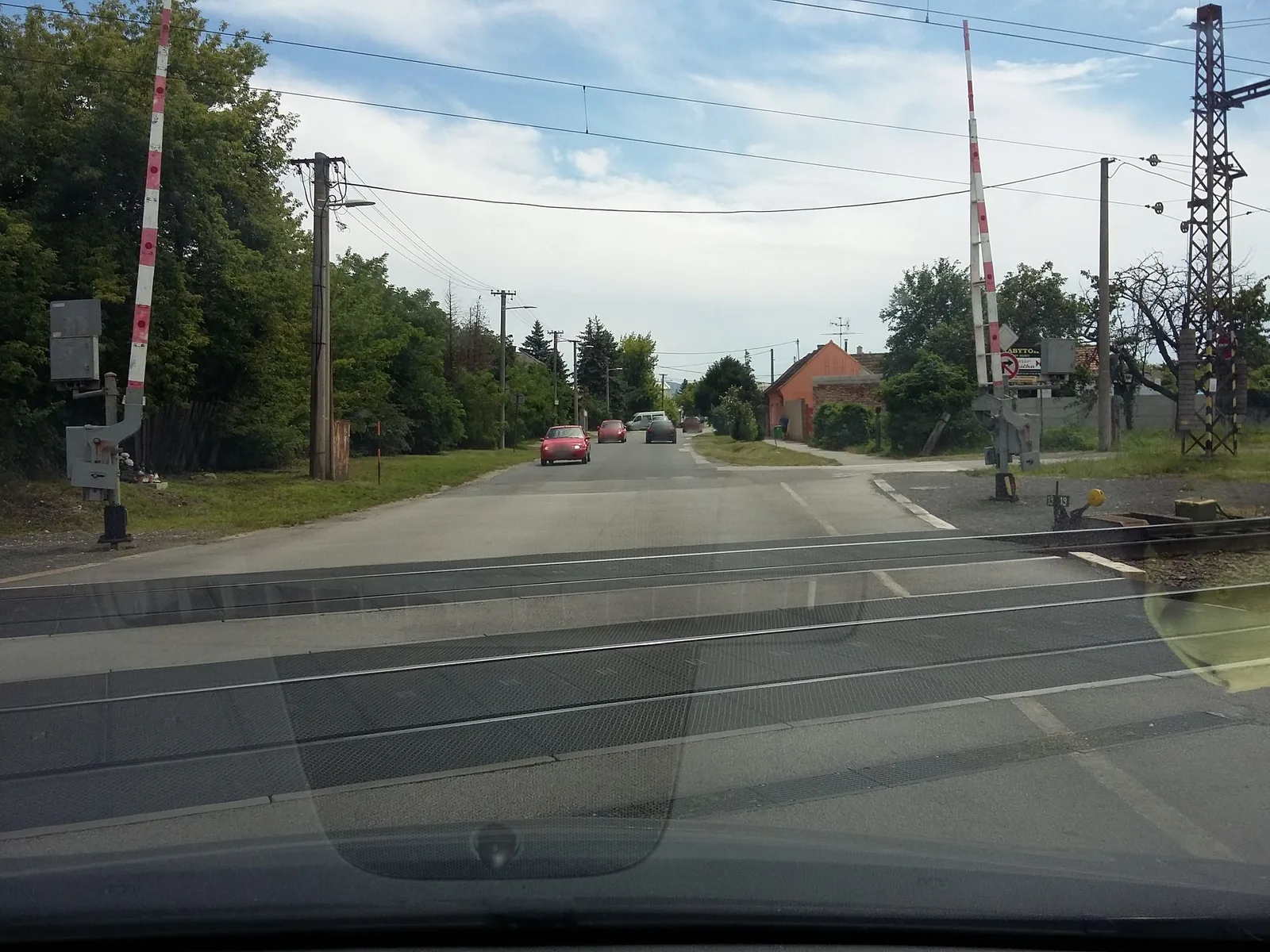
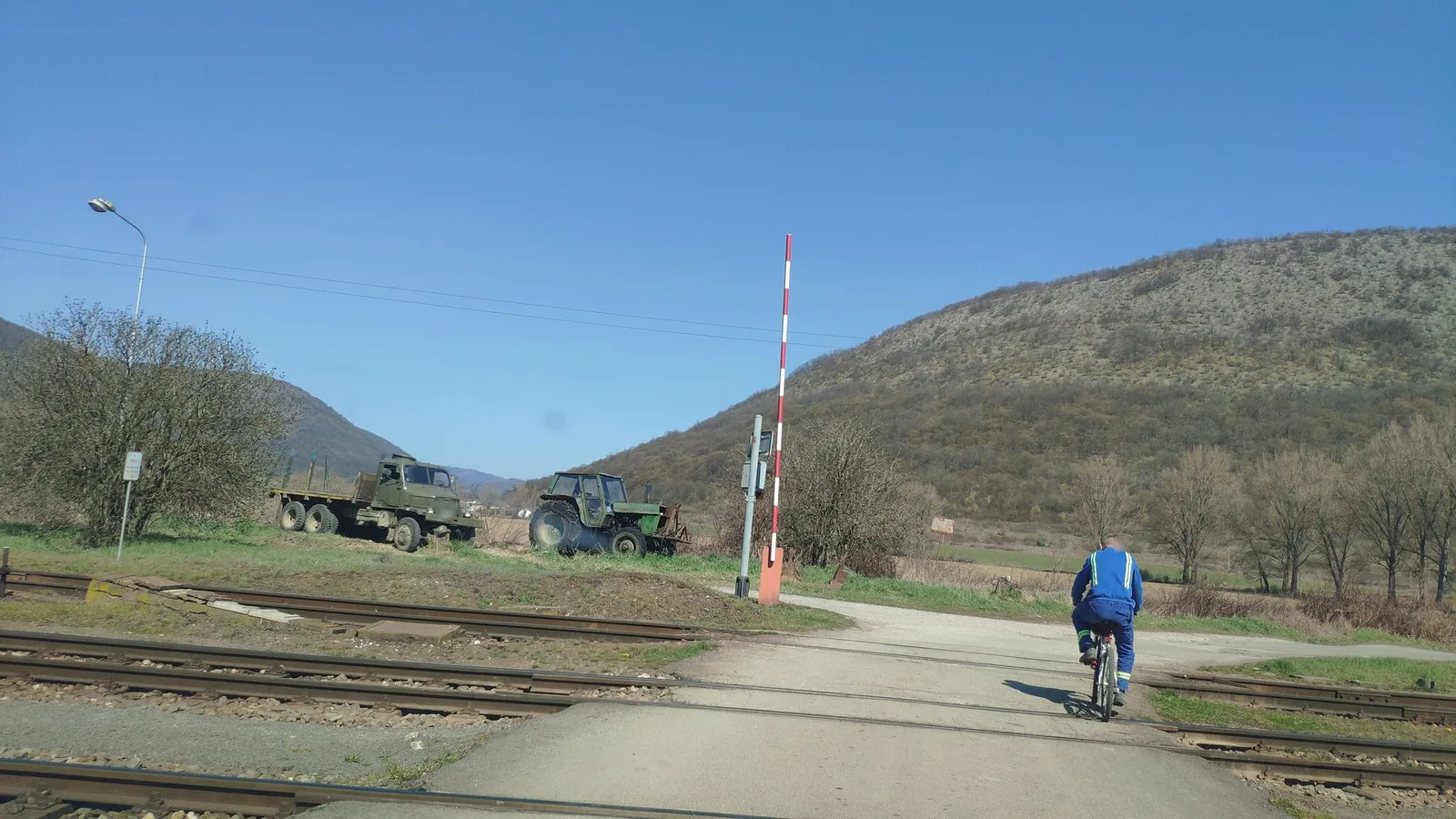
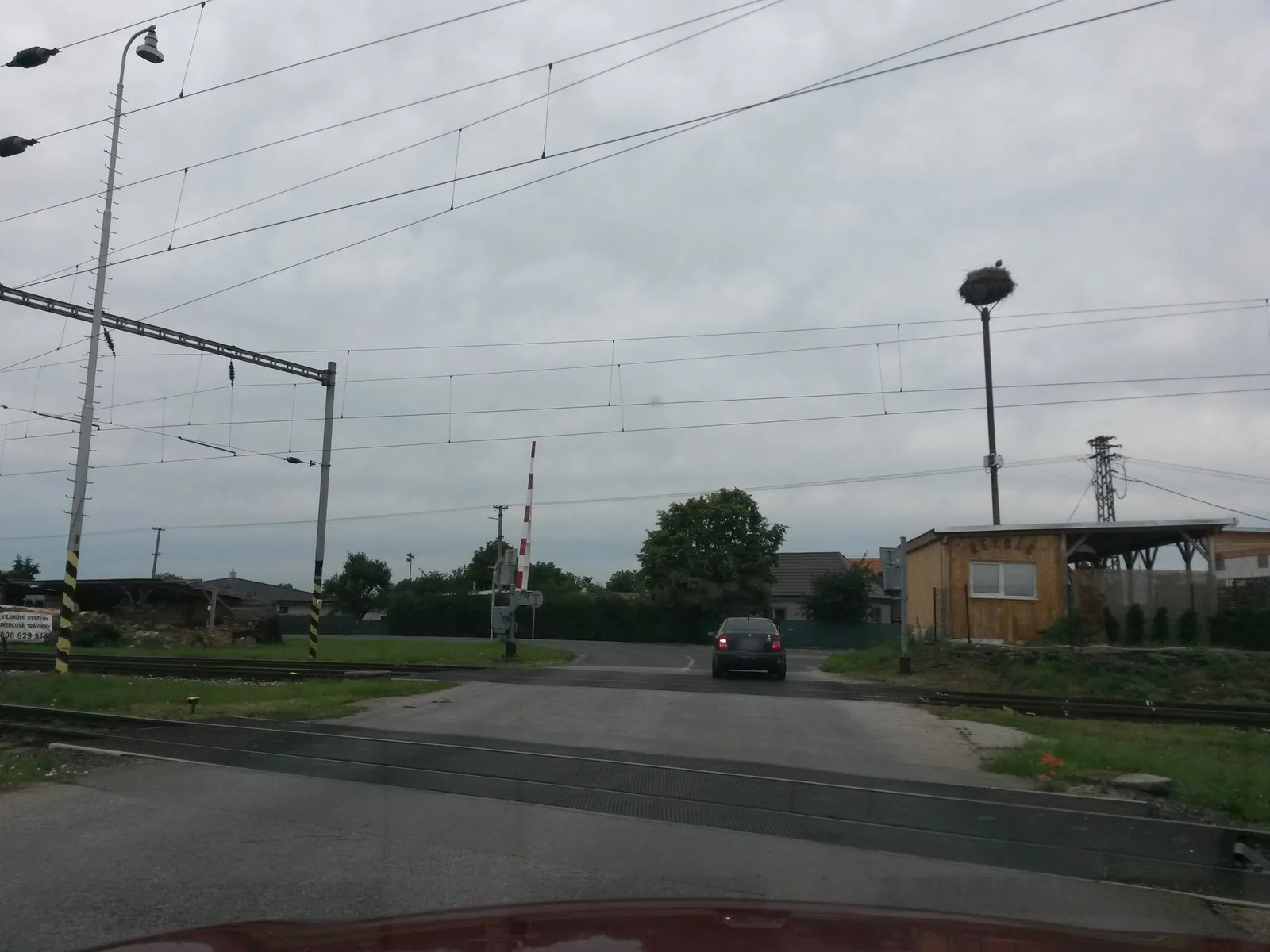
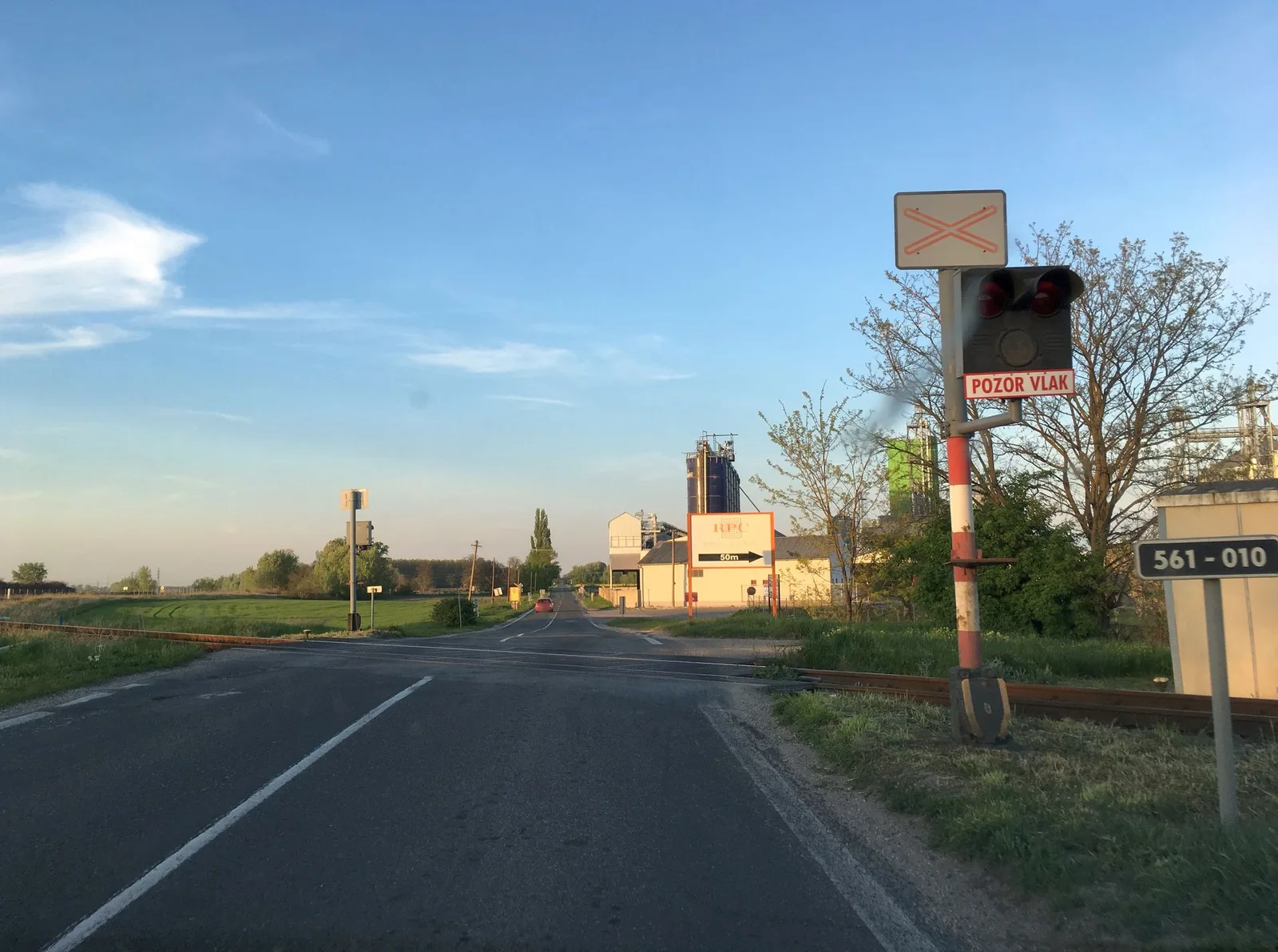
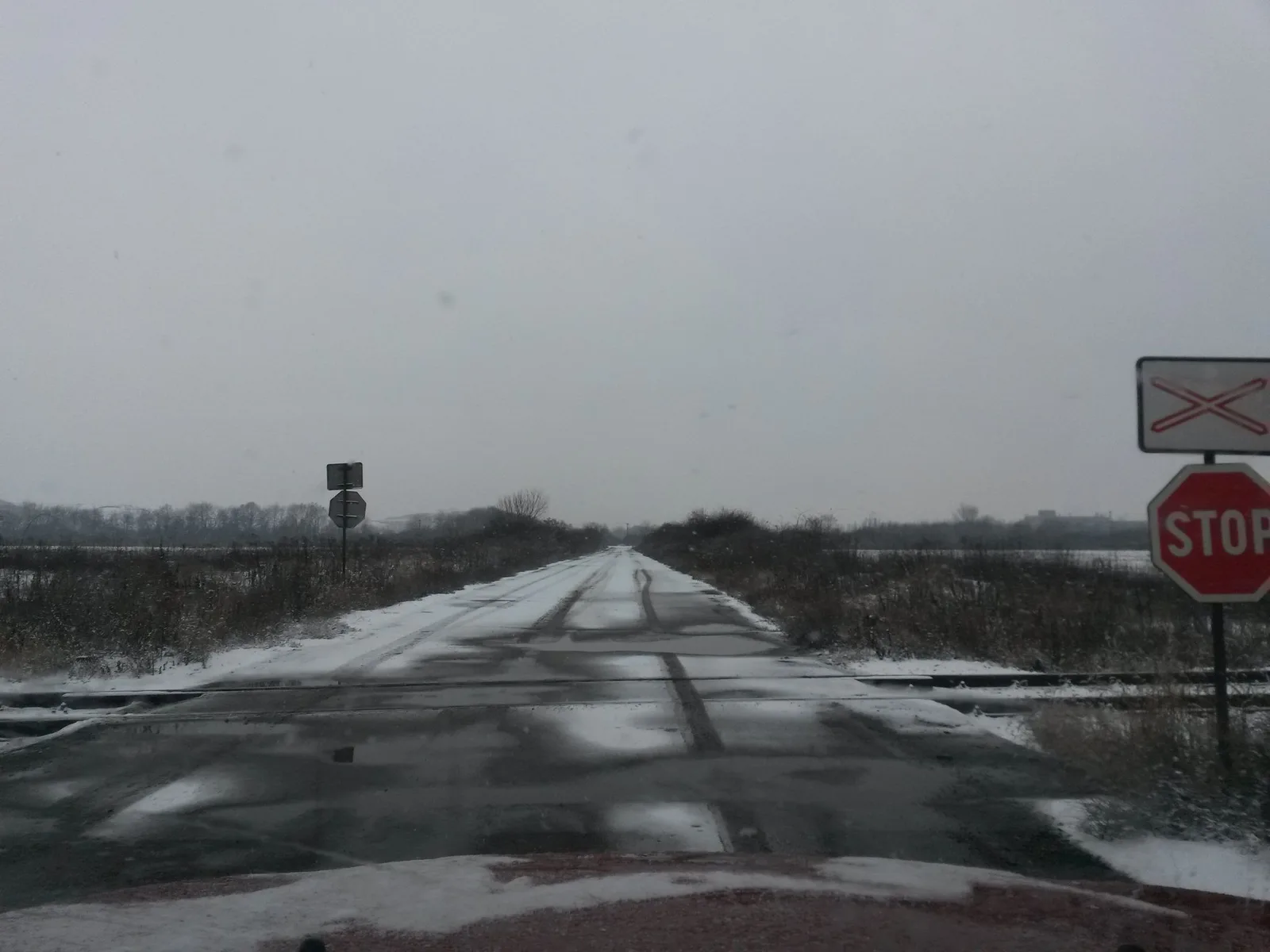
The street-level views below show crossings in rural, small-town and road-access settings on the same network, where local settings differ widely.
3. The infrastructure manager, safety authority and accident investigator
ŽSR, the state-owned railway infrastructure manager, maintains the crossing inventory and carries out the upgrades and modernisation across the network [1, ↗].
The Transport Authority, Dopravný úrad, set up on 1 January 2014 by Act No. 402/2013 Coll., is the railway safety authority that Directive (EU) 2016/798 requires of every Member State [5, ↗]. It issues safety certificates and supervises railway safety [3, ↗].
The Unit for Investigation of Railway Accidents, founded on 1 January 2010, investigates serious rail accidents and sits as a structural unit within the Section of railways at the Ministry of Transport, independent in its organisation from the parties whose interests could conflict with that task [4, ↗].
4. A prescriptive regime and risk research
Slovak technical regulations set the protection a crossing must carry from the train speed, the road traffic and the sight distances, a prescriptive approach that a comparative per-crossing reading can extend [2, ↗]. The JIC database, structured per crossing since 2012, holds the location, road and protection details that such a reading draws on [2, ↗].
A comprehensive risk assessment from the University of Žilina scores each crossing on two axes, the probability of an accident and its consequences, building the probability from the historical accident record and structured expert judgement through fault-tree and event-tree analysis, and applying the failure-mode method of the European common safety method [9, ↗]. The model reads the protection type, the traffic volumes, the accident history and the crossing configuration, the same fields the JIC database already holds for every crossing [9, ↗]. It stays a research method rather than a deployed national score, yet it shows what that per-crossing data could support [9, ↗].
5. Modernising the network
ŽSR upgrades crossings from passive to active protection as part of line modernisation, particularly along the TEN-T corridors, with the work co-funded through the Operational Programme Integrated Infrastructure and the EU Cohesion Fund [1, ↗]. Where a corridor is rebuilt the crossings come off the line altogether, replaced by overpasses and underpasses with the signalling renewed alongside [13, ↗].
- The Považská Bystrica to Považská Teplá section of the Púchov–Žilina line replaced a crossing with a new overpass and added line-block signalling, within a 471 million euro project that drew 285 million from the Cohesion Fund [13, ↗].
- The Žilina to Krásno nad Kysucou line rebuilt twelve crossings within a 159 million euro modernisation, 86 million of it from the Cohesion Fund [14, ↗].
- A further 135 million euro agreement with the European Commission funds more line modernisation and railway safety [15, ↗].
ERTMS deployment on the Bratislava–Žilina–Košice corridor renews the line and brings more crossing upgrades or removals with it [6, ↗].
6. Comparing the surroundings of crossings
A crossing is both a point of risk and a point of access.
- For the crossings that stay, the risk they carry depends on the nearby population, the emergency access, and the local routes that rely on them.
- For the crossings moving toward upgrade or removal, the same surroundings set the access question, where road users and pedestrians go once the crossing closes or gains protection, and rural sites are often constrained.
Some crossings have simple alternatives. Others touch emergency access, pedestrian and farm circulation, nearby population or the local road network that the route through the crossing connects. Comparing the surroundings of each crossing on the same reference helps rank where to upgrade, modernise or remove first, as much as field review, detailed engineering and budget commitment on those moving toward a project.
That is the territorial layer SAMRoute structures around crossings, with a common geography, repeatable indicators, a regular refresh and traceable sources, so one crossing can be compared with another [8, ↗].
7. References
Infrastructure manager and inventory
[1] ŽSR. Company profile (Železnice Slovenskej republiky). The state infrastructure manager role and the assets it owns, including the level crossings. Read
[2] ŽSR. Železničné priecestia všeobecne (Železnice Slovenskej republiky). The crossing protection types and the JIC unique identification number system in place since June 2012. Read
Safety authority and investigation
[3] Dopravný úrad. Transport Authority (Dopravný úrad). The railway safety authority, set up on 1 January 2014 by Act No. 402/2013 Coll. Read
[4] Ministry of Transport of the Slovak Republic. NIB Annual Report 2023 (European Union Agency for Railways). The Unit for Investigation of Railway Accidents, its 2010 founding, its independence, and the level crossing accident record. Read
Modernisation and accident record
[6] European Commission. ERTMS deployment in Slovakia (DG MOVE). The ERTMS programme on the Bratislava–Žilina–Košice corridor. Read
[13] European Commission. Modernisation of the Púchov–Žilina railway line between Púchov and Považská Teplá (Inforegio). The crossing replaced by an overpass, the line-block signalling and the 471 and 285 million euro figures. Read
[14] European Commission. Modernisation of the railway track Žilina – Krásno nad Kysucou (Regional Policy evaluation). The twelve crossings rebuilt and the 159 and 86 million euro figures. Read
[15] European Newsroom. Slovakia will use 135 million euros from EU funds for the modernization of railway transport (European Newsroom). The 135 million euro agreement for line modernisation and railway safety. Read
[7] Wikipedia. 2024 Nové Zámky rail accident (Wikipedia). The 27 June 2024 level crossing collision between a EuroCity train and a bus. Read
[11] Caliber.az. One dead as train derails after collision in Slovakia (Caliber.az, 2026). The 16 April 2026 collision with a truck at an uncontrolled crossing near Dunajská Streda. Read
[12] Wikipedia. Brezno train accident (Wikipedia). The 21 February 2009 collision between a train and a ski coach at a stop-sign crossing near Polomka. Read
Risk research and accident factors
[9] M. Lukáš, J. Famfulík. Comprehensive risk assessment of railway crossings in the Slovak Republic (University of Žilina, 2021). The double-index probability-and-consequence model, the fault-tree, event-tree and failure-mode analysis and the crossing variables. Read
[10] L. Badin et al. Main factors influencing the accident rate at level crossings of ŽSR. The crossing count, level crossings as the railway location with the most accident victims, and road-user behaviour as the dominant cause. Read
European framework
[5] European Parliament and Council. Directive (EU) 2016/798 of 11 May 2016 on railway safety (OJ L 138, 26.5.2016). Requires each Member State to set up a national safety authority and an independent investigating body. Read
[8] SAMRoute. Rail cadence, level crossings and emergency access (position page). Open