Level crossings in Austria. Comparing crossings before removal and modernisation decisions
Austria keeps reducing and upgrading its level crossings, with ÖBB-Infrastruktur managing the inventory, the Bundesministerium für Innovation, Mobilität und Infrastruktur acting as the railway safety authority, and the Sicherheitsuntersuchungsstelle des Bundes investigating accidents.
The following sections present the accident history, the level crossing system, the public actors, the prescriptive regime, and the elimination programme. The last section covers the territorial context that SAMRoute models.
1. Accident history at level crossings
The Rechnungshof, the Austrian Court of Audit, reviewed the 2017 to 2021 period and recorded 376 accidents at crossings on ÖBB-Infrastruktur, the Graz-Köflacher Bahn and the Salzburger Lokalbahn, with 45 fatalities and 81 serious injuries [1, ↗]. It put the cost of those accidents at 188.03 million euros [1, ↗].
In 2024, ÖBB counted 52 accidents at level crossings, with three people killed, 15 seriously injured and 23 slightly injured, most often after a road user ignored the signals or the lowered barriers [9, ↗]. The recent cases have fallen on both secured and unsecured crossings:
- On 17 April 2026, a car crossed the unsecured Pabing crossing on the Salzburger Lokalbahn, where an approaching train comes into view only about 400 metres away. A commuter train struck it and killed the driver, the former Austria goalkeeper Alexander Manninger, at 48 [10, ↗].
- On 26 May 2025, a passenger train and a truck collided at the Wollsdorf crossing on the Gleisdorf to Weiz line in Styria. Both caught fire, and four people were injured, one seriously [11, ↗].
- On 24 November 2024, a car came to a stop between the lowered barriers at the secured Eisbach crossing on the Pyhrnbahn near Micheldorf. A regional express struck it, killing the 43-year-old driver [12, ↗].
2. The Austrian level crossing system
ÖBB-Infrastruktur AG, the state infrastructure manager within the ÖBB group, manages about 5,000 kilometres of line and 1,000 stations, and owns the level crossing inventory on the national network [2, ↗]. The number of crossings keeps falling, from 3,231 to 3,035 across the 2017 to 2021 period, a 6.1 percent reduction as crossings are closed or grade-separated through line upgrades [1, ↗]. Roughly half the crossings carry active light or barrier protection, and the rest stay passive, marked by the Andreaskreuz, the St Andrew's cross, alone [3, ↗]. Smaller infrastructure managers, among them the Graz-Köflacher Bahn and the Salzburger Lokalbahn, carry further crossings outside this perimeter [1, ↗].
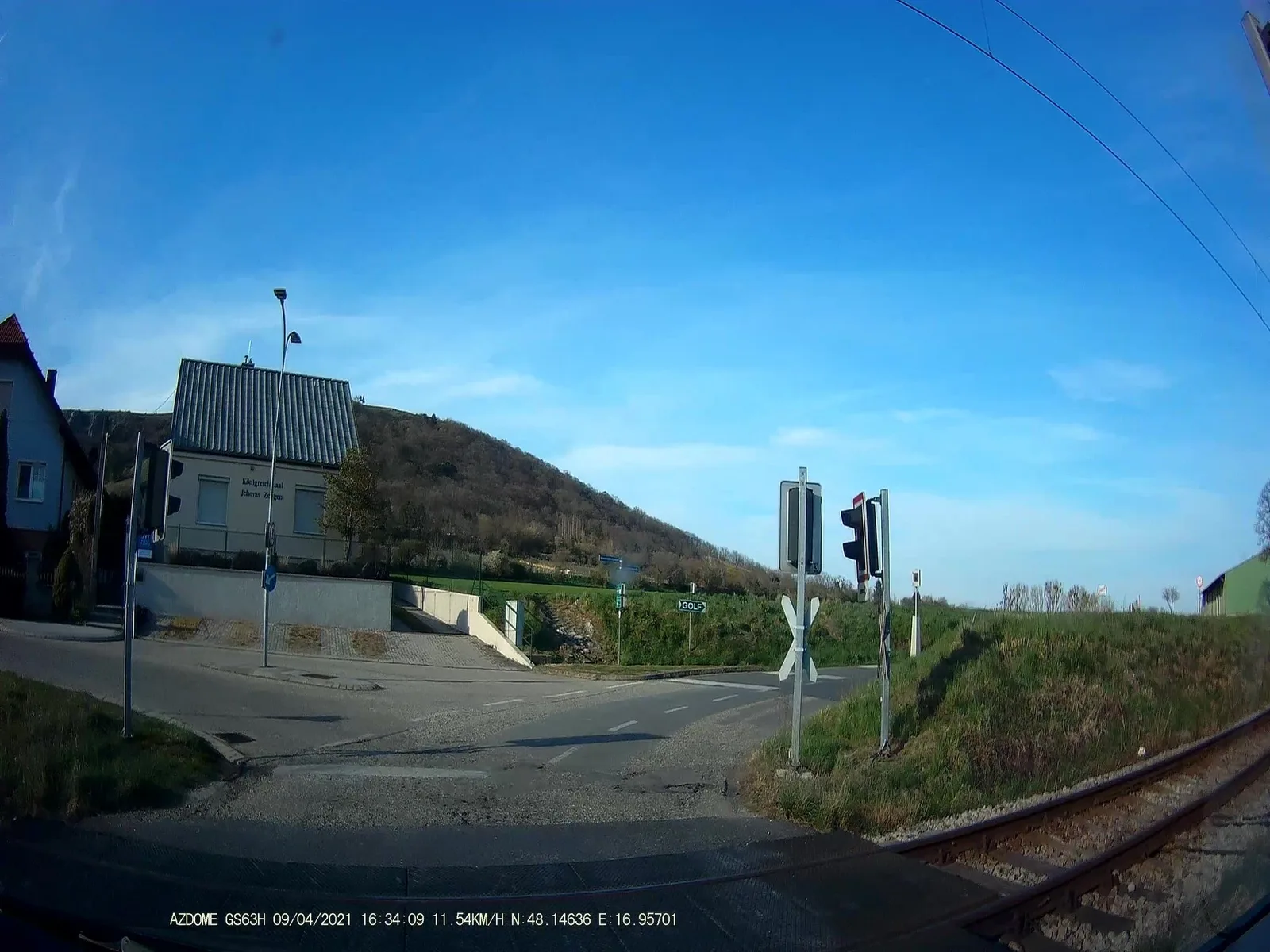
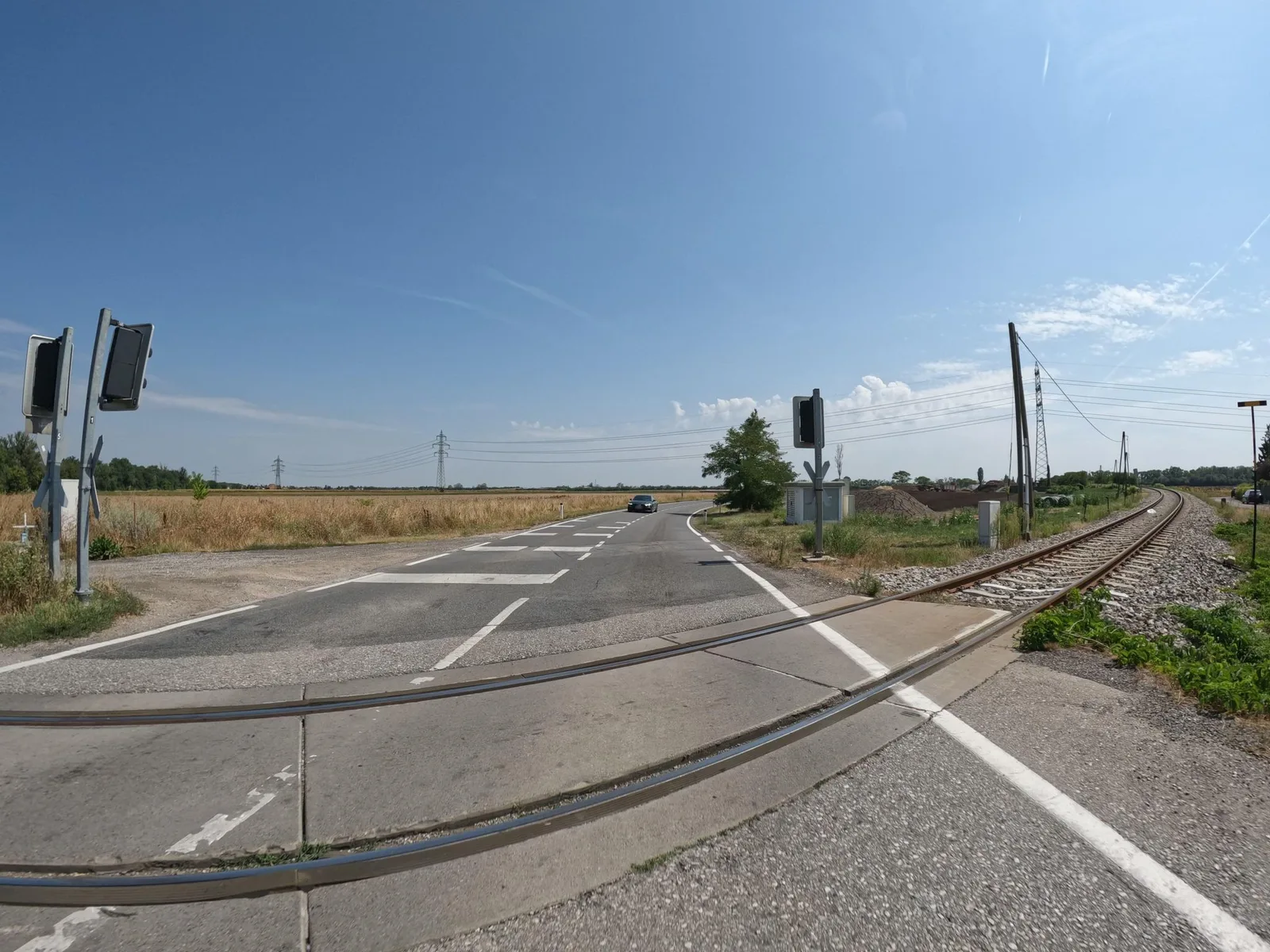
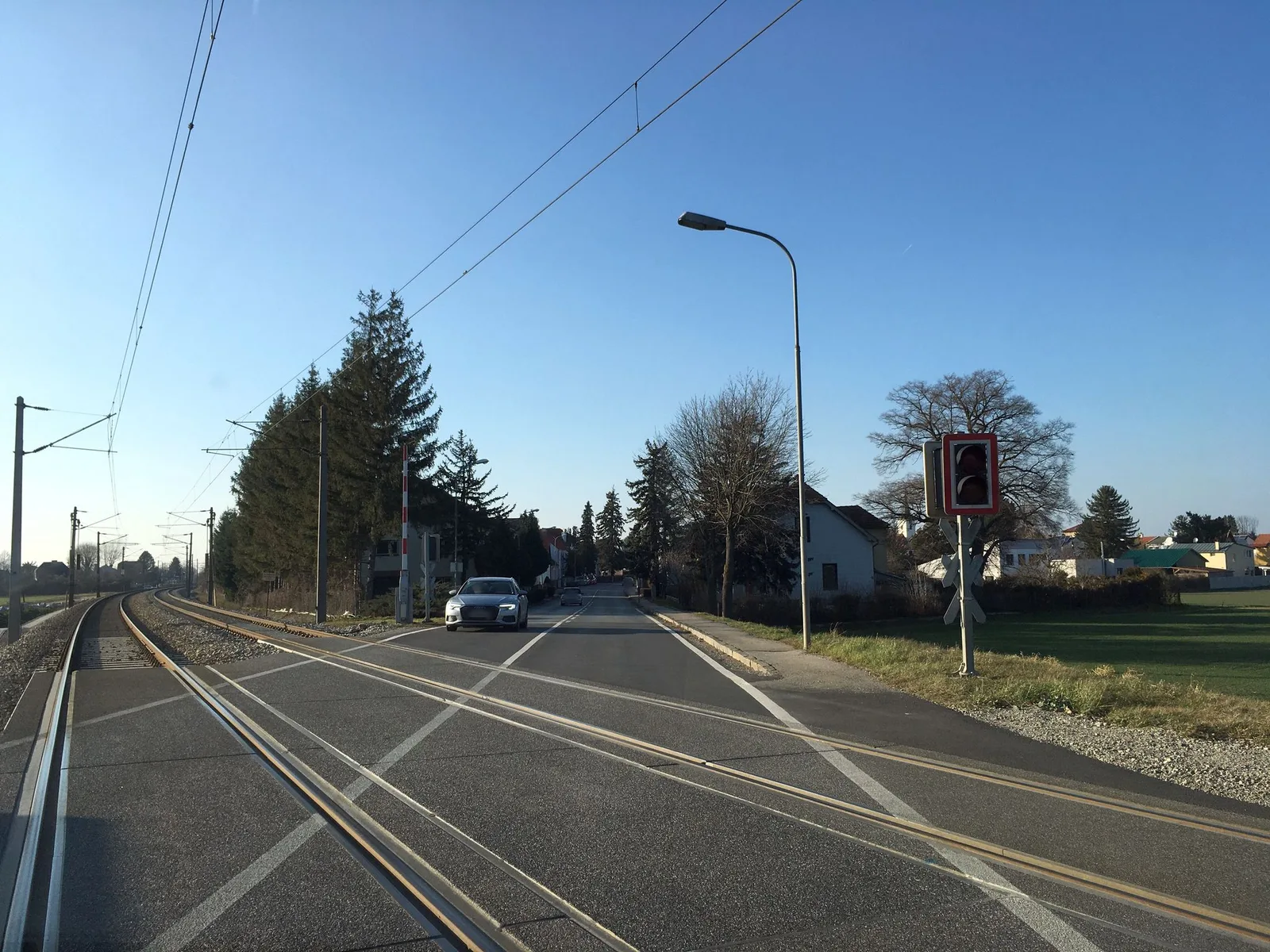
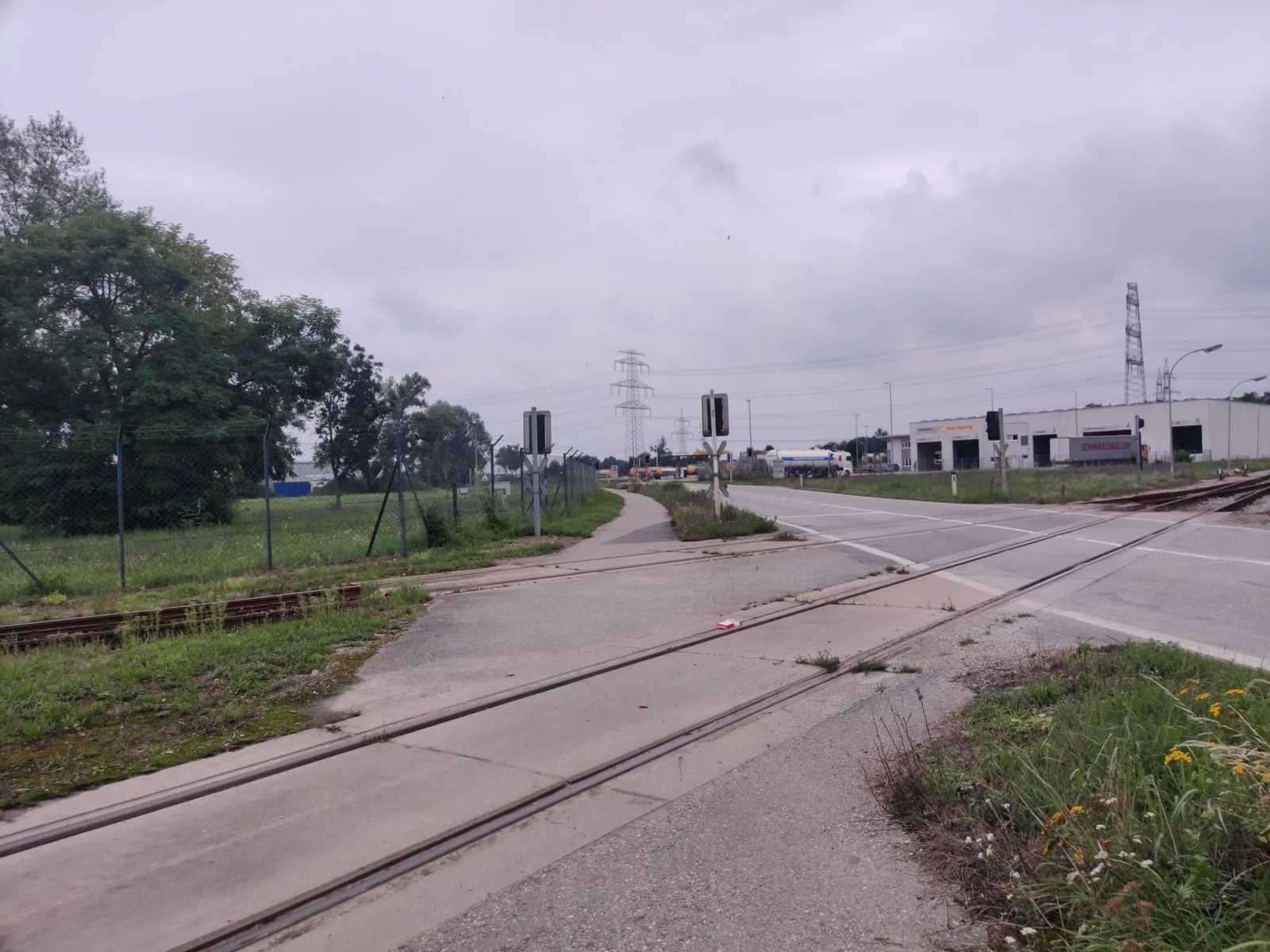
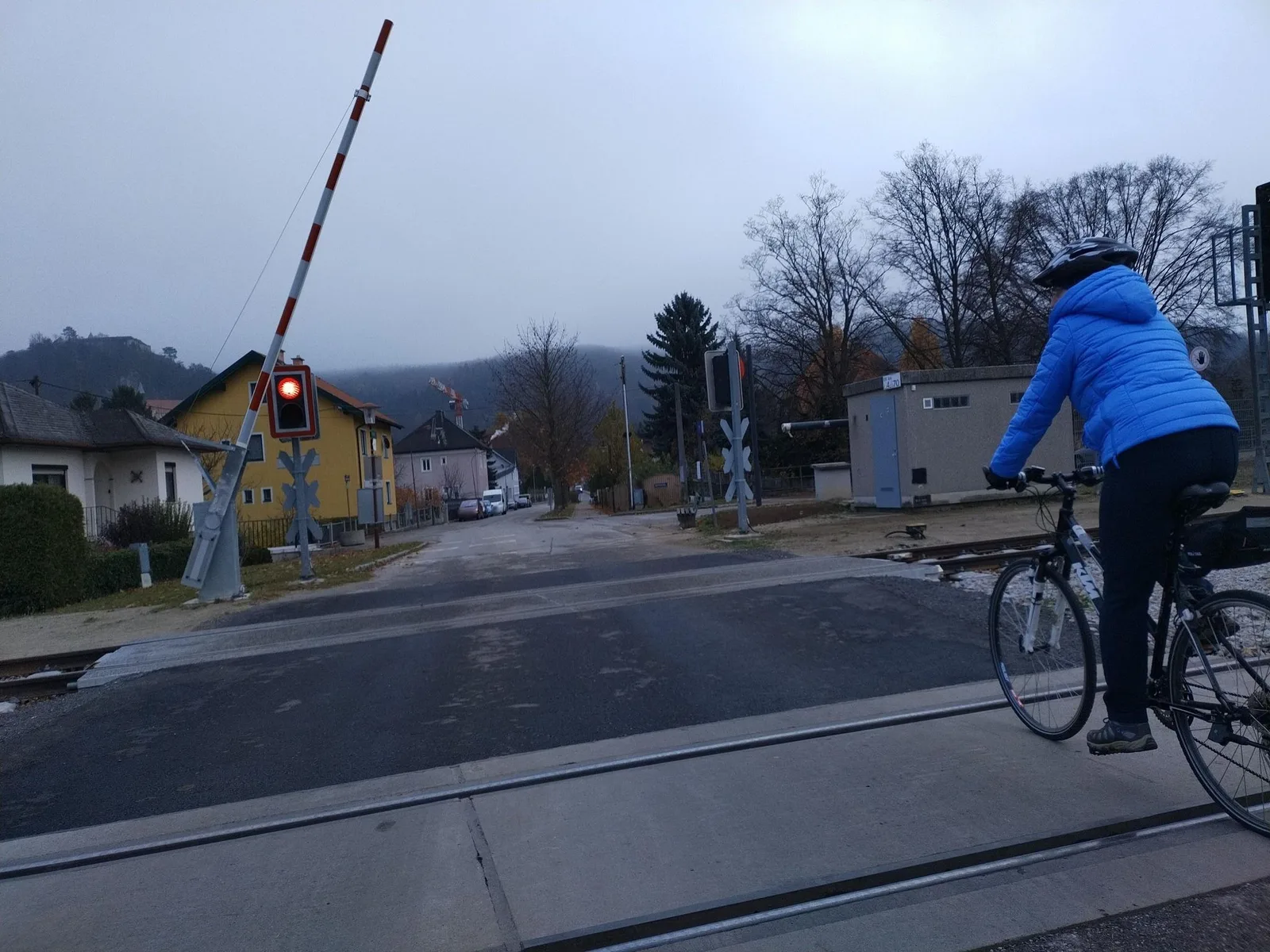
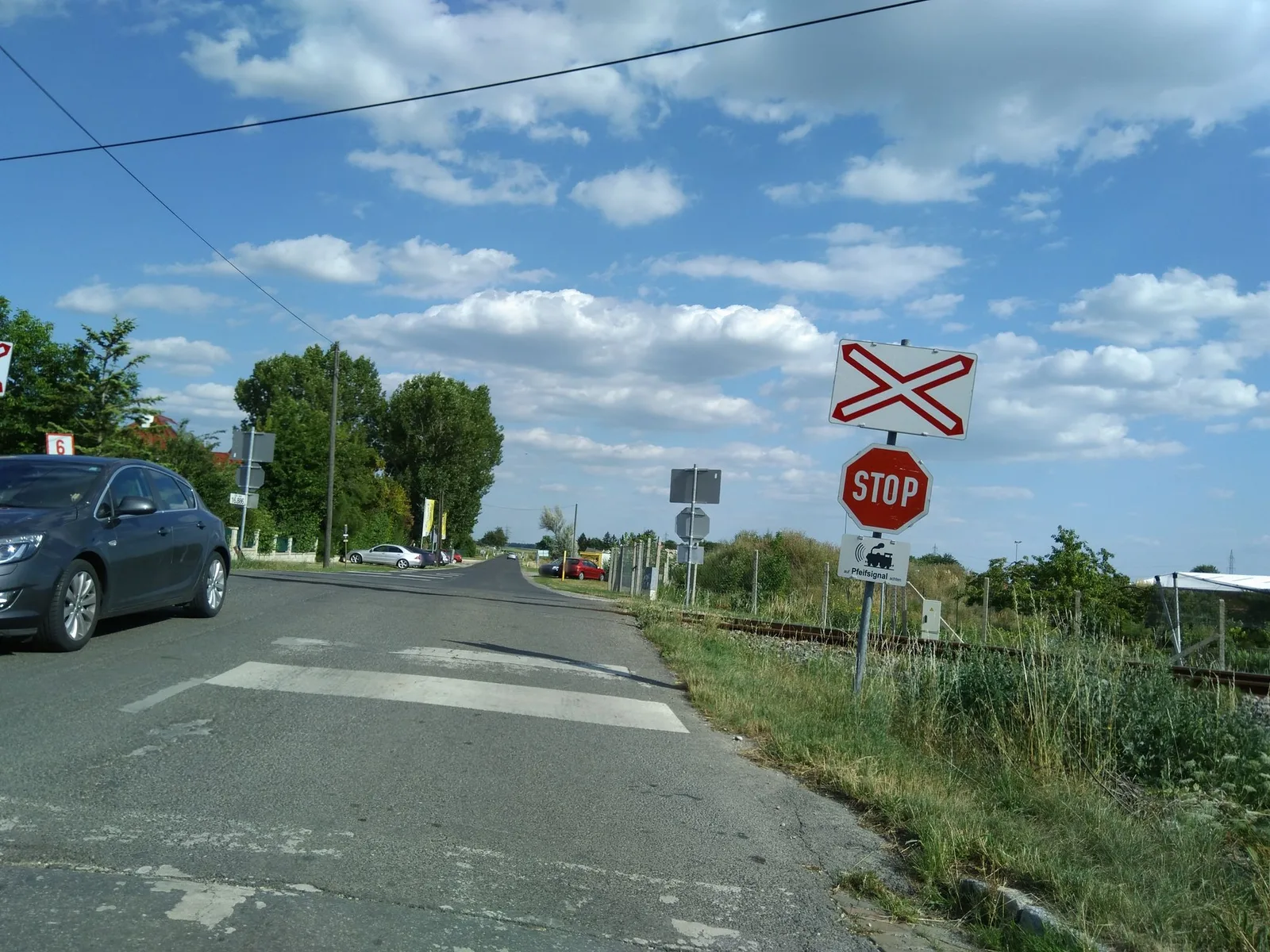
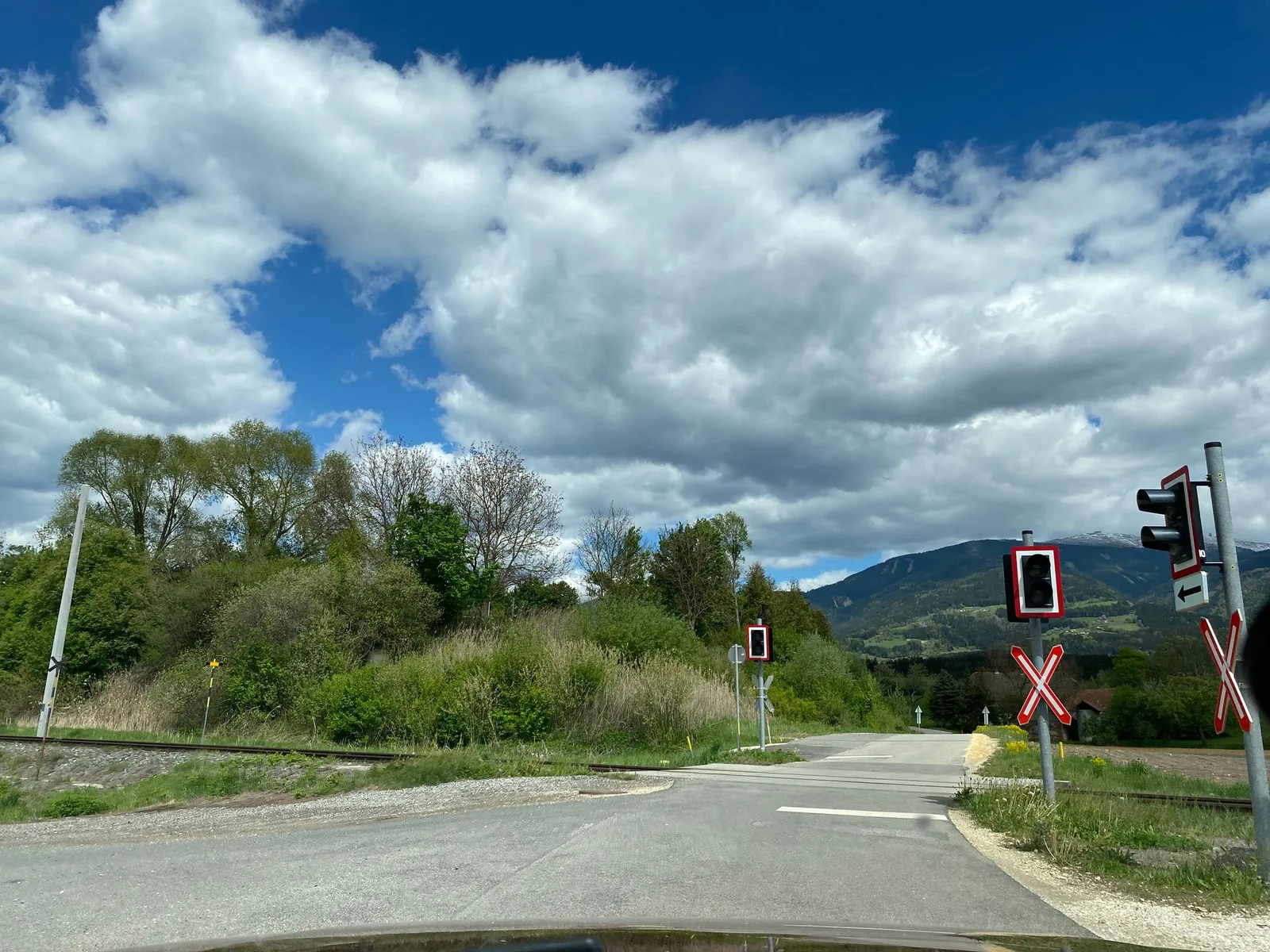
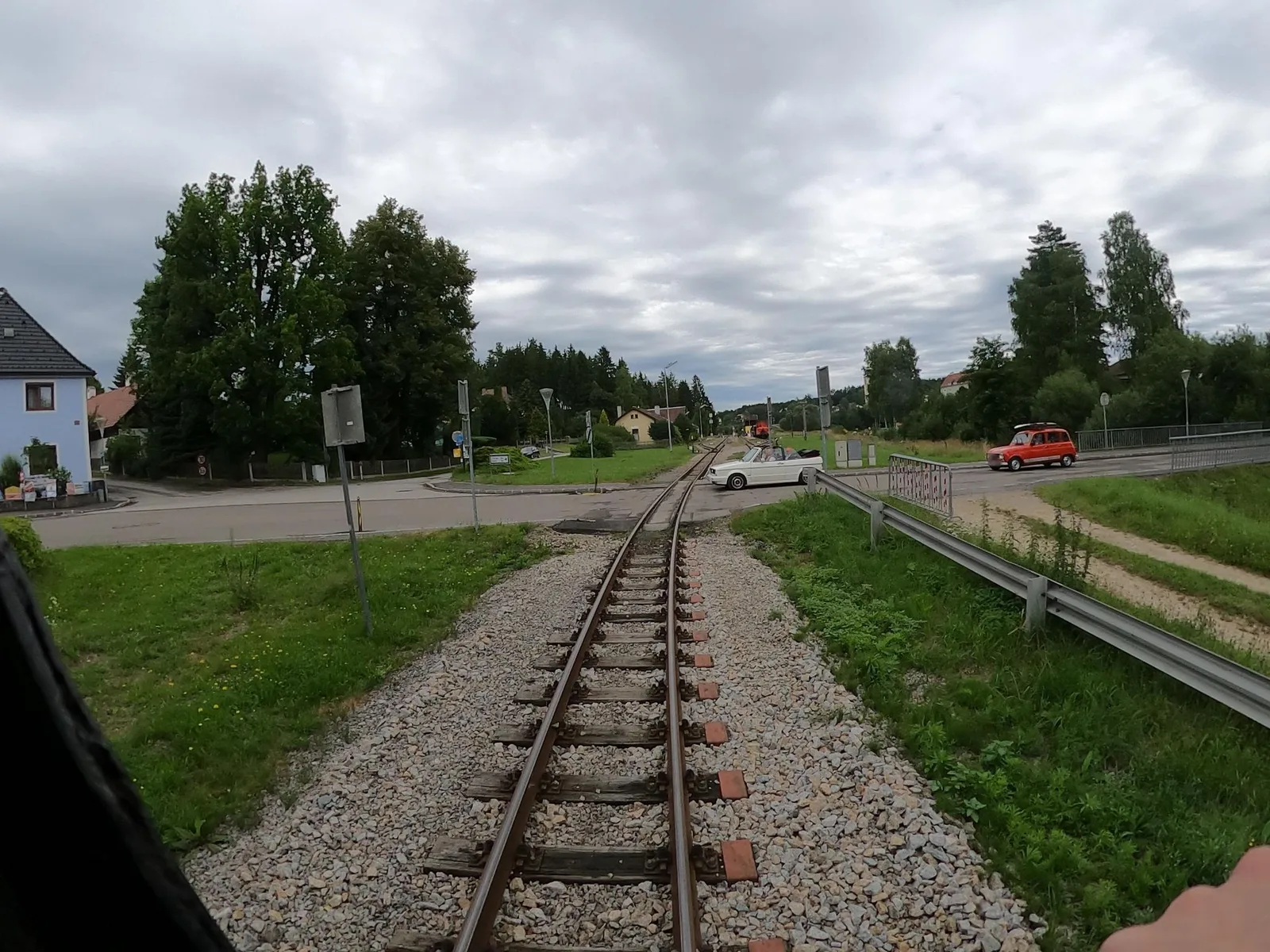
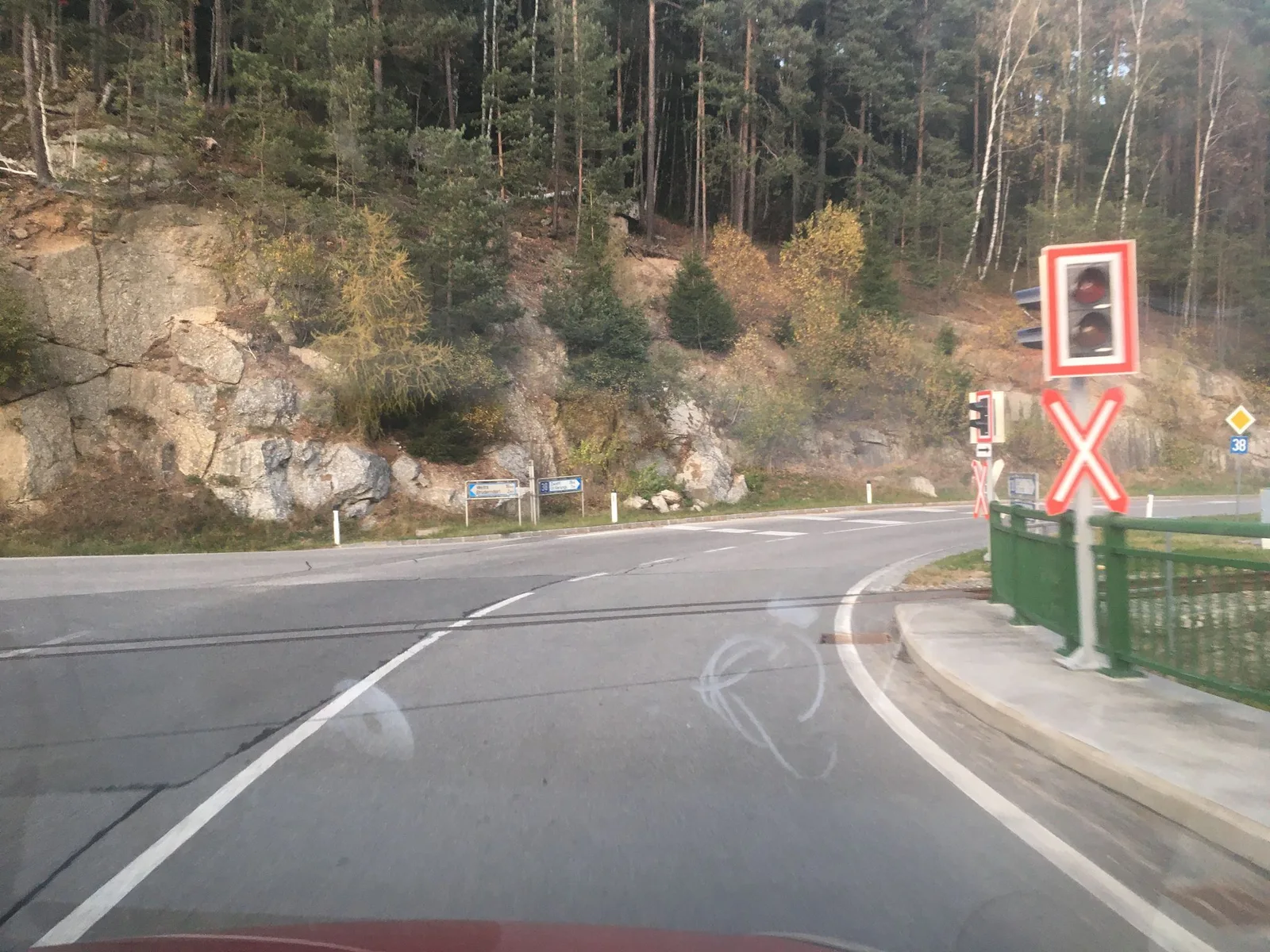
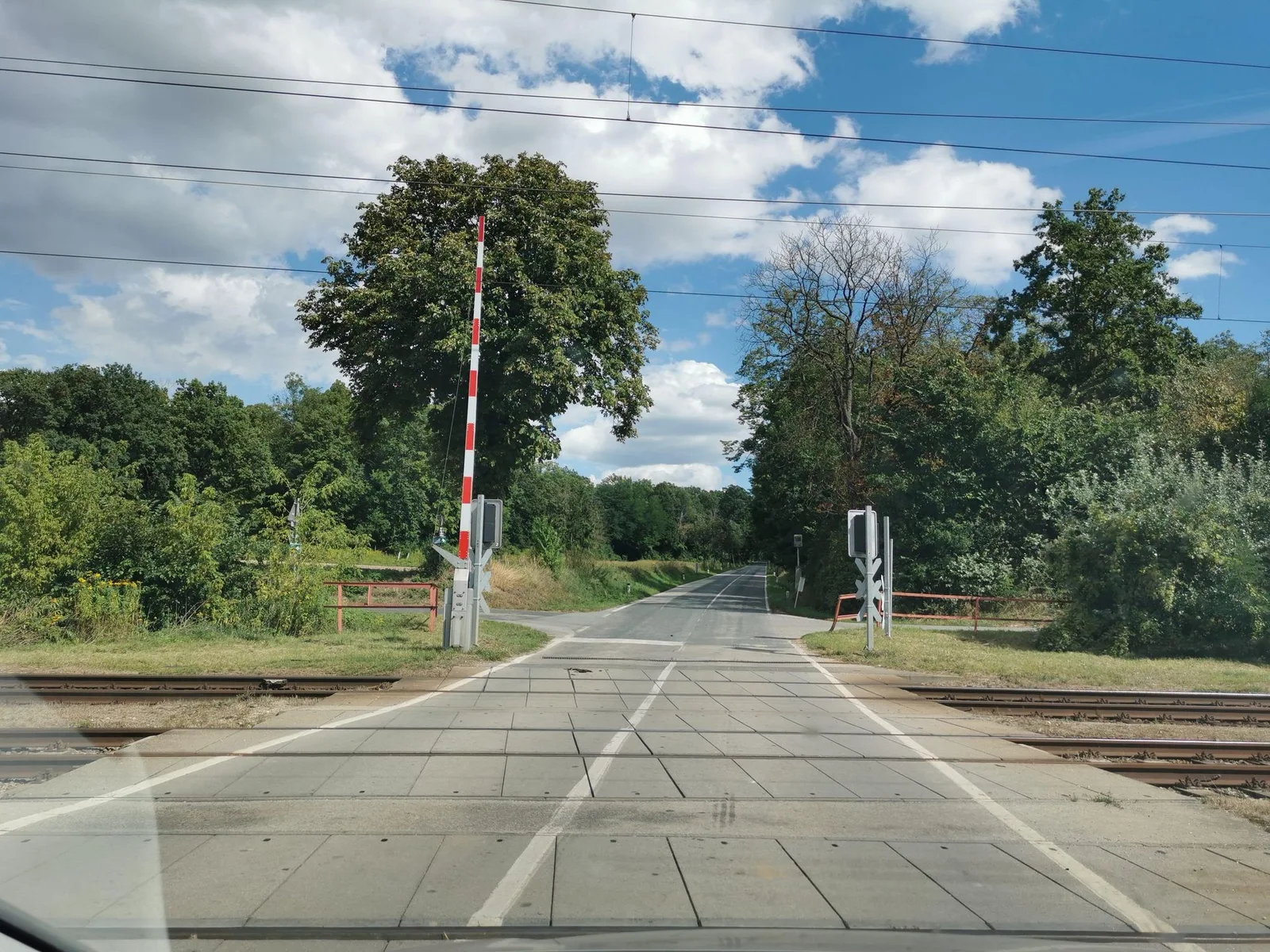
The street-level views below show crossings in rural, small-town and road-access settings on the same network, where local settings differ widely.
3. The infrastructure manager, safety authority and accident investigator
ÖBB-Infrastruktur maintains the crossing inventory and carries out the closures and grade separations as the state infrastructure manager [2, ↗].
The Bundesministerium für Innovation, Mobilität und Infrastruktur is the supreme railway authority and the national safety authority that Directive (EU) 2016/798 requires of every Member State [7, ↗]. It supervises railway safety and oversees the crossing regime [5, ↗].
The Sicherheitsuntersuchungsstelle des Bundes (SUB), the Federal Safety Investigation Authority, investigates rail accidents independently and publishes its findings [6, ↗].
4. A prescriptive regime under the EisbKrV
The Eisenbahnkreuzungsverordnung of 2012, the level crossing regulation, sets the protection a crossing must carry from the road traffic load, the sight conditions and the train's approach time [4, ↗]. Section 45 fixes how the approach time and the sight points are calculated, which decides whether passive protection suffices or active light and barrier protection is required [4, ↗]. Passive protection by the Andreaskreuz alone is admissible only where line speed stays at or below 80 kilometres per hour [1, ↗]. Those thresholds and the sight-point method drive the protection, a prescriptive approach that a comparative per-crossing reading can extend.
5. Eliminating and modernising crossings
Over those years, 107.55 million euros went to crossing safety, below the cost the audit attributed to the accidents, which is why the Court pressed for the modernisation to be accelerated [1, ↗].
ÖBB-Infrastruktur removes crossings steadily through closure and grade separation, with the works funded jointly by the federal government, the Länder and the municipalities [1, ↗].
The crossings that stay gain light and barrier protection, carriageway warning lights set into the road surface ahead of the crossing, and radar-triggered red-light enforcement, alongside the recurring "Pass auf dich auf" awareness campaign [3, ↗].
6. Comparing the surroundings of crossings
A crossing is both a point of risk and a point of access.
- For the crossings that stay, the risk they carry depends on the nearby population, the emergency access, and the local routes that rely on them.
- For the crossings moving toward upgrade or removal, the same surroundings set the access question, where road users and pedestrians go once the crossing closes or gains protection, and rural sites are often constrained.
Some crossings have simple alternatives. Others touch emergency access, pedestrian and farm circulation, nearby population or the local road network that the route through the crossing connects. The Court of Audit weighed accident cost against safety spend across the whole stock, and comparing the surroundings of each crossing on the same reference supports that prioritisation, as much as field review, detailed engineering and budget commitment on those moving toward a project.
That is the territorial layer SAMRoute structures around crossings, with a common geography, repeatable indicators, a regular refresh and traceable sources, so one crossing can be compared with another [8, ↗].
7. References
Infrastructure manager and inventory
[1] Rechnungshof. Eisenbahnkreuzungen (Bericht 2023/23, 2023). The crossing count decline, the 376 accidents with 45 fatalities and 81 serious injuries over 2017 to 2021, the 188.03 against 107.55 million euro comparison and the joint funding. Read
[2] ÖBB-Infrastruktur. Zahlen, Daten, Fakten 2024 (ÖBB-Infrastruktur, 2024). The infrastructure manager role, the 5,000 kilometre network and the 1,000 stations. Read
[3] ÖBB-Infrastruktur. Eisenbahnkreuzungen (folder, 2024). The active and passive protection types, the Andreaskreuz, the carriageway warning lights and the awareness campaign. Read
The regime
[4] Republik Österreich. Eisenbahnkreuzungsverordnung 2012 (EisbKrV). The protection criteria, the approach-time and sight-point calculation in Section 45 and the 80 kilometre per hour limit for passive protection. Read
Safety authority and investigation
[5] Bundesministerium für Innovation, Mobilität und Infrastruktur. Railways in Austria (BMIMI). The supreme railway authority and national safety authority. Read
[6] Sicherheitsuntersuchungsstelle des Bundes. Safety Investigation Authority (SUB). The independent rail accident investigation body. Read
[7] European Parliament and Council. Directive (EU) 2016/798 of 11 May 2016 on railway safety (OJ L 138, 26.5.2016). Requires each Member State to set up a national safety authority and an independent investigating body. Read
Accident history
[9] 5 Minuten. ÖBB-Bilanz, 52 Unfälle an Eisenbahnkreuzungen 2024 (5min.at, June 2025). The 52 accidents, three fatalities and the injury figures for 2024, and the stock of 2,916 crossings. Read
[10] ORF Salzburg. Kollision mit Zug, Ex-ÖFB-Tormann Manninger getötet (salzburg.ORF.at, April 2026). The fatal collision at the unsecured Pabing crossing on the Salzburger Lokalbahn. Read
[11] RailMarket. Passenger train hits truck in Wollsdorf, Austria (RailMarket, May 2025). The collision and fire at the Wollsdorf crossing on the Gleisdorf to Weiz line. Read
[12] ORF Oberösterreich. Tödlicher Zugunfall in Micheldorf (ooe.ORF.at, November 2024). The fatal collision at the secured Eisbach crossing on the Pyhrnbahn. Read
[8] SAMRoute. Rail cadence, level crossings and emergency access (position page). Open