Level crossings in Sweden. Comparing crossings before upgrade and removal decisions
Sweden keeps renewing and removing its level crossings, with Trafikverket managing the inventory under Vision Zero, the Transportstyrelsen acting as the railway safety authority, and the Statens haverikommission investigating accidents.
The following sections present the accident history, the level crossing system, the public actors, the regime and its cost research, and the renewal programme. The last section covers the territorial context that SAMRoute models.
1. Accident history at level crossings
On 15 January 2024, a lorry and trailer became stuck on the half-barrier crossing at Ramseröd outside Uddevalla, and a passenger train struck it, killing the train driver [6, ↗]. The Statens haverikommission found that Trafikverket, as infrastructure manager, had not handled the risks that arise at half-barrier facilities when heavy road vehicles cross to a sufficient extent, that earlier accidents already showed the combination of trains, heavy vehicles and half-barriers to be a systemic risk [6, ↗].
2. The Swedish level crossing system
Trafikverket, the Swedish Transport Administration, manages the state railway network and is the authority responsible for every level crossing on it, whichever road holder owns the road [3, ↗]. The network carries about 6,911 level crossings, roughly half of them passive and the rest protected by barriers, half-barriers or flashing lights [1, ↗]. The stock falls year by year as crossings are closed, grade-separated and renewed with modern automatic equipment [2, ↗].
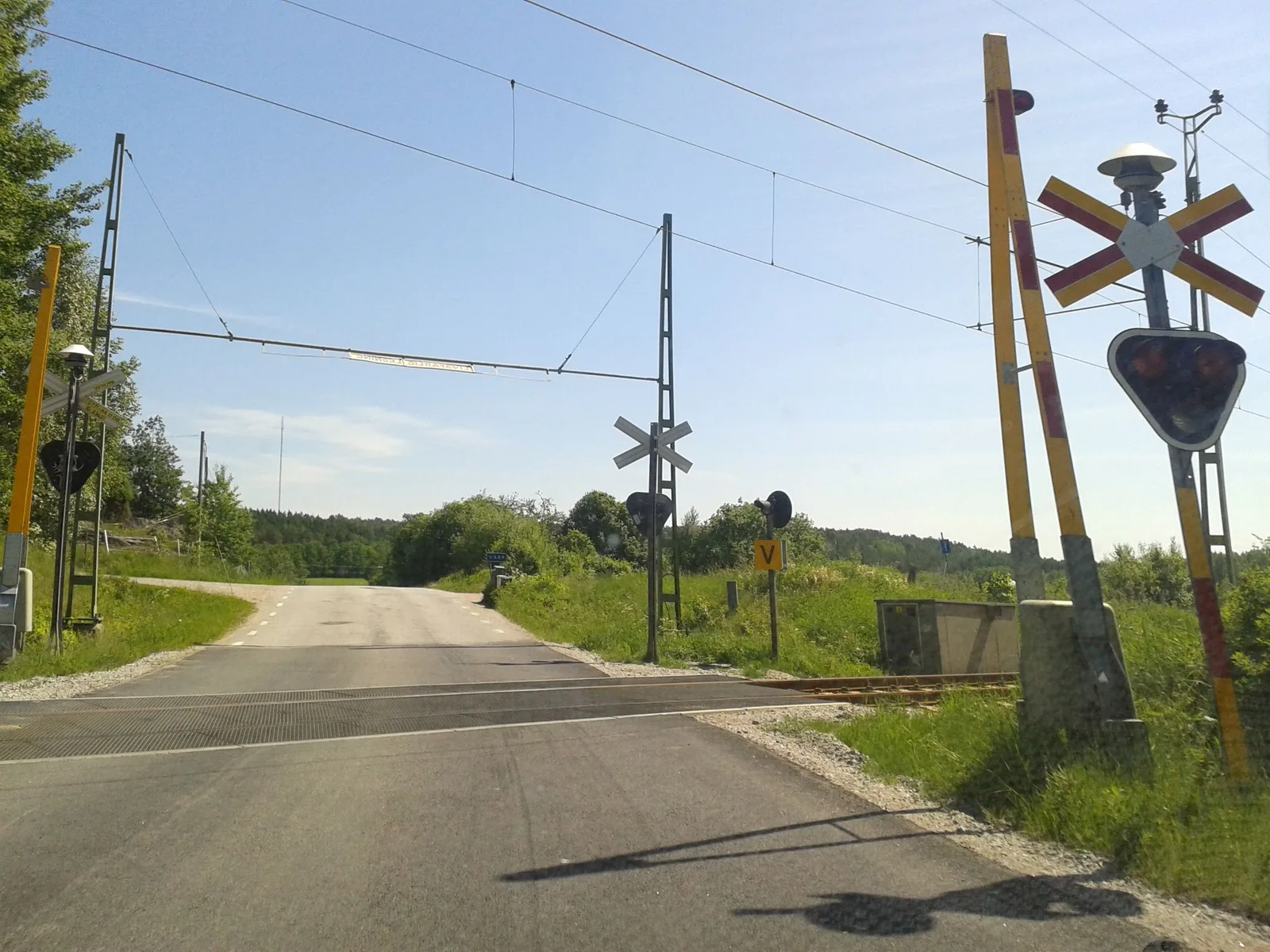
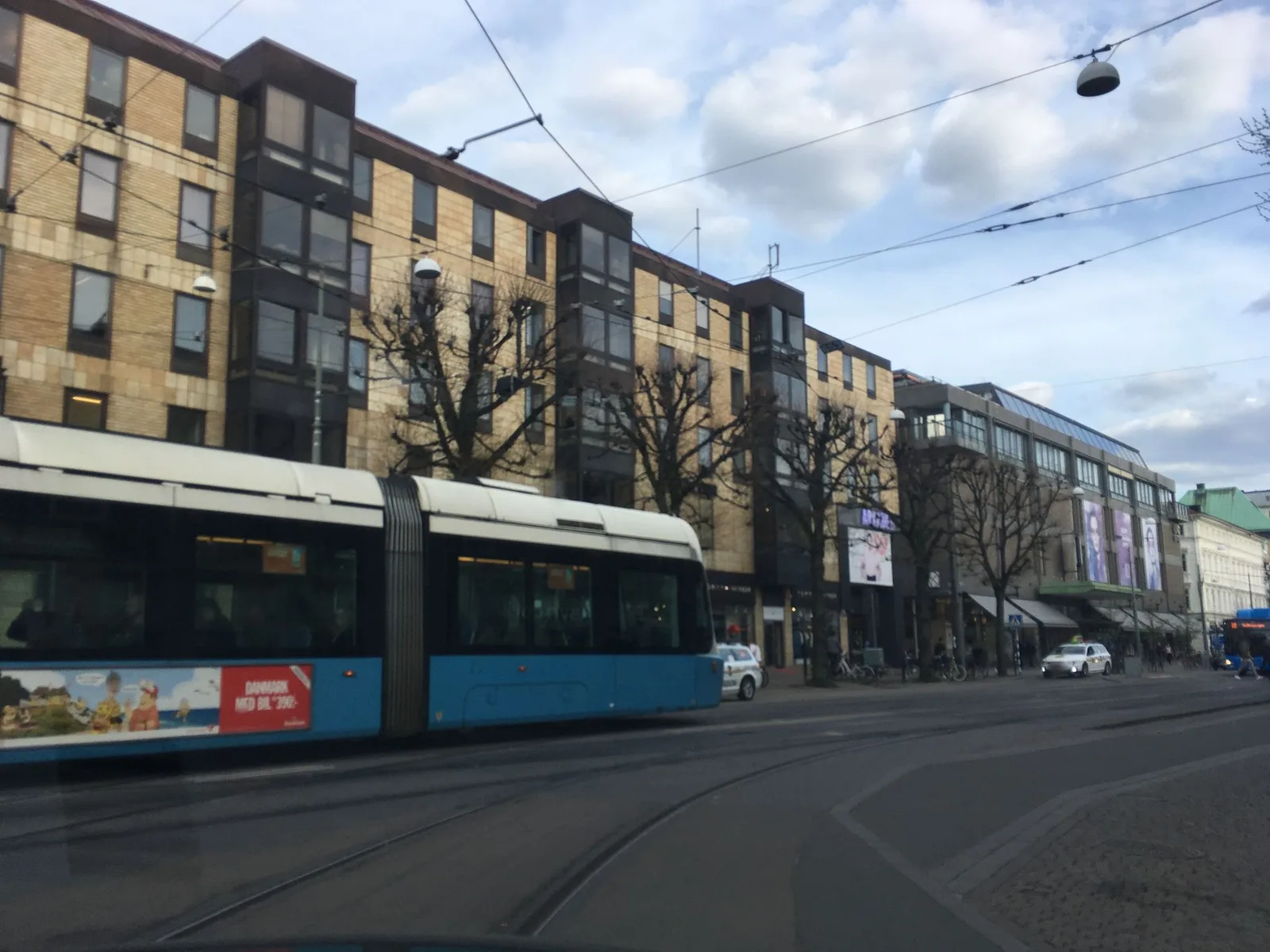
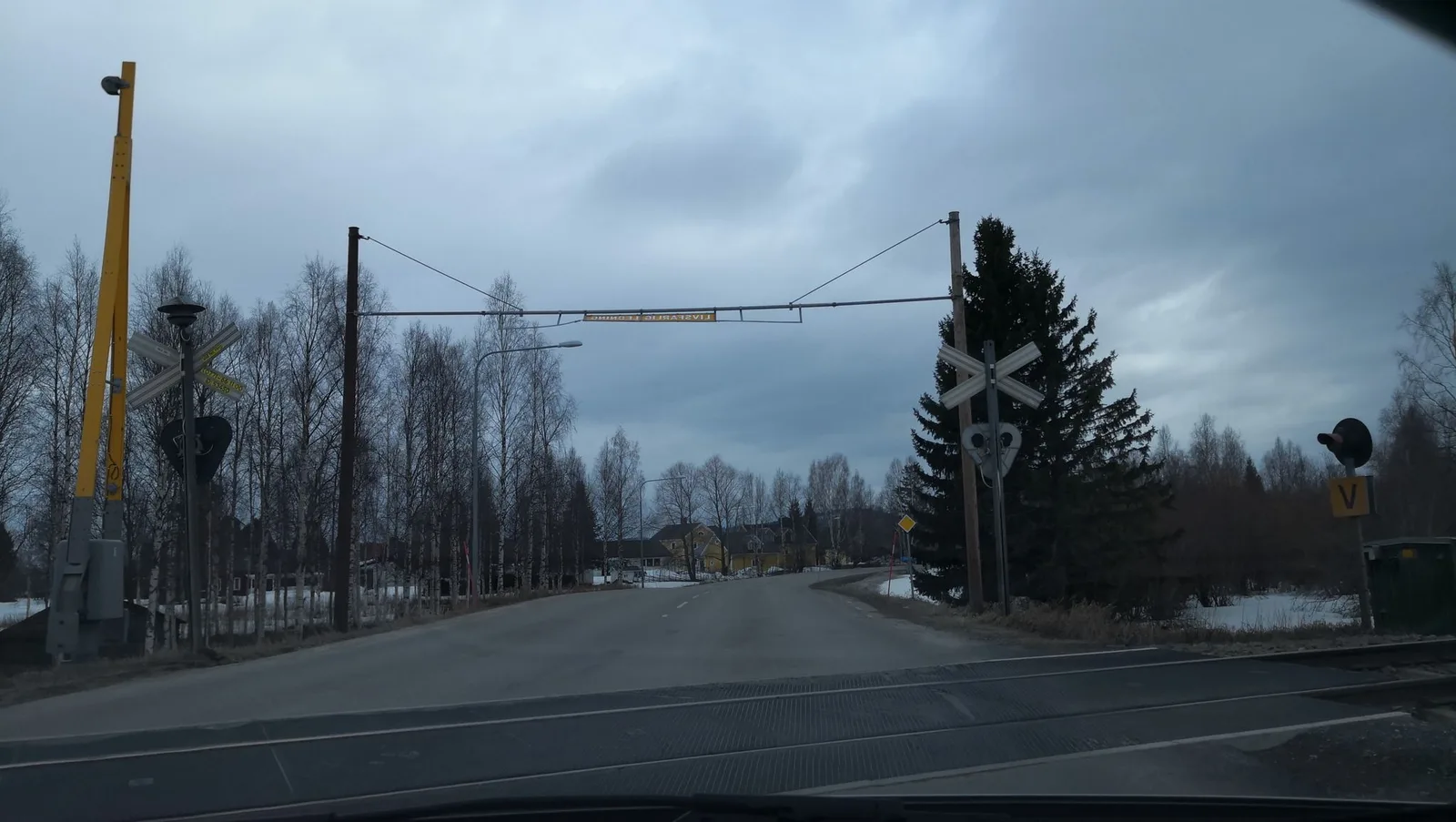
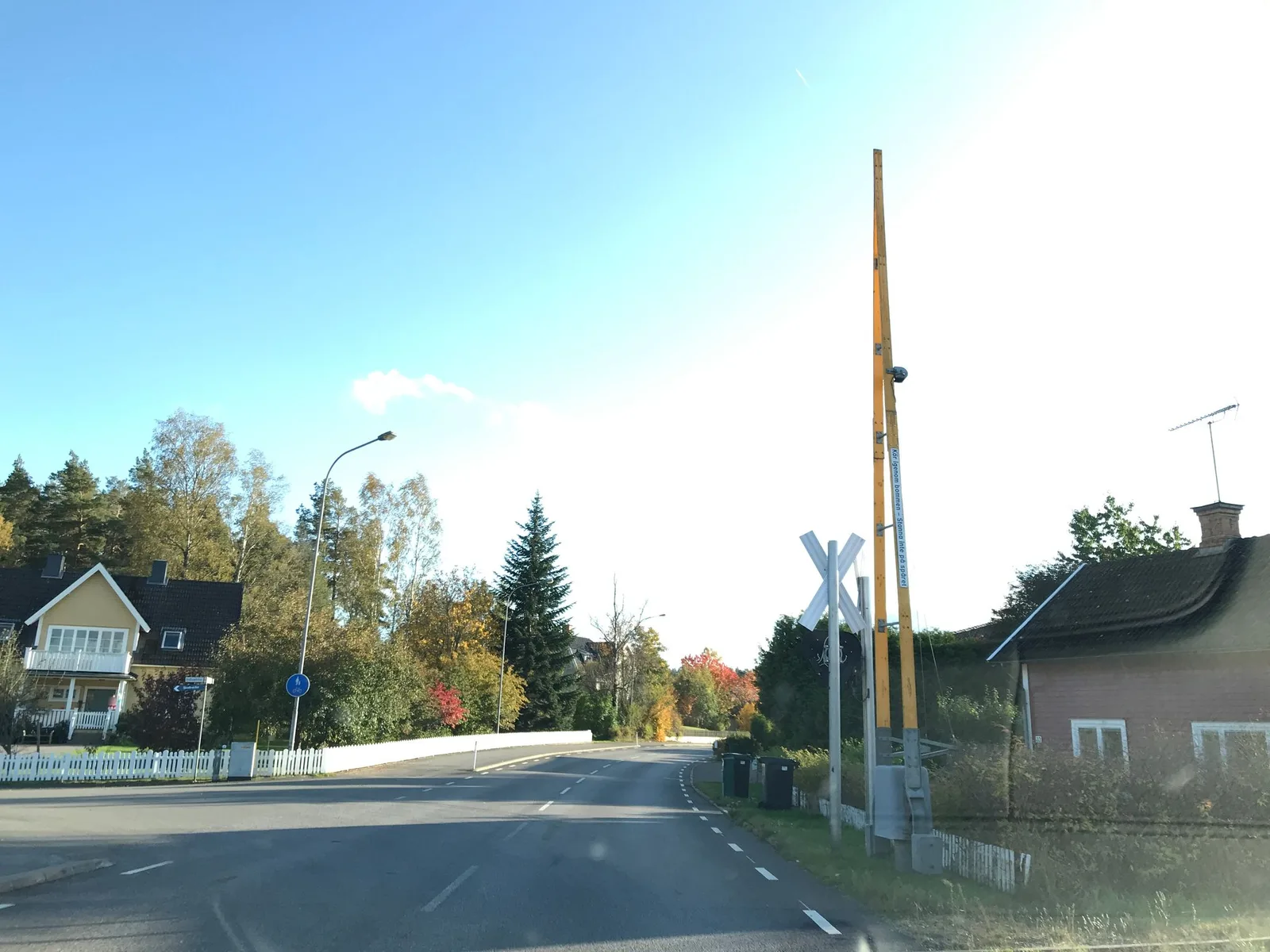
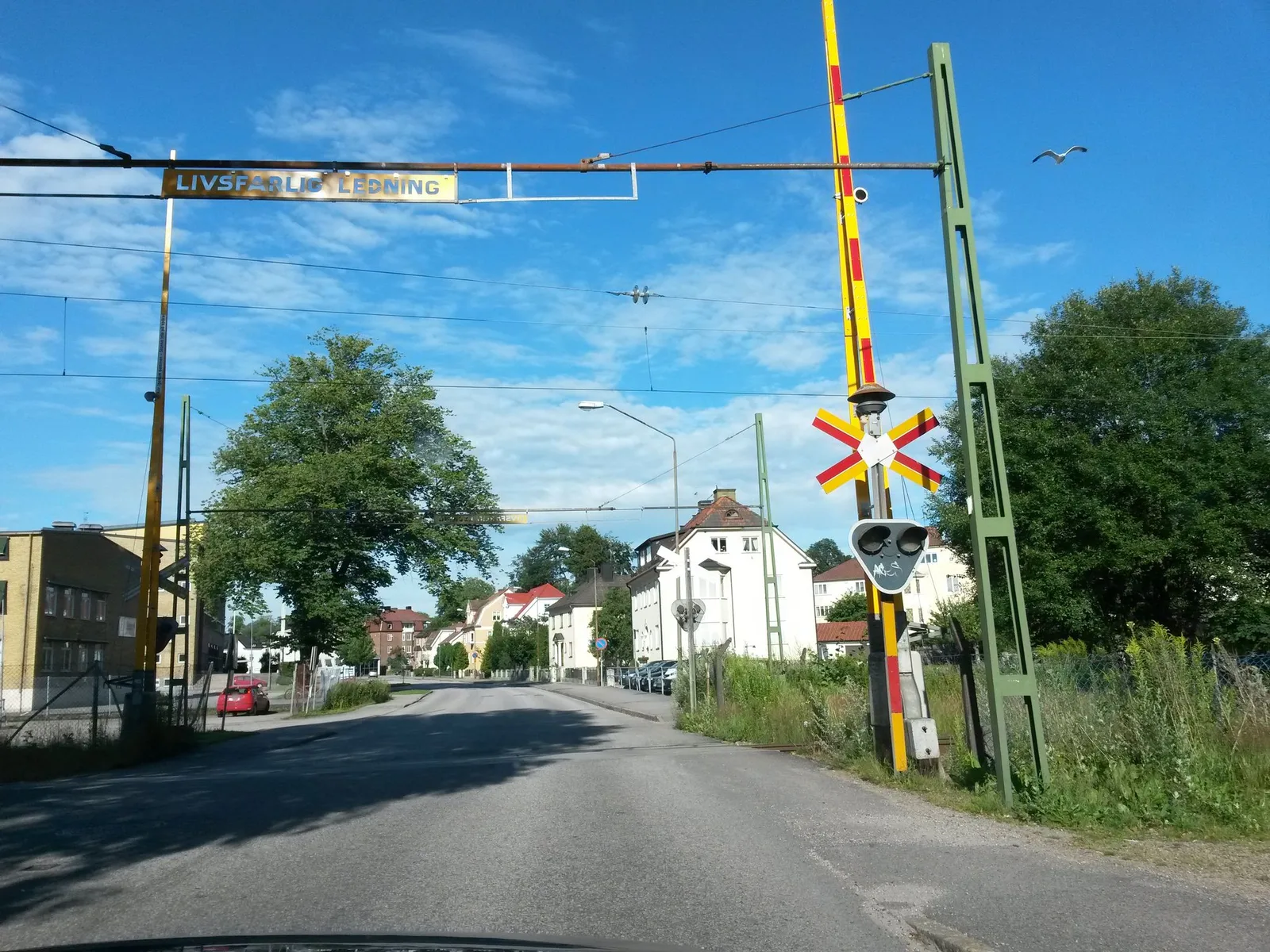
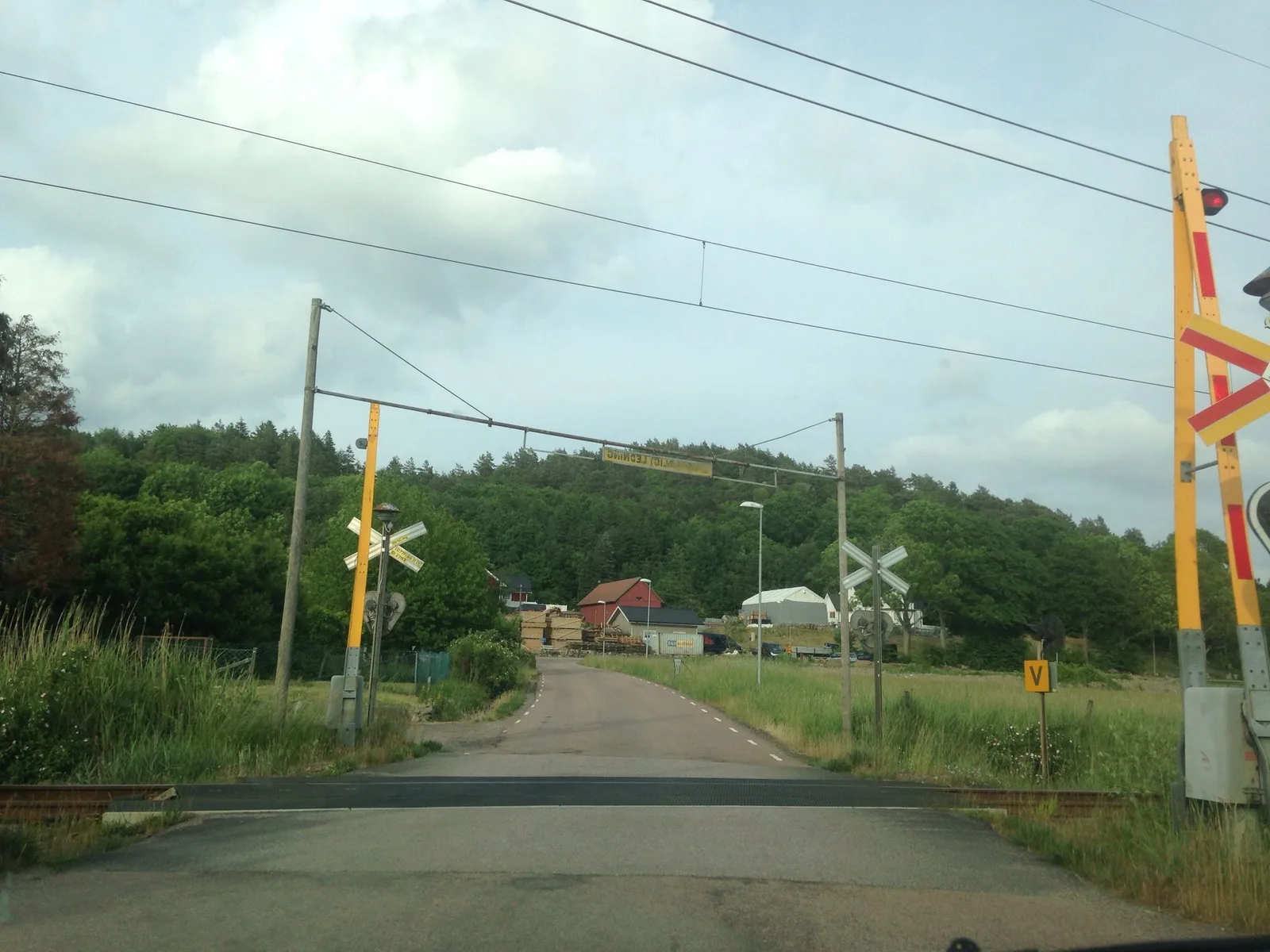
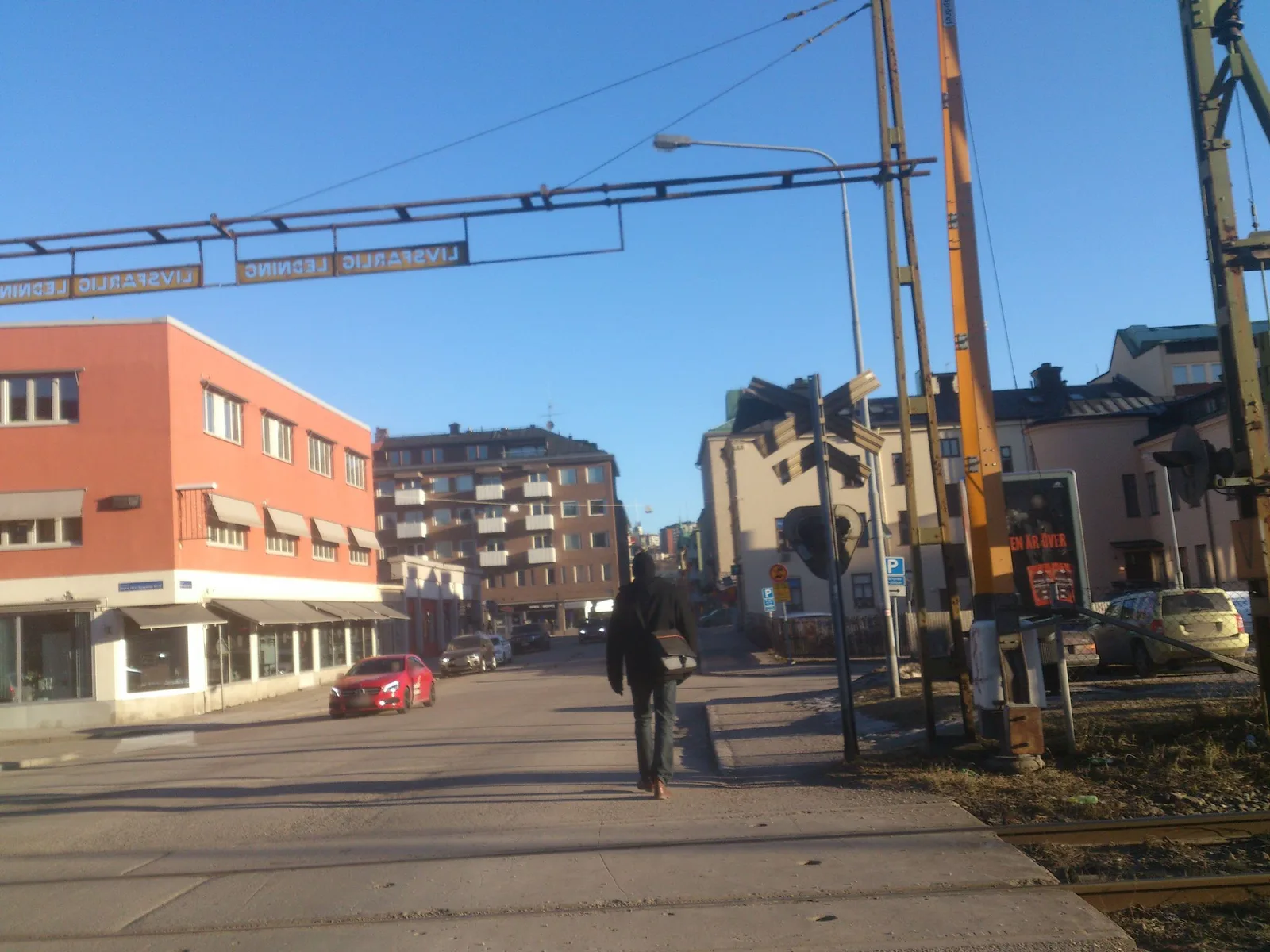
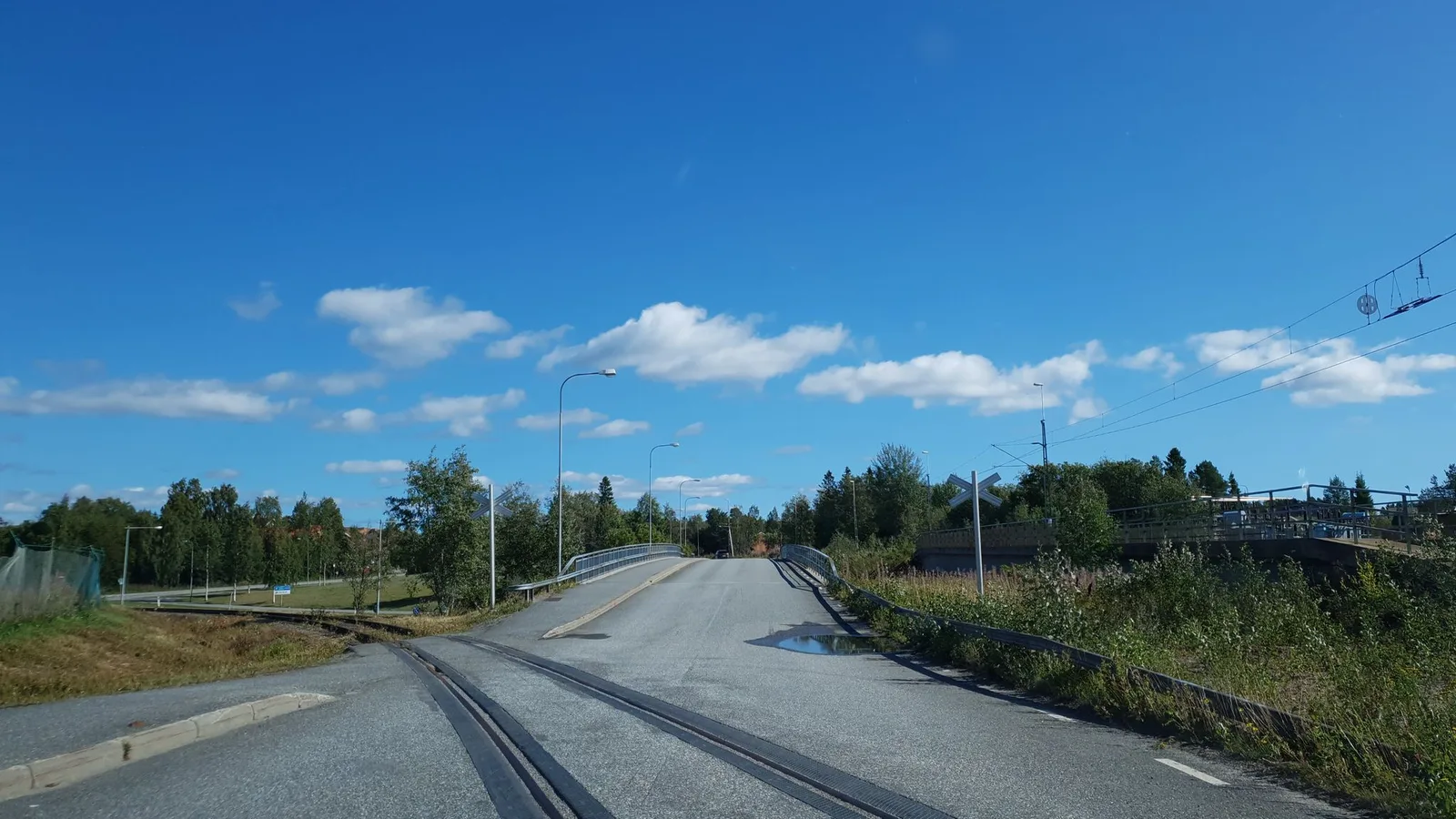
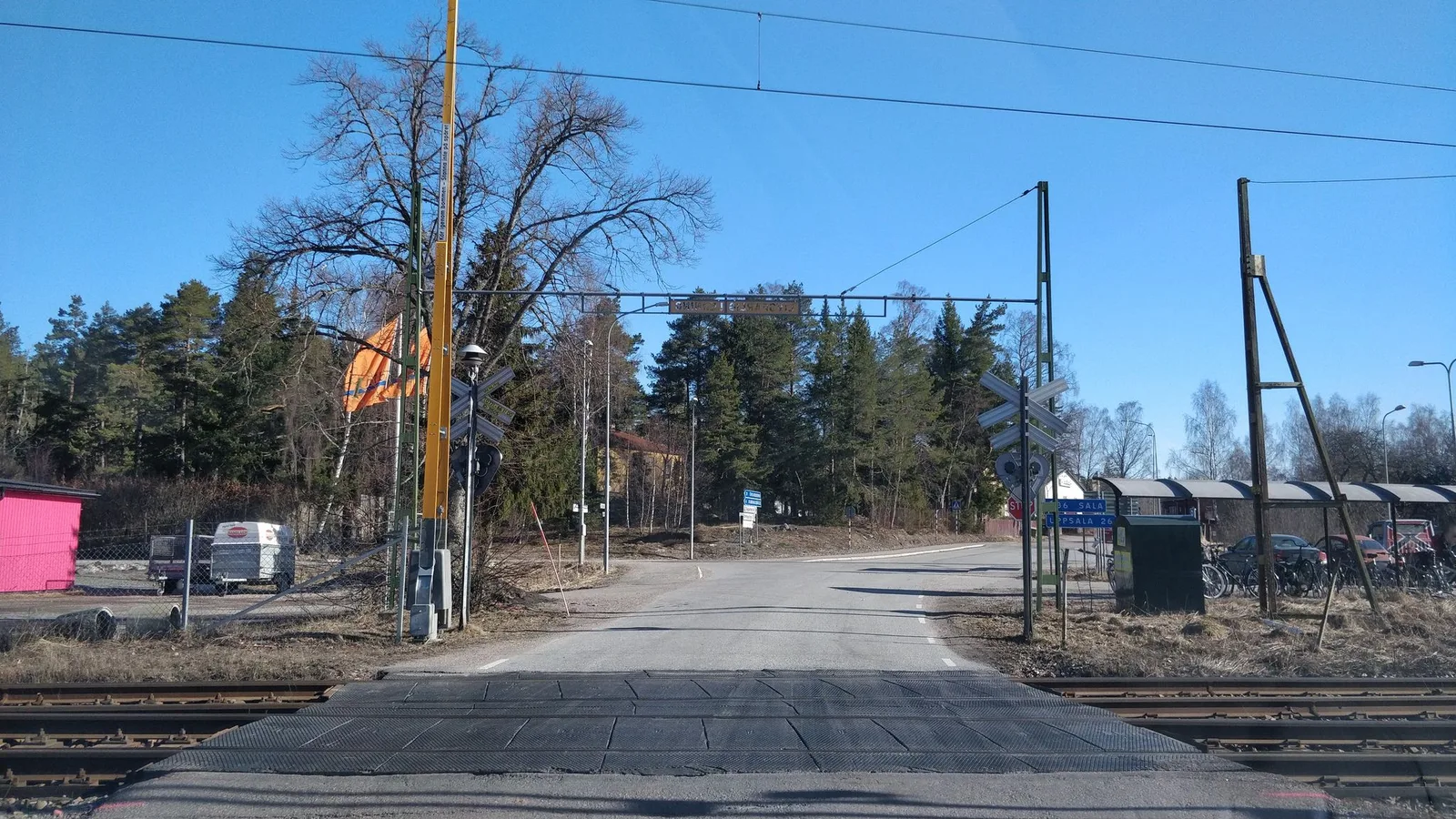
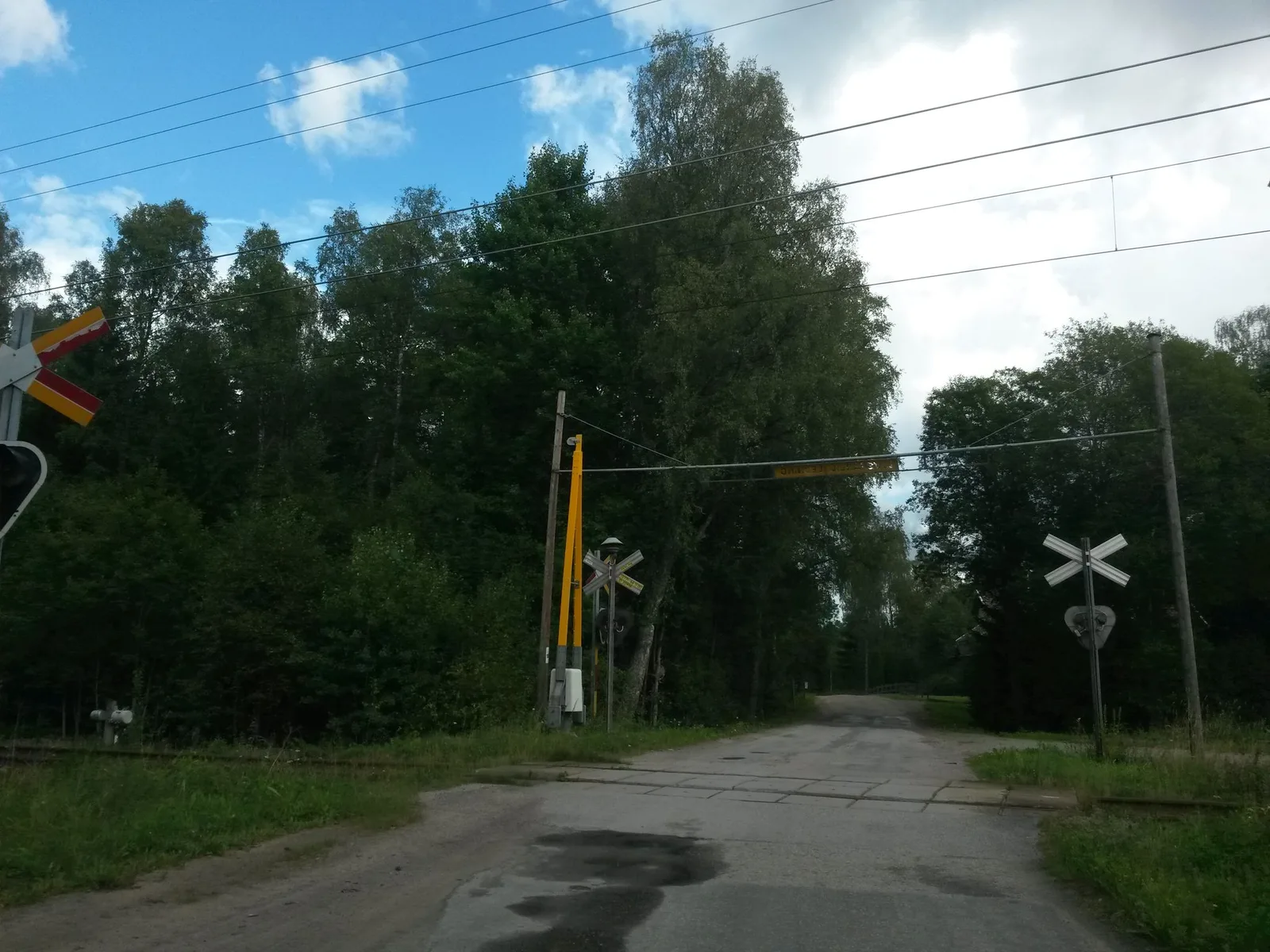
The street-level views below show crossings in rural, small-town and road-access settings on the same network, where local settings differ widely.
3. The infrastructure manager, safety authority and accident investigator
Trafikverket maintains the crossing inventory and carries out the closures, grade separations and renewals as the state infrastructure manager [3, ↗].
The Transportstyrelsen, the Swedish Transport Agency, is the railway safety authority that Directive (EU) 2016/798 requires of every Member State [9, ↗]. It writes the binding TSFS regulations, oversees railway safety and issues the authorisations [4, ↗].
The Statens haverikommission (SHK), the Swedish Accident Investigation Authority, investigates serious rail accidents independently, under the Ministry of Defence, and publishes its findings and recommendations [5, ↗].
4. A regime under Vision Zero, and a cost of risk
Sweden sets crossing protection through the binding TSFS regulations, which treat the protection systems as safety-critical signalling subject to integrity certification, inside the Vision Zero policy that the country adopted in 1997 and that holds no death or serious injury in the transport system to be acceptable [8, ↗].
Swedish transport policy also prices the risk. Government-linked research put the accident cost of each train passage over a crossing at about 1.28 Swedish kronor, near 0.13 euros, derived from the protection type, the road type, the train traffic and the number of persons living within two kilometres of the crossing [7, ↗]. The crossings in the study saw between the median of about 4,600 and the mean of about 6,800 train passages a year, so over a year that rate works out near 600 to 900 euros of accident cost at a typical crossing, and about 6,400 euros at a busy one carrying 50,000 passages [7, ↗]. The rate runs higher where the protection is light and the train traffic heavy, and summed across the network it feeds the marginal-cost pricing that is a keystone of how Sweden weighs infrastructure decisions, while the persons-nearby term reads the local population directly [7, ↗].
5. The ALEX renewal
The ALEX programme, for Automatic Level Crossing, renews the older relay-technology crossings with modern, certified automatic systems, at a pace of 70 to 100 crossings a year, toward renewing the whole route network over about 25 years [2, ↗].
6. Comparing the surroundings of crossings
A crossing is both a point of risk and a point of access.
- For the crossings that stay, the risk they carry depends on the nearby population, the emergency access, and the local routes that rely on them.
- For the crossings moving toward upgrade or removal, the same surroundings set the access question, where road users and pedestrians go once the crossing closes or gains a modern system, and rural sites are often constrained.
Some crossings have simple alternatives. Others touch emergency access, pedestrian and farm circulation, nearby population or the local road network that the route through the crossing connects. The Swedish cost-of-risk research already counts the persons living within two kilometres of each crossing, and comparing the wider surroundings on the same reference extends that reading across the whole stock, supporting prioritisation as much as field review, detailed engineering and budget commitment on those moving toward a project.
That is the territorial layer SAMRoute structures around crossings, with a common geography, repeatable indicators, a regular refresh and traceable sources, so one crossing can be compared with another [10, ↗].
7. References
Infrastructure manager and inventory
[1] Wikipedia. Level crossings by country (Wikipedia, after UNECE data). The number of level crossings on the Swedish network. Read
[2] Trafikverket. ALEX, Automatic Level Crossing (Trafikverket). The renewal of relay-technology crossings with modern automatic systems, at 70 to 100 a year over about 25 years. Read
[3] Trafikverket. Säkerhet vid plankorsningar (Trafikverket). The infrastructure manager role and Trafikverket's responsibility for every crossing on the state network. Read
Safety authority and investigation
[4] Transportstyrelsen. Railway (Swedish Transport Agency). The railway safety authority and the binding TSFS regulations. Read
[5] Statens haverikommission. Rail investigations (Swedish Accident Investigation Authority). The independent rail accident investigation body under the Ministry of Defence. Read
[6] Statens haverikommission. Slutrapport SHK 2024:15, plankorsningsolycka vid Ramseröd (SHK, 2024). The 15 January 2024 Ramseröd collision and the systemic finding on half-barrier facilities and heavy road vehicles. Read
The regime and the cost research
[7] L. Jonsson, M. Björklund, G. Isacsson. Marginal cost estimation for level crossing accidents (VTI / Transport Policy). The marginal cost per train passage and the model variables, including the persons living within two kilometres of the crossing. Read
[8] Trafikverket. Road Safety Action Plan 2022–2025 (Trafikverket, Vision Zero). The Vision Zero policy adopted in 1997 and the safety measures across the transport system. Read
[9] European Parliament and Council. Directive (EU) 2016/798 of 11 May 2016 on railway safety (OJ L 138, 26.5.2016). Requires each Member State to set up a national safety authority and an independent investigating body. Read
[10] SAMRoute. Rail cadence, level crossings and emergency access (position page). Open