Level crossings in Poland. Comparing crossings before modernisation and removal decisions
Poland modernises and removes level crossings on a network that carries about 12,000 of them, with PKP Polskie Linie Kolejowe (PKP PLK) managing the inventory under a category-based protection regime, the Urząd Transportu Kolejowego acting as the national safety authority, and the Państwowa Komisja Badania Wypadków Kolejowych investigating accidents.
The following sections present the level crossing system, the public actors, the category-based protection regime, and the Bezpieczny przejazd campaign and modernisation programme. The last section covers the territorial context that SAMRoute models.
1. The Polish level crossing system
PKP PLK manages the national rail network and the level crossings on it [5, ↗]. The UTK count recorded 11,973 level crossings and pedestrian passages on active lines in 2024, down from 12,081 in 2023 [19, ↗].
About half the crossings carry no active signalling. In 2024, 5,962 of the 11,973 were passive, marked only by a St Andrew's cross and a stop sign [19, ↗], and those passive crossings take the most accidents, since 99 percent of crossing accidents trace to road-user behaviour rather than to the infrastructure [16, ↗]. About 40 percent of all accidents on Polish railway lines happen at crossings with roads [16, ↗].
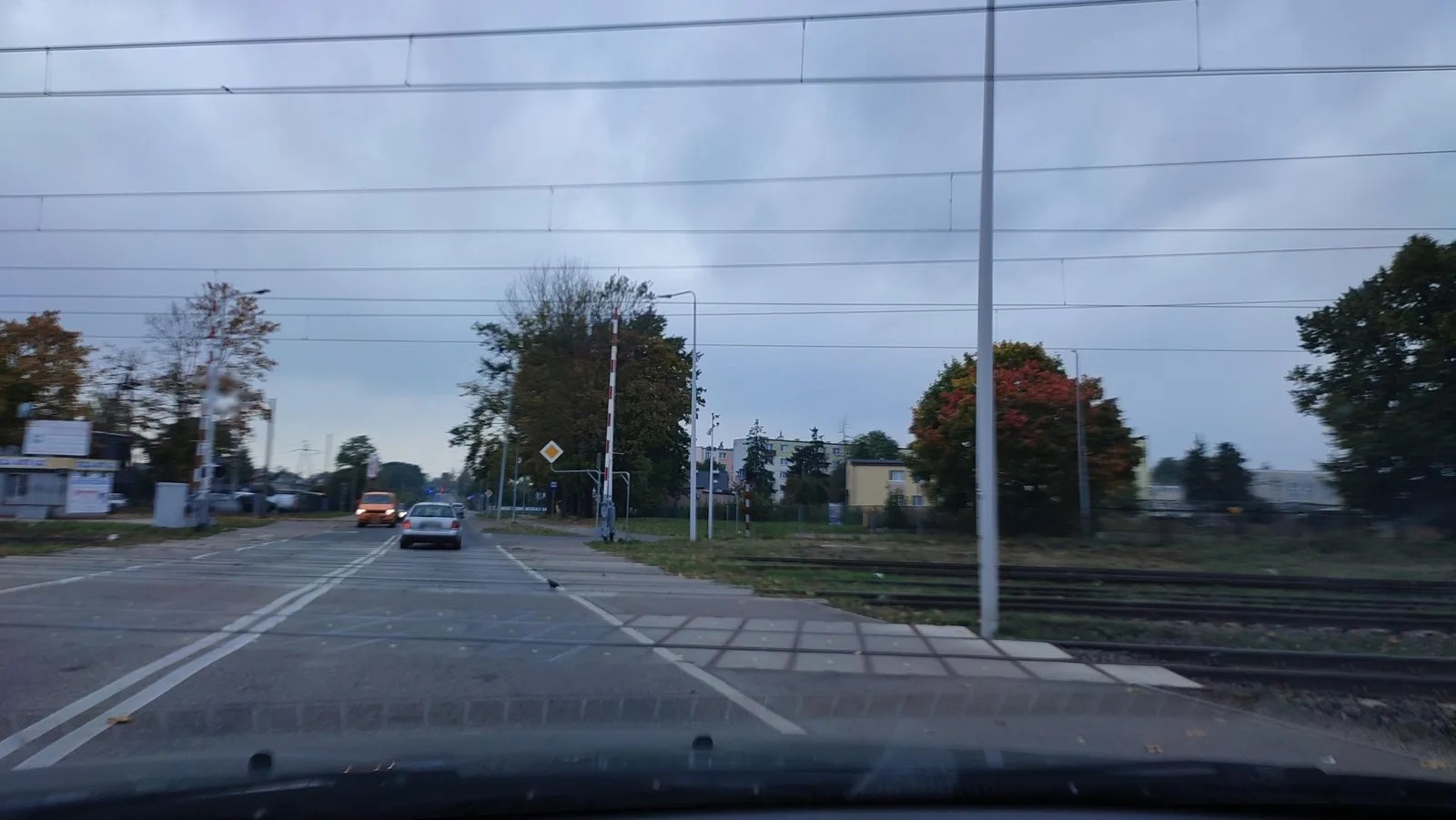
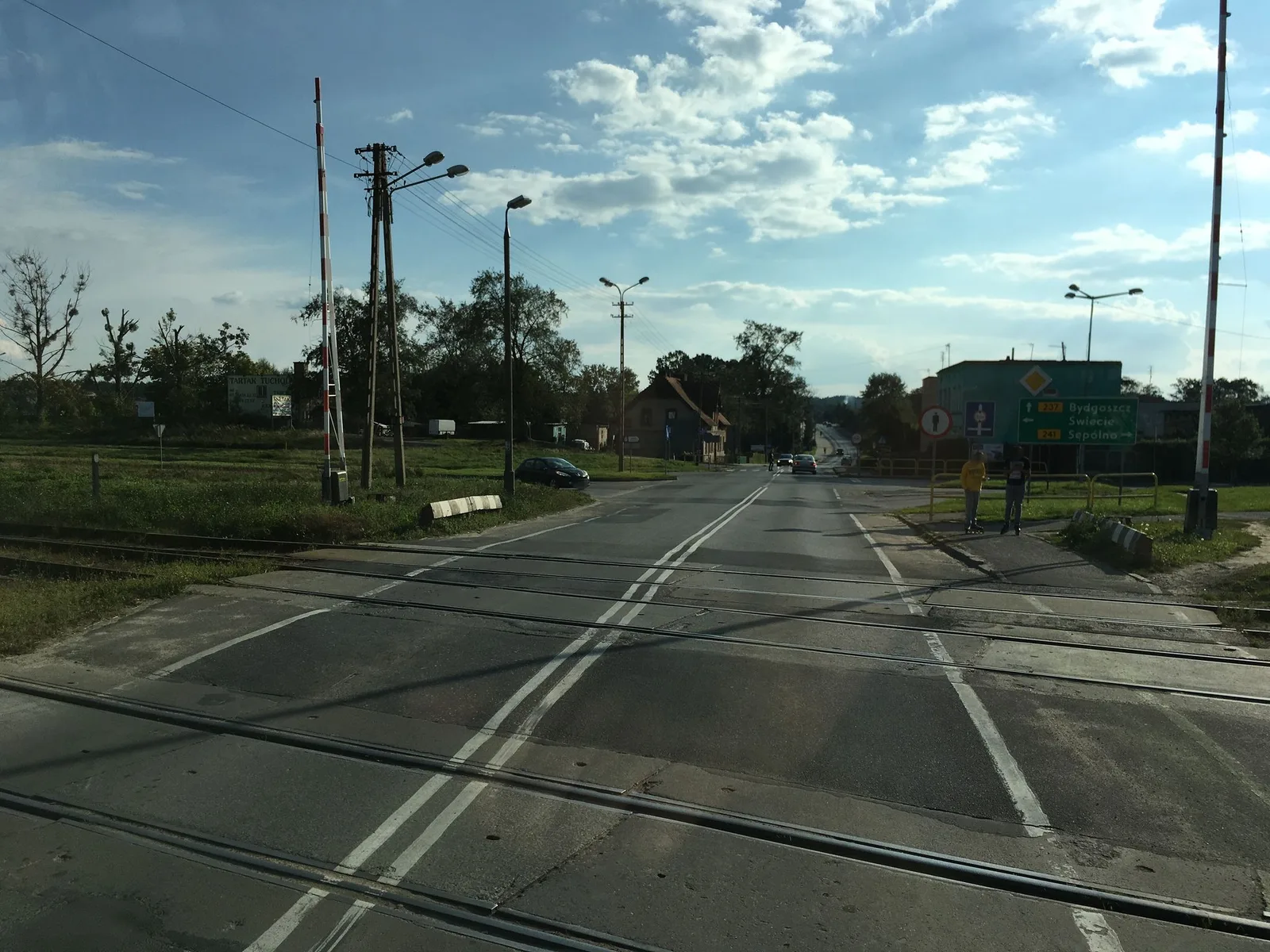
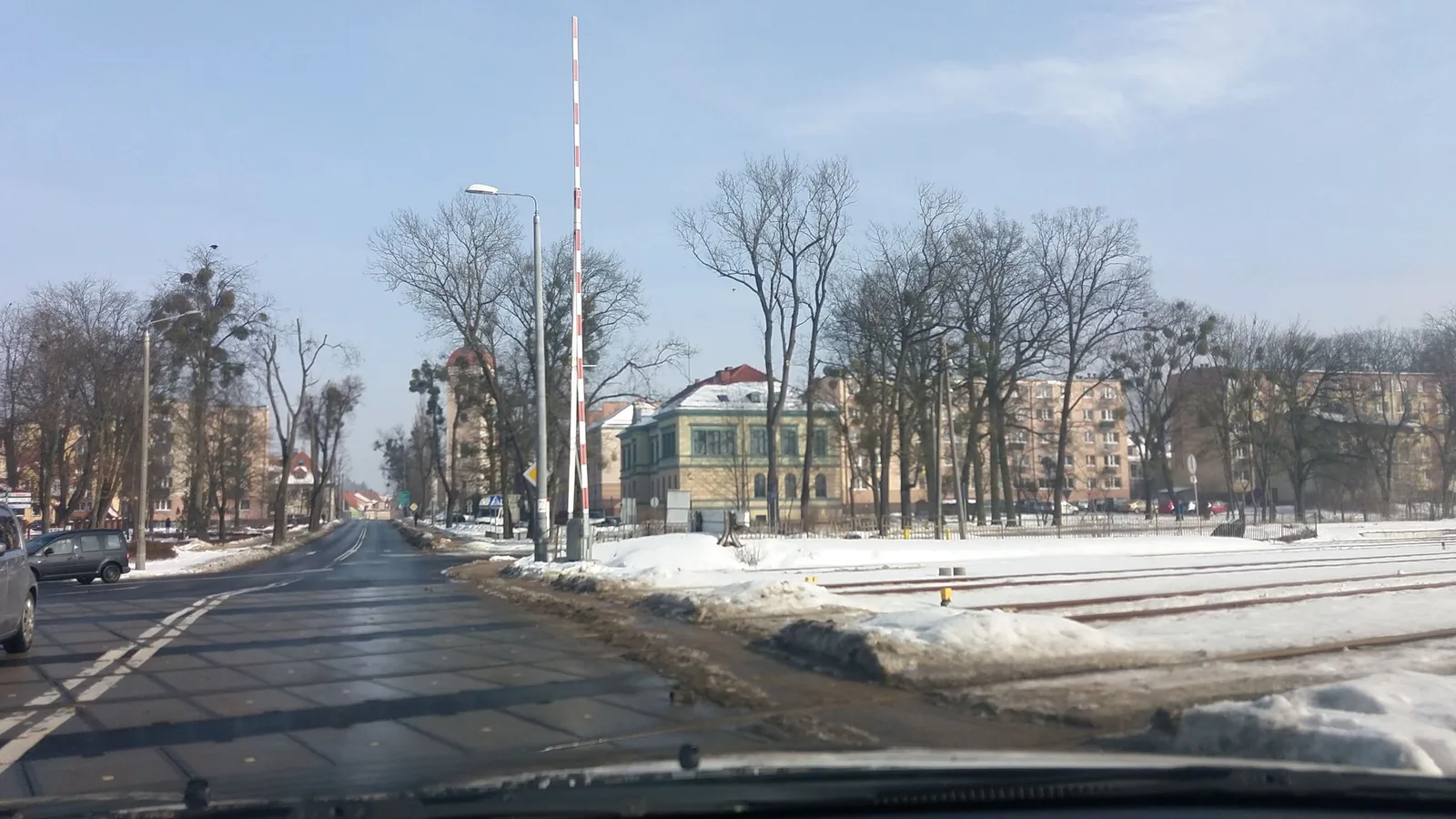
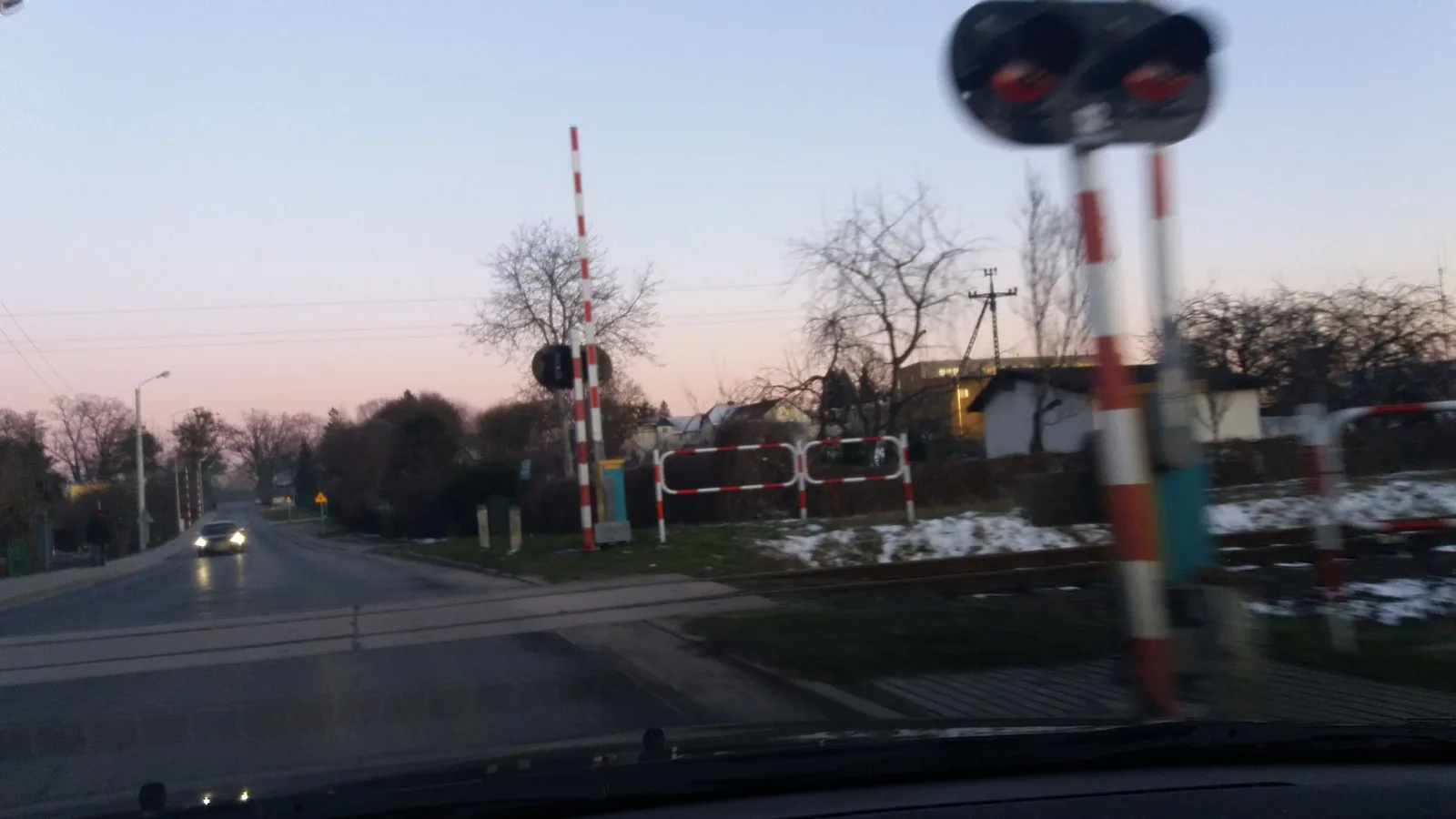
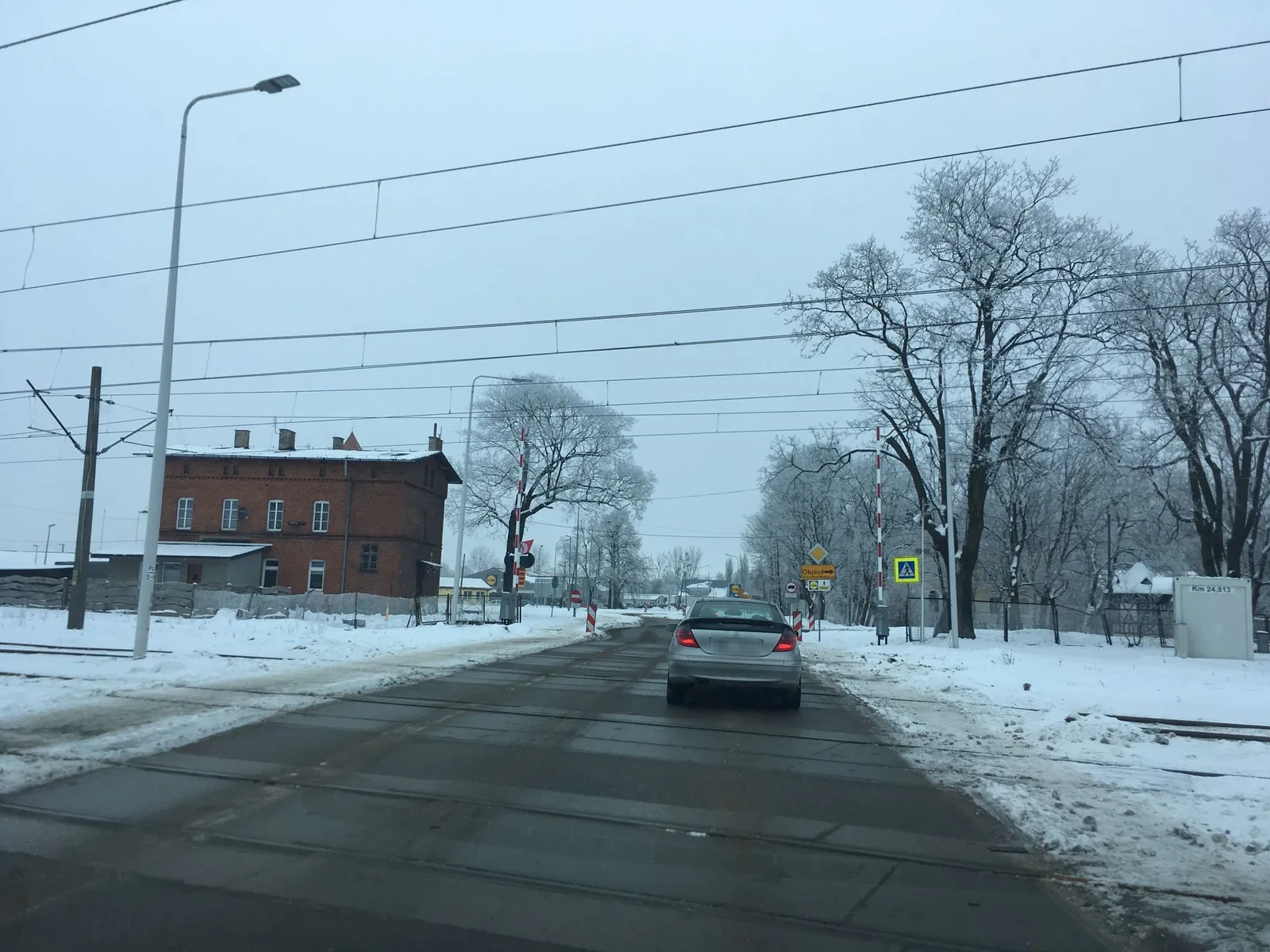
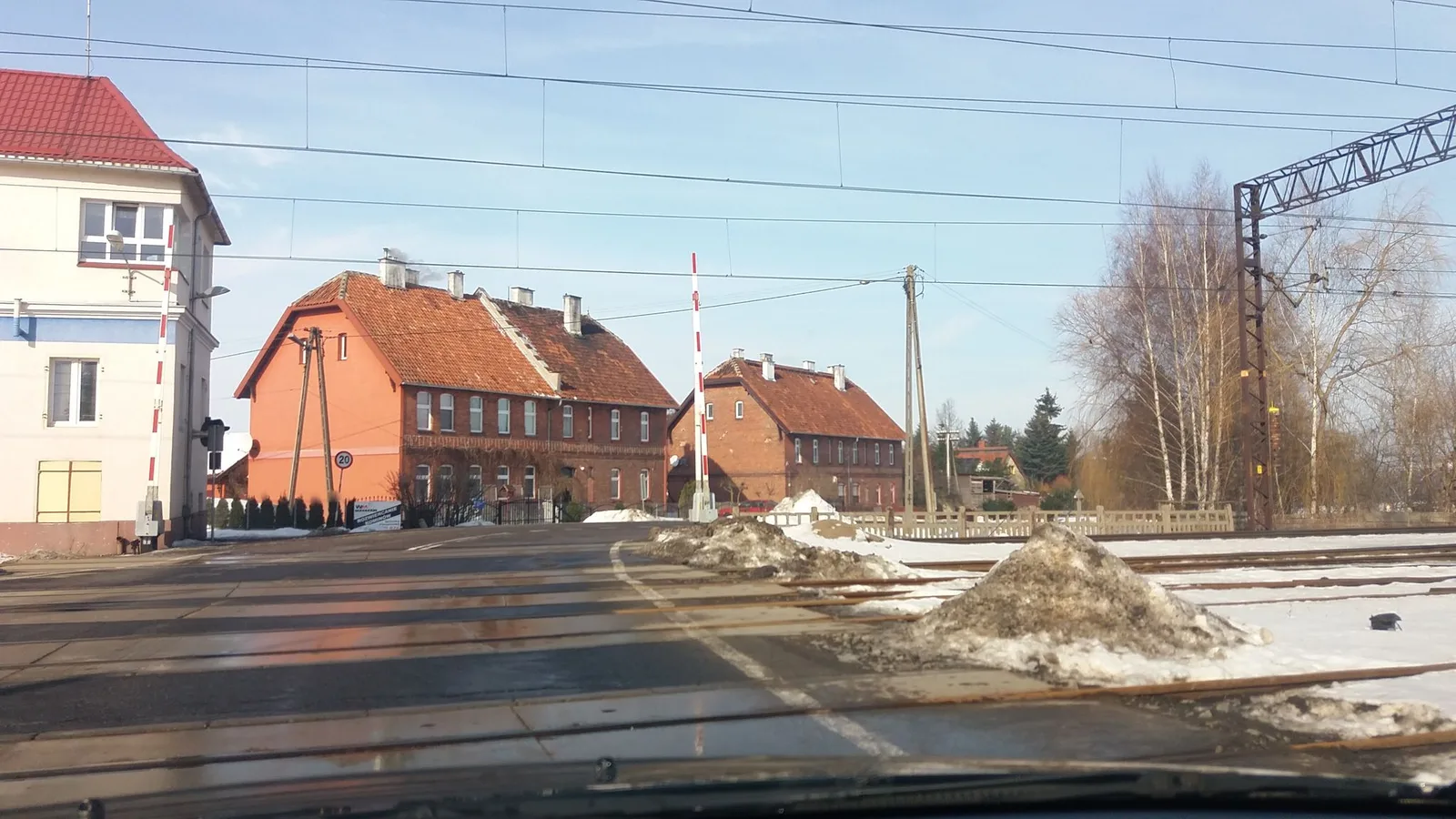
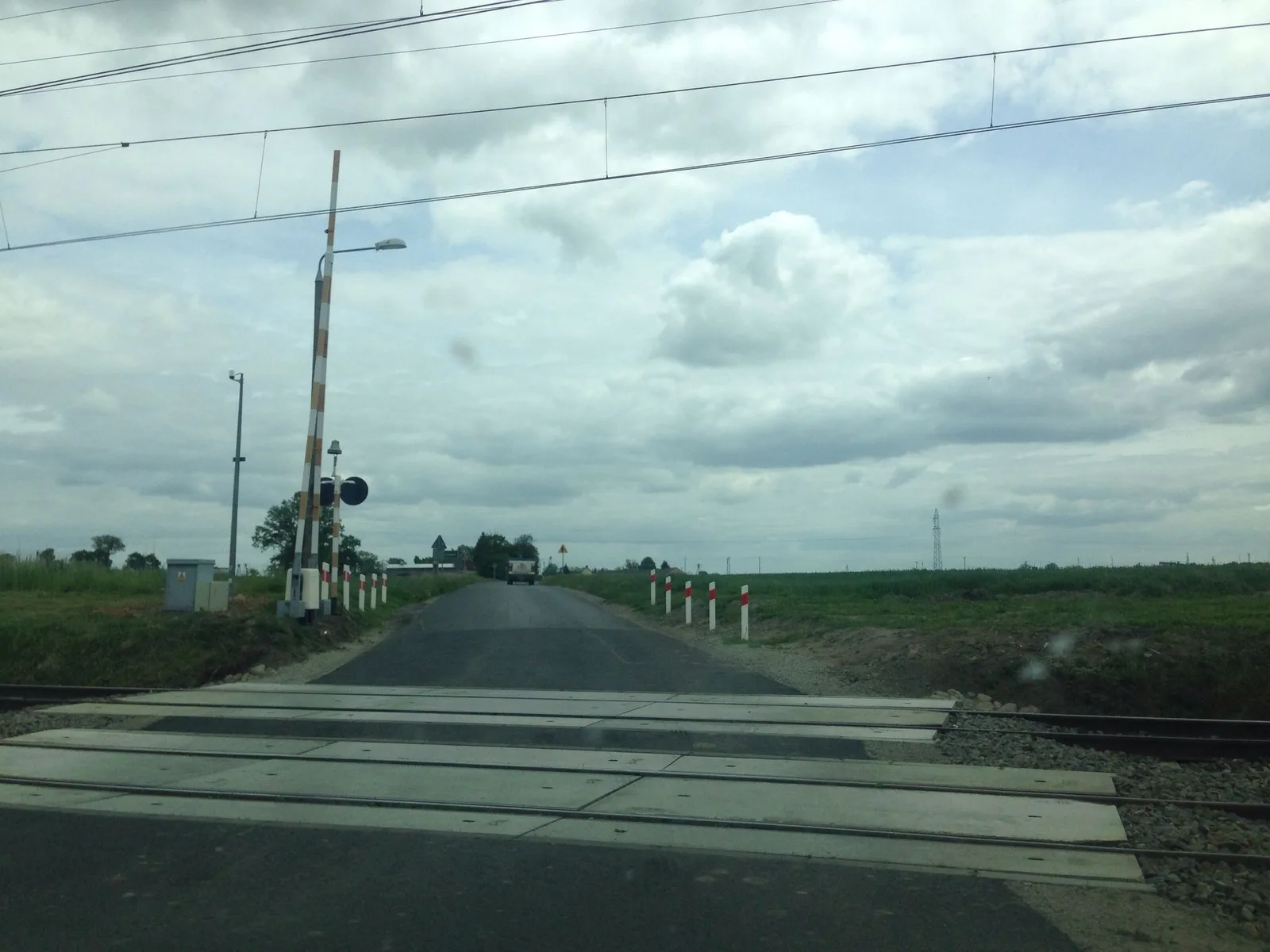
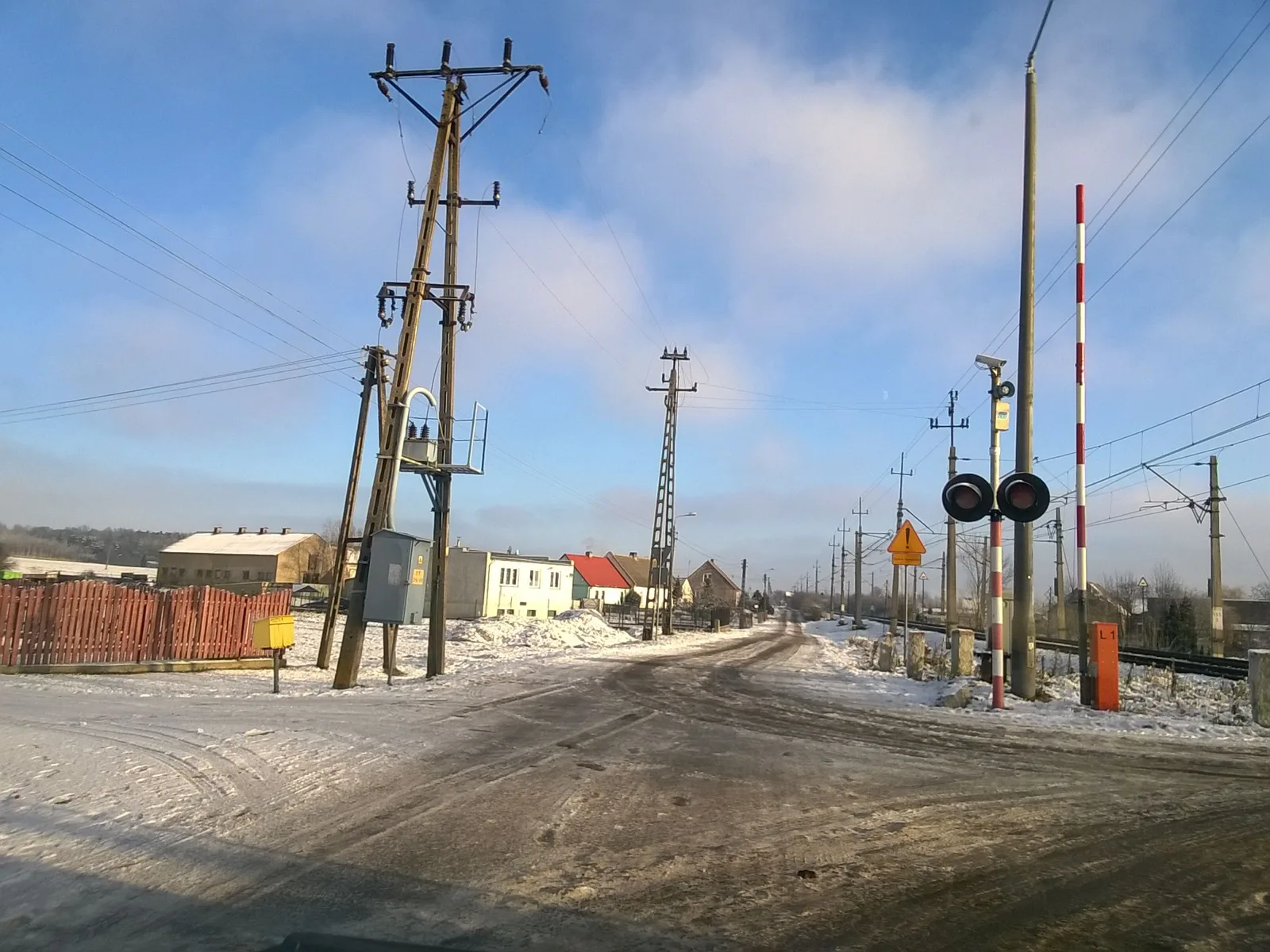
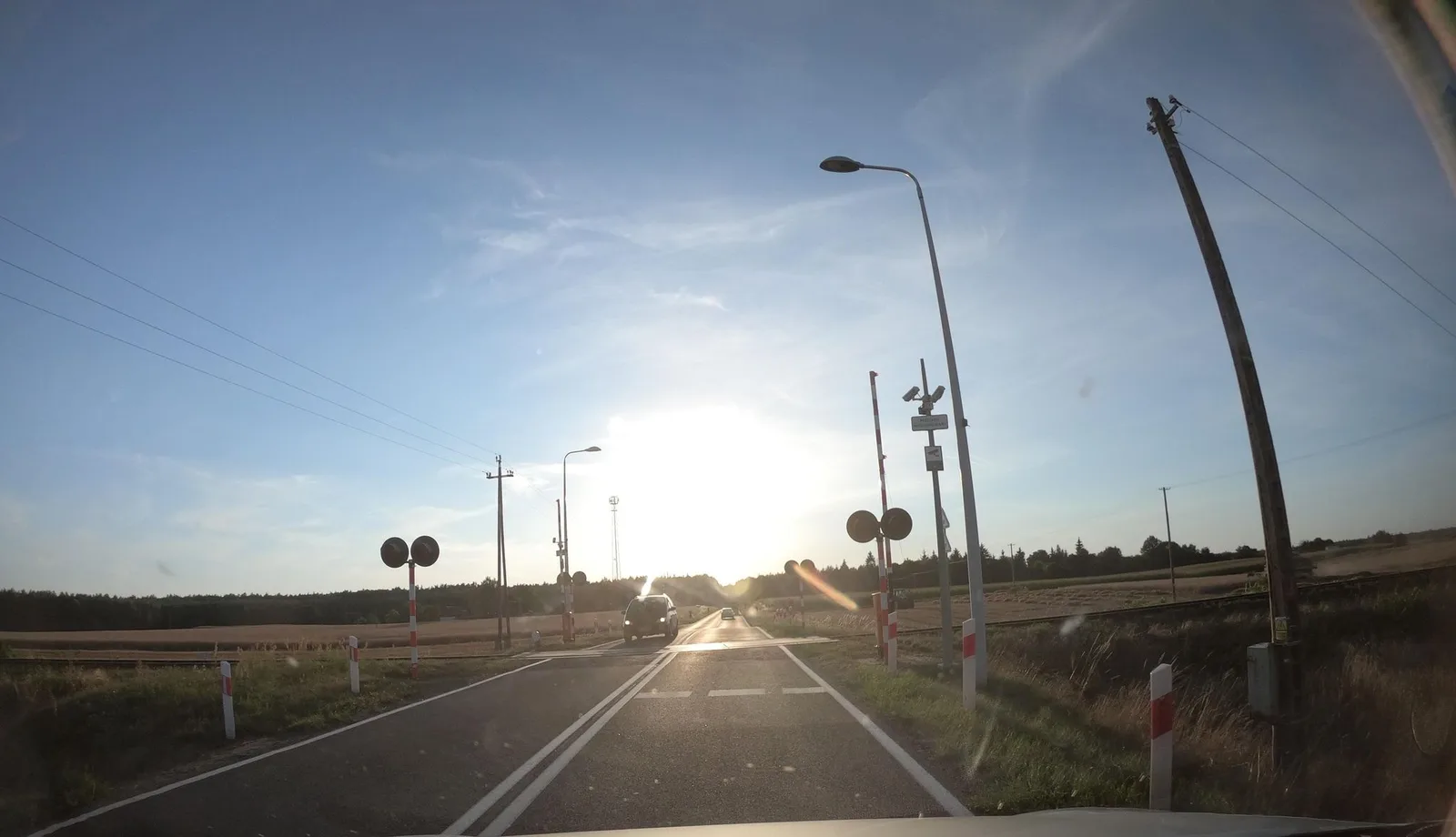
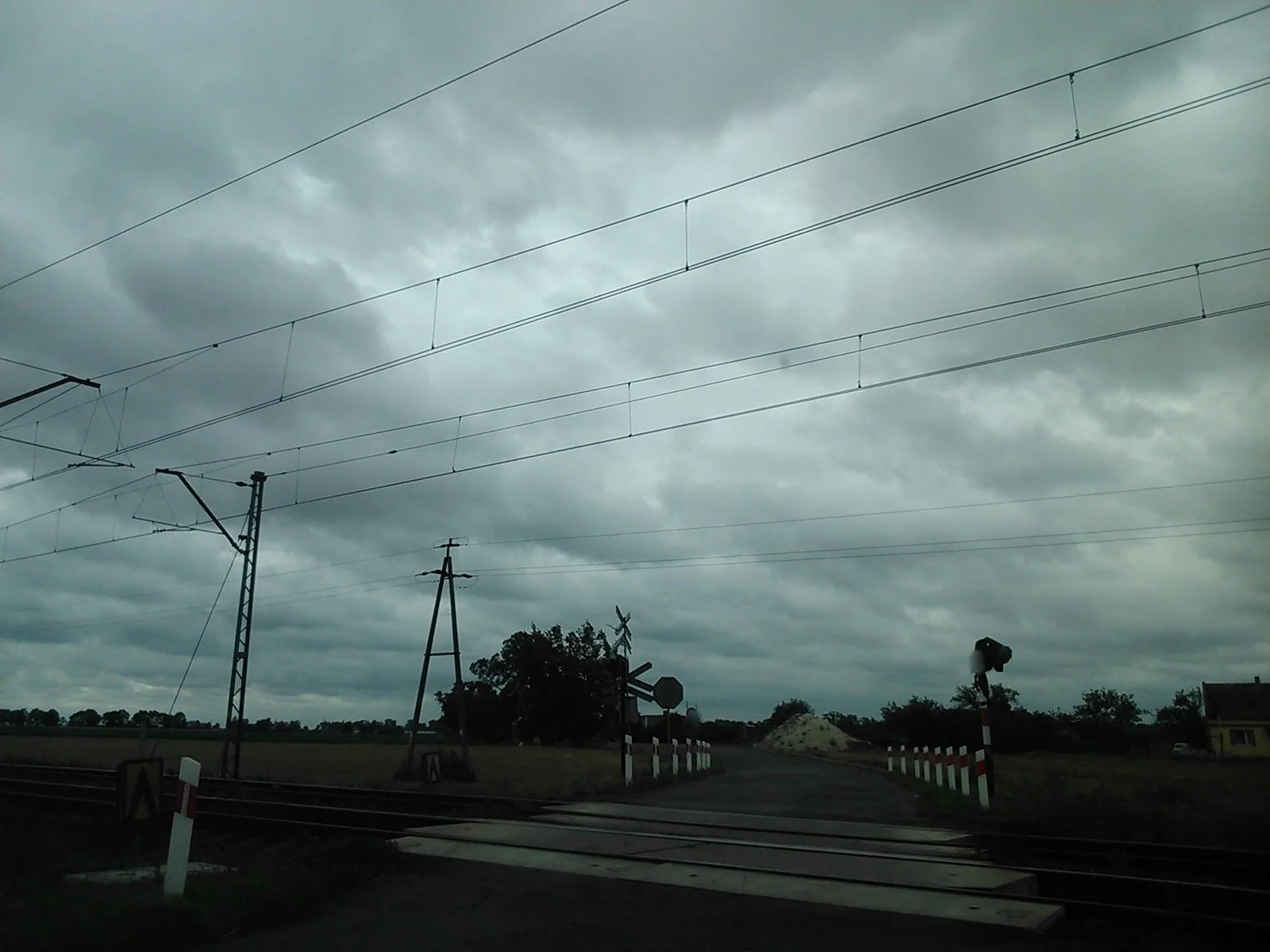
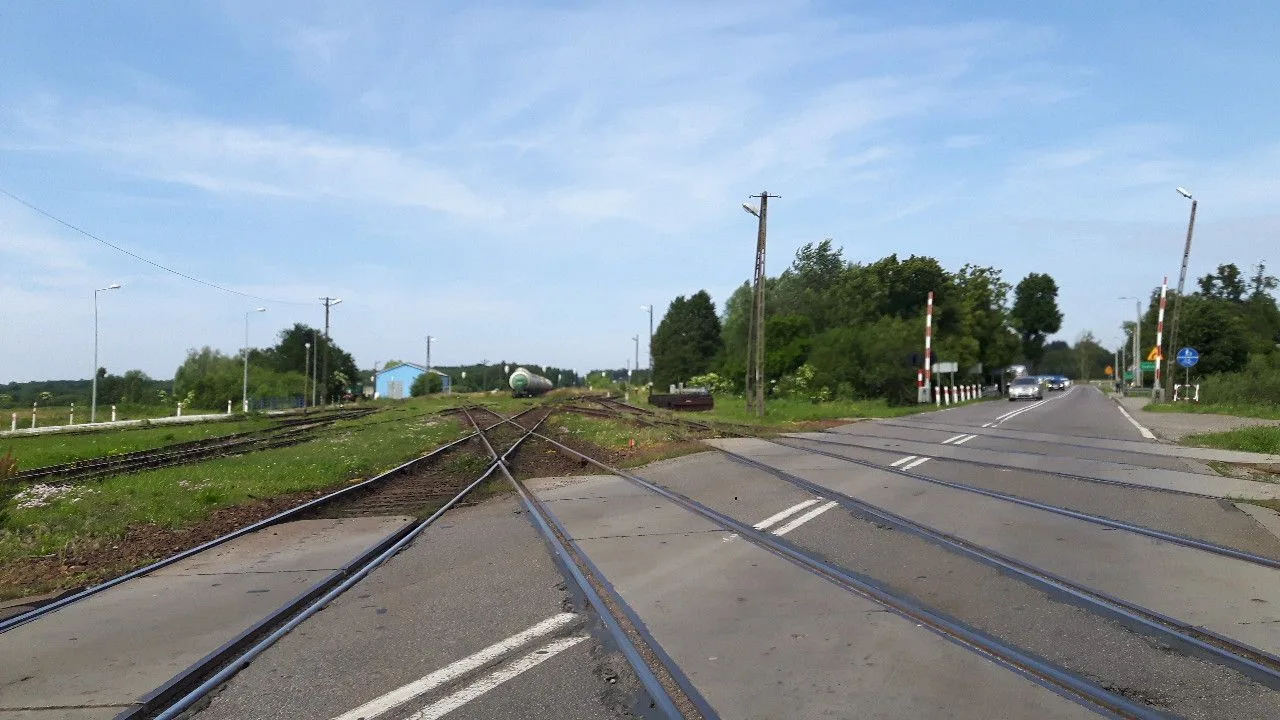
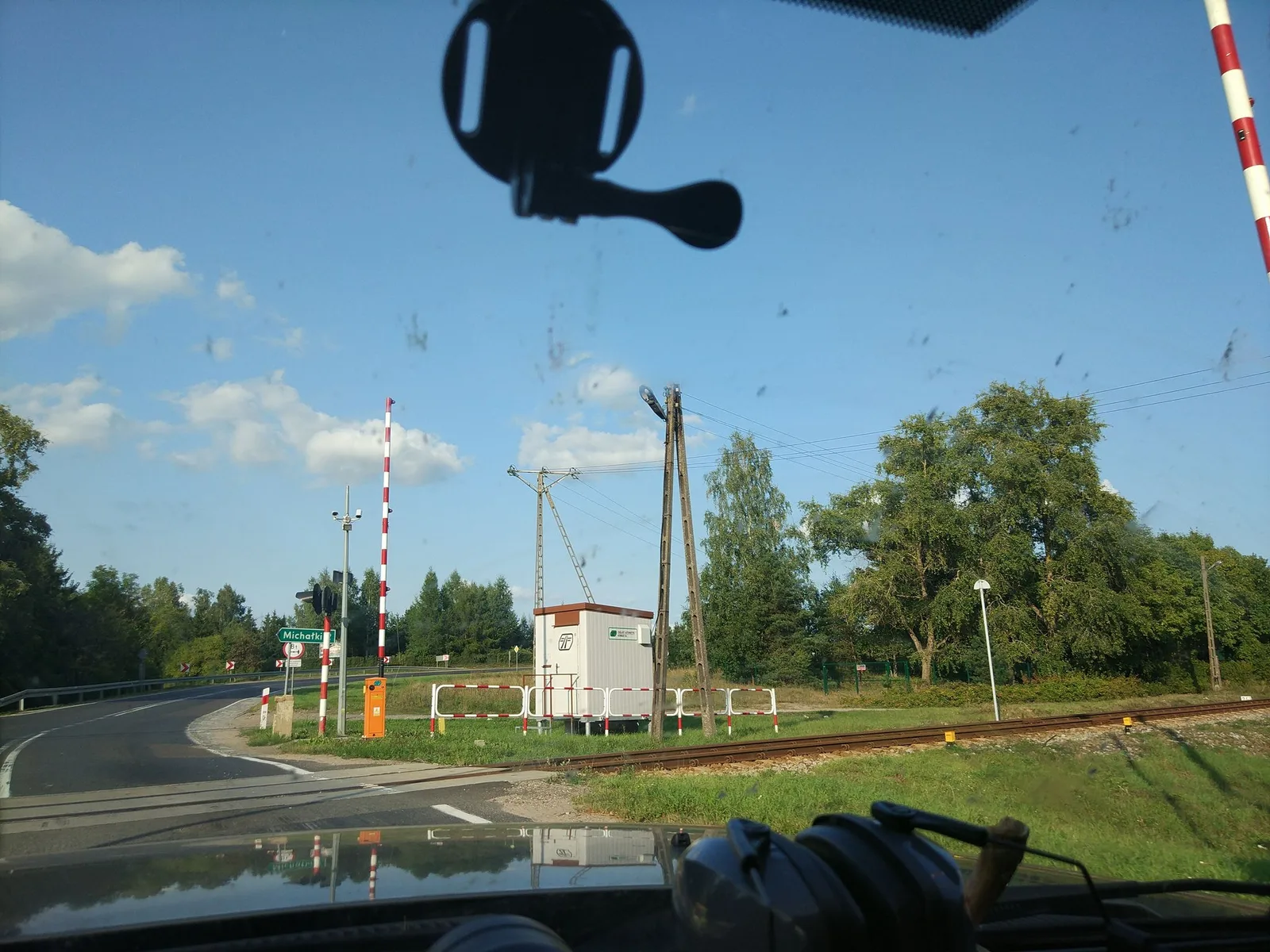
The street-level views below show crossings in rural, small-town, road and farm-access settings on the same national network, where local settings differ widely.
2. The infrastructure manager, safety authority and accident investigator
PKP PLK has managed the national network since 2001 and runs about 18,900 kilometres of active line, the largest of the Polish infrastructure managers [5, ↗] [3, ↗].
The Urząd Transportu Kolejowego (UTK) is the national safety authority. It supervises railway safety, market access and interoperability, reports to the Ministry of Infrastructure, and tracks the Common Safety Indicators that Poland reports to the Union [4, ↗].
The Państwowa Komisja Badania Wypadków Kolejowych (PKBWK) investigates railway accidents independently, under the Ministry of the Interior and Administration [6, ↗].
3. A category-based protection regime
The Regulation of 20 October 2015 (Dz.U. 2015 Poz. 1744) fixes the protection a crossing must carry, from the railway line category, the road category, the line speed, the traffic volumes and the local terrain [2, ↗]. It sets six categories, each counted on the UTK portal [1, ↗]:
- Category A keeps full barriers, worked by an attendant or remotely.
- Category B runs automatic half-barriers with light and sound signals.
- Category C runs automatic light and sound signals without barriers.
- Category D leaves the crossing passive, with only a St Andrew's cross and a stop sign.
- Category E covers pedestrian-only crossings.
- Category F covers crossings on private and internal roads.
The regime is prescriptive and category-based. The 2015 regulation sets the required category from the line and road class, the line speed, the traffic and the local terrain, a prescriptive approach that a comparative per-crossing reading can extend [2, ↗].
The regime sits inside the European framework of Directive (EU) 2016/798 [14, ↗], where level crossings cause about one percent of road fatalities yet close to a third of railway fatalities [13, ↗], and the EU Agency for Railways finds level crossing safety broadly flat since 2017 [12, ↗].
4. Bezpieczny przejazd and the modernisation programme
The Bezpieczny Przejazd campaign has run since 2005 [7, ↗]. Since June 2018, PKP PLK has marked 14,000 crossings and pedestrian passages with yellow stickers that carry an individual crossing number and the emergency line 112, so a caller can report the exact crossing [7, ↗]. The line has taken over 16,500 reports of a threat at a crossing, about 500 of which stopped train traffic [8, ↗].
The modernisation runs inside the National Railway Programme to 2030, a PLN 167.6 billion envelope of about EUR 38 billion adopted in August 2023 [9, ↗]. Crossing work mostly rides within line modernisation rather than a standalone budget. PKP PLK has built over 500 grade separations and fitted over 2,000 crossings with new signalling in line projects [17, ↗]. A dedicated FENiKS line adds about PLN 257 million, of which about PLN 194 million is EU money, for 182 crossings on 73 lines [10, ↗], and PKP PLK has drawn over EUR 900 million from the CEF2 fund, the largest single beneficiary of CEF transport money in the Union [11, ↗].
Poland recorded 61 level crossing accidents in 2023, up from 58 in 2022 [15, ↗], and 45 people died at level crossings in 2024, six more than the year before [19, ↗]. About 40 percent of all rail accidents on Polish lines happen at crossings [16, ↗], and the roughly 6,000 passive crossings concentrate that risk [17, ↗].
5. Comparing the surroundings of crossings
A crossing is both a point of risk and a point of access.
- For the crossings that stay, the risk they carry depends on the nearby population, the emergency access, and the local routes that rely on them.
- For the crossings moving toward modernisation or removal, the same surroundings set the access question, where road users go once a passive crossing closes or gains a grade separation, and rural and small-town sites are often constrained.
Some crossings have simple alternatives. Others touch emergency access, farm and small-town circulation, nearby population or the local road network that the route through the crossing connects. Comparing those surroundings on the same reference can support prioritisation across the roughly 6,000 passive crossings that carry most of the risk, as much as field review, detailed engineering and budget commitment on those moving toward a project.
That is the territorial layer SAMRoute structures around crossings, with a common geography, repeatable indicators, a regular refresh and traceable sources, so one crossing can be compared with another [18, ↗].
6. References
Infrastructure manager and inventory
[1] Urząd Transportu Kolejowego. Level crossing infrastructure data (UTK statistical portal). The per-category breakdown of the crossing stock, A to F. Read
[5] PKP Polskie Linie Kolejowe. About us (PKP PLK, 2025). The infrastructure manager role since 2001 and the network length. Read
[3] PKP Polskie Linie Kolejowe. Network Statement 2024/2025 (PKP PLK, 2024). The managed network and its access rules. Read
The protection regime
[2] Minister of Infrastructure and Development. Regulation of 20 October 2015 on technical conditions for level crossings (Dz.U. 2015 Poz. 1744). Sets the six crossing categories from line and road class, speed, traffic and terrain. Read
Safety authority and investigation
[4] Urząd Transportu Kolejowego. Office of Rail Transport (UTK, 2026). The national safety authority supervising railway safety, market access and interoperability. Read
[6] Państwowa Komisja Badania Wypadków Kolejowych. State Commission for Railway Accident Investigation (Ministry of the Interior and Administration, 2026). The independent railway accident investigation body. Read
[15] Urząd Transportu Kolejowego. Railway Safety Report 2023 (UTK, 2024). The 2023 level crossing accident count, 61 up from 58 in 2022. Read
[19] Urząd Transportu Kolejowego. Raport w sprawie bezpieczeństwa za 2024 rok (UTK, 2025). The 2024 stock of 11,973 crossings, down from 12,081 in 2023, the active and passive split (5,962 passive in 2024), and the 45 level crossing fatalities in 2024. Read
Campaign and modernisation programme
[7] PKP Polskie Linie Kolejowe. Bezpieczny Przejazd, Safe Level Crossing (PKP PLK, 2026). The campaign since 2005, the yellow stickers and the individual crossing numbers with the 112 line. Read
[8] PKP Polskie Linie Kolejowe. Bezpieczny Przejazd, statistics (PKP PLK, 2026). The reports taken on the 112 line and the resulting traffic stoppages. Read
[9] RailwayPro. Poland updates the National Rail Programme and its financing (RailwayPro, 2023). The PLN 167.6 billion programme to 2030 adopted in August 2023. Read
[10] Centre for EU Transport Projects. Improving railway safety with European funds (FENiKS) (CUPT, 2024). The level crossing co-financing of about PLN 257 million, PLN 194 million of it from the Union, for 182 crossings on 73 lines. Read
[11] RailwayPro. PKP PLK obtains more than EUR 900 million from CEF2 (RailwayPro, 2024). The CEF2 award and PKP PLK's position as the largest CEF transport beneficiary in the Union. Read
Accidents and benchmarking
[16] RailTech. Every third accident on the railway is caused by a car driver in Poland (RailTech, March 2025). The share of crossing accidents, the 99 percent driver cause and the 40 percent of rail accidents at crossings. Read
[17] Global Railway Review. Safety at level crossings in Poland (Global Railway Review, 2024). The category D structural risk and the modernisation works. Read
[12] European Union Agency for Railways. Safety Overview 2025 (ERA, 2025). Level crossing safety has been broadly flat across the Union since 2017. Read
[13] European Commission. Road safety thematic report, railway level crossings (European Road Safety Observatory, 2021). Crossings account for about one percent of road fatalities and close to a third of railway fatalities. Read
[14] European Parliament and Council. Directive (EU) 2016/798 of 11 May 2016 on railway safety (OJ L 138, 26.5.2016). Requires each Member State to set up a national safety authority and an independent investigating body. Read
[18] SAMRoute. Rail cadence, level crossings and emergency access (position page). Open