Level crossings in the Czech Republic. Comparing crossings before removal and enforcement decisions
The Czech Republic keeps upgrading, eliminating and enforcing its level crossings, with Správa železnic managing the inventory, the Drážní úřad acting as the railway safety authority, and the Drážní inspekce investigating accidents.
The following sections present the accident history, the level crossing system, the public actors, the regime, and the elimination and enforcement programme. The last section covers the territorial context that SAMRoute models.
1. Accident history at level crossings
Between 2013 and 2022, Czech level crossings saw 1,695 emergency events, in which 353 people were killed and 868 injured, about 36 deaths a year, the great majority traced to road users who ignored the signals or drove around the lowered barriers [16, ↗]. Of those deaths, 181 fell at crossings with active light and sound signalling and 53 at the passive crossings marked by the warning cross alone [16, ↗].
- In January 2024, a fast train to Prague struck a truck at a level crossing near Bohumín in the east of the country, killing the train driver and injuring about ten people [17, ↗].
- On 22 July 2015, a Pendolino express struck a lorry that had crossed onto the level crossing at Studénka against the lowered barriers, killing three people and injuring others [6, ↗].
2. The Czech level crossing system
Správa železnic, the state infrastructure manager, runs about 9,300 kilometres of line and owns the level crossing inventory [2, ↗]. The network carries about 7,650 level crossings, near 81 for every 100 kilometres of line, and the count falls each year [1, ↗]. A large share stay passive, marked by the výstražný kříž, the warning cross, alone, while the rest carry light signals and, on some, barriers [1, ↗].
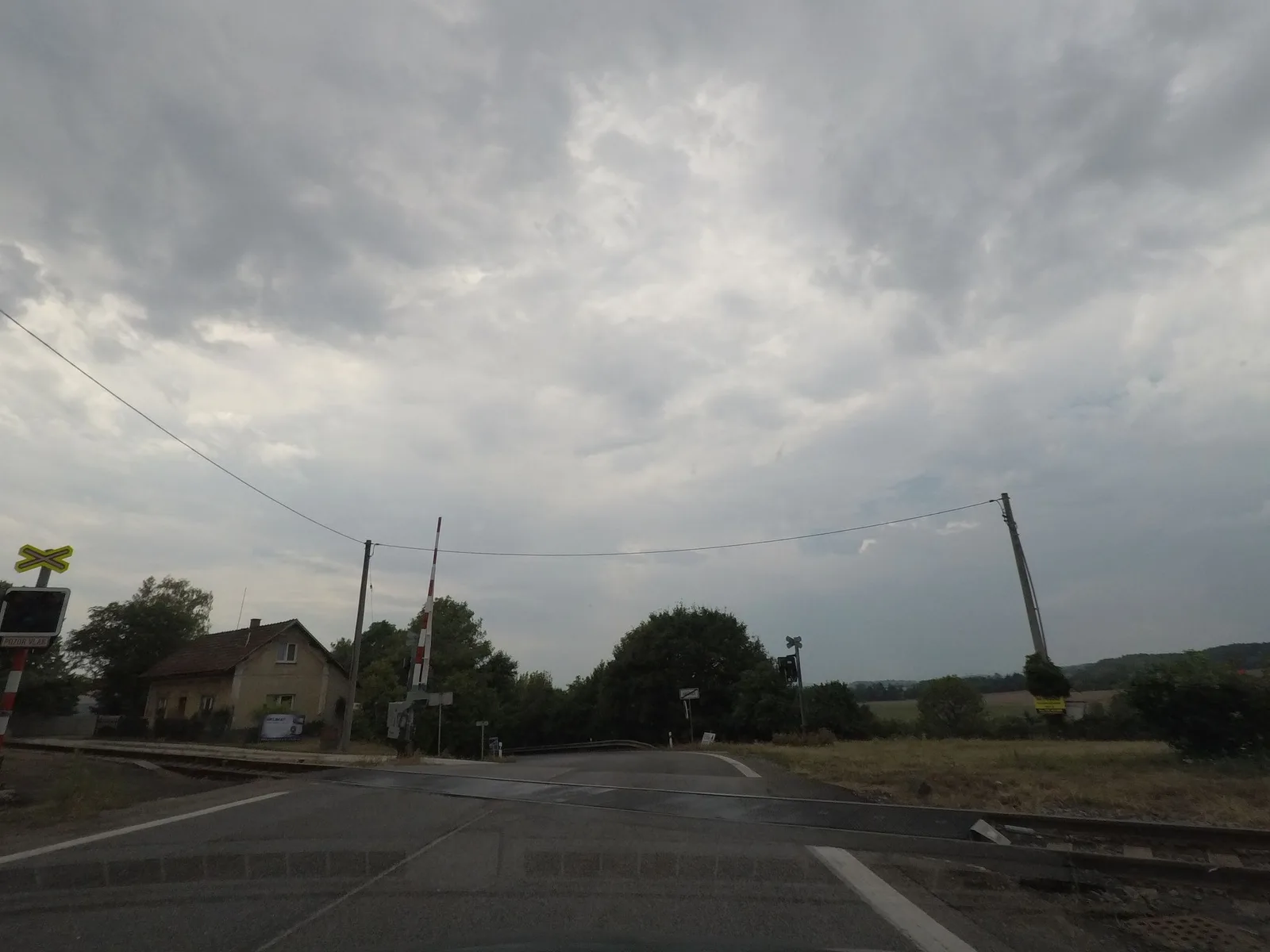
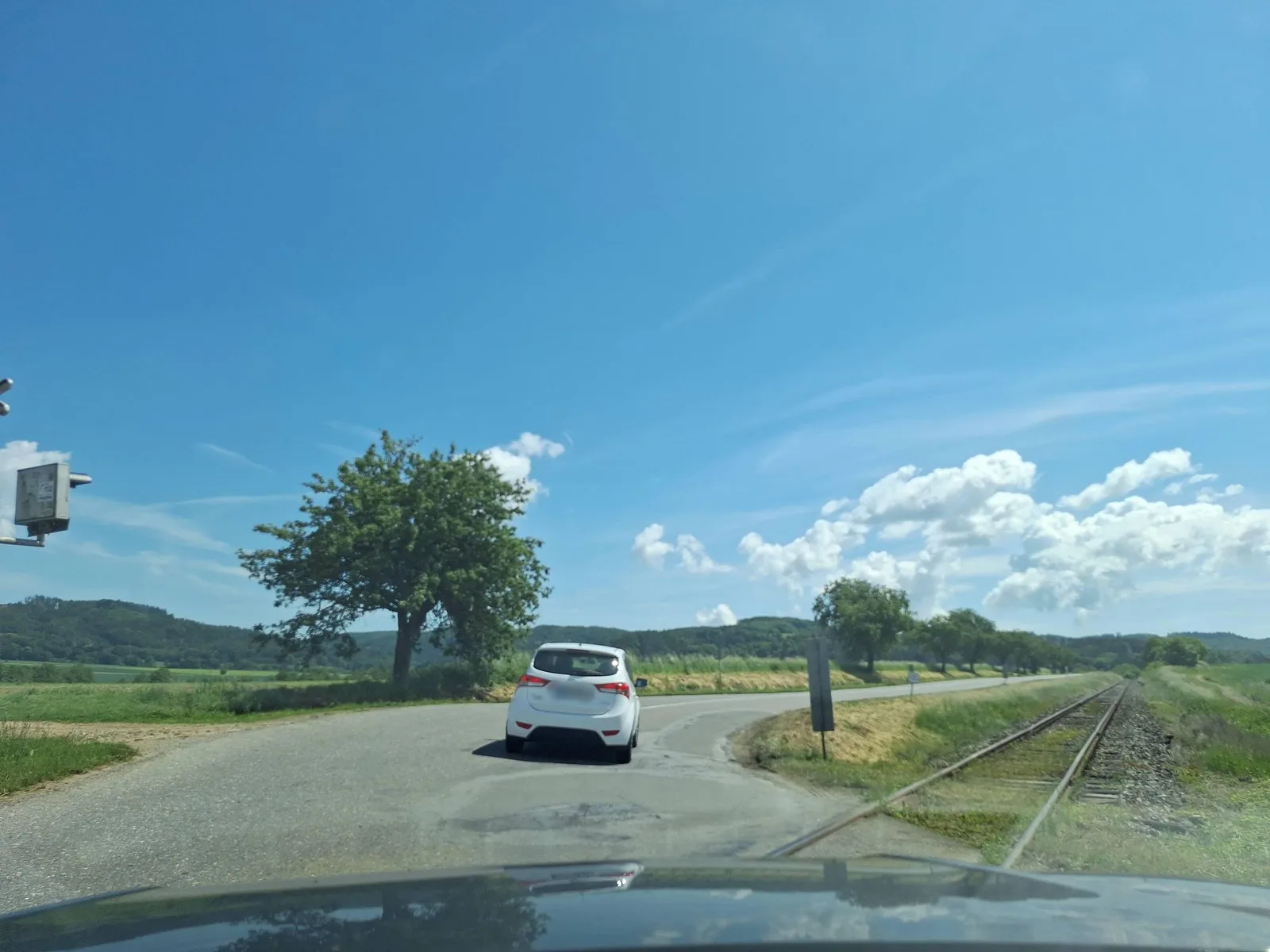
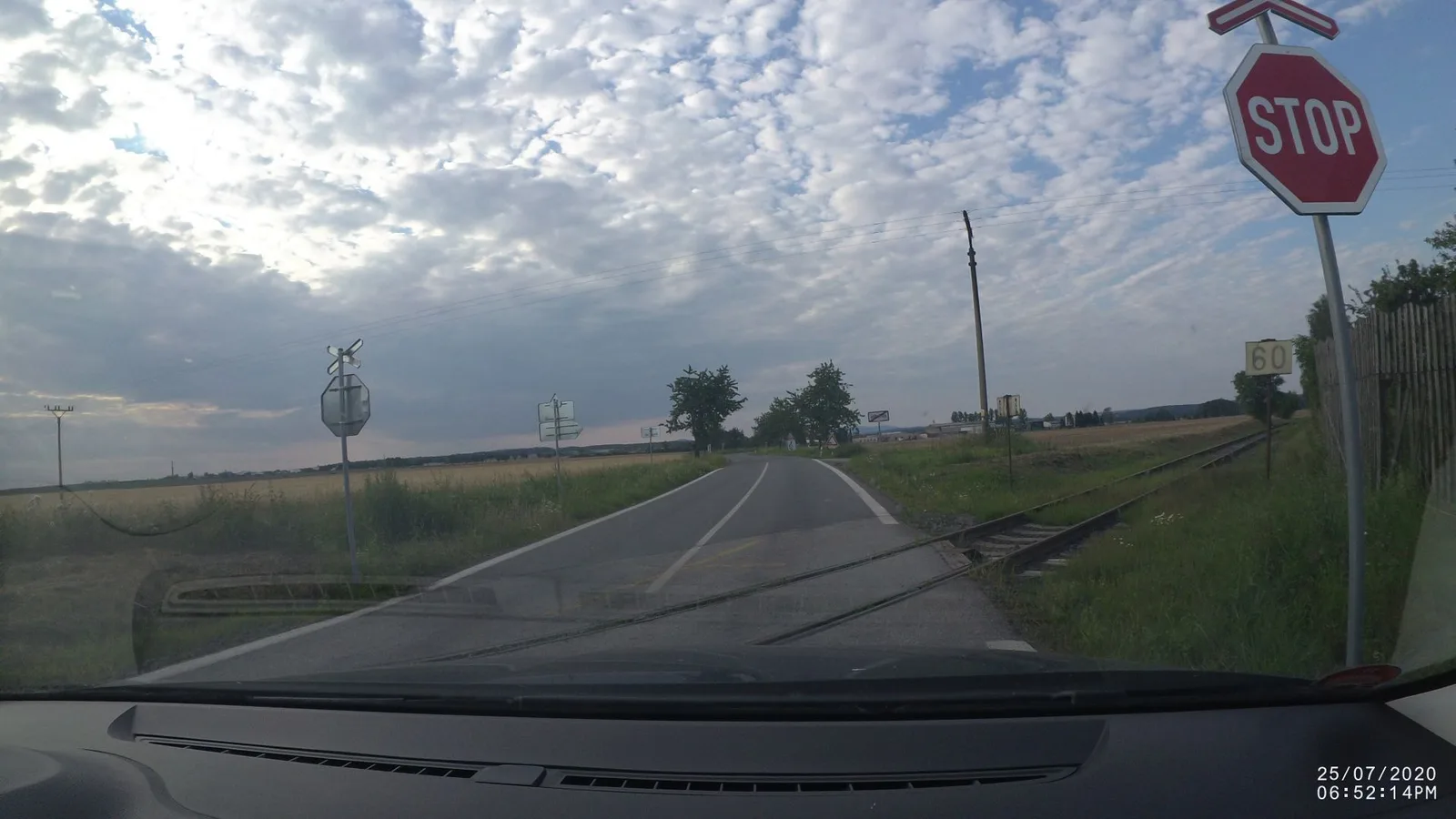
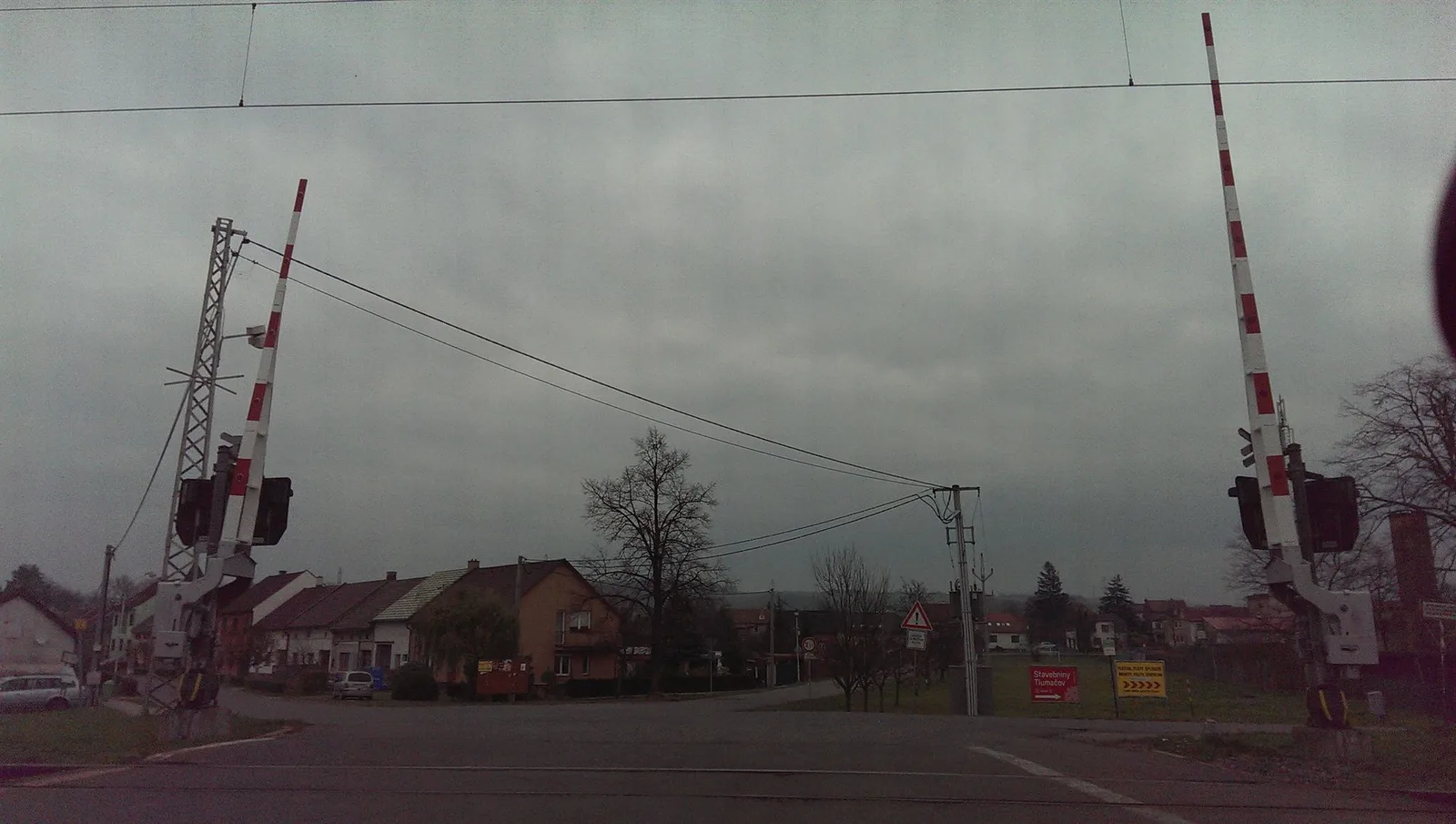
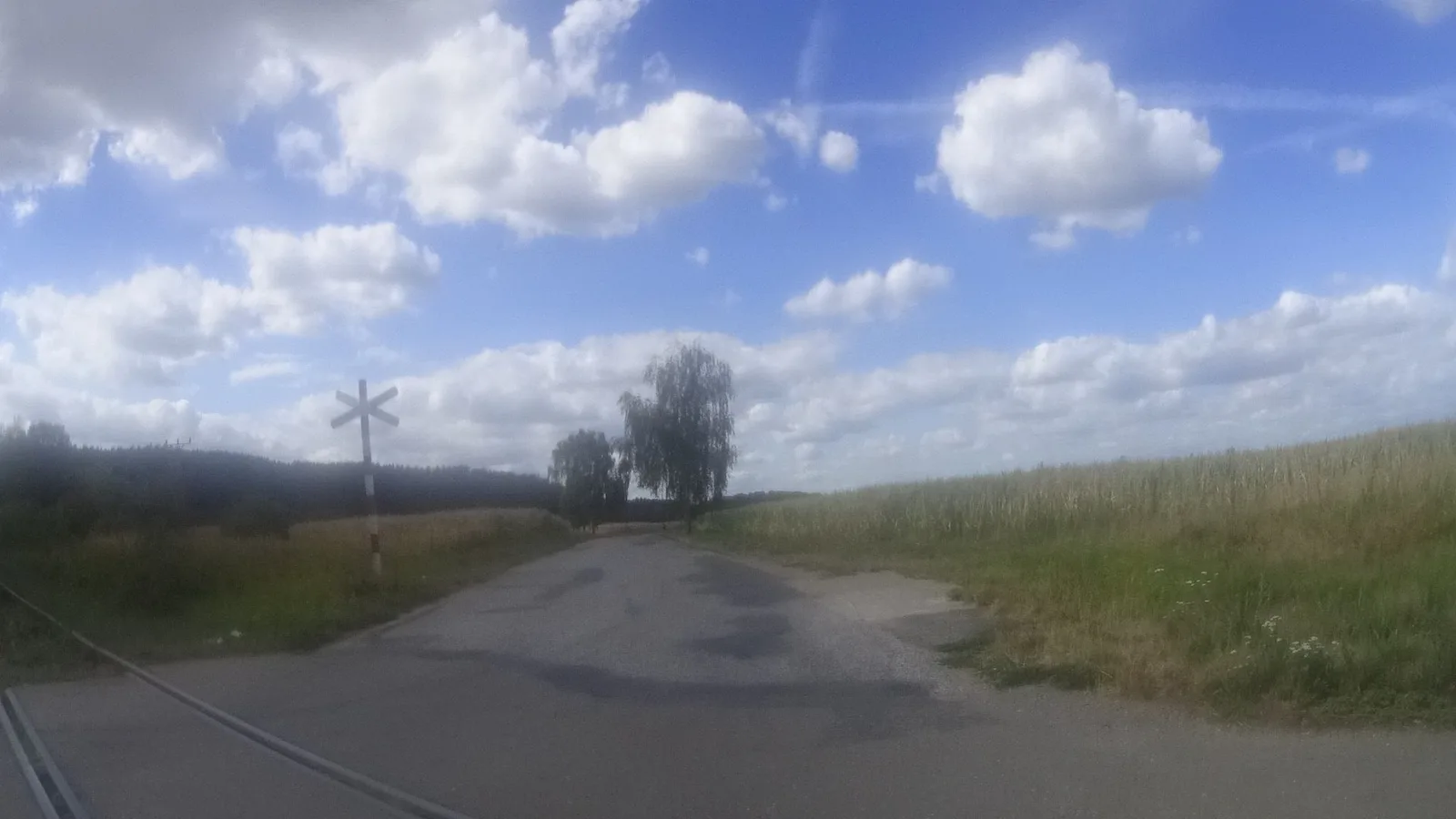
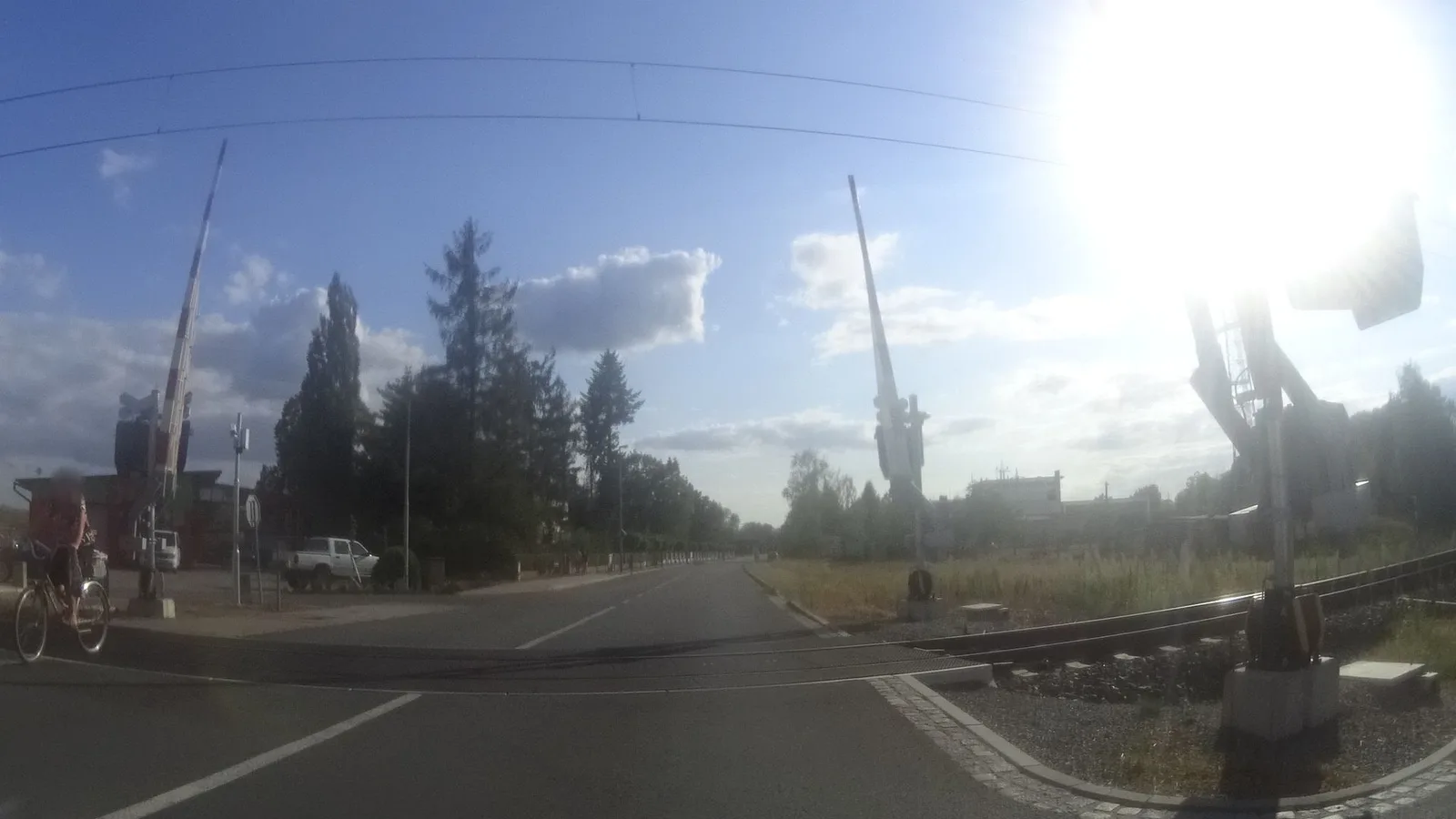
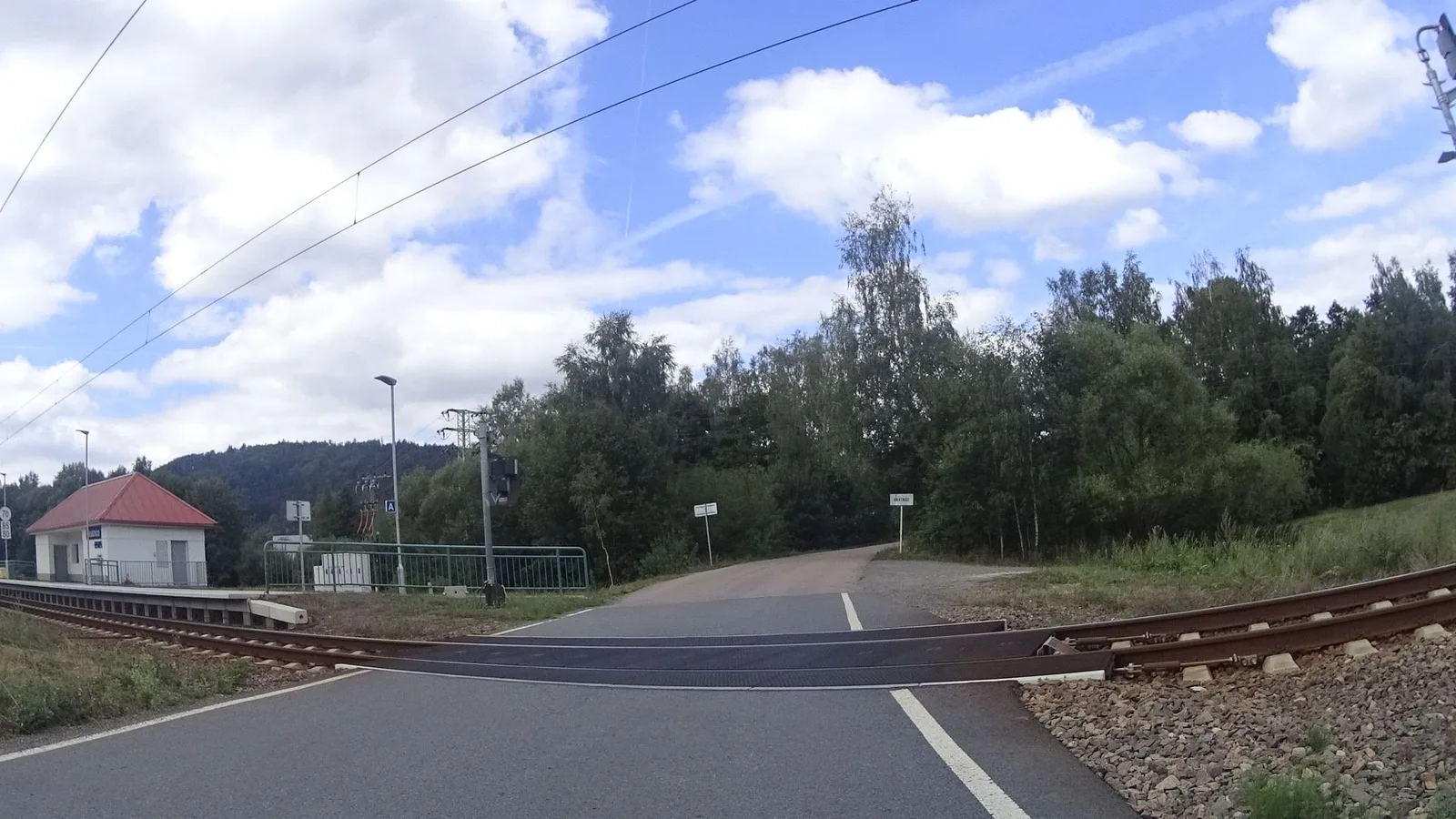
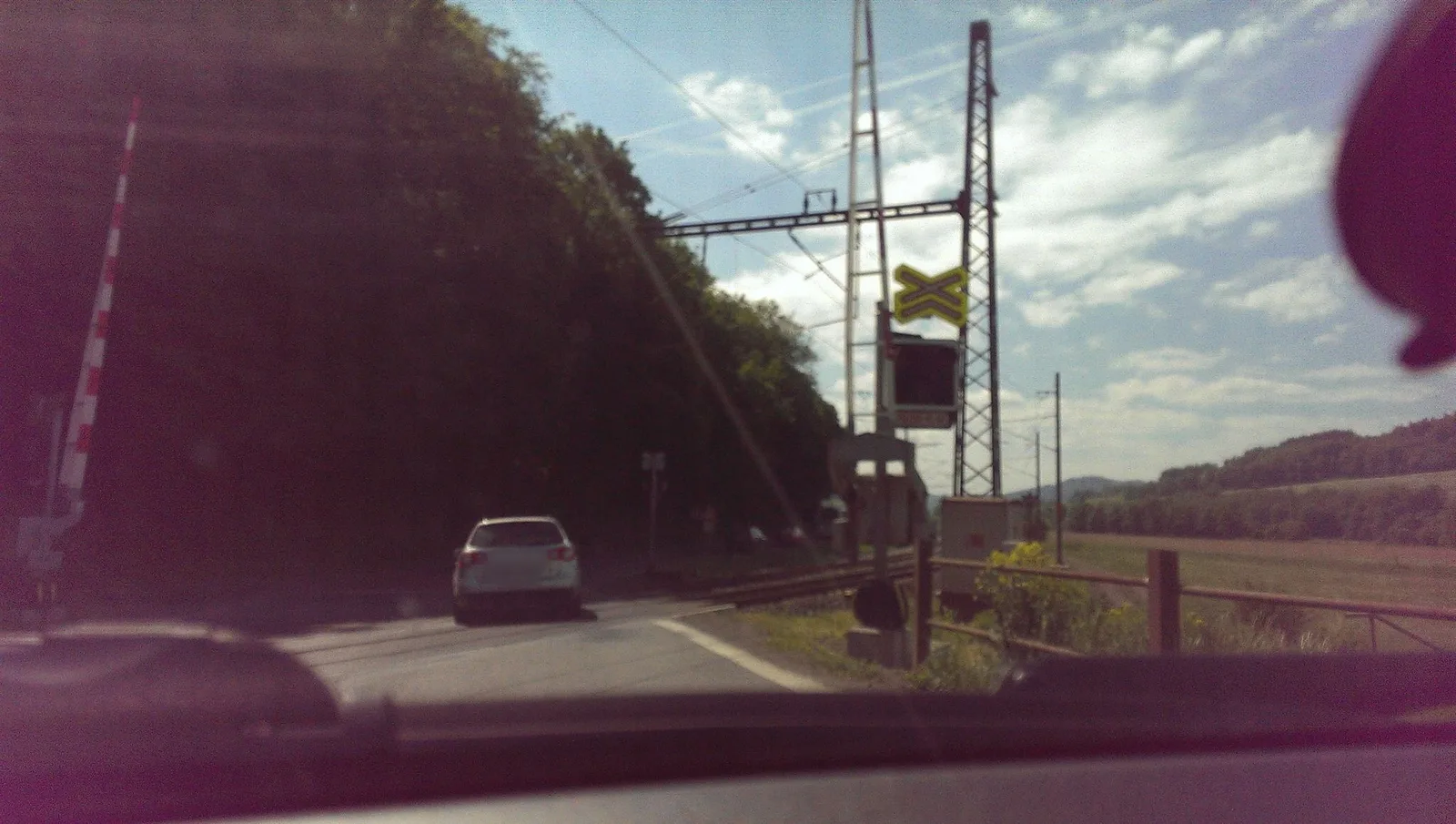
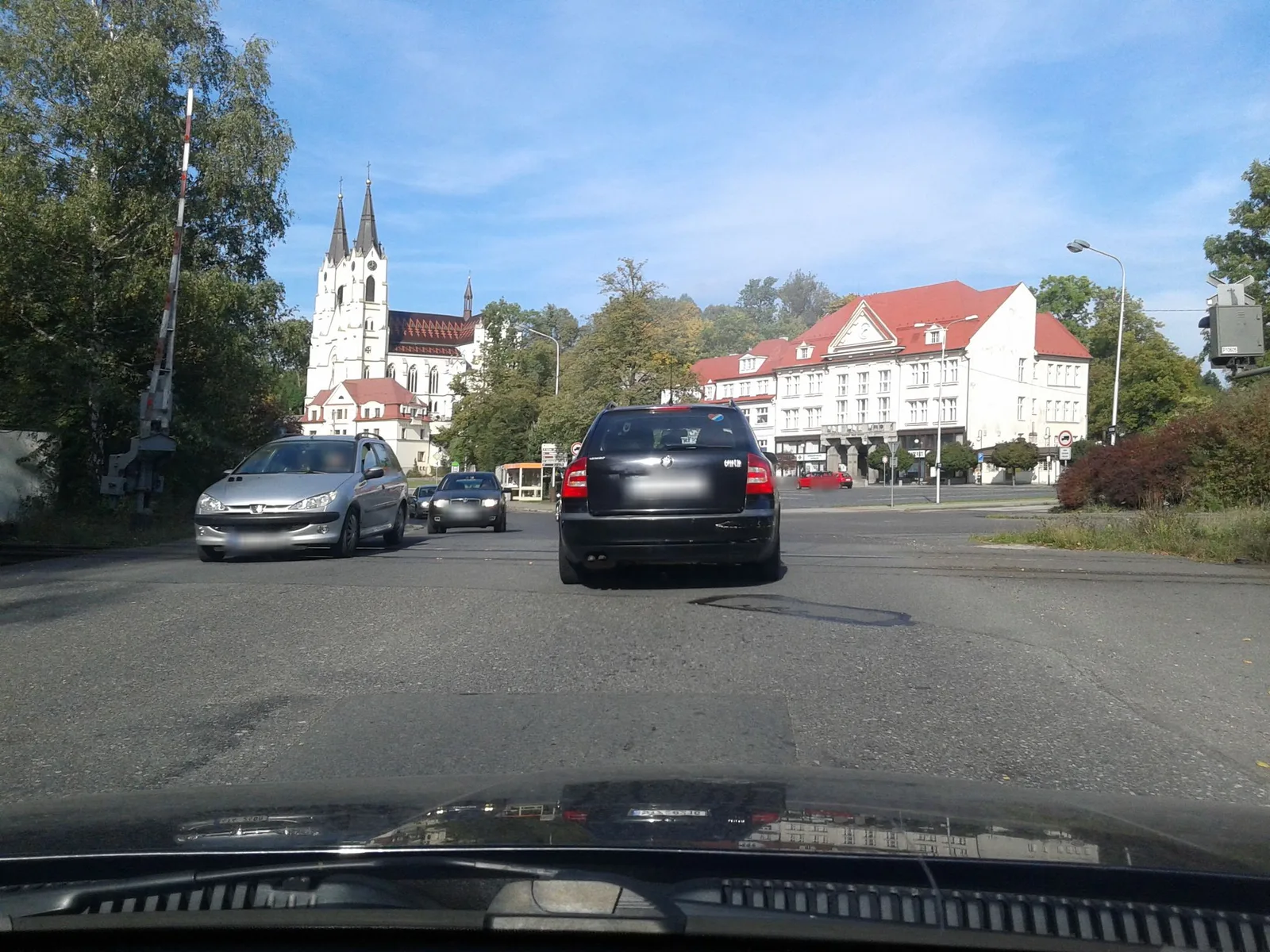
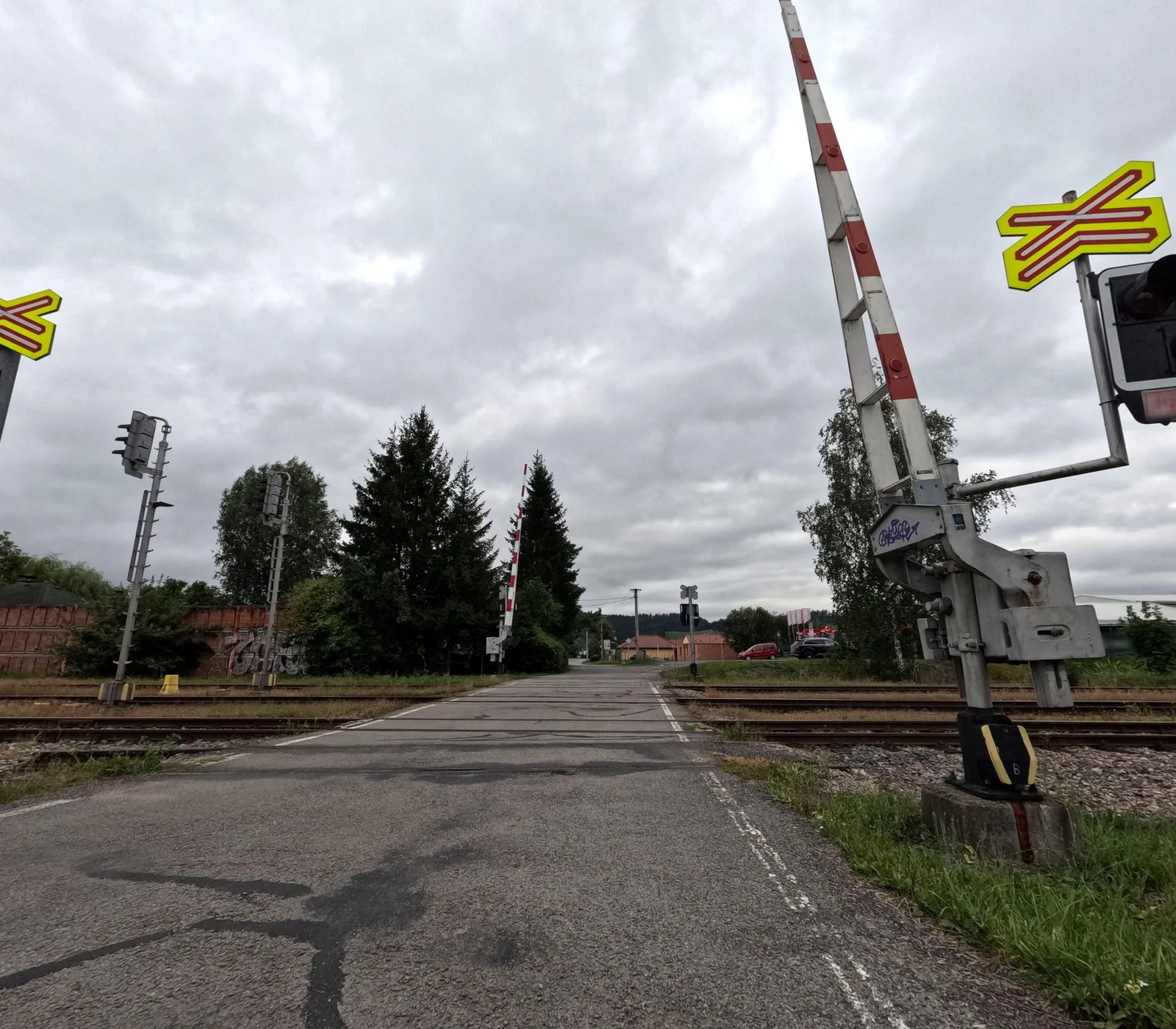
The street-level views below show crossings in rural, small-town and road-access settings on the same network, where local settings differ widely.
3. The infrastructure manager, safety authority and accident investigator
Správa železnic, renamed from Správa železniční dopravní cesty in 2020, maintains the crossing inventory and carries out the upgrades, eliminations and enforcement as the state infrastructure manager [2, ↗].
The Drážní úřad, the Czech Rail Authority, is the railway safety authority that Directive (EU) 2016/798 requires of every Member State [7, ↗]. It licenses and supervises railway safety [4, ↗].
The Drážní inspekce, the Rail Safety Inspection Office, set up on 1 January 2003, investigates serious rail accidents independently and publishes its findings [5, ↗].
4. A prescriptive regime and risk-based prioritisation
Czech technical standards set the protection a crossing must carry from the train speed, the road traffic and the sight distances [1, ↗]. Within that frame, Správa železnic ranks the crossings with the worst accident record for upgrade and replaces passive protection with light signals and barriers across a steady programme of crossings each year [1, ↗].
A regression on the Ministry of Transport's accident data over 2013 to 2022 found a downward trend of about two fewer events a year and read road-user behaviour, not the infrastructure, as the dominant cause [16, ↗]. Správa železnic also pilots obstacle-detection systems that scan the crossing and can warn an approaching train, tested at Pardubice, Olomouc and Studénka [3, ↗].
5. Eliminating crossings and enforcing them
Správa železnic also takes crossings off the network outright, and an amendment to the road act of 1997 gave it wider powers to do so, with the elimination method set out in its 2023 technical proceedings [1, ↗]. At the crossings that stay, an automated camera system now records the road users who cross against the signals and passes the cases to the police. At the Vendryně pilot from February 2023, violations fell from 375 to 131 over ten months, and Správa železnic extended the cameras to further crossings [3, ↗].
A 24 billion koruna European Investment Bank loan, about 992 million euros and the bank's largest in the country, funds Správa železnic to add barriers and to replace crossings with bridges and tunnels, work the bank estimates could prevent up to 180 incidents a year and the thirty to forty deaths they bring [18, ↗].
6. Comparing the surroundings of crossings
A crossing is both a point of risk and a point of access.
- For the crossings that stay, the risk they carry depends on the nearby population, the emergency access, and the local routes that rely on them.
- For the crossings moving toward upgrade or removal, the same surroundings set the access question, where road users and pedestrians go once the crossing closes or gains protection, and rural sites are often constrained.
Some crossings have simple alternatives. Others touch emergency access, pedestrian and farm circulation, nearby population or the local road network that the route through the crossing connects. On a network this dense, comparing the surroundings of each crossing on the same reference helps rank where to upgrade, enforce or eliminate first, as much as field review, detailed engineering and budget commitment on those moving toward a project.
That is the territorial layer SAMRoute structures around crossings, with a common geography, repeatable indicators, a regular refresh and traceable sources, so one crossing can be compared with another [8, ↗].
7. References
Infrastructure manager and inventory
[1] Správa železnic. Rušení železničních přejezdů (Vědeckotechnický sborník 9/2023). The crossing count and its decline, the protection types, the prioritisation, and the elimination method under the amended road act. Read
[2] Správa železnic. Railway network in the Czech Republic (Správa železnic). The infrastructure manager role and the network length. Read
[3] Správa železnic. Intelligent level crossing cameras (Správa železnic). The automated enforcement of crossing violations and the Vendryně results. Read
Safety authority and investigation
[4] Drážní úřad. Czech Rail Authority (Drážní úřad). The railway safety authority. Read
[5] Drážní inspekce. Rail Safety Inspection Office (Drážní inspekce). The independent rail accident investigation body, set up in 2003. Read
[6] Wikipedia. 2015 Studénka train crash (Wikipedia). The 22 July 2015 level crossing collision between a Pendolino express and a lorry. Read
[16] J. Strohmandl et al. Traffic safety at level crossings in the Czech Republic (Heliyon, 2024). The 2013 to 2022 events, fatalities and injuries, the split by protection type, the declining trend and the road-user cause. Read
[17] Euronews. Train crash in Czech Republic kills 1 and injures at least 10 (Euronews, 2024). The January 2024 collision with a truck at a level crossing near Bohumín. Read
[18] European Investment Bank. EIB signs CZK 24 billion green funding for Czech railway modernisation (EIB, 2023). The loan, the level crossing barriers and grade separations and the projected reduction in incidents and deaths. Read
European framework
[7] European Parliament and Council. Directive (EU) 2016/798 of 11 May 2016 on railway safety (OJ L 138, 26.5.2016). Requires each Member State to set up a national safety authority and an independent investigating body. Read
[8] SAMRoute. Rail cadence, level crossings and emergency access (position page). Open