Level crossings in Hungary. Comparing crossings before upgrade and removal decisions
Hungary keeps inspecting, upgrading and modernising its level crossings, with MÁV managing the inventory, the railway authority within the Ministry of Construction and Transport acting as the safety authority, and the Transportation Safety Bureau investigating accidents.
The following sections present the accident history, the level crossing system, the public actors, the regime, and the inspection and modernisation programme. The last section covers the territorial context that SAMRoute models.
1. Accident history at level crossings
At level crossings the number of accidents stays lower than on the road network, yet the outcomes are often serious or fatal, and the likelihood of a fatality runs almost ten times higher than in a road accident [2, ↗]. On 5 April 2022, a train struck a minibus that had crossed onto the level crossing near Mindszent, in Csongrád-Csanád county, against the active warning signal, killing seven and injuring others [8, ↗].
2. The Hungarian level crossing system
MÁV, the Hungarian state railway, manages about 7,000 kilometres of line and owns the level crossing inventory [1, ↗]. As of 2024, the network carries 5,630 level crossings [2, ↗]. A large share stay passive, marked by warning signs alone, while the rest carry light signals and, on some, semi-barriers [2, ↗]. The GYSEV company runs some lines in the north-west and along the Austrian border [7, ↗].
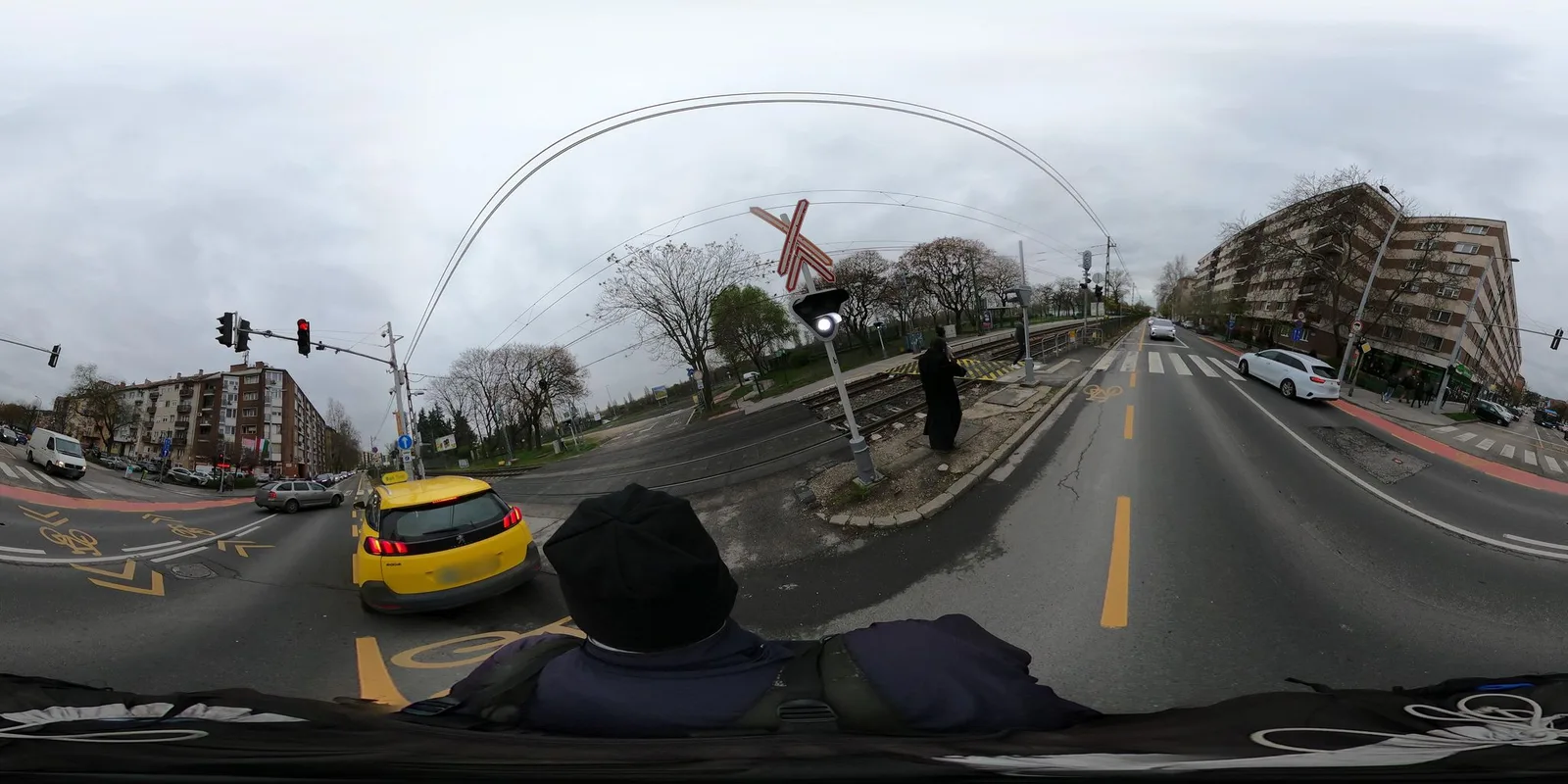
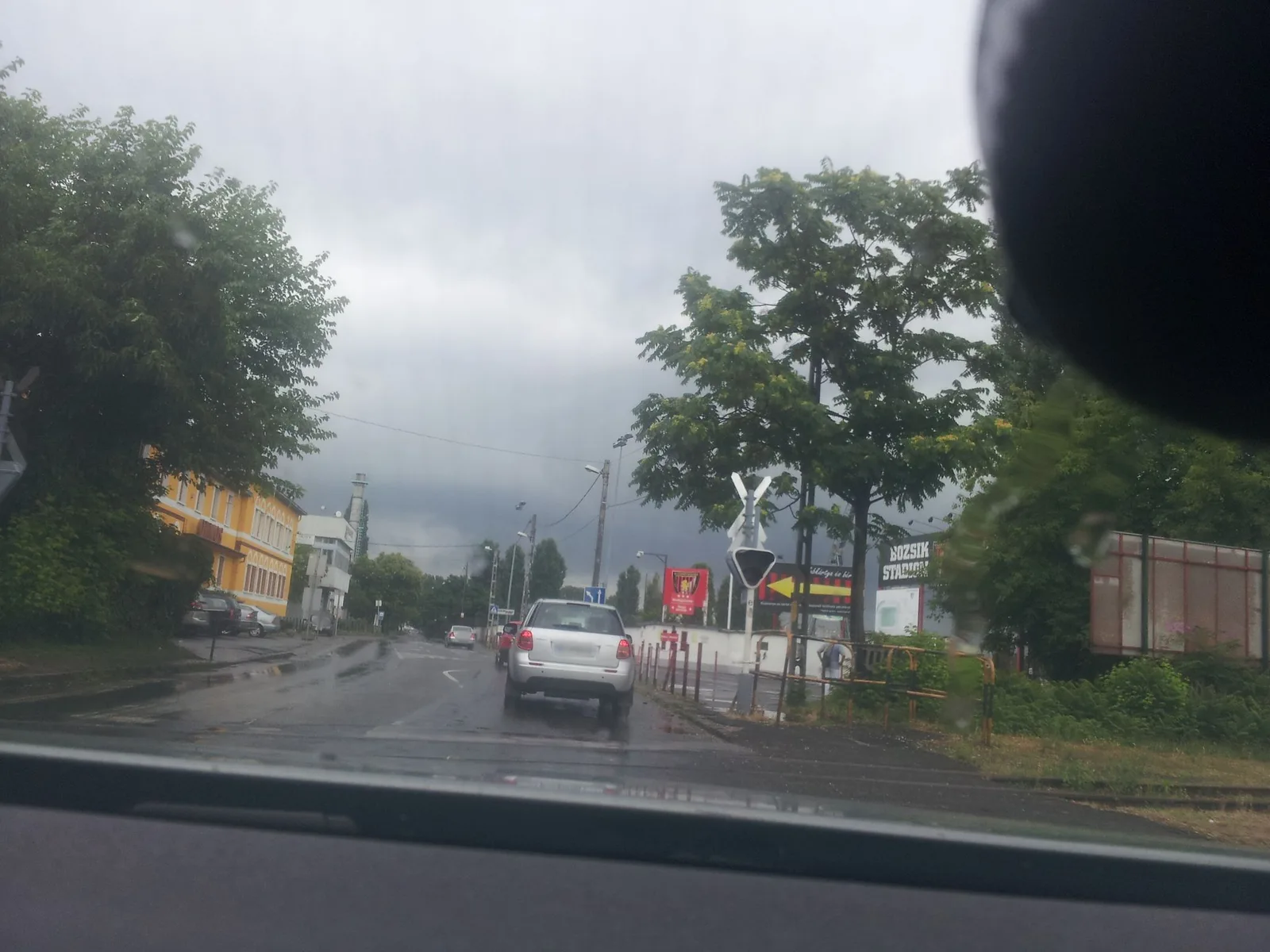
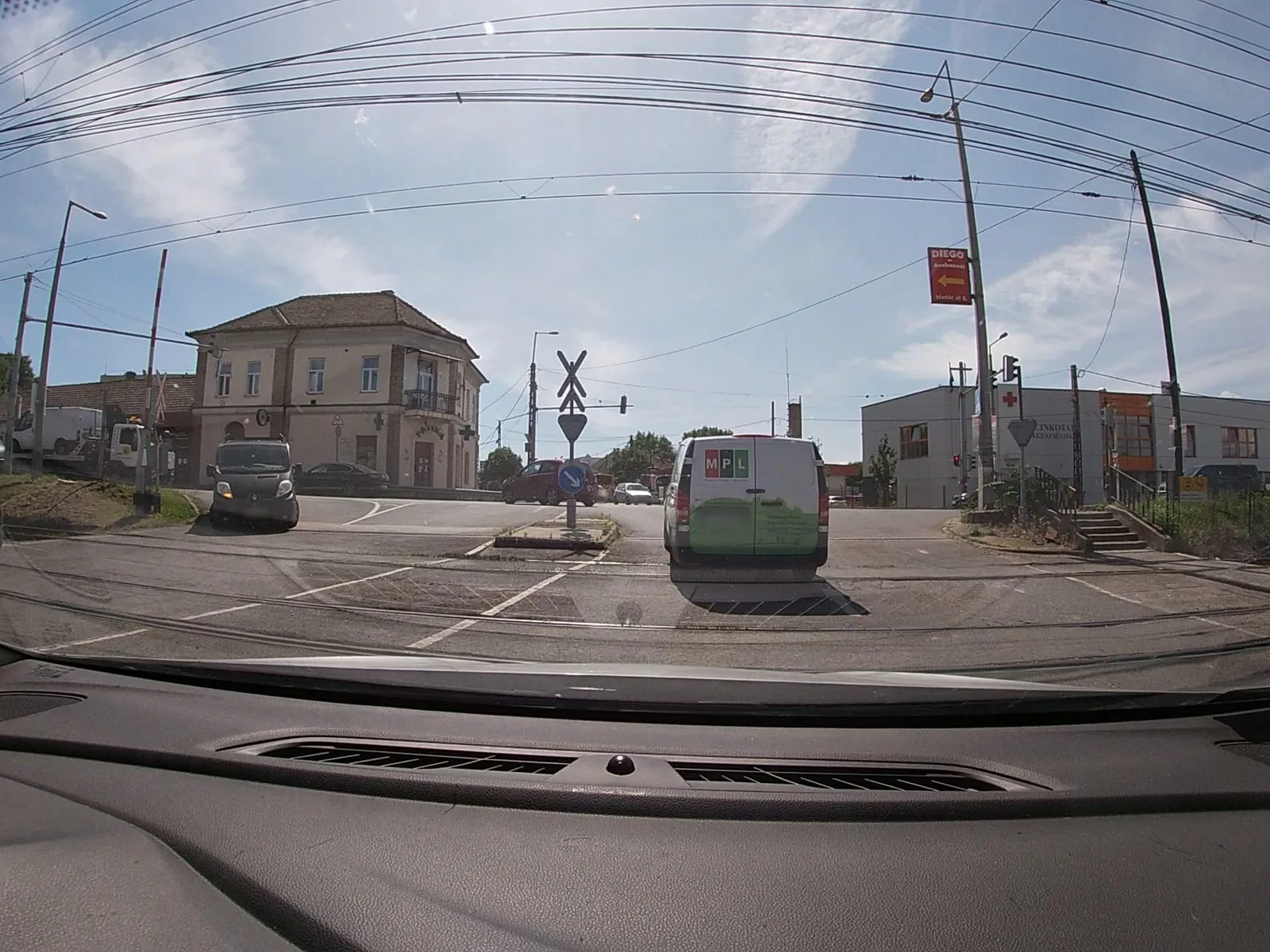
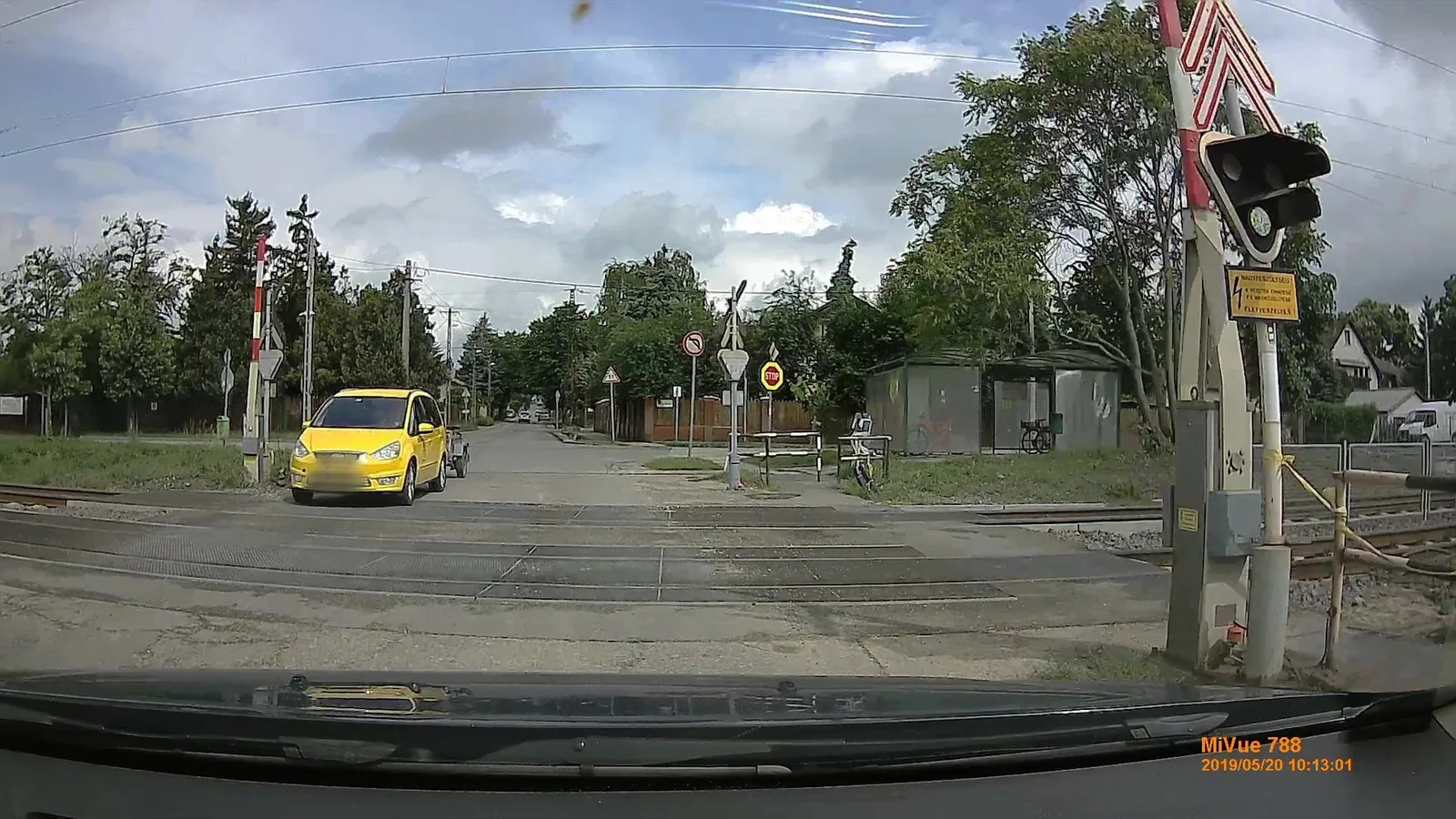
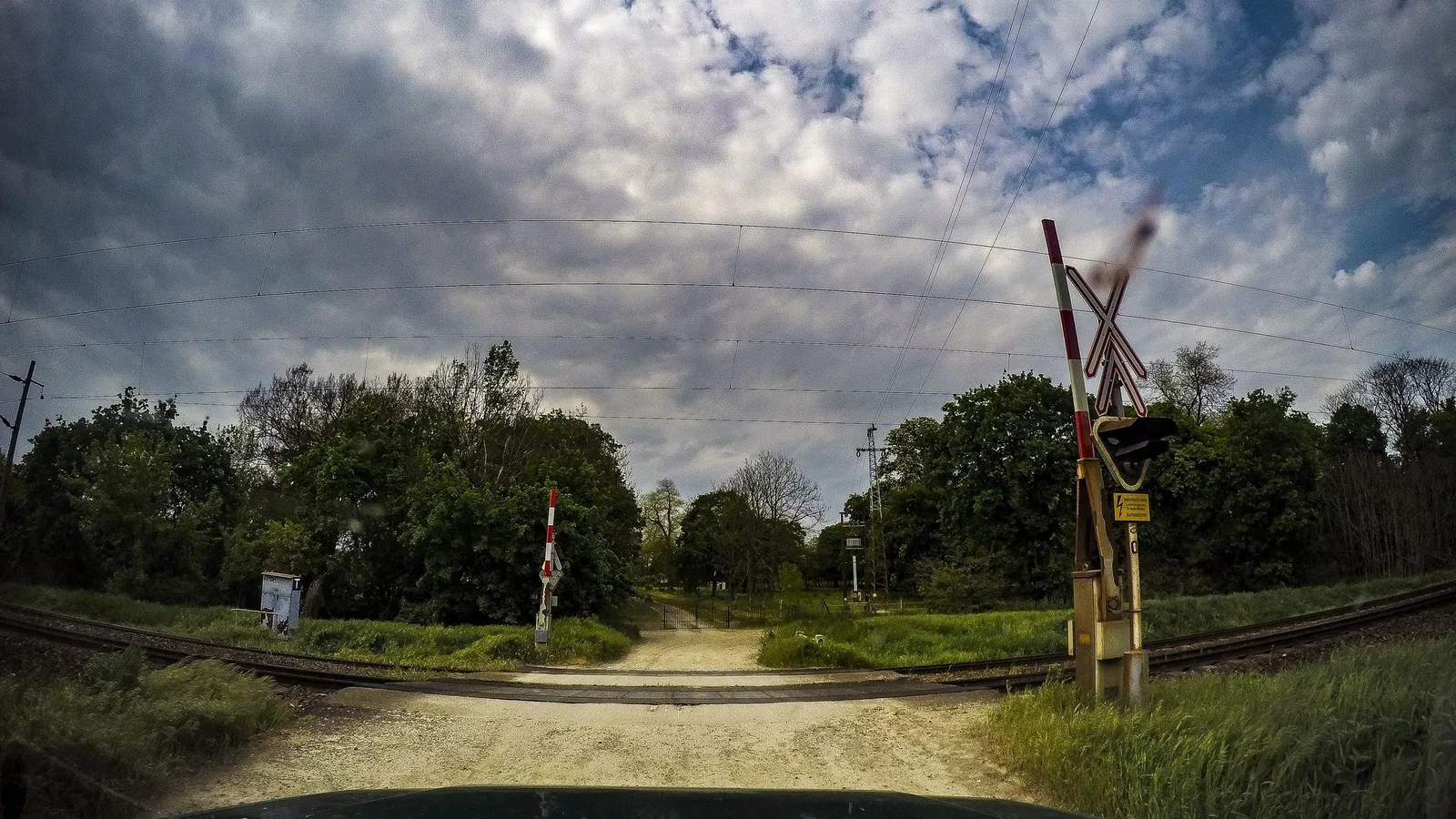
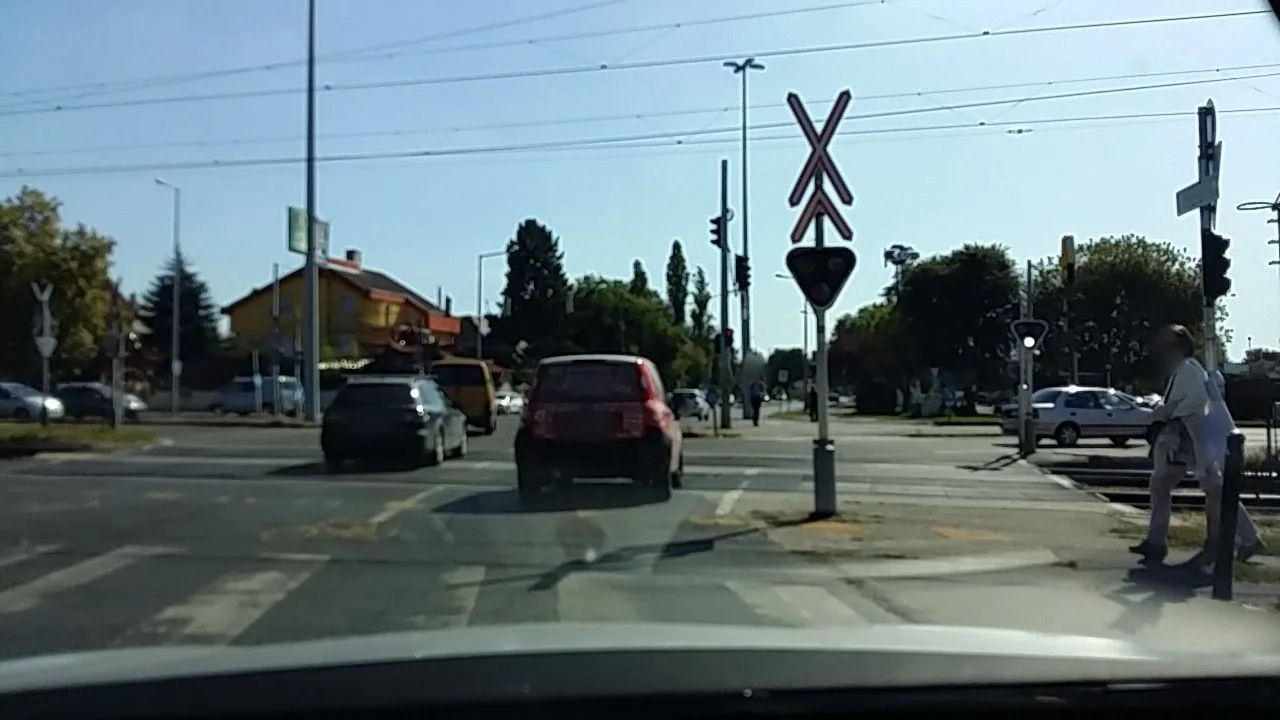
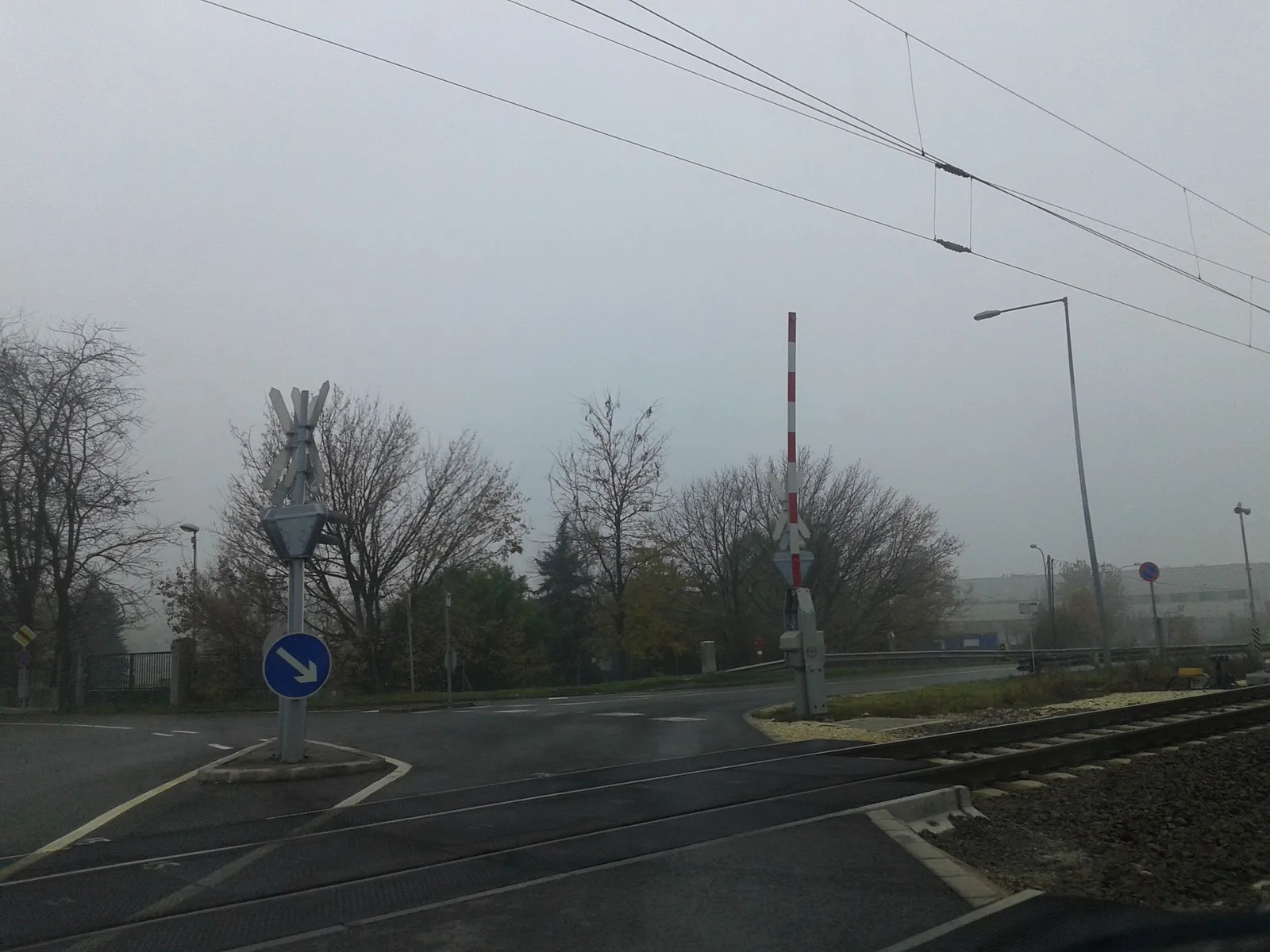
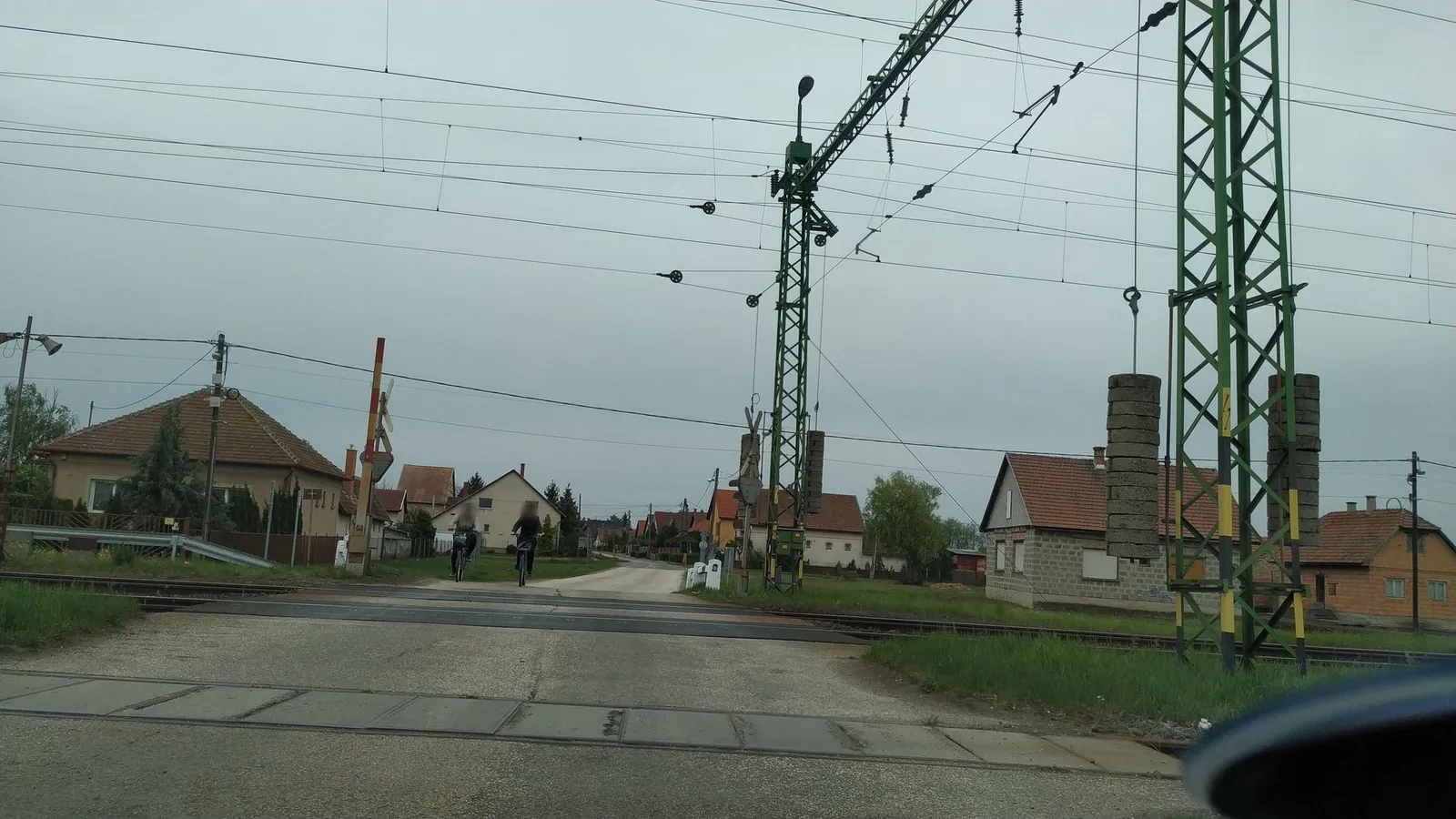
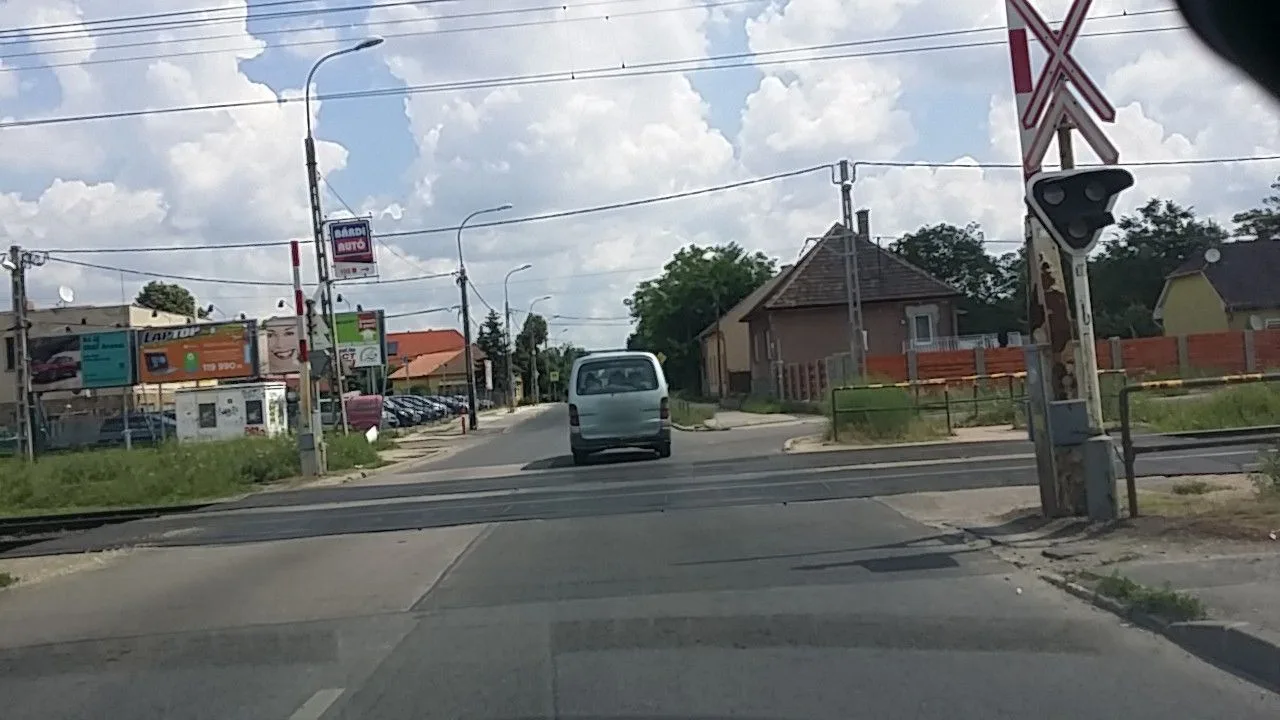
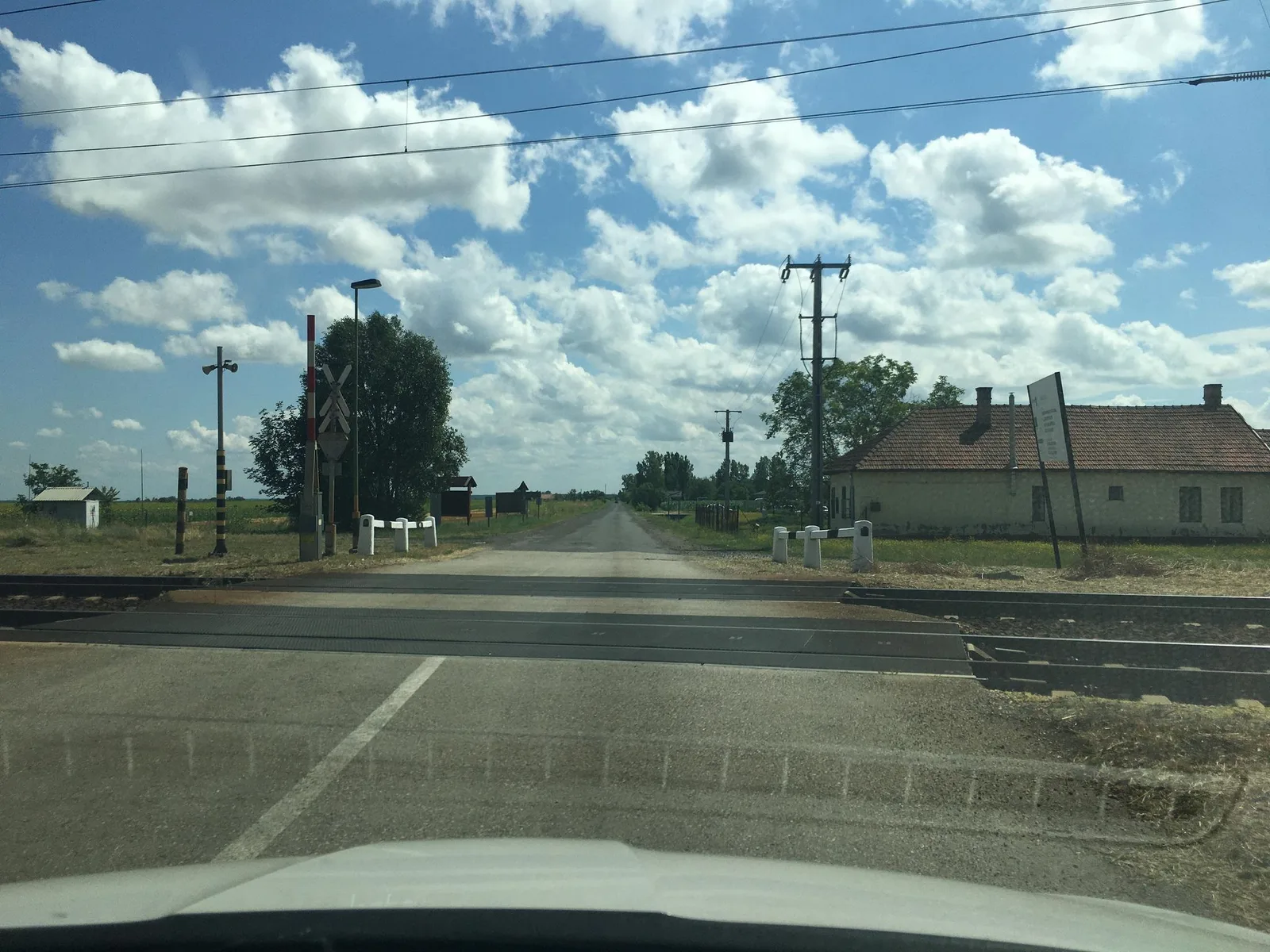
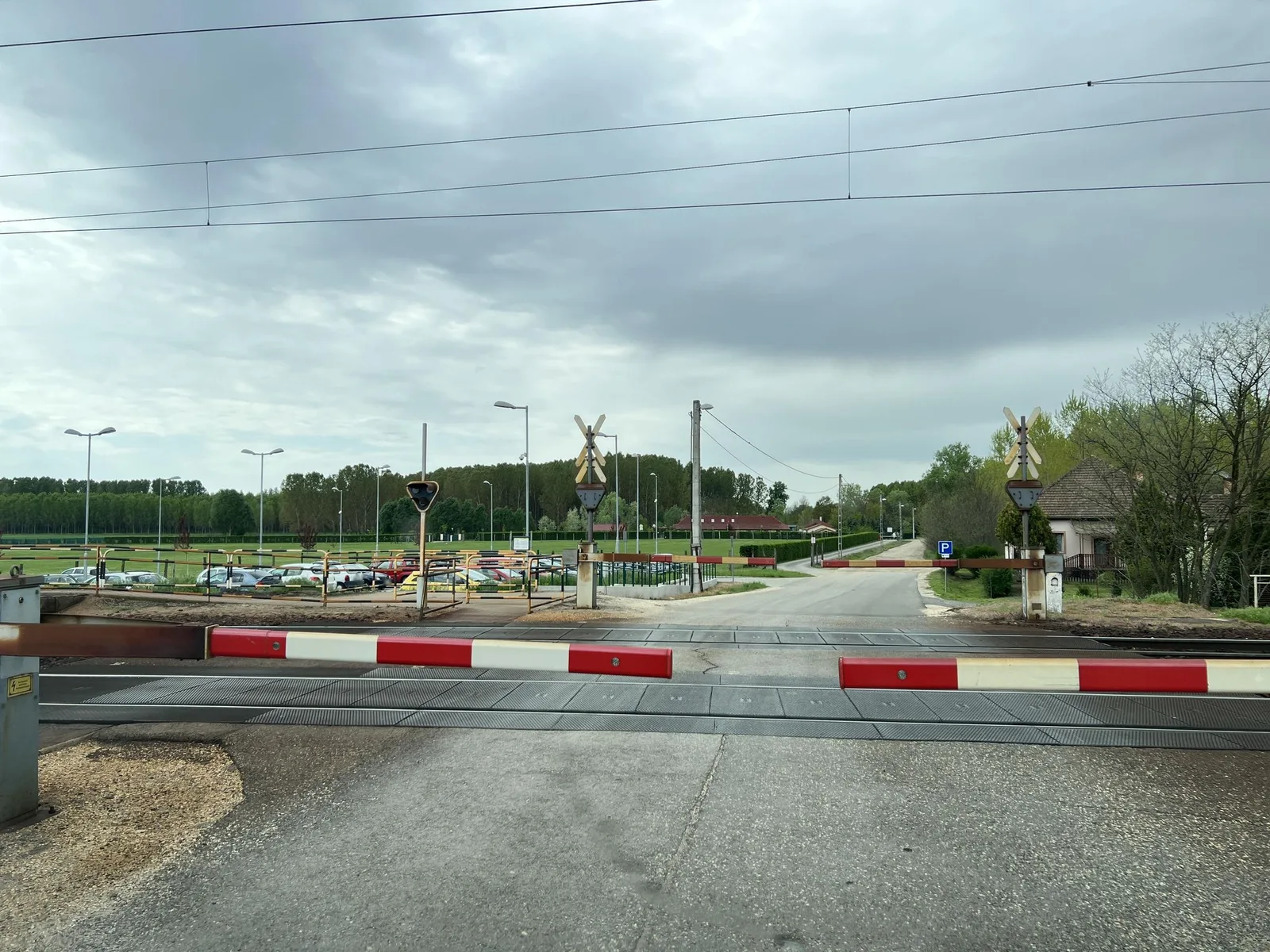
The street-level views below show crossings in rural, small-town and road-access settings on the same network, where local settings differ widely.
3. The infrastructure manager, safety authority and accident investigator
MÁV (Magyar Államvasutak), founded in 1868, maintains the crossing inventory and carries out the inspections, upgrades and modernisation as the state infrastructure manager [1, ↗].
The railway authority within the Ministry of Construction and Transport is the railway safety authority that Directive (EU) 2016/798 requires of every Member State [5, ↗]. It licenses and supervises railway safety, and it initiates the periodic review of crossing regulation [2, ↗].
The Transportation Safety Bureau (Közlekedésbiztonsági Szervezet, KBSZ), set up on 1 January 2006, investigates serious rail, air and waterborne accidents independently and publishes its findings [3, ↗].
4. A prescriptive regime and periodic inspection
Hungarian technical standards set the protection a crossing must carry from the train speed, the road traffic and the sight distances, and the regime is backed by a wide range of legislation [2, ↗]. The traffic regulations and safety standards of the crossings are reviewed on a recommended five-year cycle, which the transport authority initiates, considering the road and rail traffic, the visibility of traffic signs, the obstacles in the sight areas and the local specificities of each crossing, a prescriptive approach that a comparative per-crossing reading can extend [2, ↗].
5. Adapting road safety inspection to crossings
A 2024 study from Széchenyi István University adapted the road safety inspection method, established for roads under Directive 2008/96/EC, to railway level crossings [2, ↗]. In late September and early October 2023, the authors inspected ten crossings in the Győr region from the road user's perspective, recording sign visibility, sight obstacles and irregular cycle approaches, and proposed adapting the method to the periodic review of crossings nationwide [2, ↗].
In 2015, MÁV ran a road safety project that improved 172 crossings over three years, installing 105 semi-barriers and 57 LED signal optics in place of halogen bulbs, fitting 10 new light and semi-barrier devices, renewing the pavement and signing at 18 locations, and adding event-controlled cameras that record what happens once the crossing turns red [2, ↗]. On the Budapest–Belgrade corridor, the upgraded line replaces at-grade crossings with viaducts and underpasses [6, ↗].
6. Comparing the surroundings of crossings
A crossing is both a point of risk and a point of access.
- For the crossings that stay, the risk they carry depends on the nearby population, the emergency access, and the local routes that rely on them.
- For the crossings moving toward upgrade or grade separation, the same surroundings set the access question, where road users and pedestrians go once the crossing closes or gains protection, and rural sites are often constrained.
Some crossings have simple alternatives. Others touch emergency access, pedestrian and farm circulation, nearby population or the local road network that the route through the crossing connects. On a network with this many passive crossings, comparing the surroundings of each crossing on the same reference helps rank where to upgrade, inspect or separate first, as much as field review, detailed engineering and budget commitment on those moving toward a project.
That is the territorial layer SAMRoute structures around crossings, with a common geography, repeatable indicators, a regular refresh and traceable sources, so one crossing can be compared with another [9, ↗].
7. References
Infrastructure manager and inventory
[1] MÁV. Introduction to MÁV (MÁV-csoport). The infrastructure manager role, the founding date and the network length. Read
[2] Ladich, M. and Miletics, D. Adaptation of road safety inspection method to railway level crossings (Pollack Periodica 20, 2025). The crossing count, the protection types, the prescriptive regime and five-year review, the 2015 MÁV safety project and the 2023 inspection of ten crossings. Read
[7] GYSEV. Győr-Sopron-Ebenfurti Vasút (GYSEV). The regional infrastructure manager on lines in the north-west and along the Austrian border. Read
Safety authority and investigation
[3] Transportation Safety Bureau. Railway investigation (KBSZ). The independent rail accident investigation body, set up in 2006. Read
Modernisation
[6] European Investment Bank. MÁV Rail Infrastructure Modernisation Programme (EIB). The broader infrastructure modernisation, including grade separation on upgraded corridors. Read
Accidents
[8] Transportation Safety Bureau. Railway investigation (KBSZ). The 5 April 2022 level crossing collision between a train and a minibus near Mindszent. Read
European framework
[5] European Parliament and Council. Directive (EU) 2016/798 of 11 May 2016 on railway safety (OJ L 138, 26.5.2016). Requires each Member State to set up a national safety authority and an independent investigating body. Read
[9] SAMRoute. Rail cadence, level crossings and emergency access (position page). Open