Level crossings in Croatia. Comparing crossings before upgrade and removal decisions
Croatia keeps securing, modernising and replacing its level crossings, with HŽ Infrastruktura managing the inventory, the Croatian Railway Safety Agency acting as the railway safety authority, and the Air, Maritime and Railway Traffic Accident Investigation Agency investigating accidents.
The following sections present the accident history, the level crossing system, the public actors, the regime, and the modernisation programme. The last section covers the territorial context that SAMRoute models.
1. Accident history at level crossings
More than 95 per cent of the accidents and incidents at Croatian level crossings are caused by drivers and pedestrians failing to obey the rules, so road user behaviour drives most of the harm [1, ↗]. Across the European Union the passive crossings carry the higher accident rate, and the Danube macro-region, which includes Croatia, still held more than 14,000 passive crossings out of around 28,000 in 2020, so the share that remains passive frames where the work concentrates [3, ↗].
2. The Croatian level crossing system
HŽ Infrastruktura, the state infrastructure manager, runs the 2,617 kilometre railway network, of which 2,302 kilometres are single-track and 315 kilometres double-track, and owns the level crossing inventory [2, ↗]. The network carries 1,438 level crossings for road and pedestrian traffic, of which 57 per cent are passively secured and 43 per cent actively secured [1, ↗]. Every crossing carries at least passive protection, the St Andrew's Cross and Stop signs with the prescribed visibility triangle, so a crossing with no protection at all does not exist on the network [1, ↗].
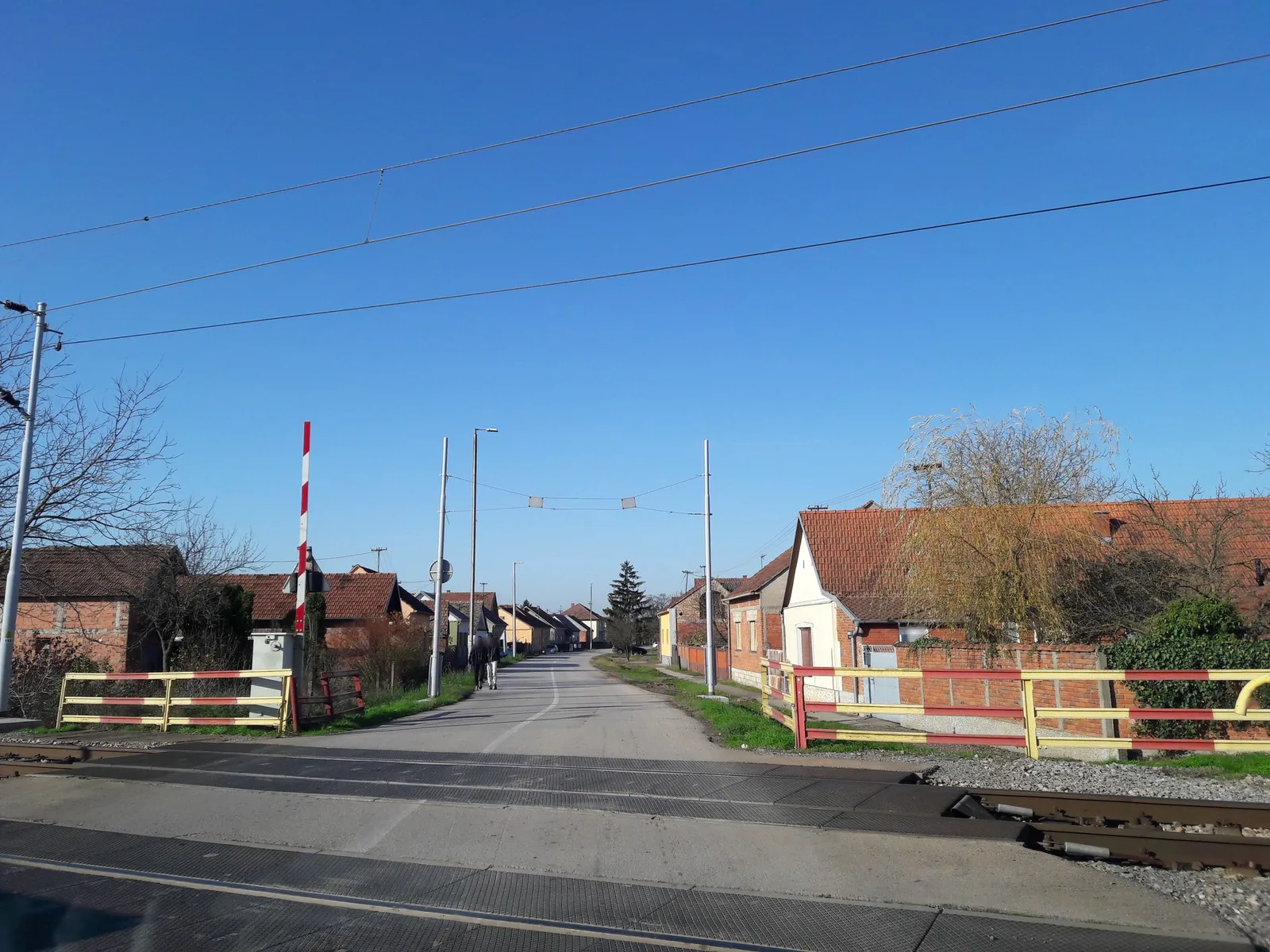
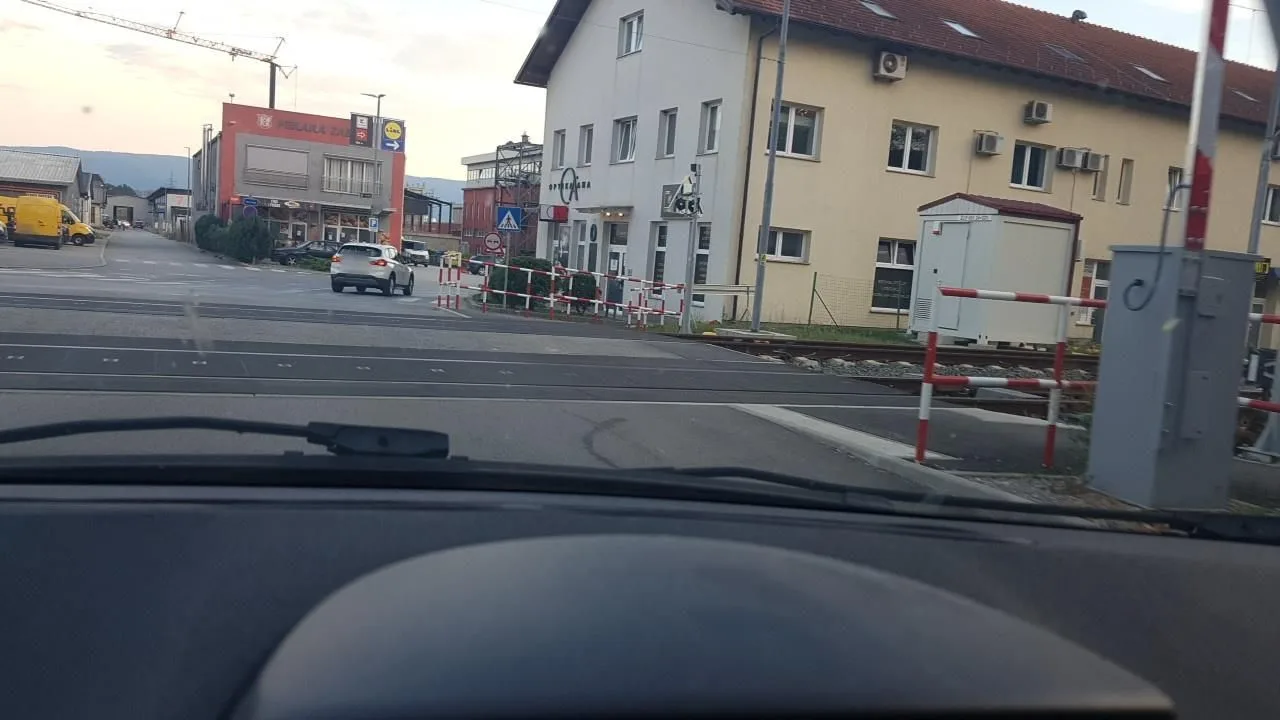
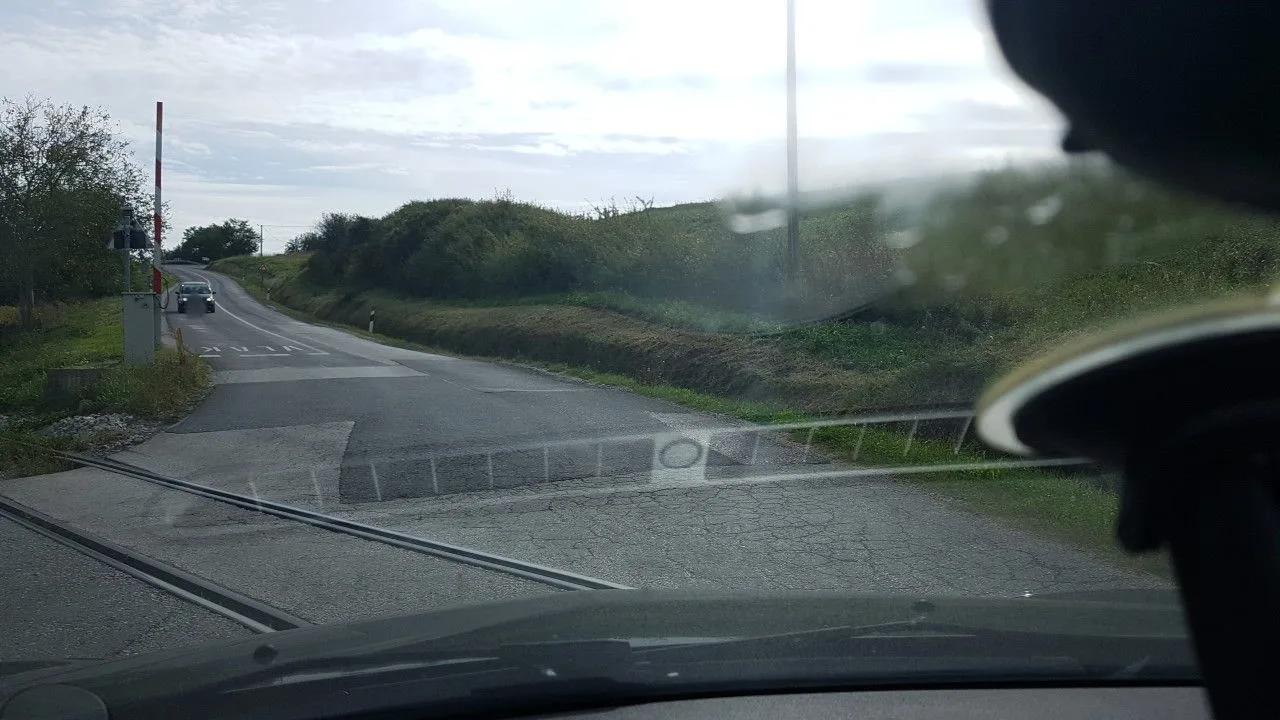
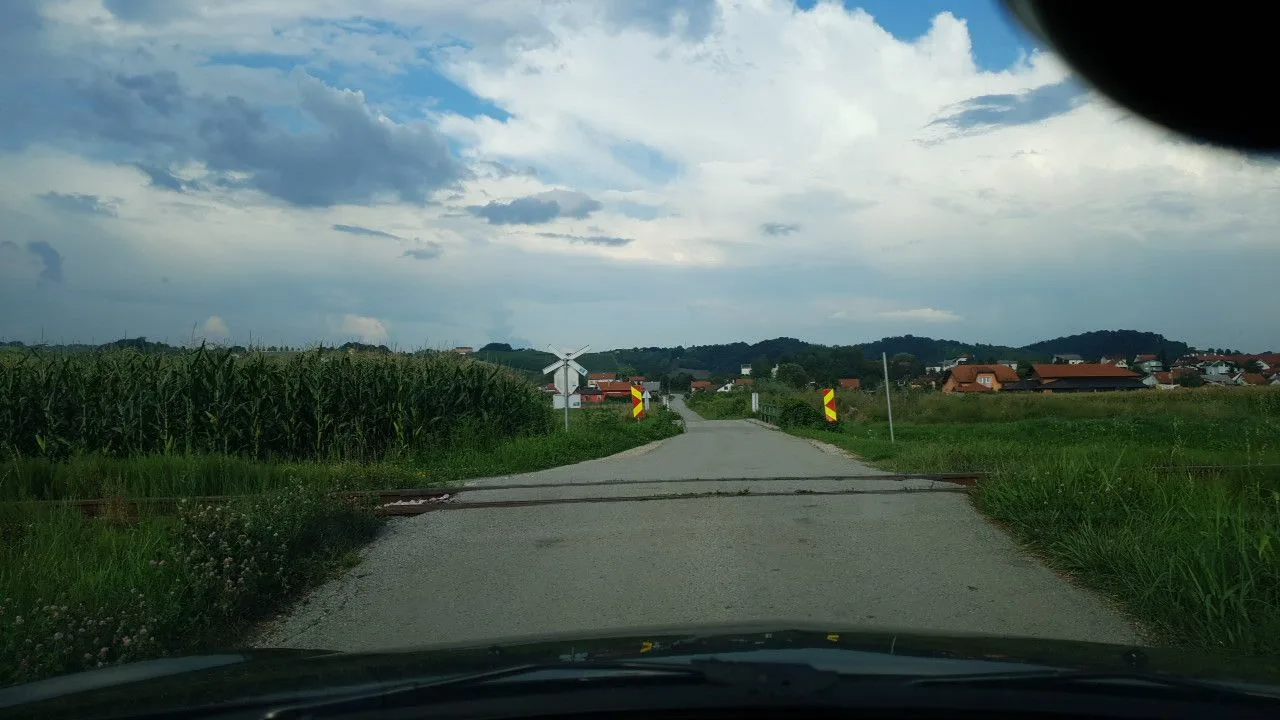
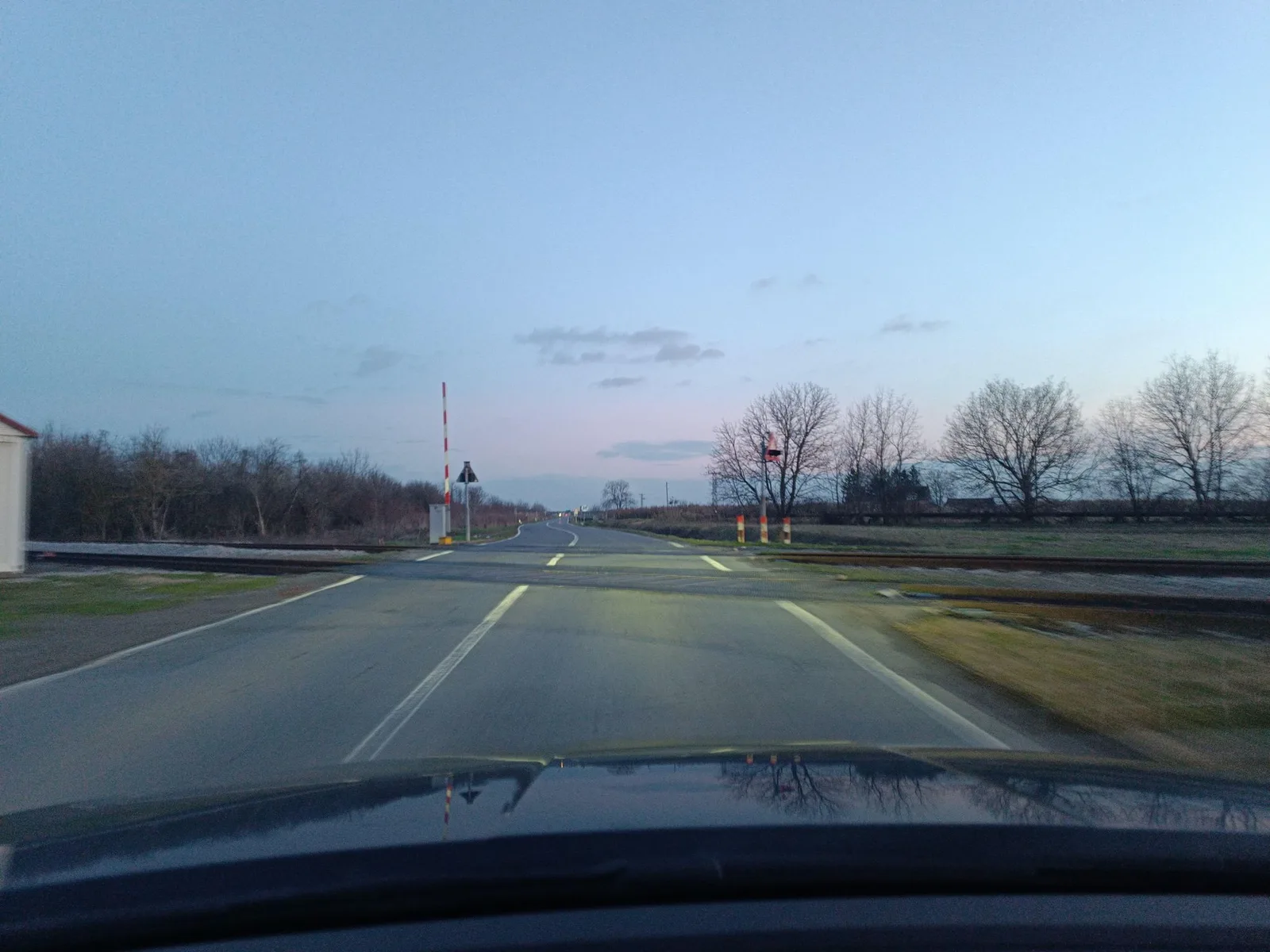
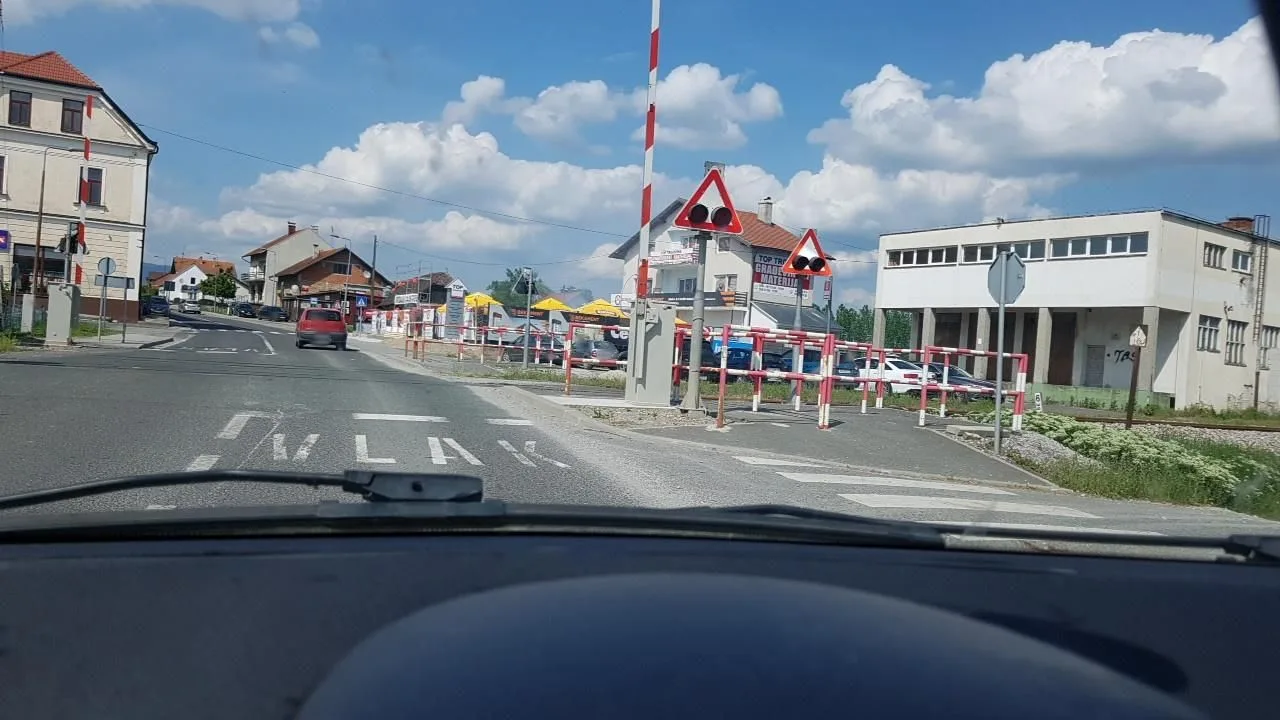
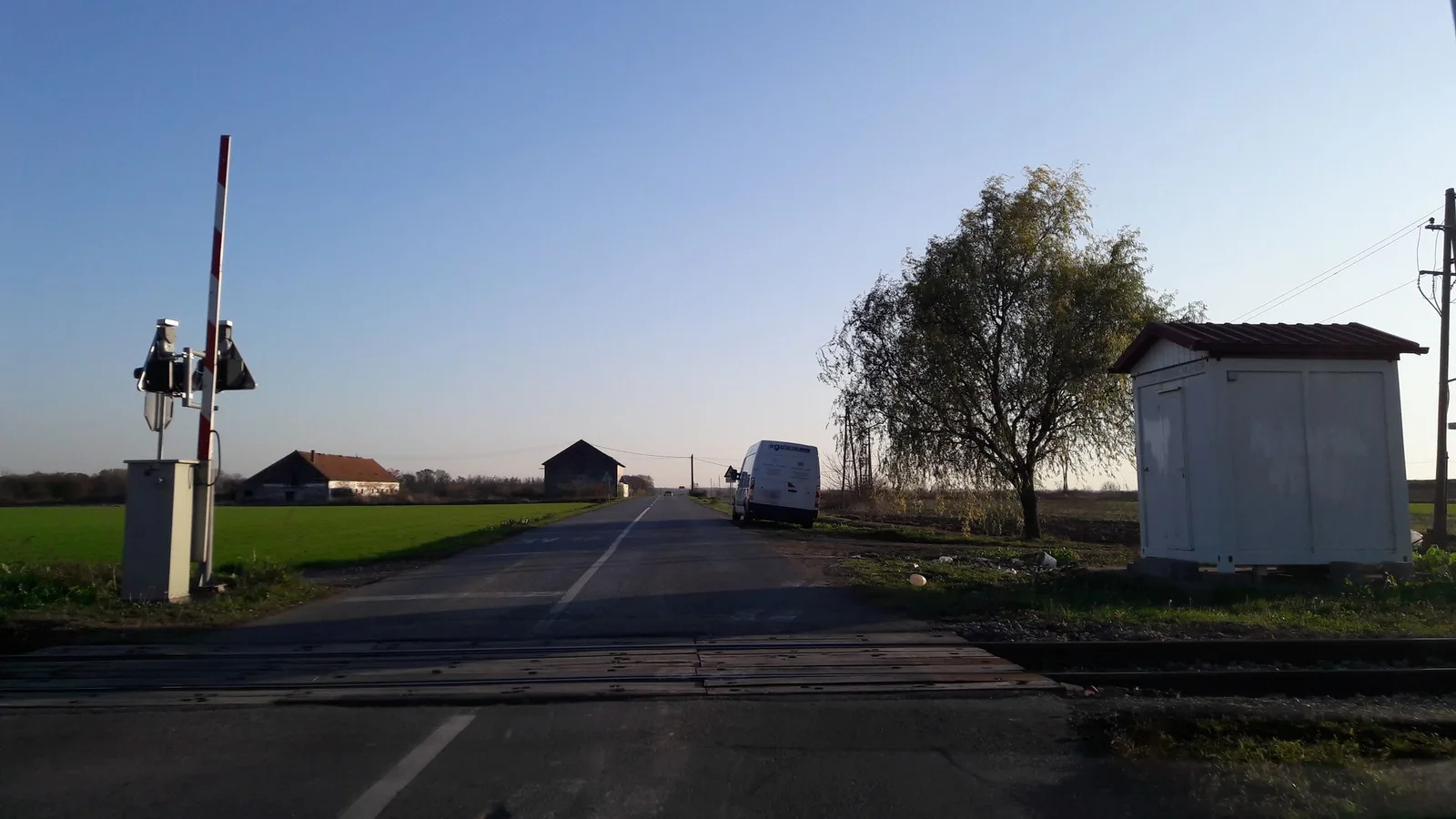
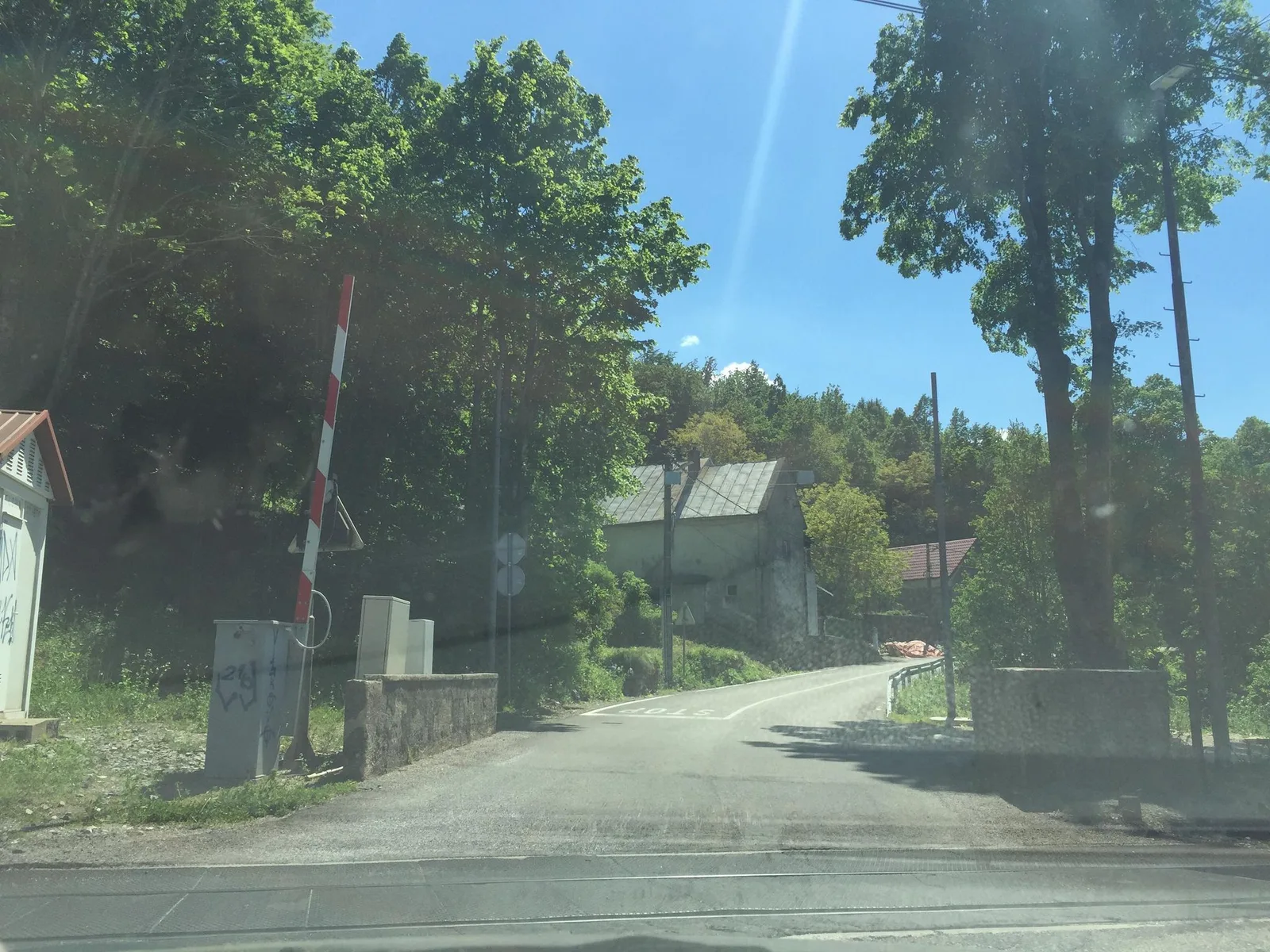
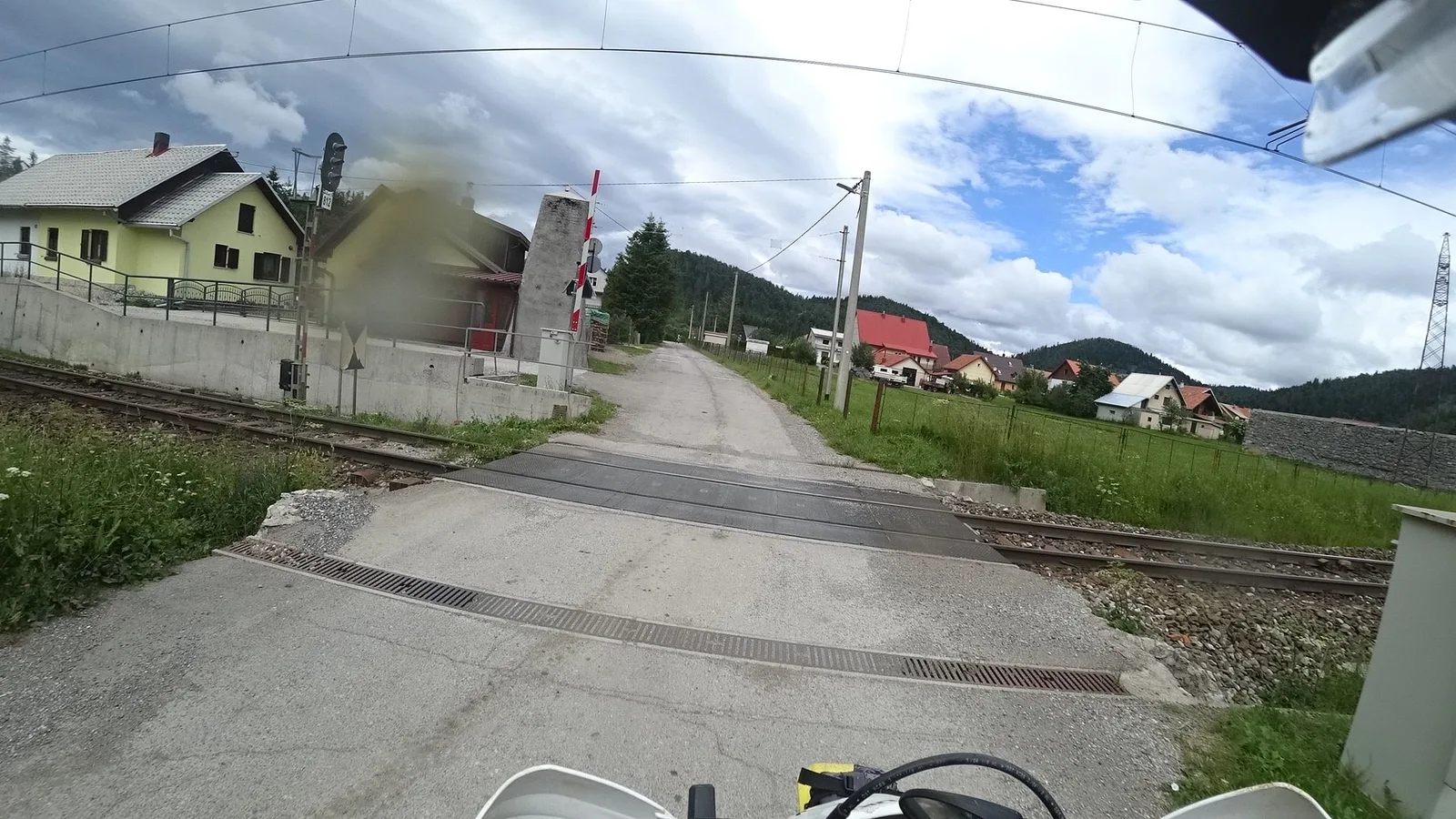
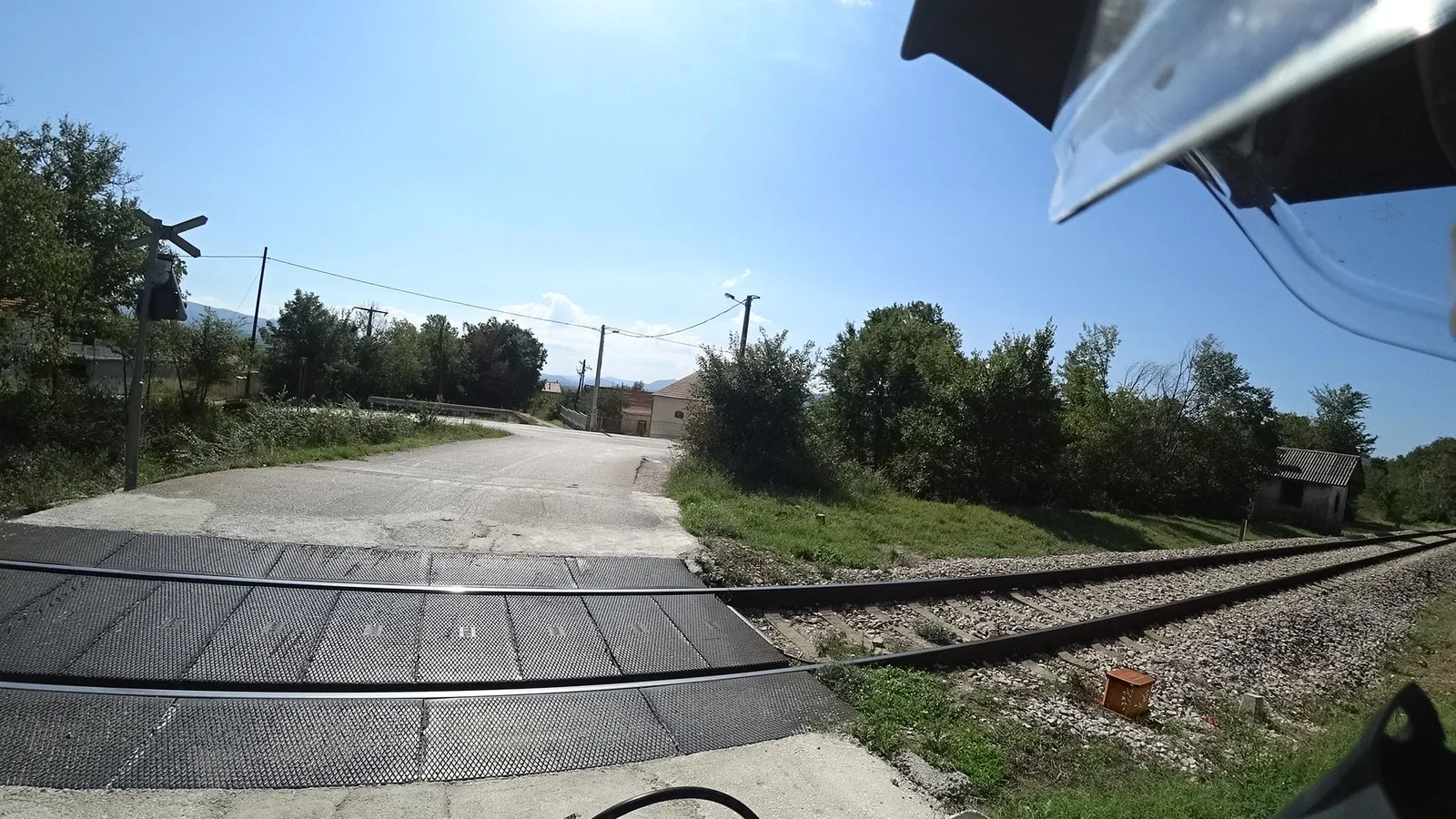
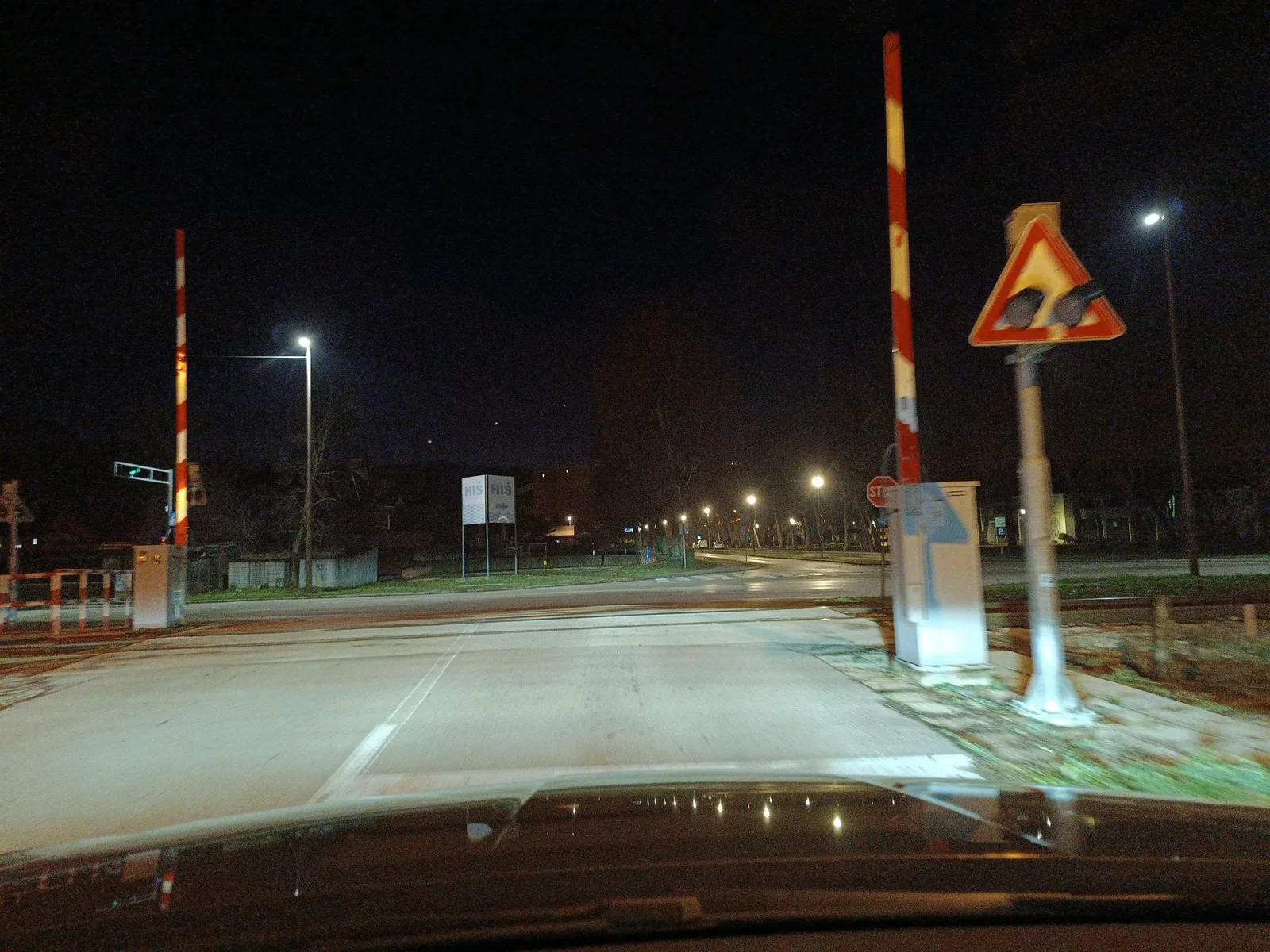
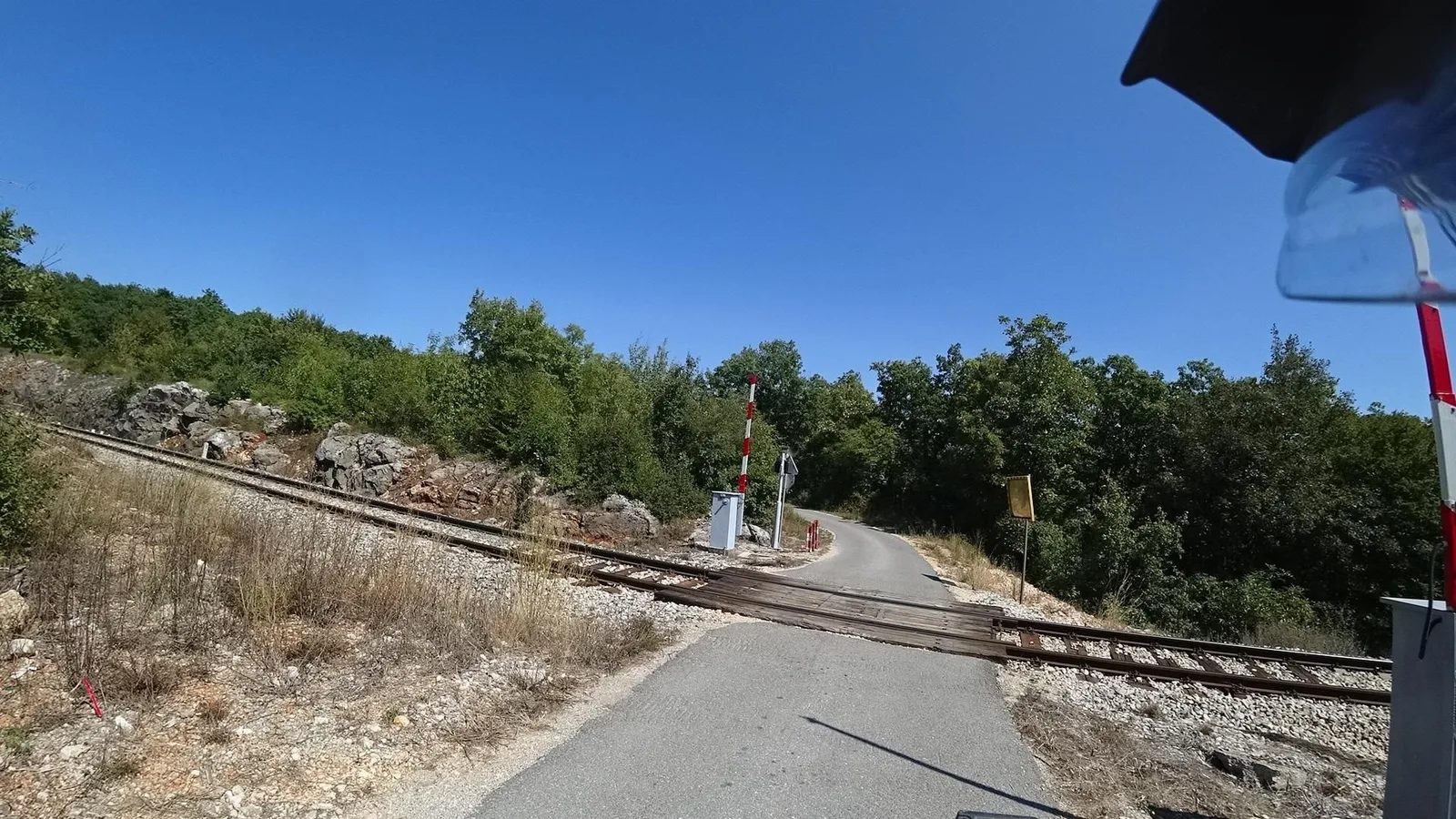
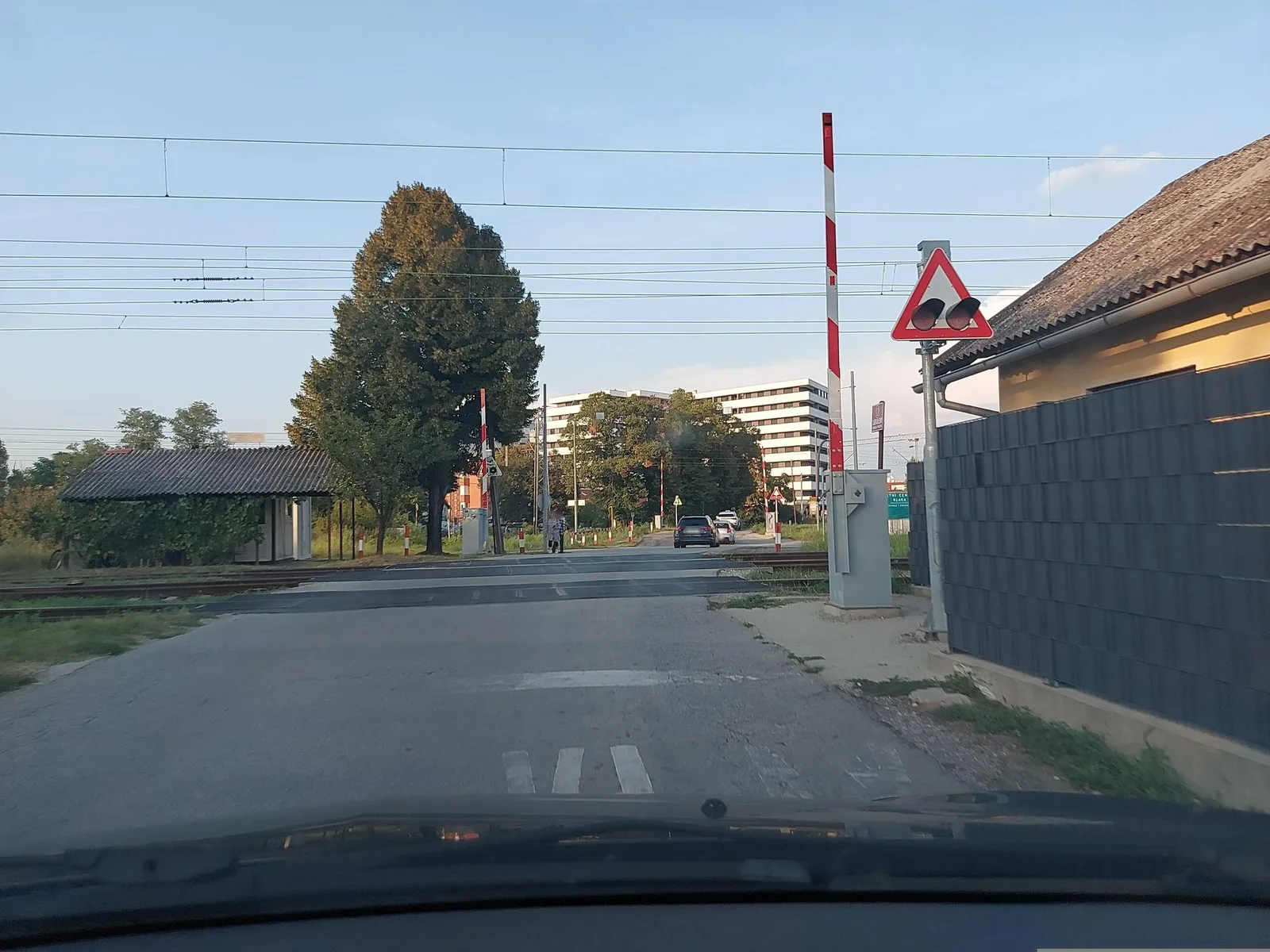
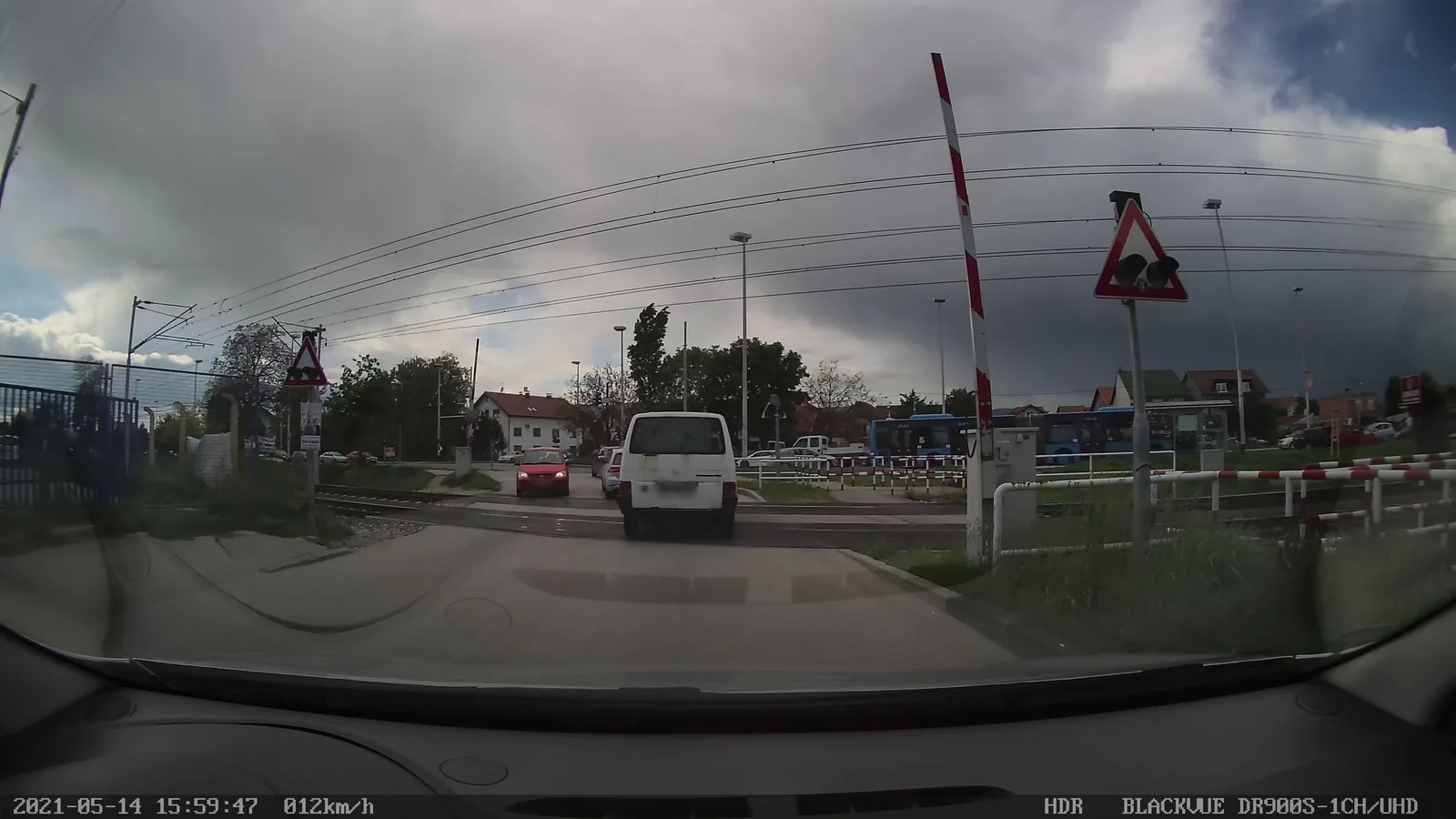
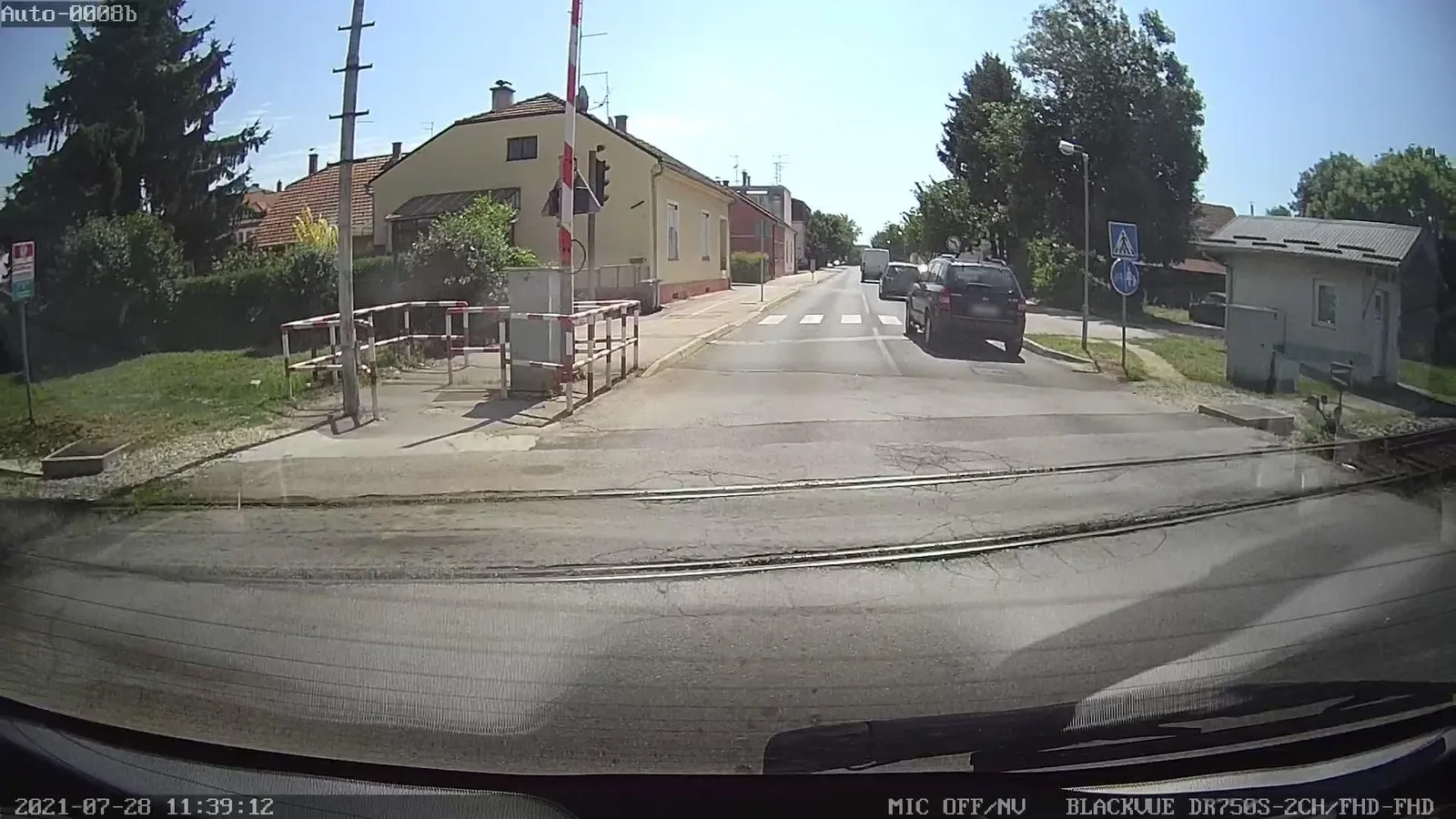
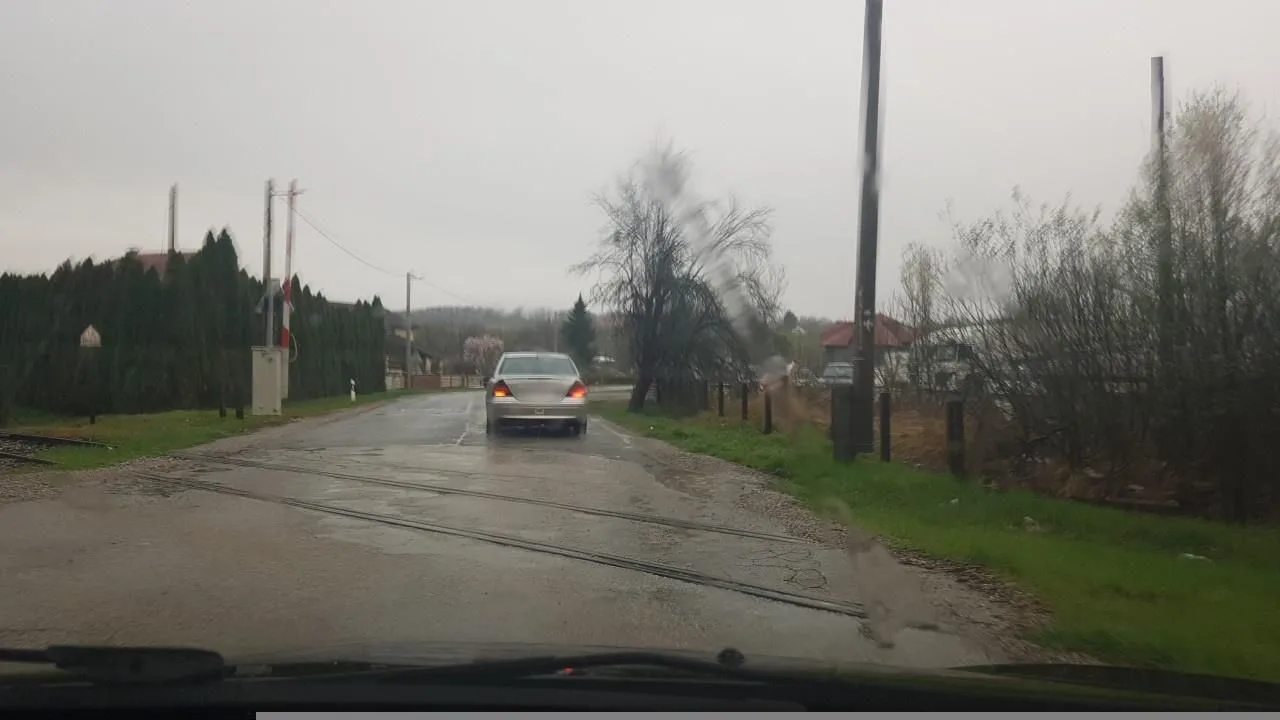
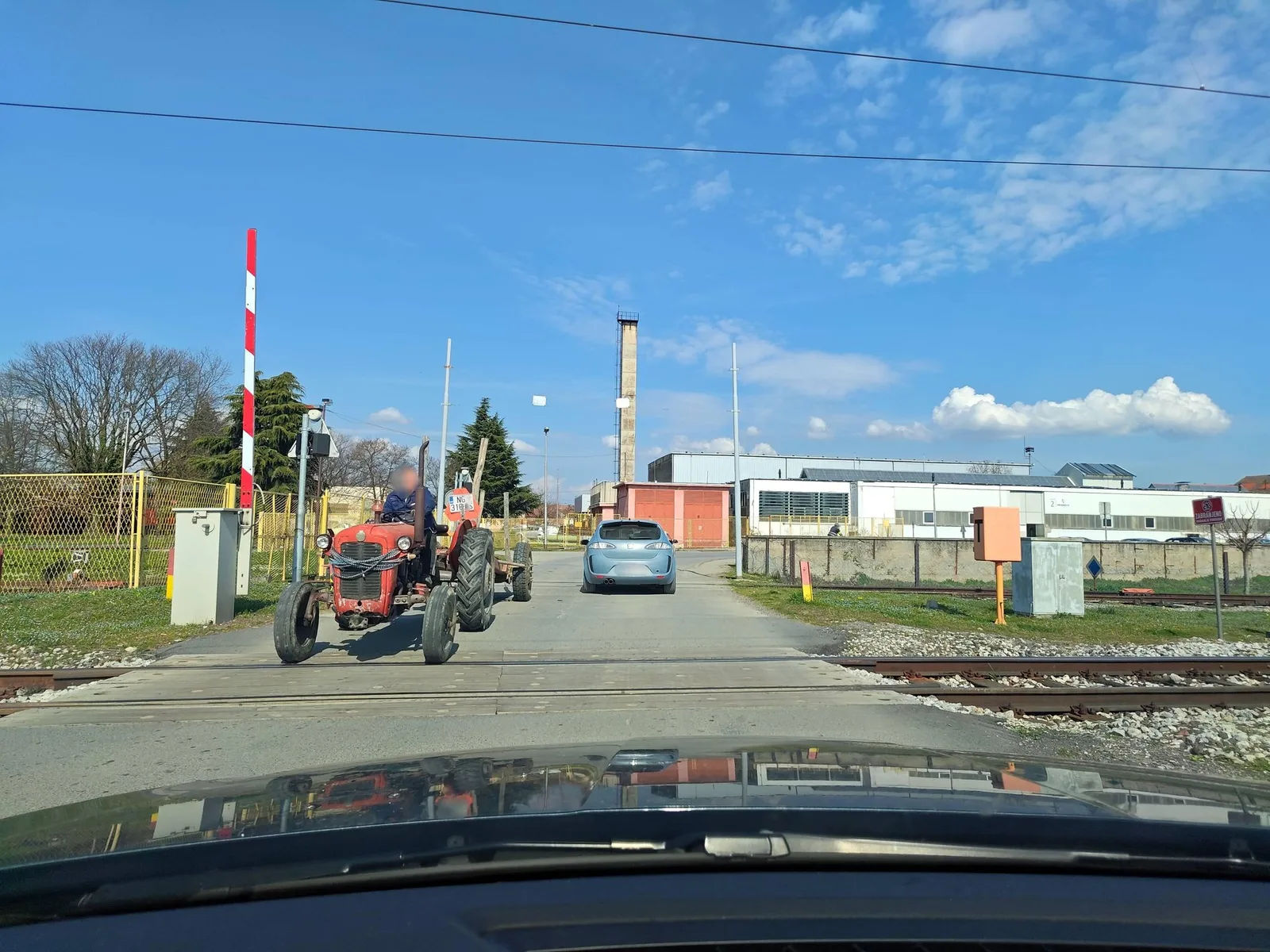
The street-level views below show crossings in rural, small-town and road-access settings on the same network, where local settings differ widely.
3. The infrastructure manager, safety authority and accident investigator
HŽ Infrastruktura, a state-owned subsidiary of Hrvatske željeznice, maintains the crossing inventory and carries out the modernisation and grade-separation work as the state infrastructure manager, and it runs the 2,617 kilometre network with 1,013 kilometres electrified [2, ↗]. The Safety and Interoperability of the Railway System Act places the responsibility for managing the risks at level crossings with the infrastructure manager [1, ↗].
The Croatian Railway Safety Agency is the railway safety authority that Directive (EU) 2016/798 requires of every Member State [6, ↗]. It issues approvals for placing infrastructure subsystems into service and supervises railway safety on the basis of risk, with the control command system, which includes level crossings, holding a central place in that supervision [1, ↗].
The Air, Maritime and Railway Traffic Accident Investigation Agency, established by the Government of the Republic of Croatia, investigates every serious accident in the railway system independently and issues safety recommendations [1, ↗].
4. A prescriptive regime
Croatian regulation sets the protection a crossing must carry from the category of the railway line, the category of the road, the permitted line speed and the local circumstances at the site, a prescriptive approach that a comparative per-crossing reading can extend [1, ↗].
5. Modernising and grade-separating crossings
The Government has set rail investment as a priority and plans EUR 6 billion over ten years, with the Ministry of the Sea, Transport and Infrastructure adopting the Programme for the Resolution of Level Crossings and Pedestrian Crossings over Railway Lines for 2023 to 2027 [1, ↗]. The programme analyses the existing crossings, establishes a priority list for their resolution and sets the approach for each one, so passive sites move toward automatic devices with half barriers and light and sound signalling, and some crossings are replaced with underpasses or overpasses as part of line modernisation [1, ↗]. Three modernisation projects now under way will raise the safety level at 170 crossings across Croatia [1, ↗]. An earlier World Bank project, Sustainable Croatian Railways in Europe, financed the installation of 50 road-rail level crossings [4, ↗].
Alongside the engineering work, HŽ Infrastruktura has run the "Train is Always Faster" information campaign for over 20 years, aimed at children and young people, and the European Union Agency for Railways frames the response to crossing risk as a combination of engineering, education and enforcement measures directed at road user behaviour [1, ↗] [5, ↗].
6. Comparing the surroundings of crossings
A crossing is both a point of risk and a point of access.
- For the crossings that stay, the risk they carry depends on the nearby population, the emergency access, and the local routes that rely on them.
- For the crossings moving toward modernisation or grade separation, the same surroundings set the access question, where road users and pedestrians go once the crossing closes or gains protection, and rural sites are often constrained.
Some crossings have simple alternatives. Others touch emergency access, pedestrian and farm circulation, nearby population or the local road network that the route through the crossing connects. On a network of this size, comparing the surroundings of each crossing on the same reference helps rank where to modernise, separate or secure first, as much as field review, detailed engineering and budget commitment on those moving toward a project.
That is the territorial layer SAMRoute structures around crossings, with a common geography, repeatable indicators, a regular refresh and traceable sources, so one crossing can be compared with another [7, ↗].
7. References
Infrastructure manager, inventory and programme
[1] Faculty of Transport and Traffic Sciences, University of Zagreb. Applied Research Topics in Transport and Logistics (FPZ-UNIZG, 2025). The crossing count and the passive and active proportions, the prescriptive protection, the road user share of accidents, the actors, and the 2023 to 2027 resolution programme. Read
[2] HŽ Infrastruktura. Network Statement 2026 (HŽ Infrastruktura). The infrastructure manager role, the 2,617 kilometre network, the single and double-track split, and the electrified length. Read
[4] World Bank. Sustainable Croatian Railways in Europe, restructuring paper (World Bank, P147499). The installation of 50 road-rail level crossings under the project. Read
European framework and safety
[3] Transport Community and European Union Agency for Railways. Level crossing safety in the EU (Transport Community, 2022). The passive and active accident rates and the Danube macro-region crossing stock. Read
[5] European Commission. Road safety thematic report, railway level crossings (European Commission, road safety). The road user behaviour at crossings and the countermeasures. Read
[6] European Parliament and Council. Directive (EU) 2016/798 of 11 May 2016 on railway safety (OJ L 138, 26.5.2016). Requires each Member State to set up a national safety authority and an independent investigating body. Read
[7] SAMRoute. Rail cadence, level crossings and emergency access (position page). Open