Level crossings in the Netherlands. Reading territorial exposure before upgrade and removal decisions
The Netherlands keeps upgrading and removing level crossings, with ProRail managing the mainline inventory and the NORM risk model, the LVO and NABO programmes delivering improvements, the ILT overseeing railway safety, and the Onderzoeksraad investigating serious accidents.
- For the crossings that remain in service, the nearby population, emergency access, harbour and industrial circulation, low-frequency line behaviour and development pressure form the territorial context.
- For the crossings that move toward removal, upgrade or access substitution, the crossing is removed, upgraded or replaced. Road users, cyclists and local traffic then rely on different routes, and rural, harbour and industrial sites are often constrained.
The following sections present the level crossing system, the path from accident learning to the responsibility question, the public actors, the NORM risk model, as well as the LVO and NABO improvement programmes. The last section covers the territorial context that SAMRoute models.
1. The Dutch level crossing system
ProRail is the state-owned manager of the national mainline rail network in the Netherlands, and it owns the level crossing inventory [3, ↗]. Its annual reporting records on the order of 2,000 to 2,500 level crossings on the managed network, the spread reflecting a 2019 change in how crossings are counted and the reporting basis used in a given year [3, ↗]. Heritage railways, tramways and crossings on private or industrial sidings carry their own inventories and sit outside this mainline perimeter, so the perimeter has to be set before the totals are read.
A niet-actief beveiligde overweg, or NABO, is a passive crossing with no active warning such as barriers or lights. At those crossings, the road user has to judge whether a train is approaching, which explains why ProRail and the Ministry of Infrastructure and Water Management singled out the 180 publicly accessible NABOs on the passenger network for priority removal [1, ↗]. By the May 2023 progress letter to Parliament, 112 of those 180 had been tackled [1, ↗], and by 11 November 2025 ProRail reported 171 of the 180 addressed, reaching the program's 95 percent interim milestone [17, ↗].
The Dutch safety framework operates within the European railway safety regime set by Directive (EU) 2016/798 [12, ↗], and the European Commission's thematic review of level crossing safety covers the Netherlands within the Union wide picture, where passive crossings remain the residual risk [11, ↗].
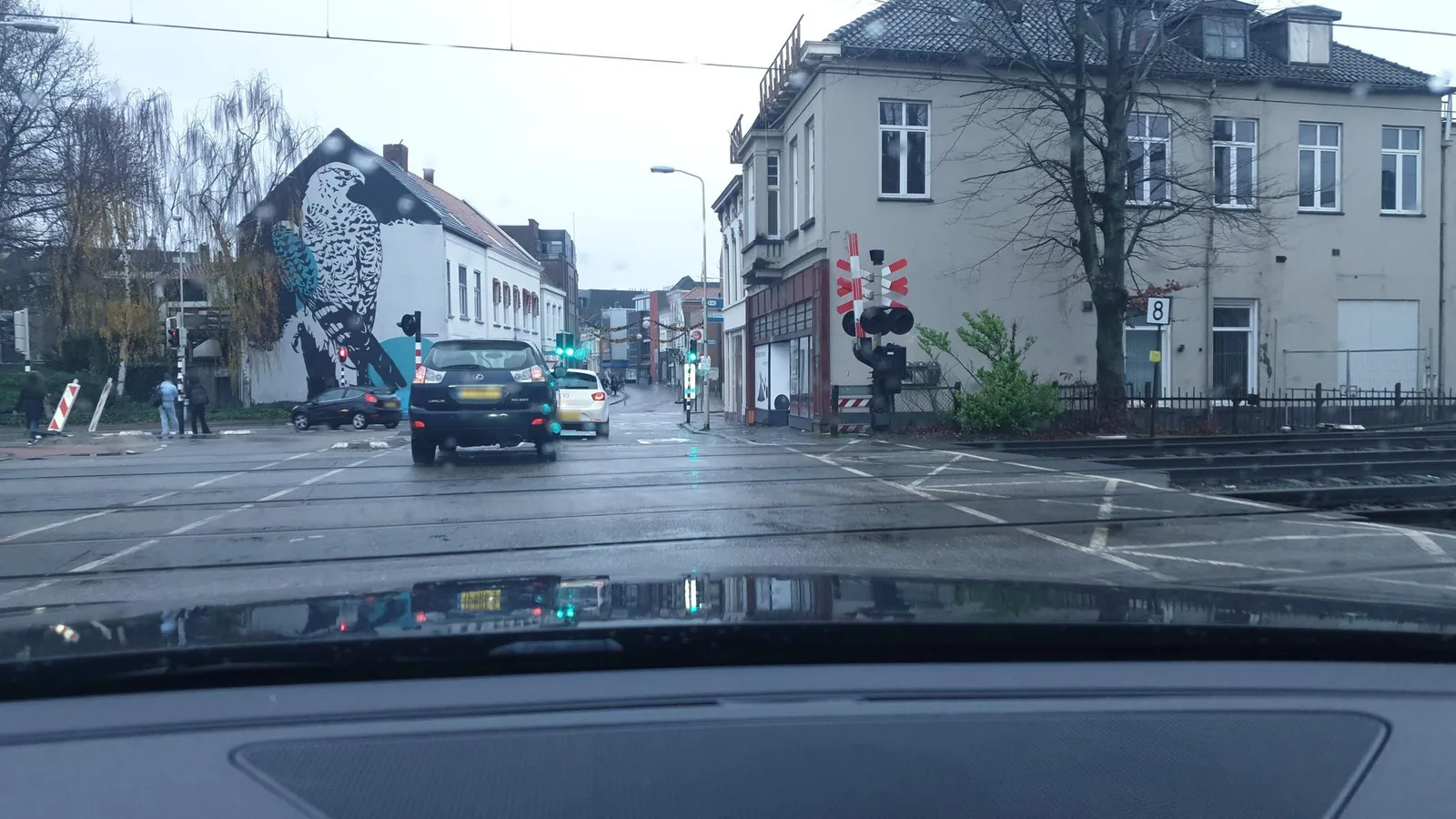
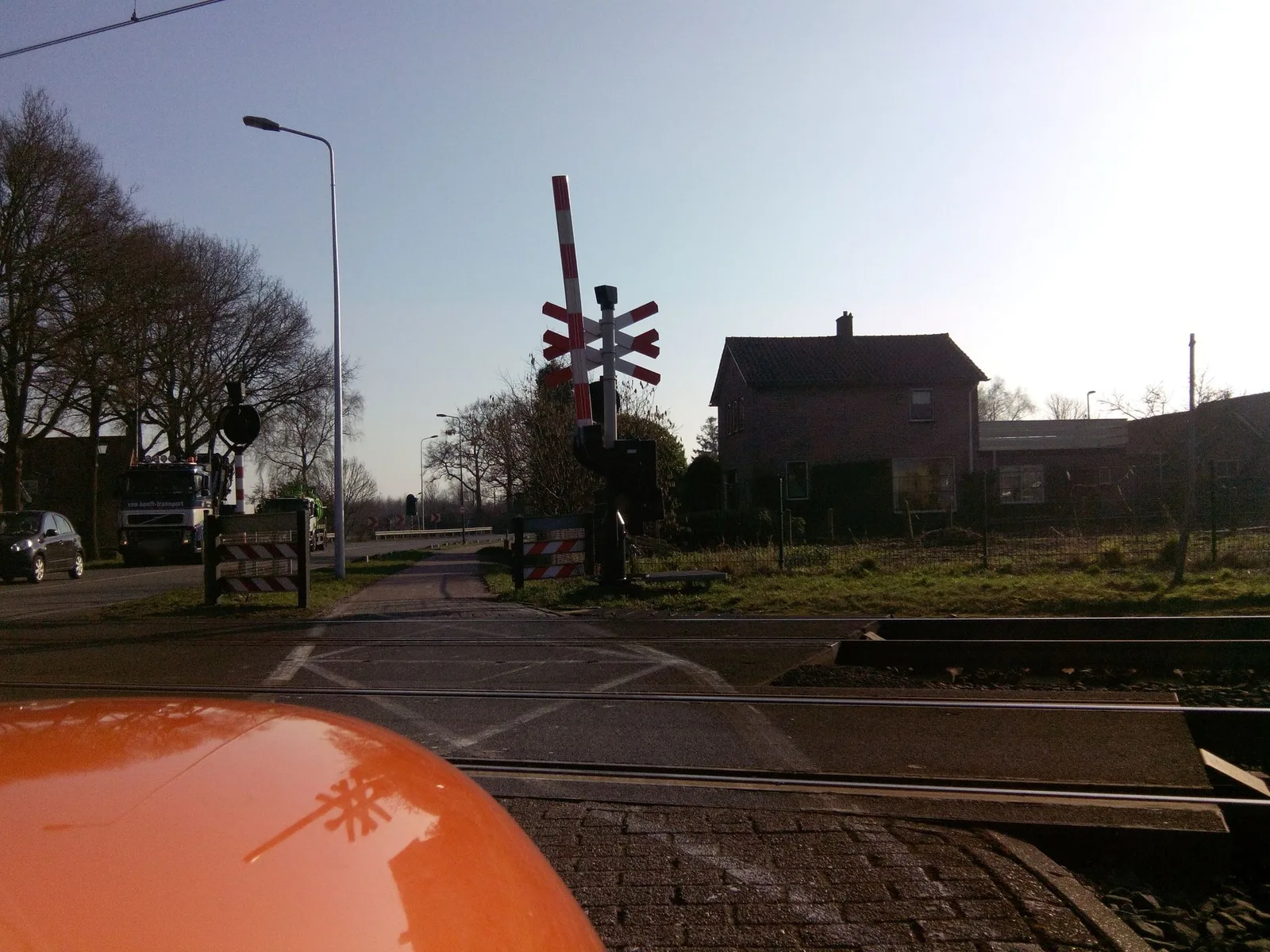
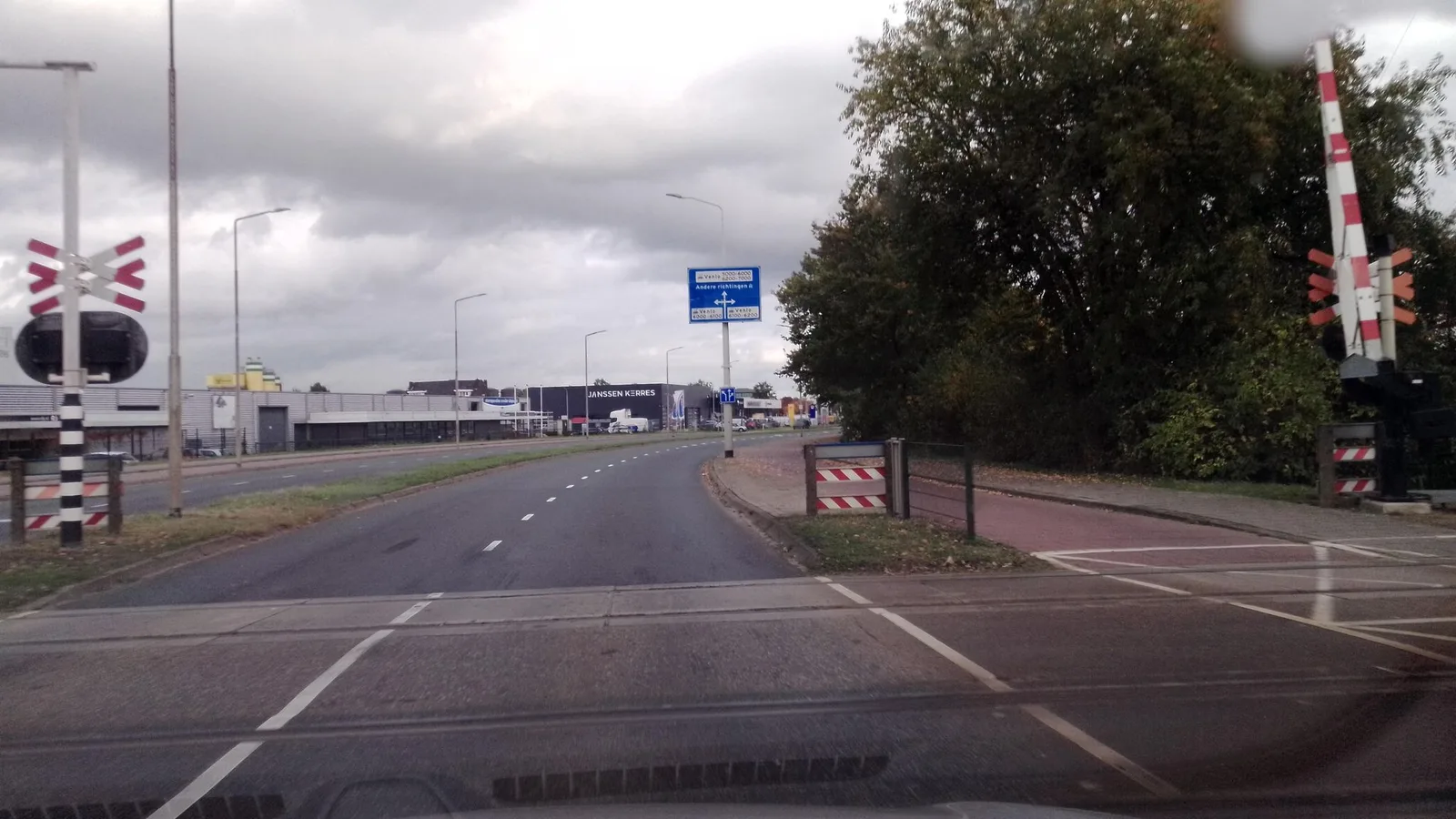
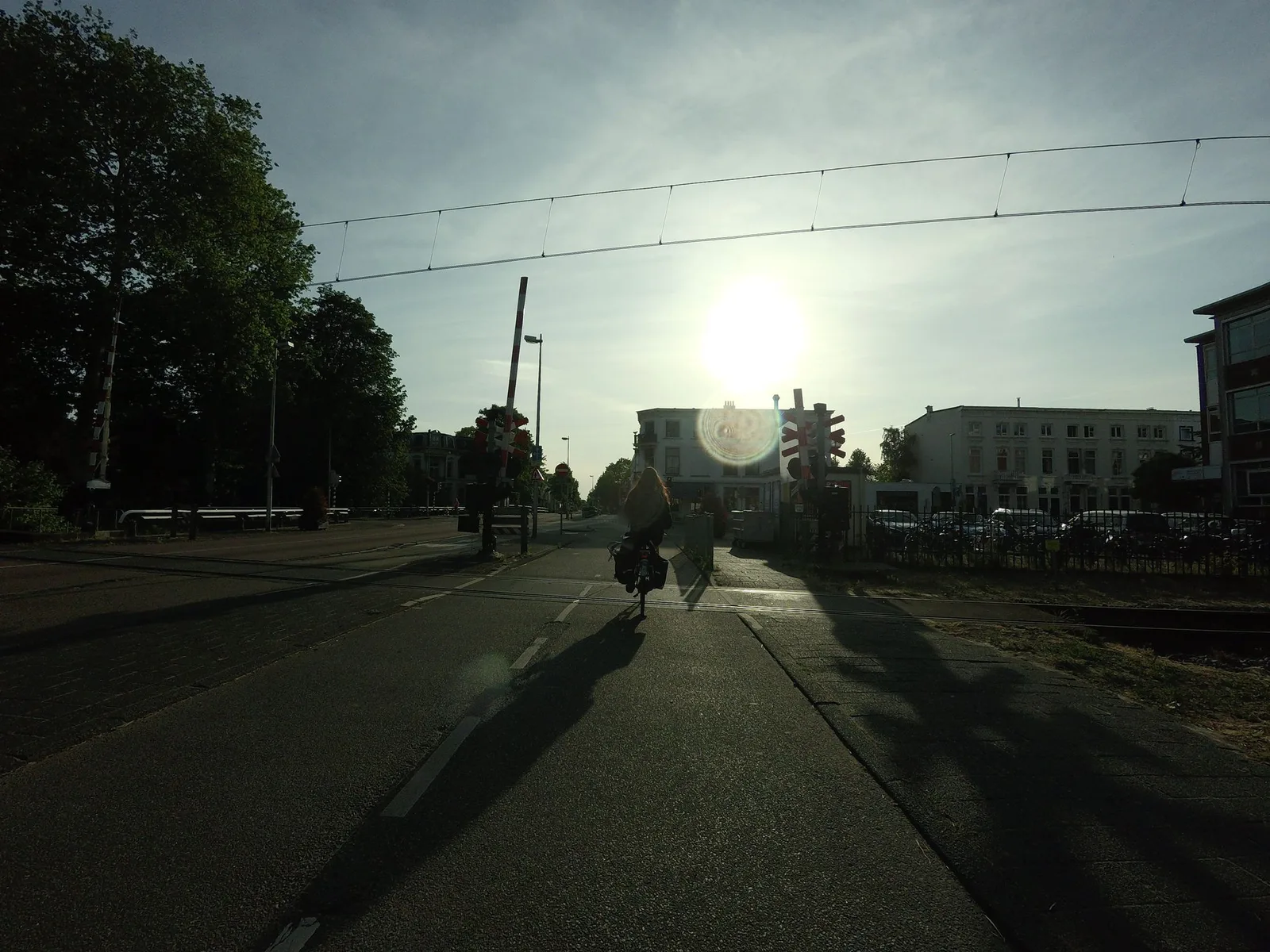
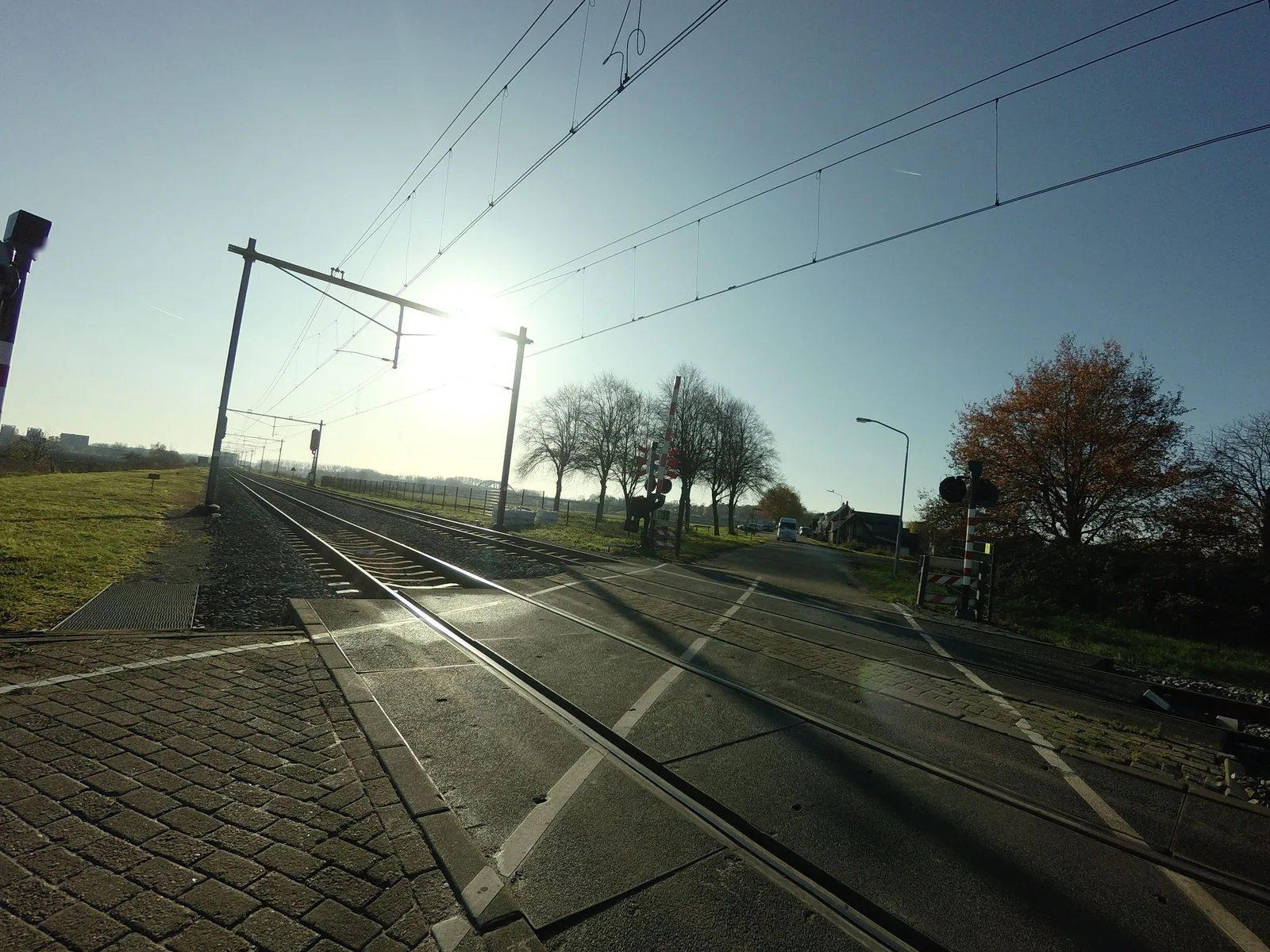
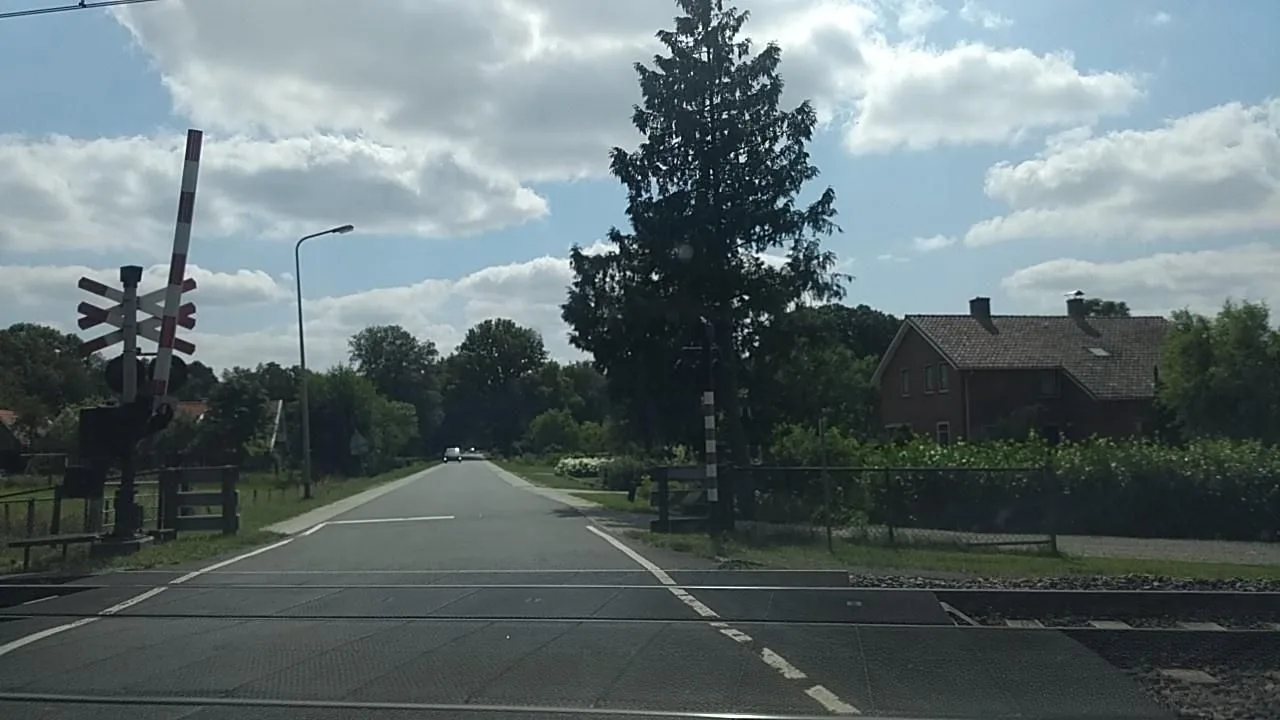
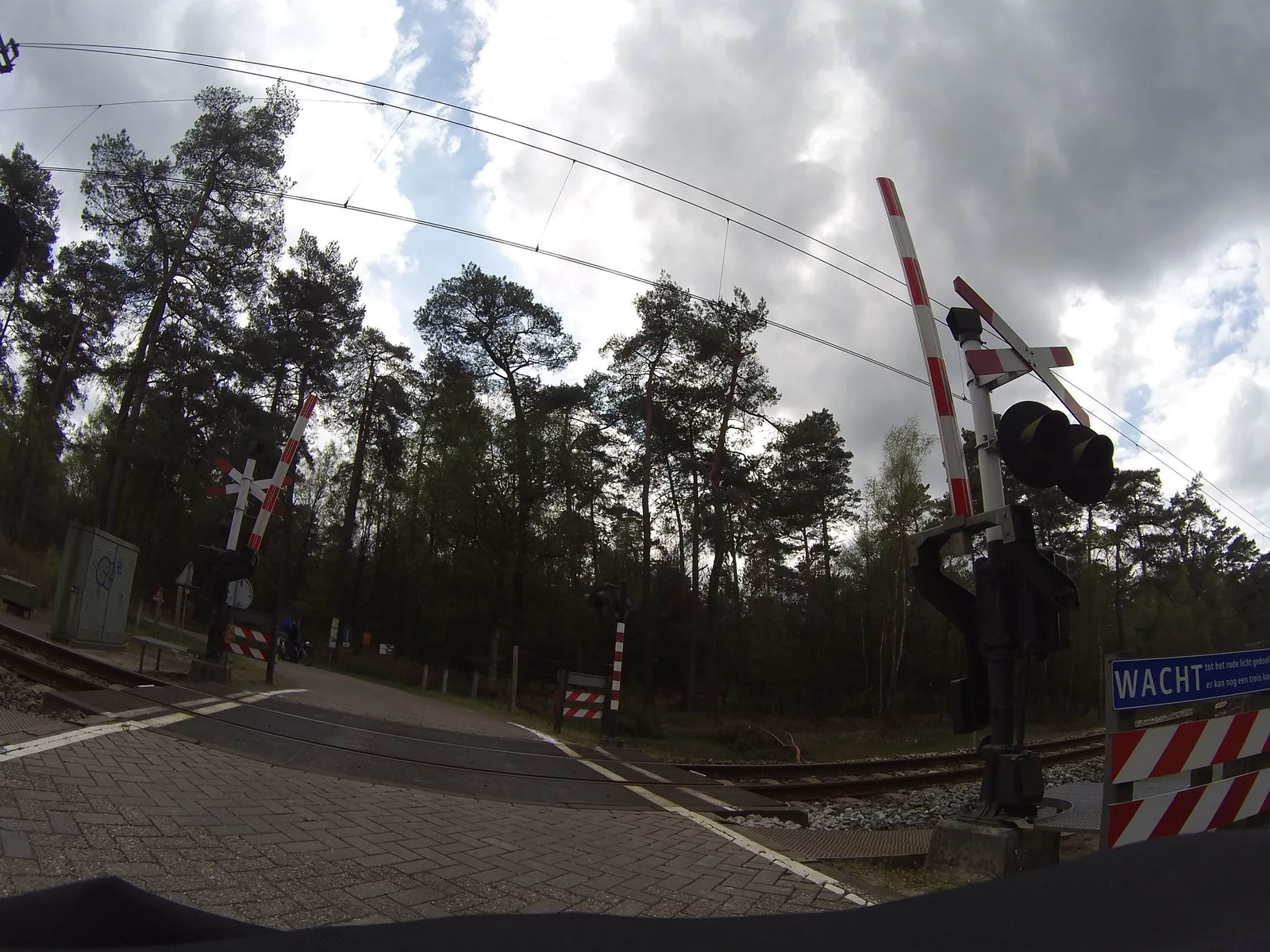
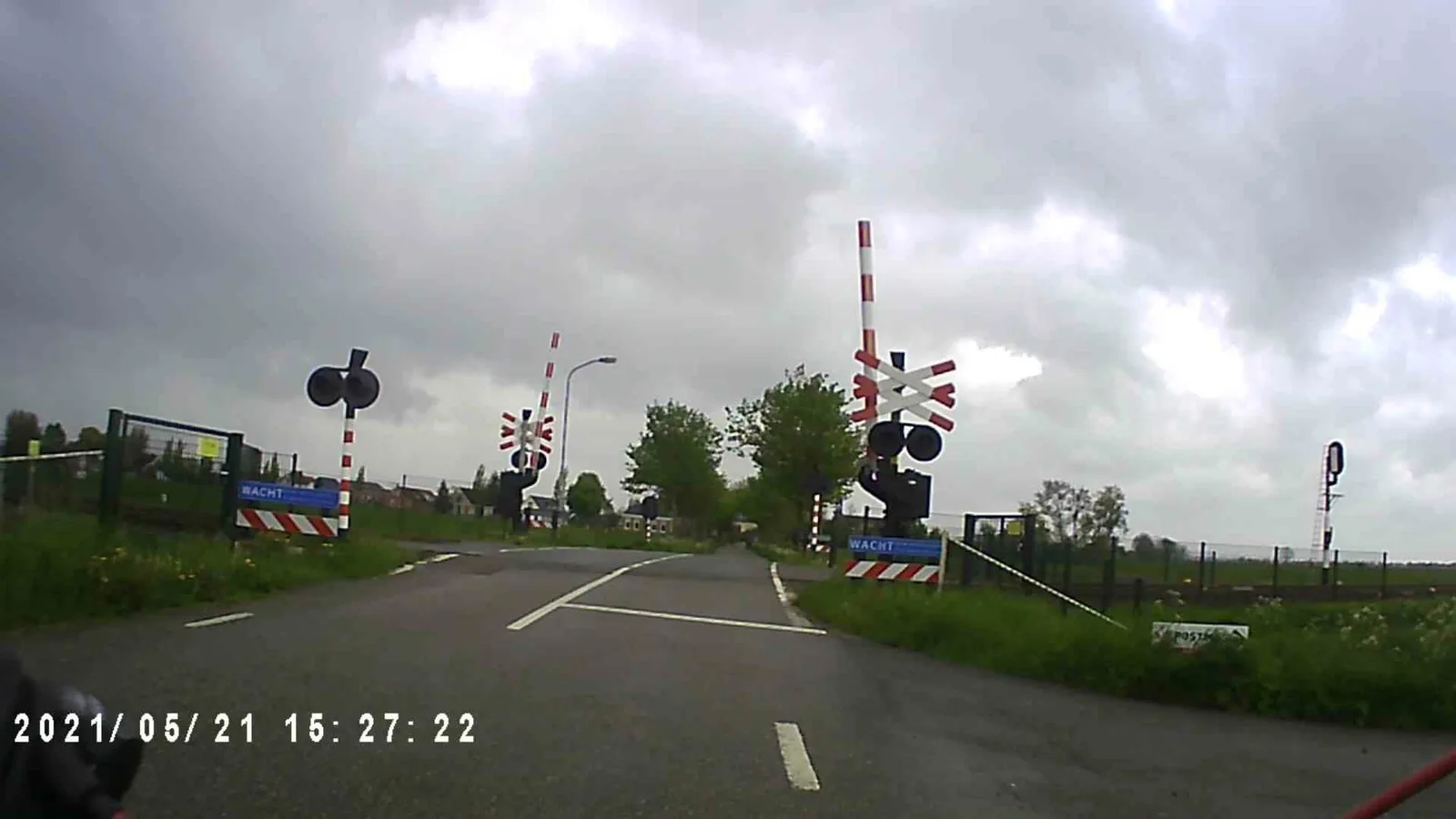
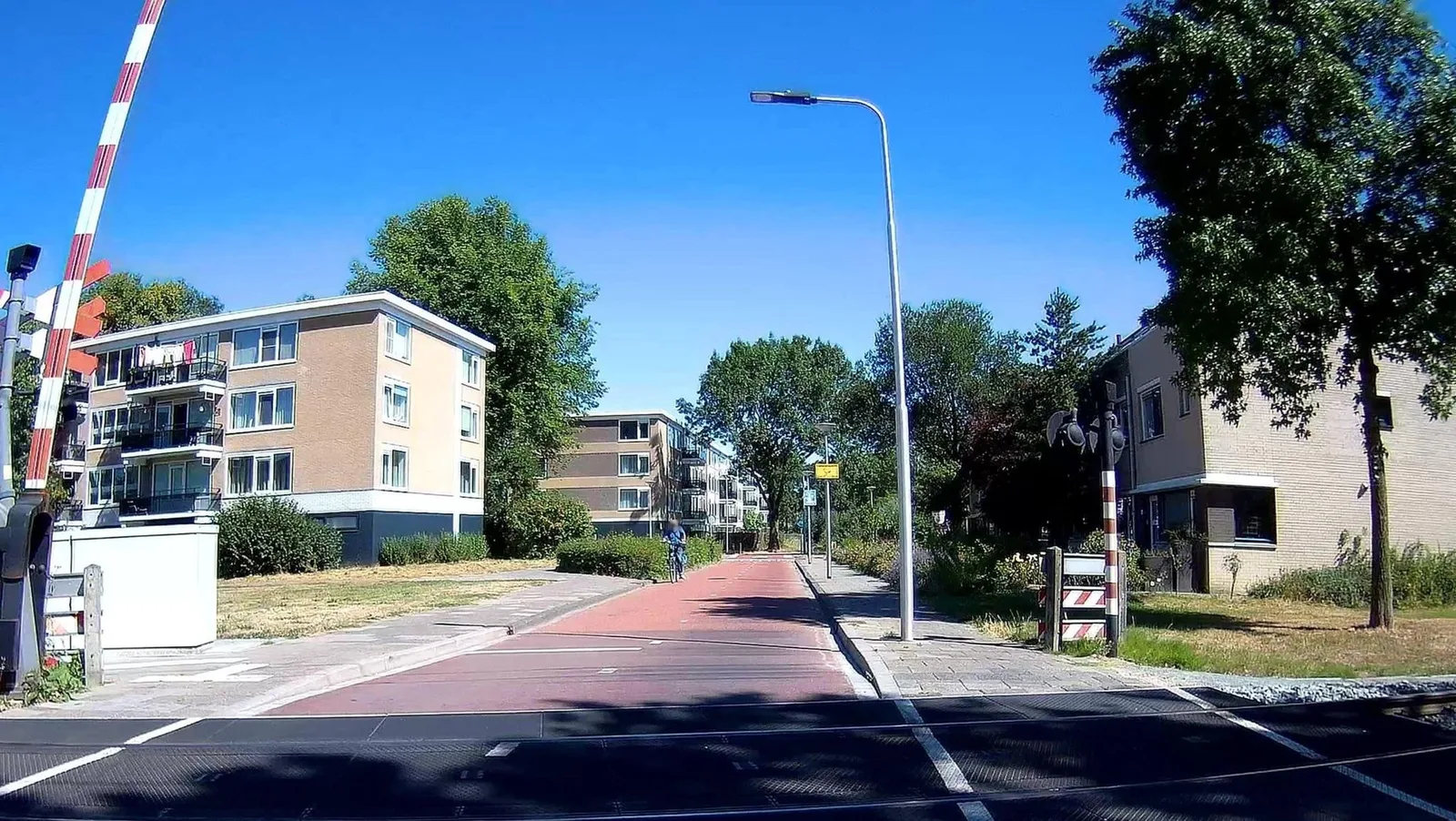
The nine street-level views below show crossings in rural, suburban, industrial and local-access contexts on the same national network, where local settings differ widely.
2. From accident learning to the responsibility question
The Dutch apparatus took its current shape through a sequence of investigations and policy responses, each one turning the system toward measured risk while keeping one question open:
- In 2018, the Onderzoeksraad voor Veiligheid, the Dutch Safety Board, published Overwegveiligheid, een risicovolle kruising van belangen, which examined how responsibility for the safety of the road approach to a crossing is shared between the infrastructure manager, the road authority and the landowner, and called for a clearer allocation [5, ↗].
- A proposed power to compel crossing upgrades was considered, and the responsibility question around the road approach stayed open [1, ↗] [5, ↗].
- In May 2023, the State Secretary for Infrastructure and Water Management set out the safety program and the NABO progress in a letter to Parliament [1, ↗].
- In October 2023, ProRail put the NORM risk model into operation [2, ↗].
- On 28 August 2024, a freight train struck a lorry at the Zanddijk level crossing in Hooge Zwaluwe, on a low-frequency freight line. The freight train driver was killed, one of the two other colleagues on the train was injured, and the lorry driver did not sustain physical injury [4, ↗].
- In December 2025, the Dutch Safety Board recommended that risk analyses account more fully for road-user behaviour at crossings on low-frequency lines, and that ProRail improve NORM on that point [4, ↗].
The Dutch system is model led and program based, with continued attention to the road approach and to road-user behaviour on lightly trafficked lines.
3. ProRail, the ILT and the Onderzoeksraad
ProRail holds the delivery role. As the national infrastructure manager it manages the mainline crossing inventory, runs NORM and delivers the LVO and NABO programs, operating under a safety authorisation [3, ↗] [6, ↗].
The ILT, the Inspectie Leefomgeving en Transport, is the safety authority. It issues ProRail's safety authorisation, inspects how ProRail manages infrastructure risk, and follows up on accident investigation recommendations [6, ↗].
The Onderzoeksraad voor Veiligheid, the Dutch Safety Board, is independent. It investigates serious occurrences and feeds accident learning back into policy, model improvement and program choices over time [4, ↗] [5, ↗].
Operators and the Ministry sit around the system. NS and DB Cargo Nederland appear in the accident investigations, the Ministry of Infrastructure and Water Management frames policy and funds the programs, CQM and Goudappel built NORM for ProRail, and Movares offers a separate crossing risk analysis service [2, ↗] [8, ↗] [9, ↗] [10, ↗].
Those roles give the Dutch system a strong public apparatus. NORM then turns part of that apparatus into a comparable operational risk view.
4. NORM, the operational risk model
NORM, the Nieuw Overwegen Risico Model, has structured ProRail's operational risk view at each level crossing since October 2023 [2, ↗]. It was developed for ProRail by CQM and Goudappel [8, ↗] [9, ↗]. It is an actuarial model. It reads twenty years of accident data, the measured road and rail traffic at each crossing, and the timetable, and it produces a risk estimate broken down by user type, separating the risk to cyclists, motorists, train drivers and passengers.
Public materials describe NORM's purpose and broad inputs, while the full methodology and variable list remain inside the ProRail apparatus. NORM is the national operational risk reference, and its published descriptions center on the crossing, its traffic and immediate approaches [4, ↗]. Beyond those, a separate territorial reading can look at the road-side environment, land use and the way the route through the crossing connects the places on either side.
The Dutch Safety Board's Hooge Zwaluwe investigation illustrates why this adjacent reading can matter. The Board recommended that risk analyses account more fully for road-user behaviour on low-frequency lines, where a train is an infrequent sight, and that ProRail improve NORM on that point [4, ↗].
NORM gives ProRail a stable common base for comparison and prioritisation across the operational portfolio. A territorial reading can sit beside that operational reference and describe the wider setting of candidate crossings, while preserving NORM's role and the Dutch compliance base.
5. The improvement programs, LVO and NABO
The Netherlands runs two parallel improvement programs. The Landelijk Verbeterprogramma Overwegen, the national level crossing improvement program, upgrades safety and traffic flow at secured crossings, sometimes replacing a crossing with an underpass [1, ↗]. The NABO program targets the passive crossings, with the 180 publicly accessible NABOs on the passenger network as its priority population [1, ↗].
Both programs are funded as multi-year national envelopes through the Ministry of Infrastructure and Water Management, and the NABO program timeline was extended later in the decade as the harder sites remained [1, ↗]. Progress is reported to Parliament and on ProRail's program page, with 112 of the 180 priority NABOs addressed by the May 2023 letter and 171 of the 180 by 11 November 2025 [1, ↗] [17, ↗].
Removing or upgrading a crossing is therefore both a safety decision and an access decision. The road approach brings the road authority and sometimes the landowner into the project, while ProRail carries the rail-side delivery under its technical guidance for third-party crossing works [7, ↗]. That is why the road approach responsibility question remains relevant before a candidate crossing enters detailed works [4, ↗] [5, ↗].
6. What sits around the crossing
NORM ranks operational risk at the crossing, and the LVO and NABO programmes move selected sites toward added protection, upgrade or removal.
A crossing is both a point of risk and a point of access. For the crossings that stay, the surroundings set the stakes of an incident, who lives nearby, how emergency vehicles reach the site, and which local routes depend on it. For the crossings moving toward removal or access substitution, the same surroundings set the access question, where road users go once the crossing closes, and rural, harbour and industrial sites are often constrained.
Some crossings have simple alternatives. Others touch emergency access, harbour or industrial circulation, low-frequency line behaviour highlighted by the Onderzoeksraad [4, ↗], nearby population or development pressure around the road network.
Comparing those surroundings on the same reference can support safety prioritisation on the crossings that stay, as much as field review, detailed engineering and budget commitment on those moving toward a project.
That is the territorial layer SAMRoute structures around crossings, with a common geography, repeatable indicators, a regular refresh and traceable sources, so one crossing can be compared with another.
7. References
National policy and parliamentary reporting
[1] Tweede Kamer der Staten-Generaal. Veiligheid van het railvervoer, brief van de staatssecretaris van Infrastructuur en Waterstaat (Kamerstuk 29 893, nr. 262, 25 May 2023). Sets out the rail safety program and the NABO progress, with 112 of 180 priority crossings addressed. Read
[2] ProRail. Hoe groot of klein is het risico bij een overweg? NORM heeft het antwoord (ProRail, 2023). Announcement of the NORM risk model. Read
[3] ProRail. Jaarverslag 2024 (ProRail, 2025). Crossing counts, fatalities and improvement program progress. Read
Independent accident investigation
[4] Onderzoeksraad voor Veiligheid. Overwegaanrijding Hooge Zwaluwe / Level crossing collision, Hooge Zwaluwe (Dutch Safety Board, December 2025). Recommends that risk analyses account more fully for road-user behaviour at crossings on low-frequency lines. Read
[5] Onderzoeksraad voor Veiligheid. Overwegveiligheid, een risicovolle kruising van belangen / Crossing safety, a risky crossing of interests (Dutch Safety Board, 2018). Identifies the unresolved allocation of responsibility for the road approach. Read
Safety authority and infrastructure oversight
[6] Inspectie Leefomgeving en Transport. Rapportage railinfrastructuur, risicobeheersing ProRail (ILT, via open.overheid.nl). Inspection of ProRail's management of infrastructure risk. Read
[7] ProRail. RLN00427-2 Spoorkruising derden (Sleufloze Techniek) (ProRail guideline, 2021). Technical guideline for third-party rail crossing works. Read
Risk model builders
[8] CQM. ProRail implementeert nieuw risicobeheer-model voor overwegen (CQM). Read
[9] Goudappel. NORM, nieuw model voor het bepalen van risico's bij overwegen voor ProRail (Goudappel). Read
[10] Movares. Risicoanalyse veiligheid overweg (PRC00200) (Movares). Read
European framework and benchmarking
[11] European Commission. Road safety thematic report, railway level crossings (DG MOVE). Covers the Netherlands within the Union wide picture. Read
[12] European Parliament and Council. Directive (EU) 2016/798 of 11 May 2016 on railway safety (OJ L 138, 26.5.2016). Read
[13] SAMRoute. Rail cadence, level crossings and emergency access (position page). Open
European peer infrastructure managers
[14] SNCF Réseau. Rapport annuel sécurité 2024 (SNCF Réseau, 2024). Read
[15] Network Rail. Control Period 7 (CP7) Strategic Business Plans 2024-2029 (Network Rail). Read
[16] DB InfraGO AG. Geschäftsbericht 2024 (Deutsche Bahn, 2025). Read
ProRail program reporting
[17] ProRail. Programma Niet Actief Beveiligde Overweg (NABO) (ProRail). Program page reporting NABO progress, 171 of 180 addressed by 11 November 2025. Read