Grade crossings in Canada. Reading territorial exposure before upgrade and closure decisions
Canada keeps improving and closing crossings across a public inventory of more than 31,000, with the Grade Crossings Regulations and the TC E-05 standards as the compliance base, the GradeX model ranking risk, the Transportation Safety Board investigating accidents, and federal funding moving selected crossings toward improvements or closures.
- For the crossings that remain in service, the nearby population, emergency response, the route they carry, development pressure and climate and flood exposure form the territorial context.
- For the crossings that move toward closure or grade separation, the crossing is closed or grade-separated. Road users and farm traffic then rely on different routes, and rural or remote sites often have none.
The following sections present the grade crossing system, the path from accident learning to enforceable standards, the public actors, the GradeX risk model, as well as closure, cost-share and the funding chain. The last section covers the territorial context that SAMRoute models.
1. The Canadian grade crossing system
Transport Canada's Grade Crossings Inventory gives a public starting point for reading crossings across Canada. The dataset counts 16,771 public crossings, 8,398 private crossings and 6,232 farm crossings, for a total of 31,401 crossings in the public inventory [15, ↗]. It includes crossings under both federal and provincial jurisdiction, so the federal perimeter should be defined carefully before the totals are used for regulatory analysis.
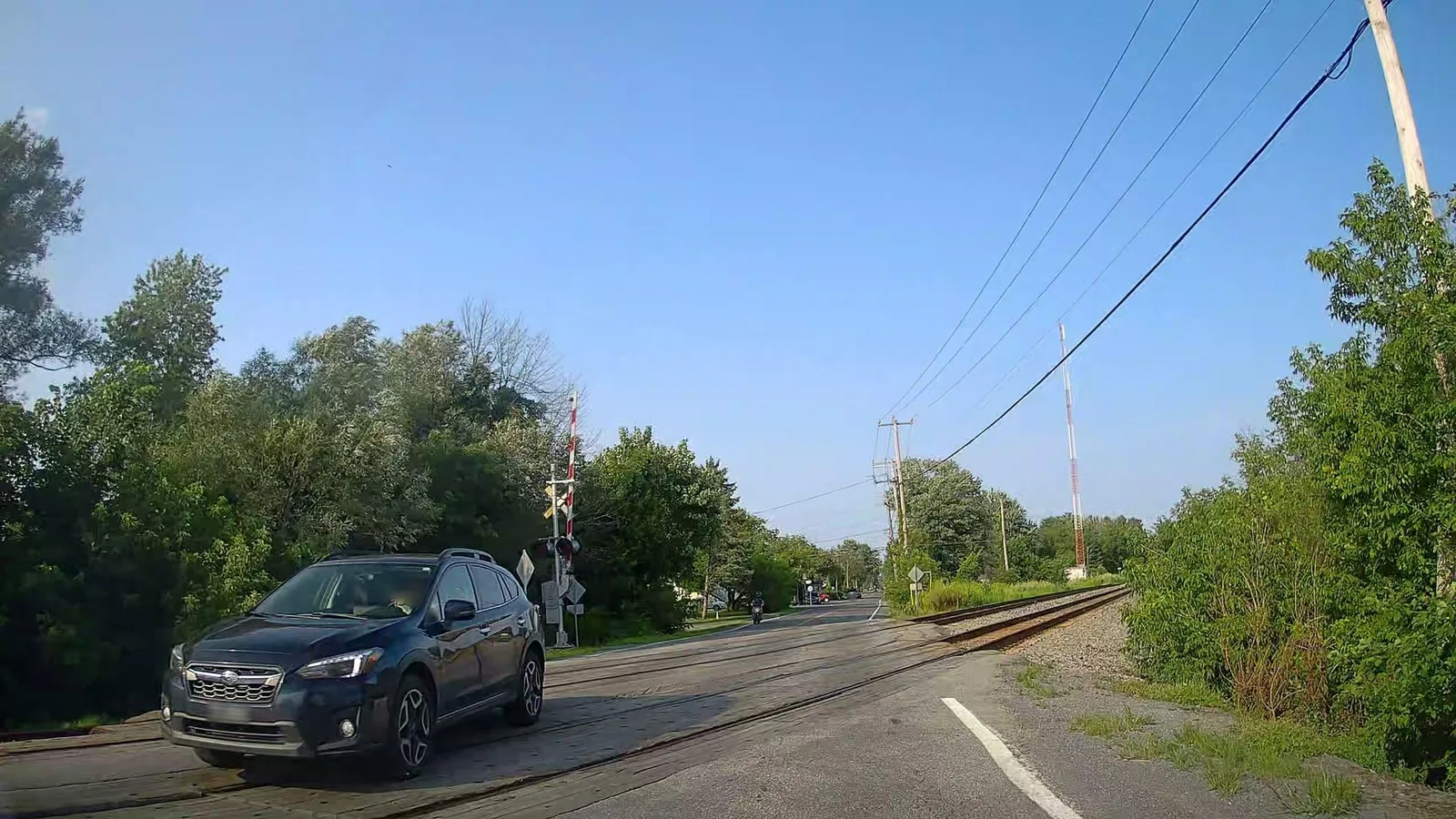
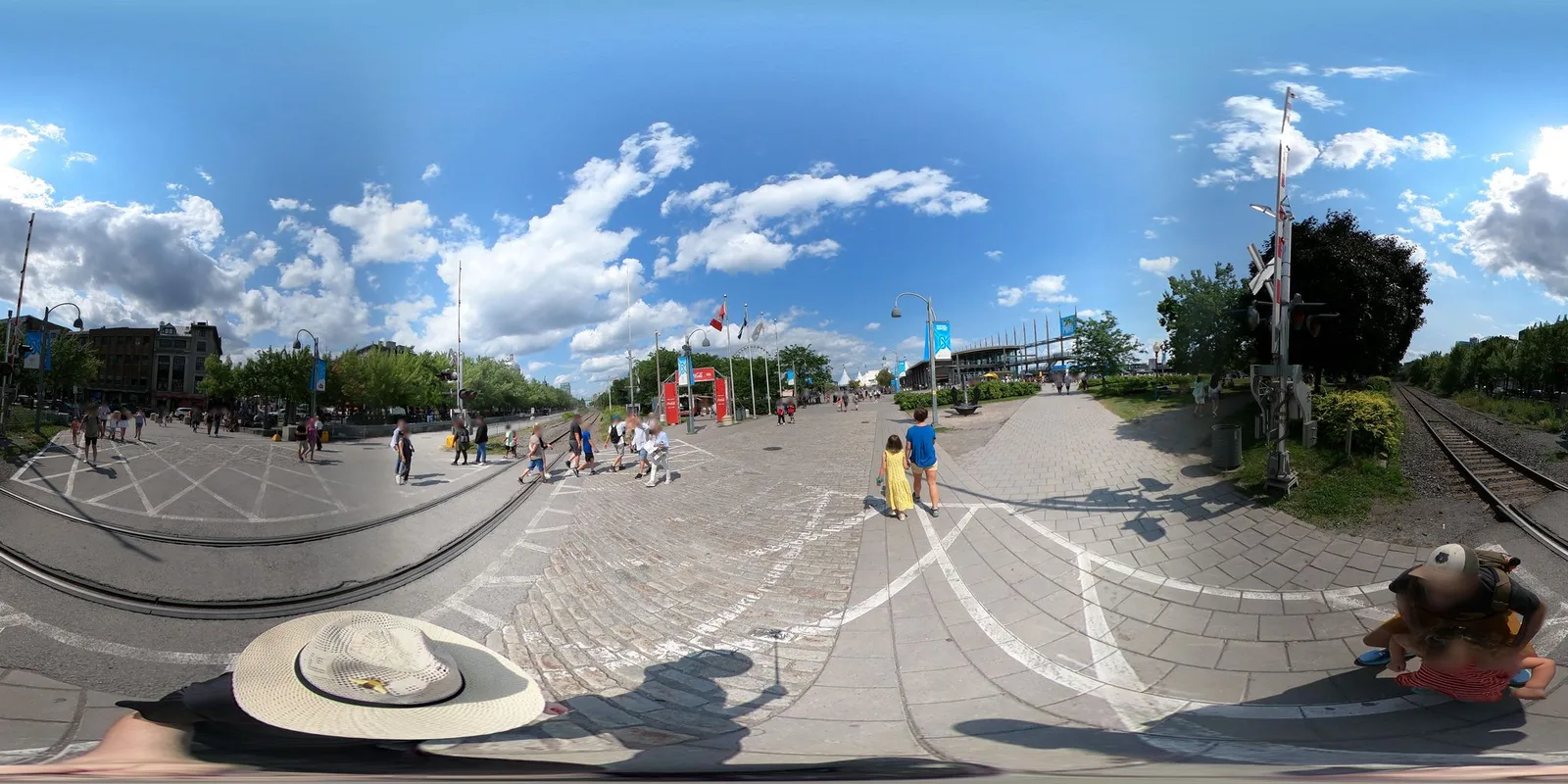
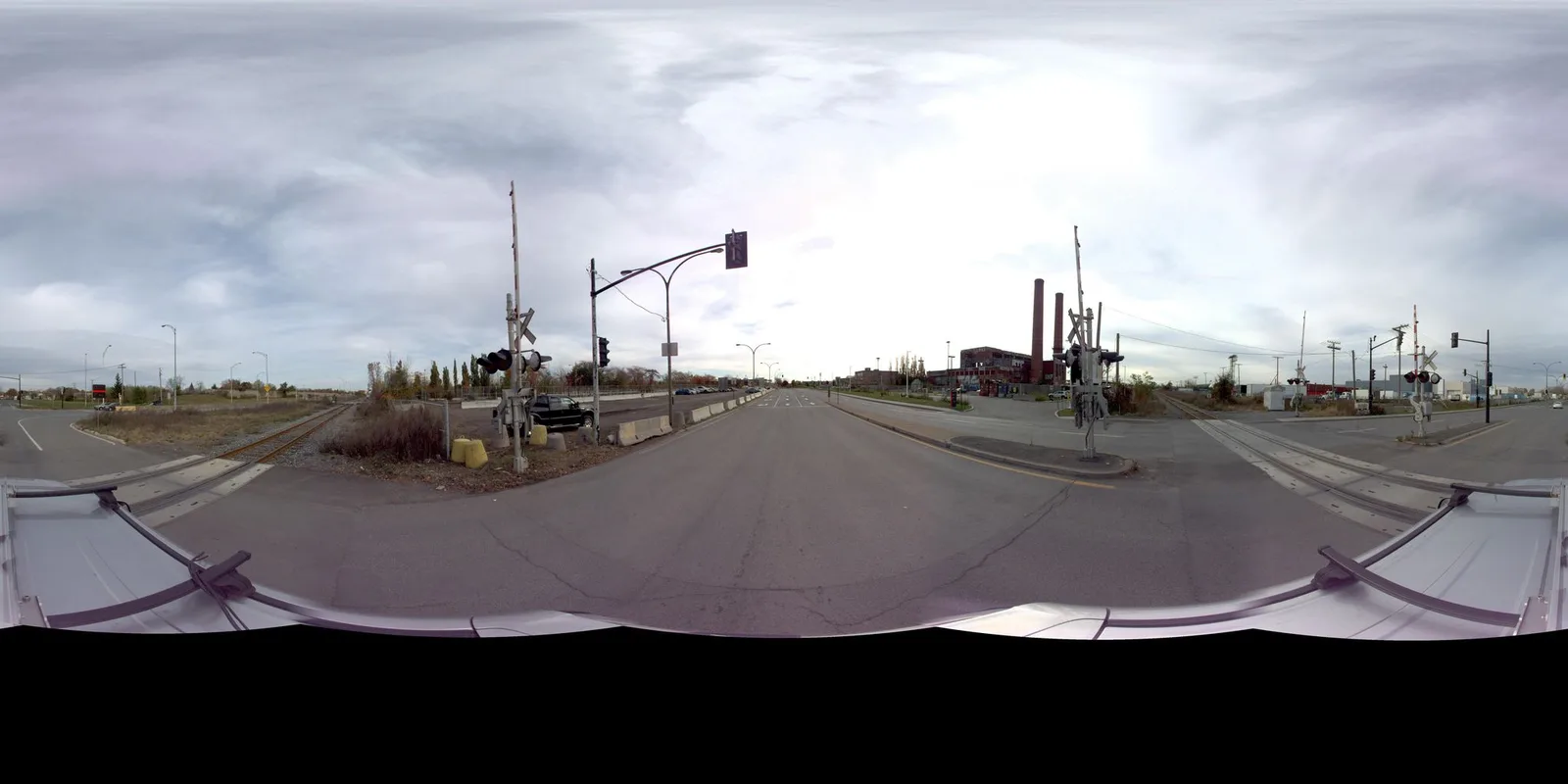
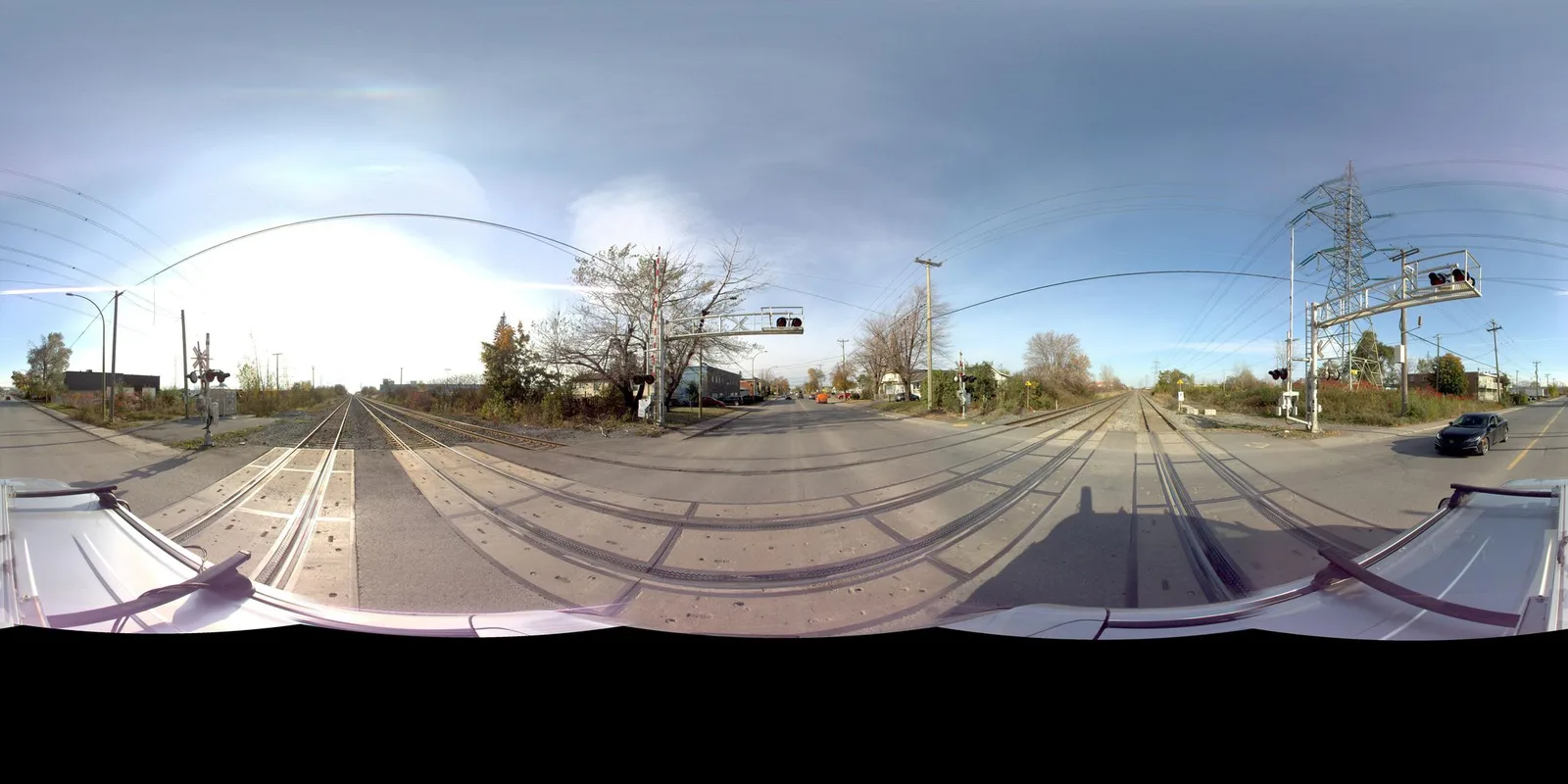
The nine street-level views below show crossings across Québec, where local settings vary widely.
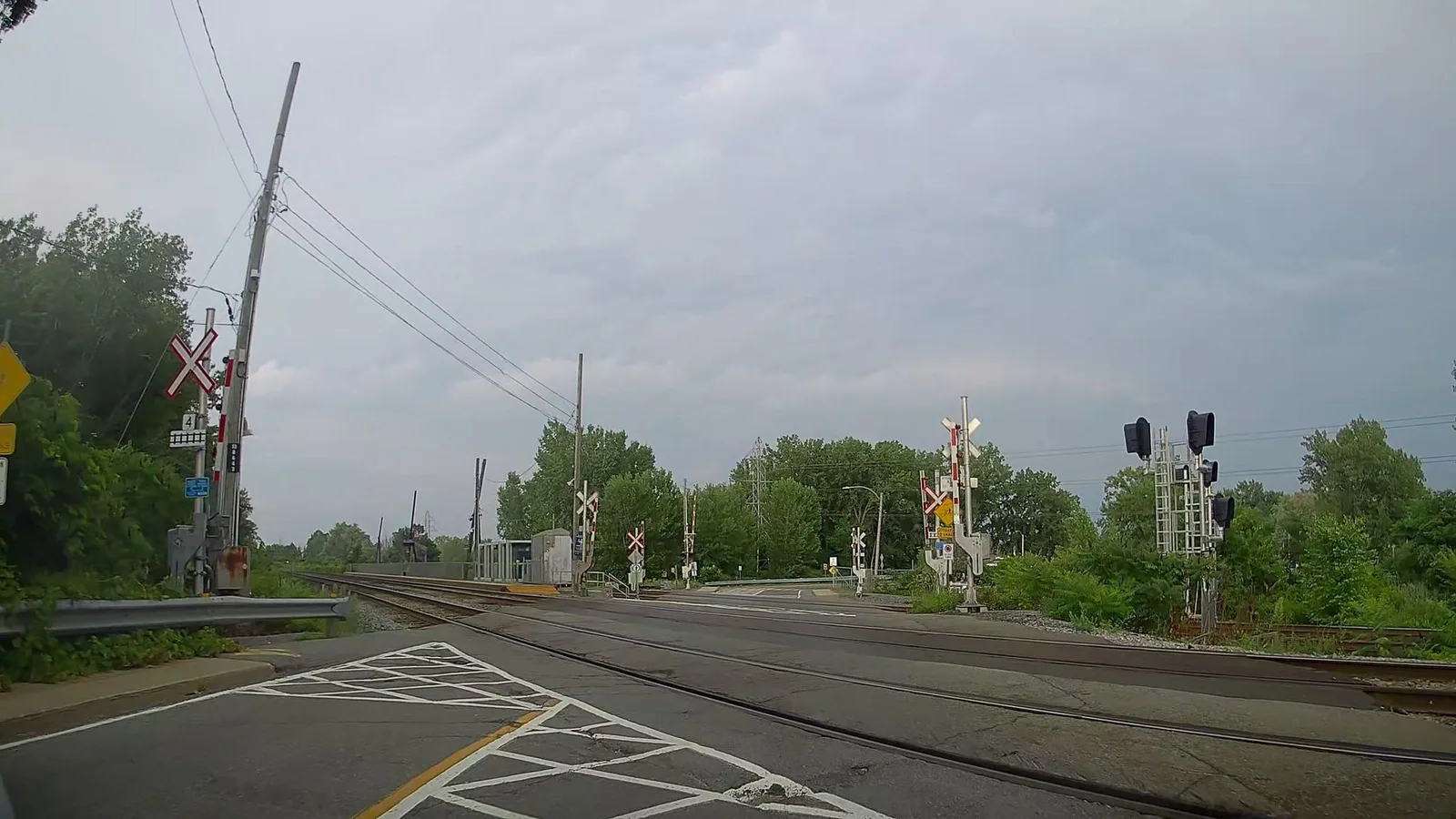
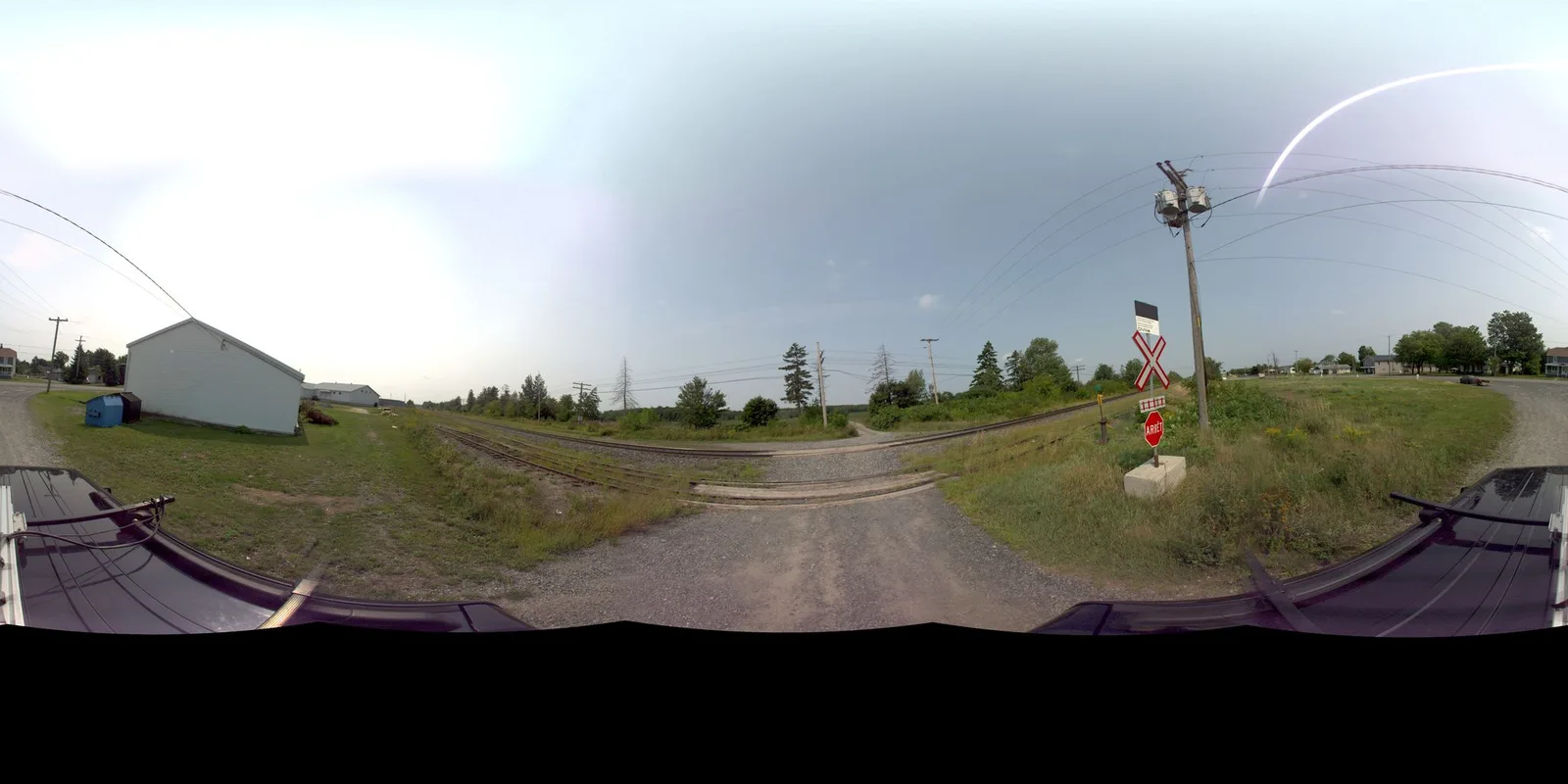
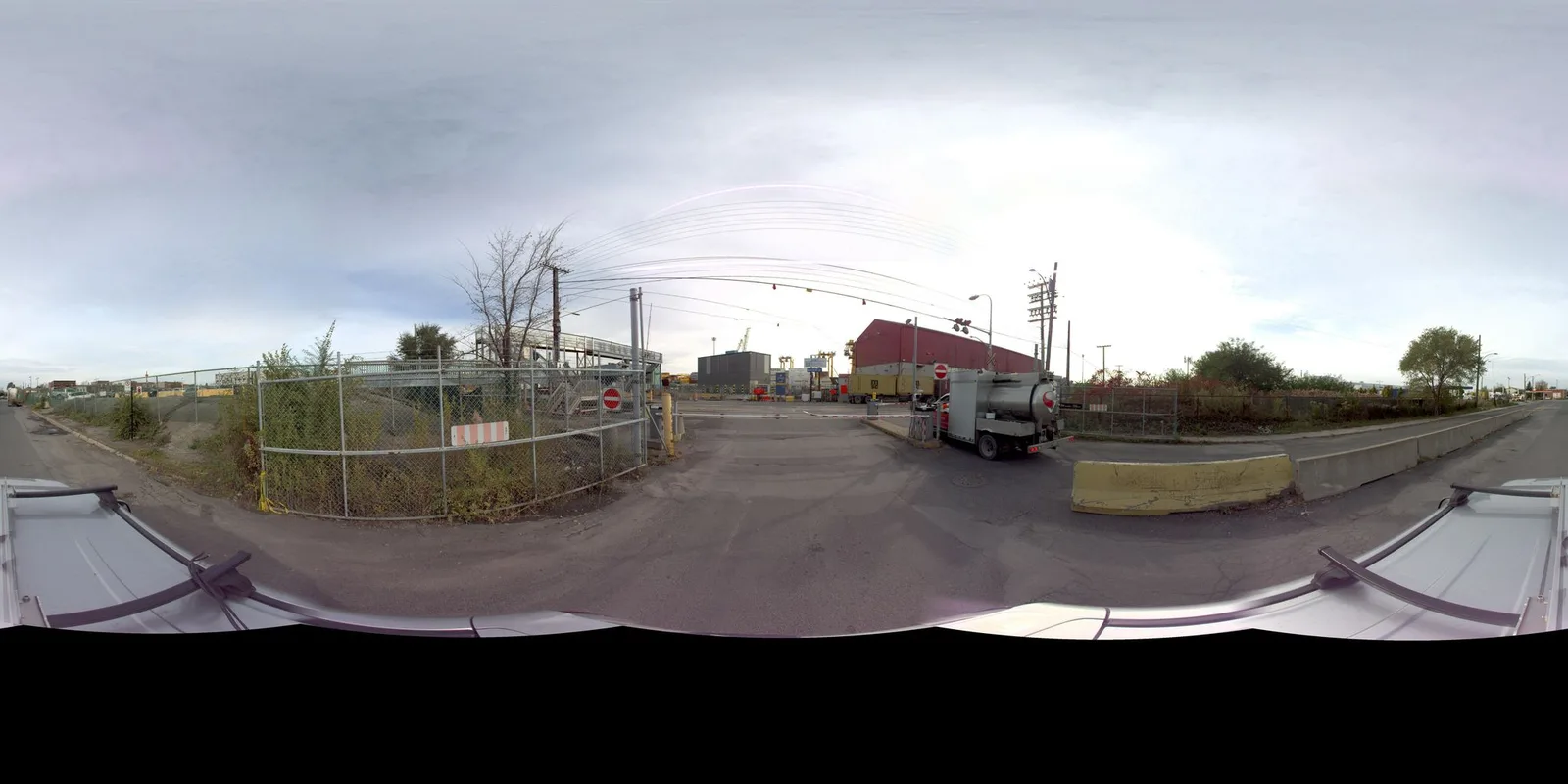
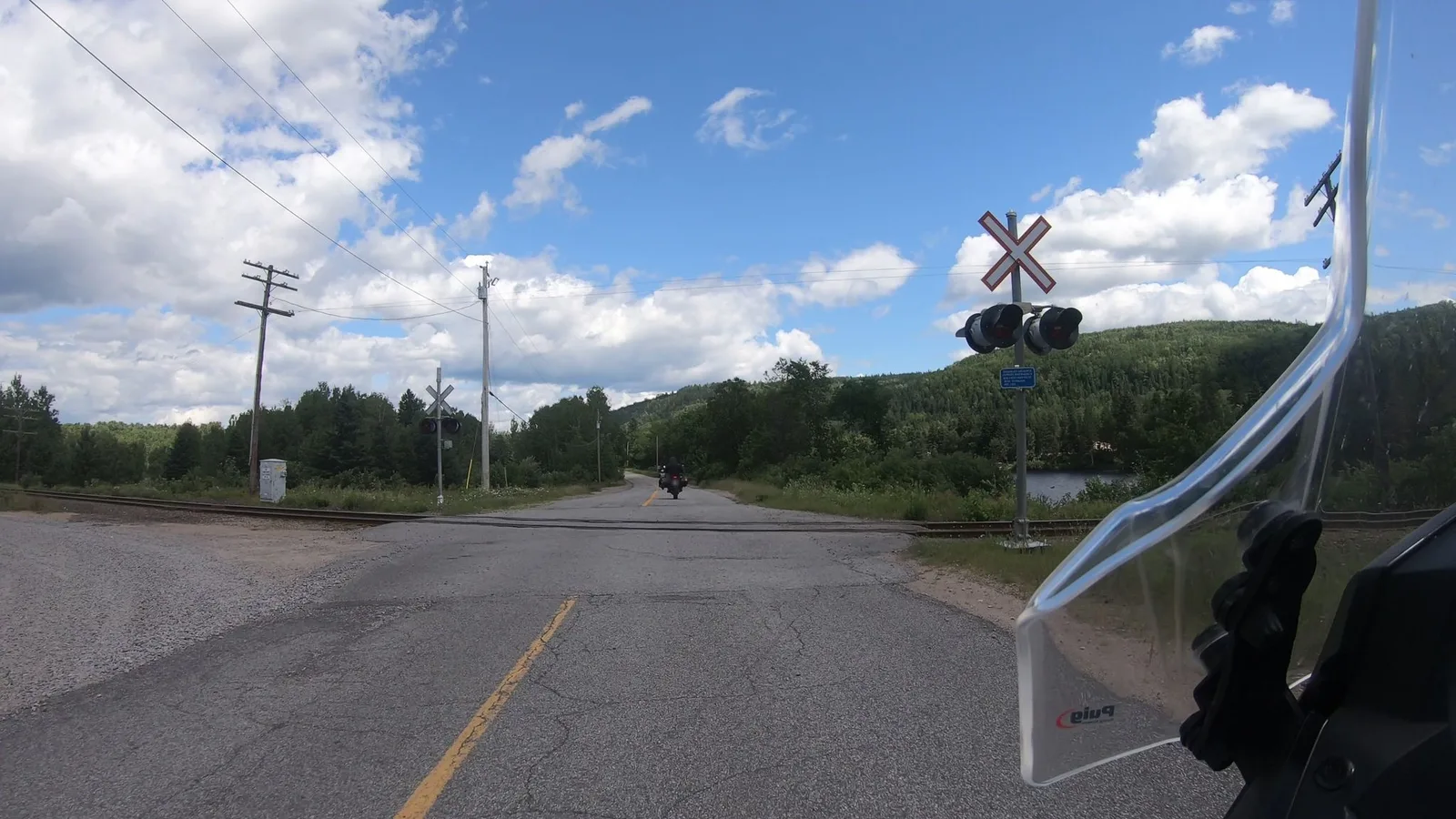
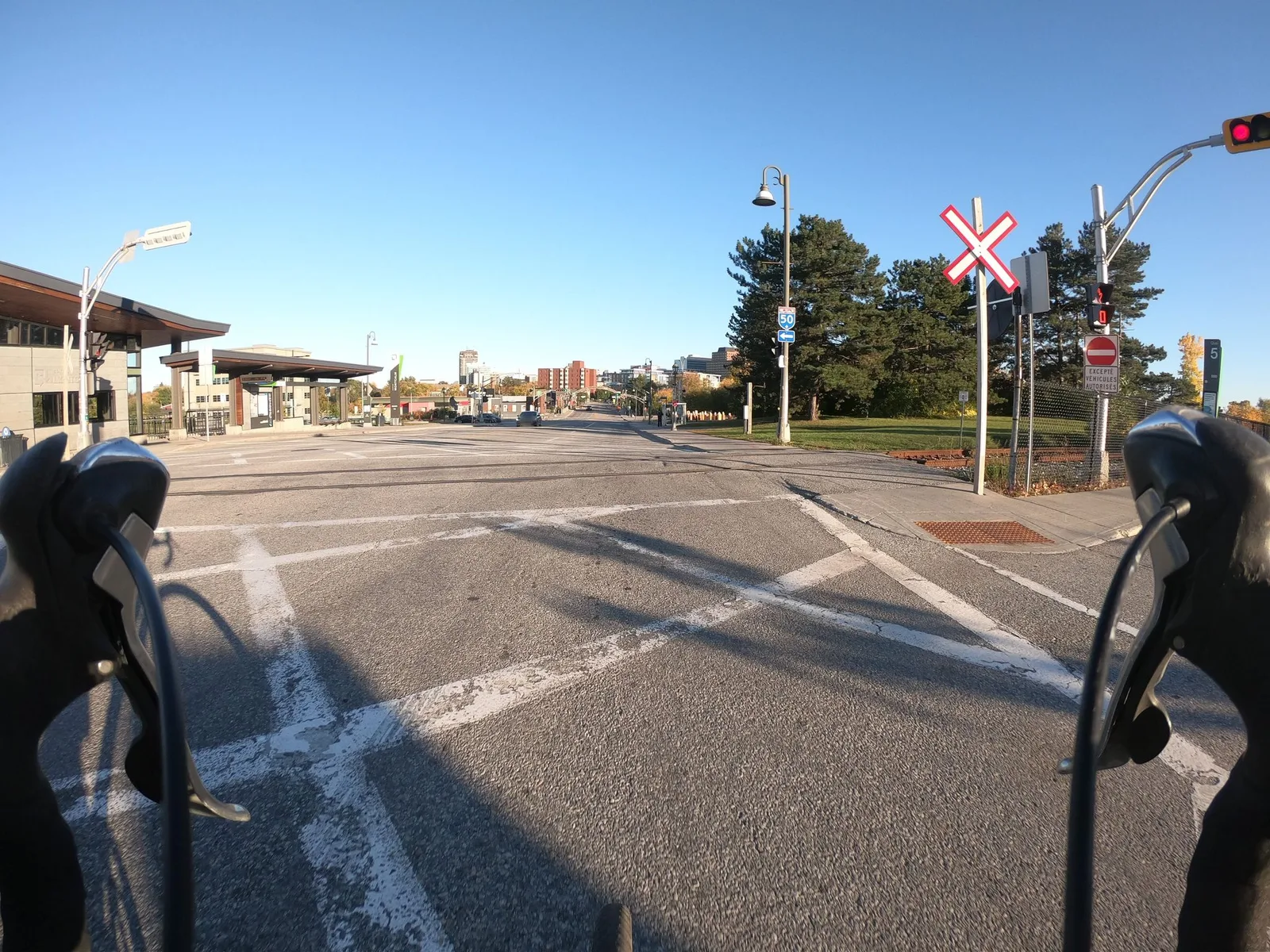
Four kinds of public and industry actors play distinct roles:
- Transport Canada, through its Rail Safety Directorate, is the national safety authority under the Railway Safety Act [1, ↗]. It administers the Grade Crossings Regulations, the Grade Crossings Standards and the funding programs [11, ↗].
- The Transportation Safety Board of Canada is the independent investigation body. It investigates railway occurrences, including grade crossing collisions, and reports findings and recommendations to Parliament [16, ↗].
- CN and CPKC are Canada's two Class I railways and the dominant freight rail operators. CN describes a network of approximately 20,000 route-miles [22, ↗], and CPKC describes a network of approximately 20,000 route-miles across Canada, the United States and Mexico following its 2023 merger with Kansas City Southern, the first single line railway connecting the three countries [23, ↗]. Short line and regional operators, passenger operator VIA Rail and commuter agencies add further operating contexts.
- The Railway Association of Canada coordinates with Transport Canada on regulatory matters and maintains the industry grade crossings handbook for road authorities and railways [21, ↗].
2. From accident learning to enforceable standards
The current apparatus was shaped by investigation findings and a long regulatory gestation, each step turning the Canadian system further toward enforceable standards shared between railways and road authorities:
- In 2001, the Transportation Safety Board issued recommendation R01-05, which pressed Transport Canada to bring grade crossing safety under comprehensive enforceable regulations, beyond guidance alone [17, ↗].
- In November 2014, the Grade Crossings Regulations came into force under SOR/2014-275, introducing the first comprehensive enforceable standards for sightlines, warning systems, crossing surfaces and information sharing between railways and road authorities, with phased compliance deadlines [2, ↗].
- In December 2021, the amendments under SOR/2021-233 extended certain compliance deadlines using a risk based approach built on collision history and the GradeX data [3, ↗] [6, ↗].
The Canadian system is regulation led and standards based, shared between the railway and the road authority on either side of each crossing.
3. Transport Canada, the TSB and the railways
Transport Canada holds the regulatory mandate. Through the Rail Safety Directorate it administers the Railway Safety Act [1, ↗], enforces the Grade Crossings Regulations [2, ↗] and maintains the engineering Grade Crossings Standards, known as TC E-05, that specify the minimum requirements for sightlines, warning systems, road geometry and crossing surfaces [4, ↗]. These standards are prescriptive, setting fixed minimum requirements, and the Grade Crossings Handbook explains how railways and road authorities apply them in the field [5, ↗].
The Transportation Safety Board sits apart from the regulator as an independent investigator. It examines serious railway occurrences, publishes its findings and addresses recommendations to Transport Canada, feeding accident learning back into regulation and standards over time [16, ↗]. Its grade crossing investigations, such as the collision and derailment at Mallorytown, Ontario in 2008 [18, ↗] and an earlier crossing accident and derailment in 2002 [19, ↗], show how that learning is built case by case.
The Class I railways carry the operating role at the crossing. Under the Grade Crossings Regulations, railways and road authorities share information about each crossing and divide responsibility for compliance, which makes most crossing decisions a negotiation between the railway and the relevant municipal or provincial road authority [7, ↗].
Transport Canada's Grade Crossings Inventory makes the asset base observable, recording location, crossing type, warning device and traffic attributes for each federally regulated crossing [15, ↗].
4. The GradeX risk model
GradeX is the comparative risk model behind the Canadian system. It was developed for Transport Canada by Professor Liping Fu and Professor Frank Saccomanno at the University of Waterloo, and it ranks more than 30,000 crossings against one another from high to low risk [13, ↗] [14, ↗].
The model reads the crossing and its immediate approaches. Its inputs cover:
- road traffic volume, measured as annual average daily traffic
- rail traffic volume and train speed
- road speed limit and the number of tracks
- warning device type and crossing sightline distance
- pavement condition at the crossing surface
- collision history drawn from Transportation Safety Board occurrence data
Transport Canada uses the resulting ranked lists internally and drew on them when it built the risk based approach for the 2021 deadline extensions [3, ↗]. The model remains an internal Transport Canada tool.
The published descriptions of GradeX focus on crossing and approach variables. A territorial reading of who depends on the crossing, how local access works, and how the surrounding area changes over time sits beside that focus. Annual average daily traffic enters the model as a static volume count, and several layers of surrounding context remain open to a separate reading:
- land use and zoning around the crossing
- origin and destination dependency on the route
- resident population and its density
- school and pedestrian exposure
- whether the crossing is the nominal route between the places it links
The Transportation Safety Board reports consistently that around 66 percent of train and vehicle collisions in Canada happen at crossings that already carry active warning devices such as gates, lights and bells [16, ↗]. That finding keeps the role of equipment upgrades intact, and shows why behaviour, access and surrounding context remain useful to read beside the crossing equipment itself.
5. Closure, cost-share and the funding chain
Canadian crossing decisions move through a consolidated funding chain. Two long running programs set the pattern:
- The Grade Crossing Improvement Program, established in 1988 under the Railway Safety Act, funds up to 50 percent of safety enhancement costs at a crossing, to a maximum of 550,000 dollars per project, covering warning system and roadway improvements [8, ↗].
- The Grade Crossing Closure Program, established in 2003, compensates road authorities and private landowners who relinquish crossing rights. Since inception it has facilitated 124 closures, 58 public and 66 private or farm, at a modest rate of roughly eight crossings each year [9, ↗].
Both programs are now folded into the Rail Safety Improvement Program, whose infrastructure, technology and research component carries grade crossing improvements and closures [10, ↗] [12, ↗]. The published figures aggregate the component budgets, and the cost-share structure means a single upgrade is funded jointly by Transport Canada, the railway and the road authority.
The modest closure rate, read against an inventory of more than 31,000 crossings, keeps the comparison question open for most assets. Public authorities, railways and funders still have to decide which crossings warrant attention and investment first, across a population far larger than any single year of program funding can reach.
6. What sits around the crossing
GradeX ranks crossing risk at the asset, and the funding chain moves selected crossings toward warning-system upgrades, roadway improvements or closure.
A crossing is both a point of risk and a point of access. For the crossings that stay, the surroundings set the stakes of an incident, who lives nearby, how emergency vehicles reach the site, and which local routes depend on it. For the crossings moving toward closure, the same surroundings set the access question, where road users and farm traffic go once the crossing closes, and rural or remote sites often have no alternative at all.
Some crossings have simple alternatives. Others touch emergency response, nearby population, the nominal route they carry, development pressure or climate and flood exposure on the adjoining road network.
Comparing those surroundings on the same reference can support safety prioritization on the crossings that stay, as much as engineering, closure negotiation and capital commitment on those moving toward a project.
A single railway such as CPKC now runs across Canada, the United States and Mexico, where each authority reports through its own format and regulatory rhythm [20, ↗]. A common territorial reading lets readers compare exposure across those regimes on the same reference, while keeping national specificity intact.
That is the territorial layer SAMRoute structures around crossings, with a common geography, repeatable indicators, a regular refresh and traceable sources, so one crossing can be compared with another.
7. References
Regulation, standards and national policy
[1] Government of Canada. Railway Safety Act (R.S.C., 1985, c. 32, 4th Supp.) (Justice Laws). Read
[2] Government of Canada. Grade Crossings Regulations (SOR/2014-275) — full text (Justice Laws). Read
[3] Government of Canada. Regulations Amending the Grade Crossings Regulations (SOR/2021-233) (Canada Gazette, Part II, 2021). Read
[4] Transport Canada. Grade Crossings Standards (TC E-05) (Transport Canada). Read
[5] Transport Canada. Grade Crossings Handbook (Transport Canada, 2023). Read
[6] Transport Canada. Changes to the Grade Crossings Regulations (Transport Canada). Read
[7] Transport Canada. Grade Crossings Regulations — what you need to know (Transport Canada). Read
Transport Canada programs
[8] Transport Canada. Evaluation of the Grade Crossing Improvement Program (Transport Canada). Read
[9] Transport Canada. Evaluation of the Grade Crossing Closure Program (Transport Canada). Read
[10] Transport Canada. Rail Safety Improvement Program (RSIP) (Transport Canada). Read
[11] Transport Canada. Grade crossings — portal (Transport Canada). Read
[12] Transport Canada. Evaluation of the Rail Safety Improvement Program (Transport Canada). Read
Risk model
[13] University of Waterloo. Engineering's railway crossing expertise lauded by Transport Canada (University of Waterloo, Engineering). Read
[14] University of Waterloo. Waterloo research makes railway crossings safer (University of Waterloo). Read
Public datasets
[15] Transport Canada. Grade Crossings Inventory (Open Government). Open
Accident investigation
[16] Transportation Safety Board of Canada. Annual Report to Parliament 2024-2025 (TSB, 2025). Read
[17] Transportation Safety Board of Canada. Rail safety recommendation R01-05 — crossing regulations (TSB, 2001). Read
[18] Transportation Safety Board of Canada. Railway investigation report R08T0158 — crossing collision and derailment, Mallorytown, Ontario (2008) (TSB). Read
[19] Transportation Safety Board of Canada. Railway investigation report R02W0063 — crossing accident and derailment (2002) (TSB). Read
Infrastructure managers and industry
[20] Canadian Pacific Kansas City. Rail and crossing regulations and standards (CPKC). Read
[21] Railway Association of Canada. Grade Crossings Handbook (RAC, 2016). Read
[22] Canadian National. Maps and network (CN). Read
[23] Canadian Pacific Kansas City. About CPKC (CPKC). Read