Level crossings in Belgium. Comparing sites before removal and modernisation decisions
Belgium is already reducing risk across its level crossing portfolio, with Infrabel removing crossings, modernising protection and raising public awareness inside a national apparatus that includes the SSICF, the Rail Accident and Incident Investigation Unit and the 2023-2032 performance contract.
- For the crossings that remain in service, the nearby population, emergency access, cycling and farm use, industrial circulation, local routes and land use form the territorial context.
- For the crossings that move toward removal, grade separation or equipment modernisation, the crossing is closed, grade-separated or altered. Road users, cyclists, farm traffic, emergency services and local operators then rely on different routes.
The following sections present the network and its crossing inventory, the public actors involved, the prioritisation model, as well as the removal, modernisation and awareness strategy. The last section covers the territorial context that SAMRoute models.
1. The Belgian level crossing system
Since 2005, Infrabel has managed the Belgian national rail network and owns the level crossing inventory [4, ↗]. As of early 2025, around 1,600 level crossings sit on that network, a figure that has fallen year by year, with about 95 percent of the public crossings carrying active protection such as barriers, lights and bells [2, ↗]. The exact count moves with the reporting date and with the public-versus-private split.
Infrabel publishes the geolocated inventory and its evolution on its open data portal [6, ↗]. Heritage lines and private or industrial sidings carry their own inventories, outside the mainline perimeter.
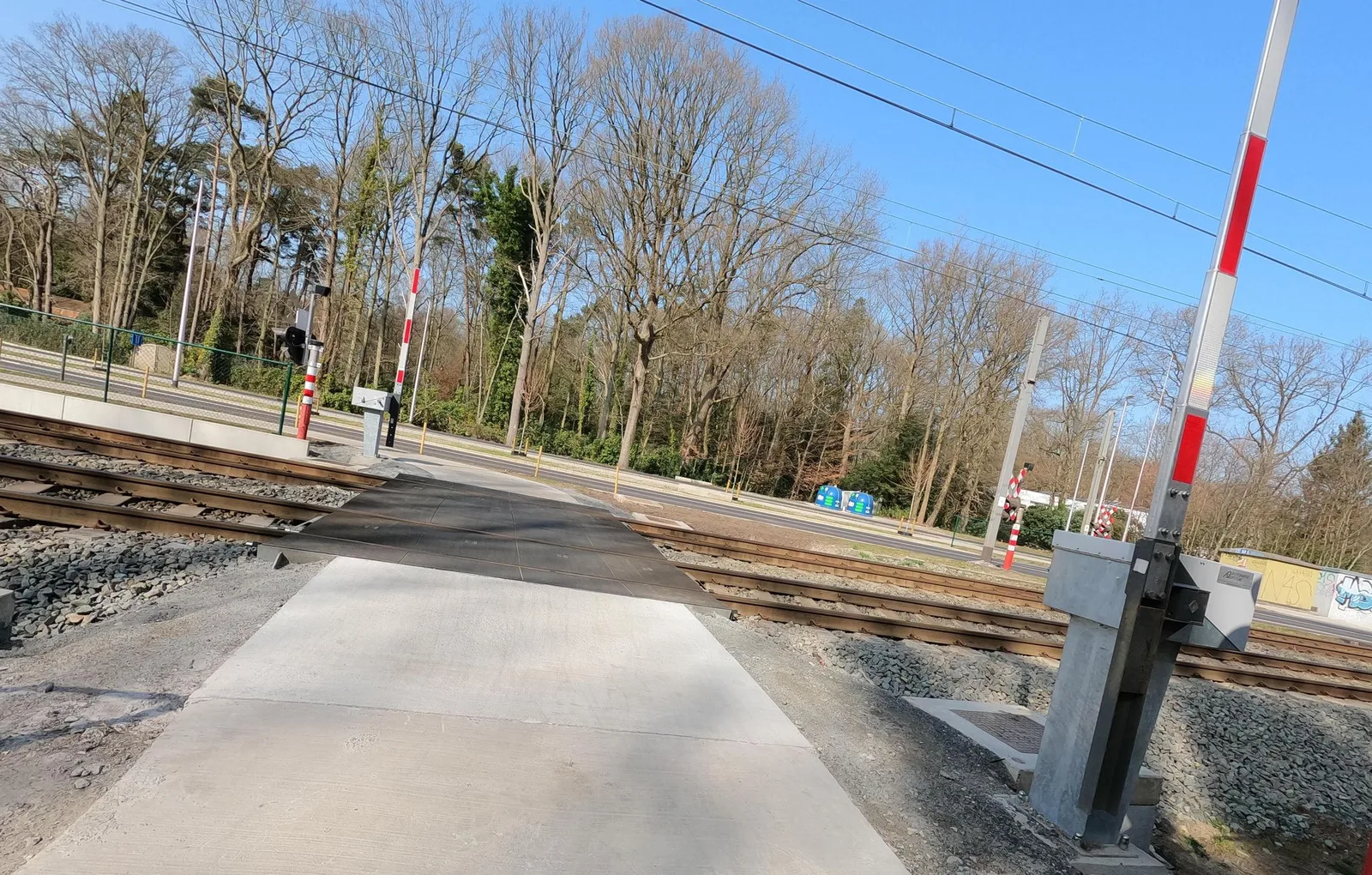
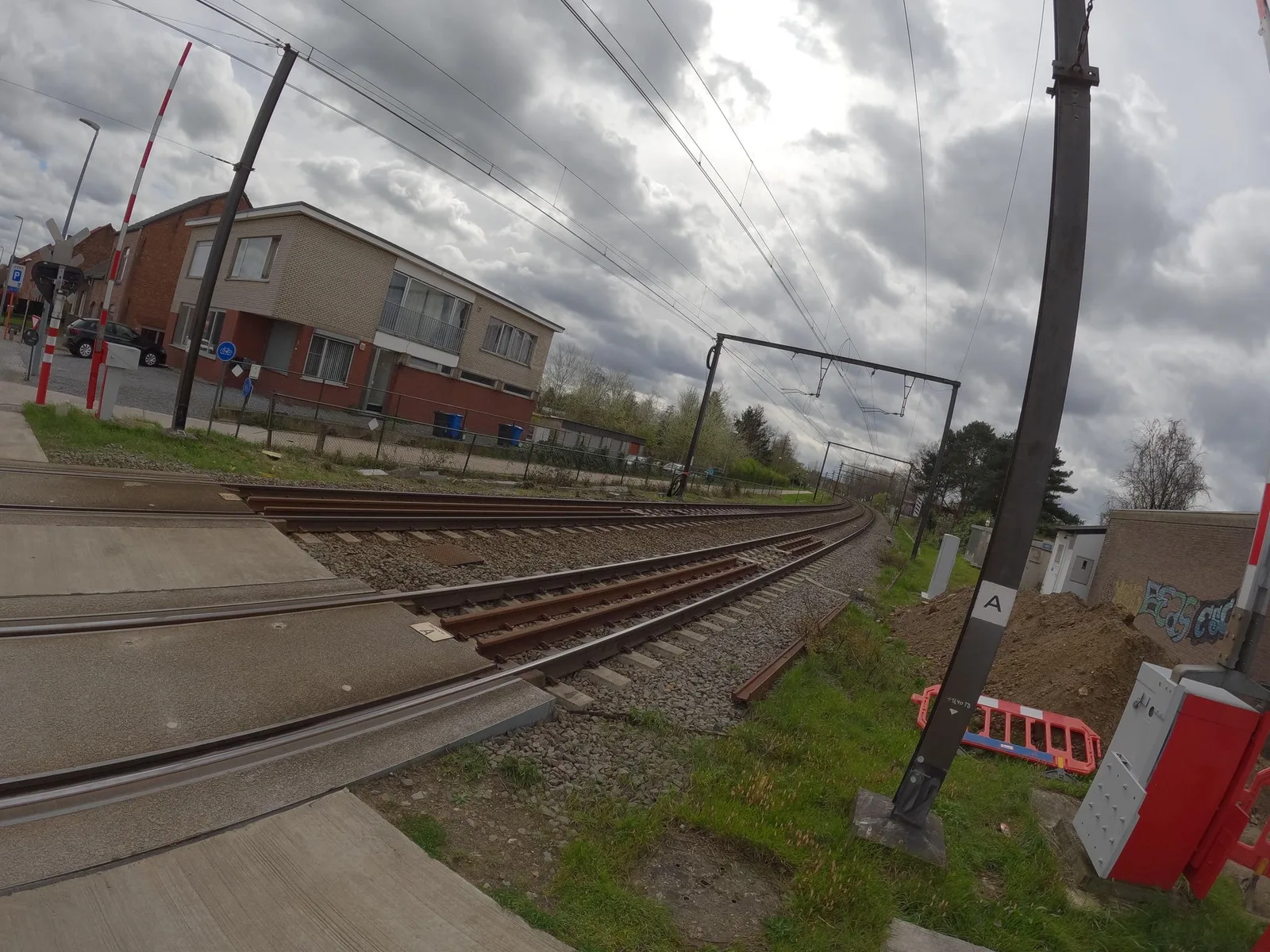
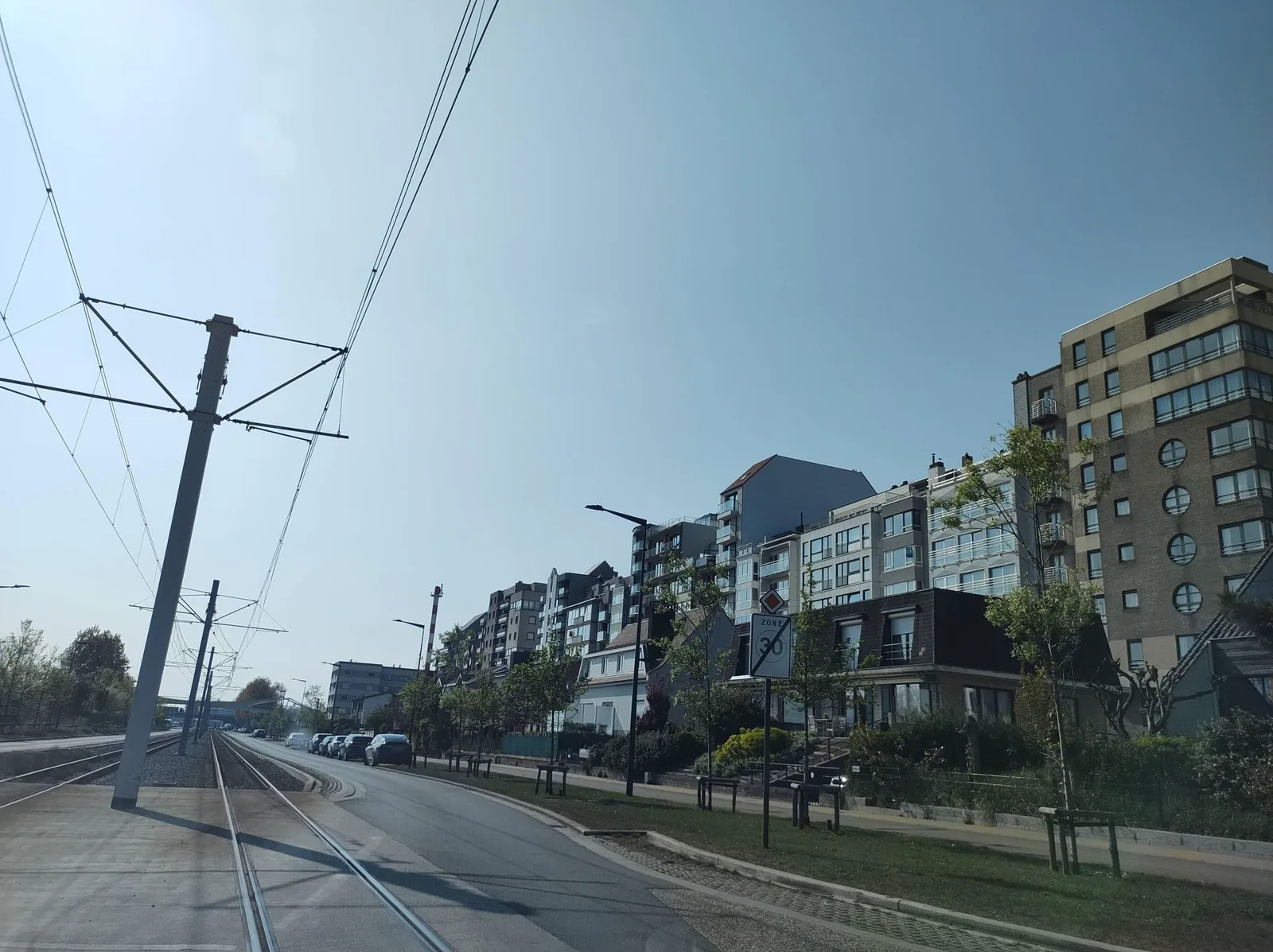
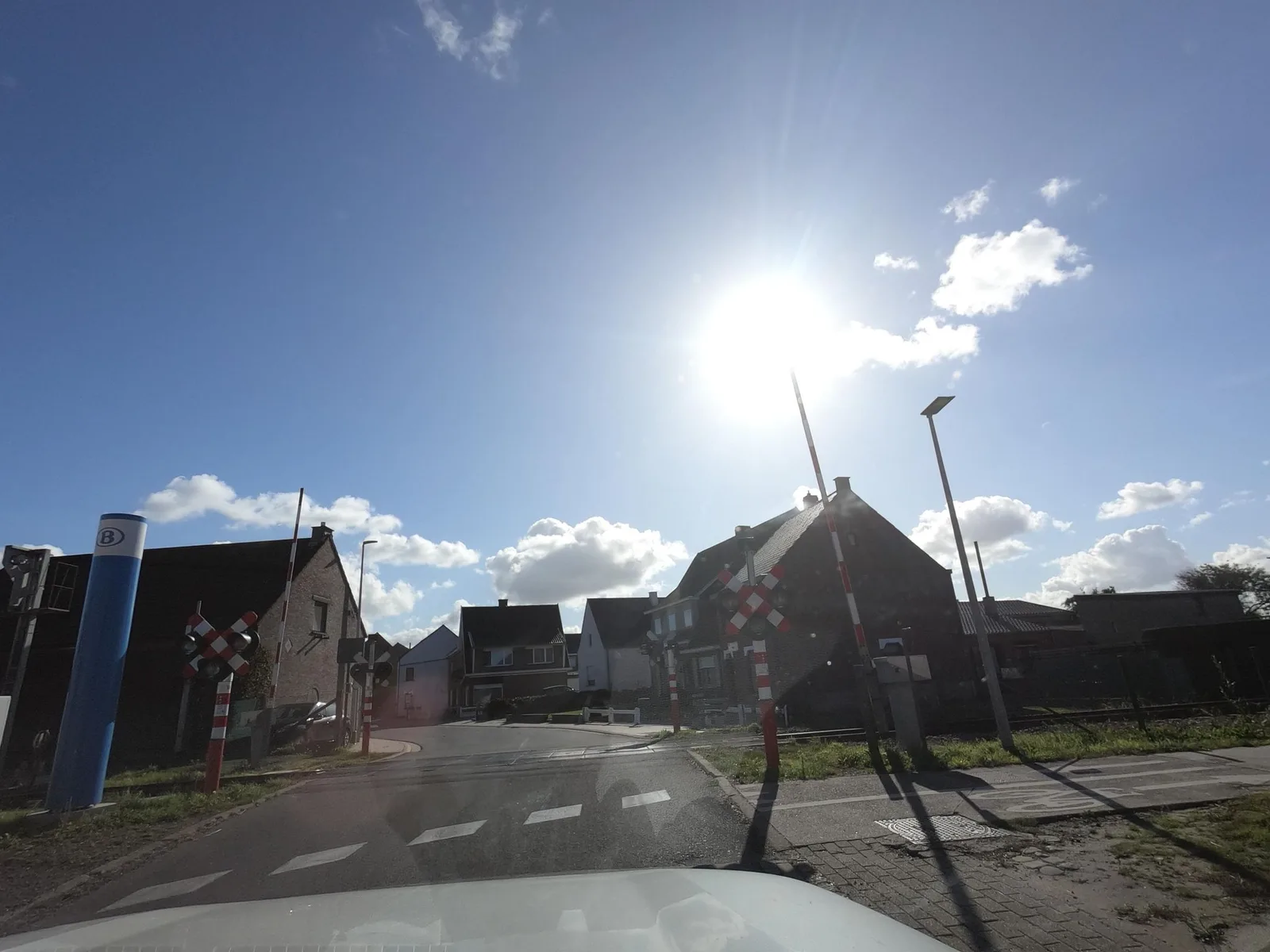
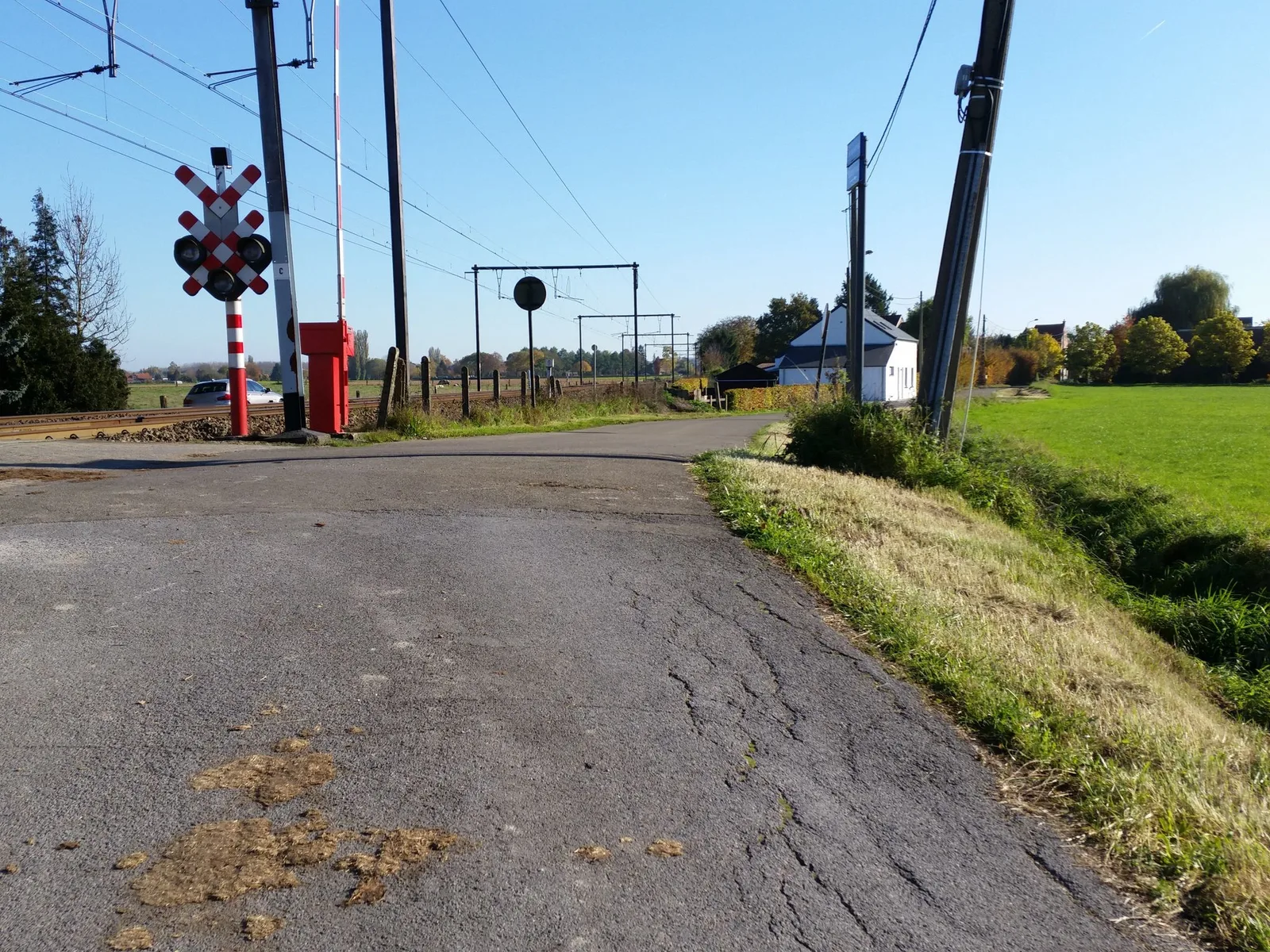
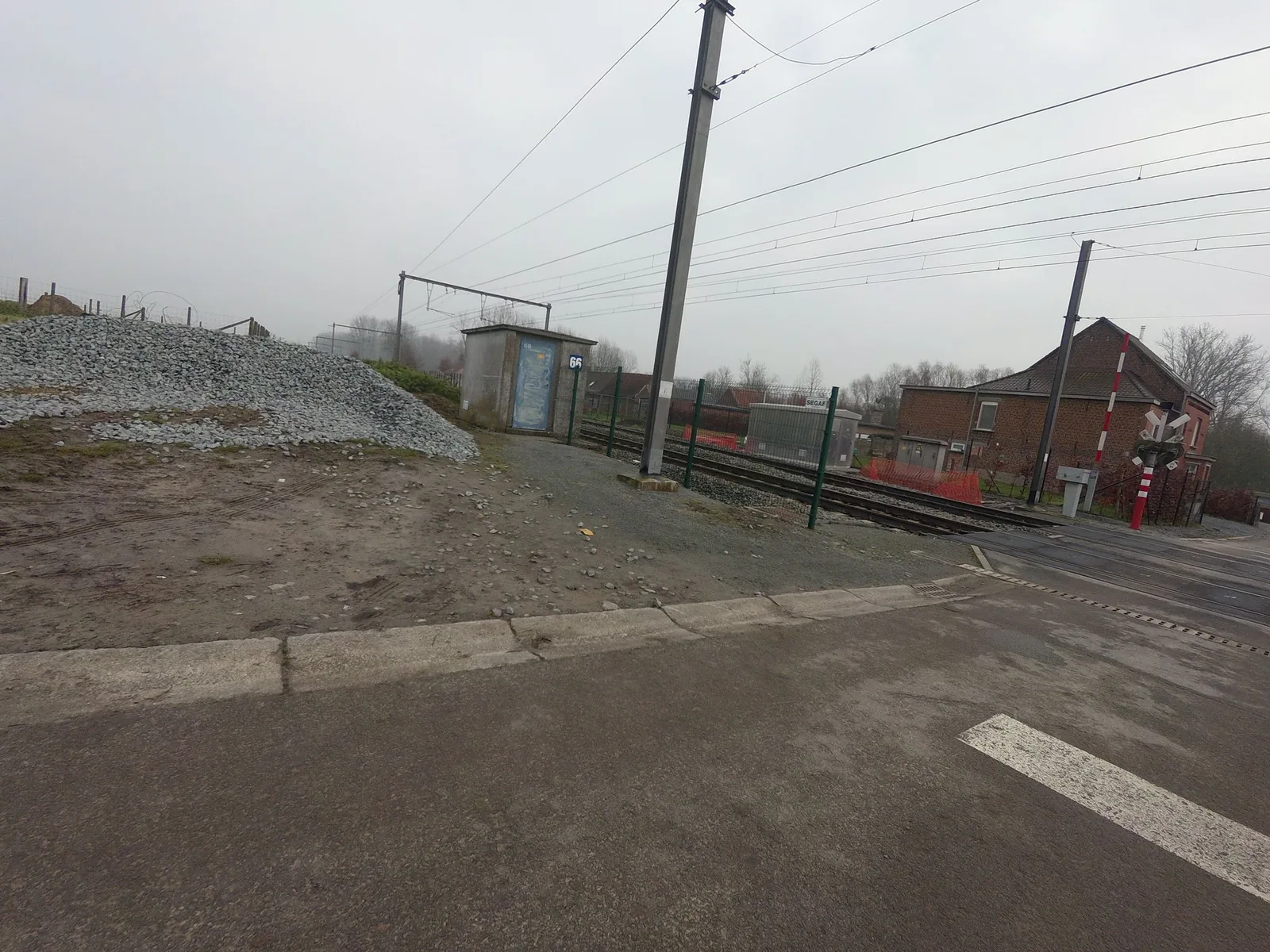
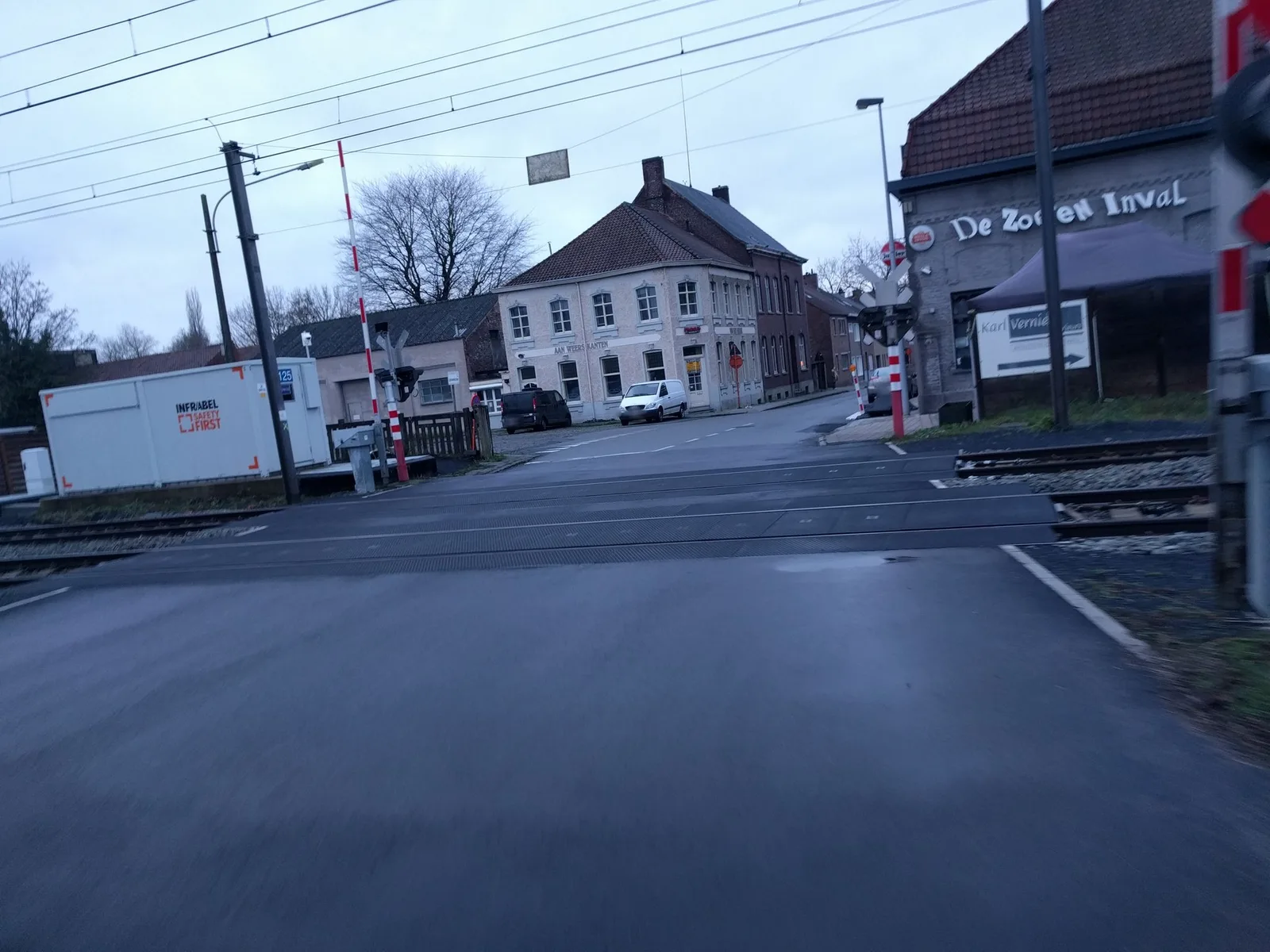
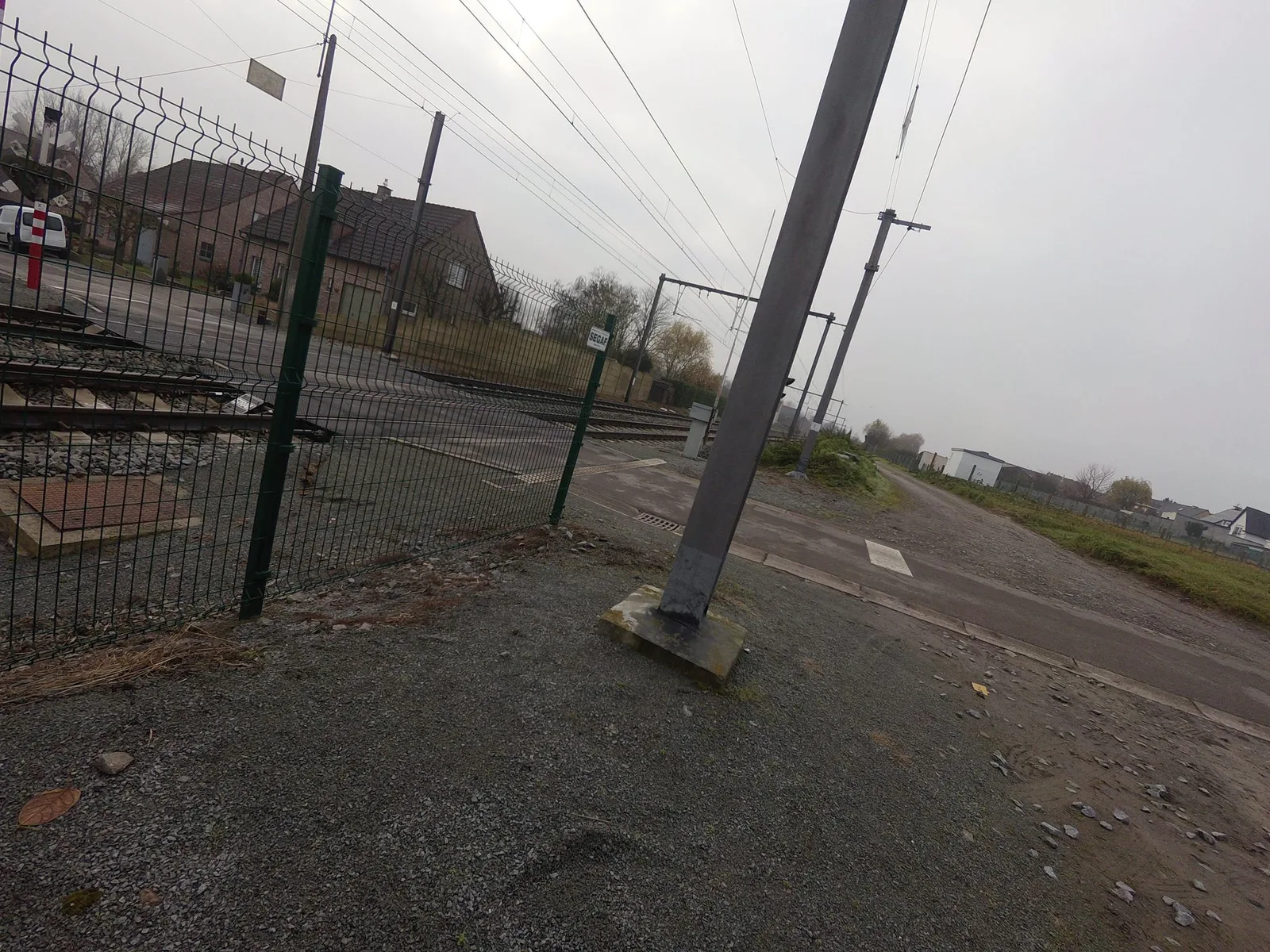
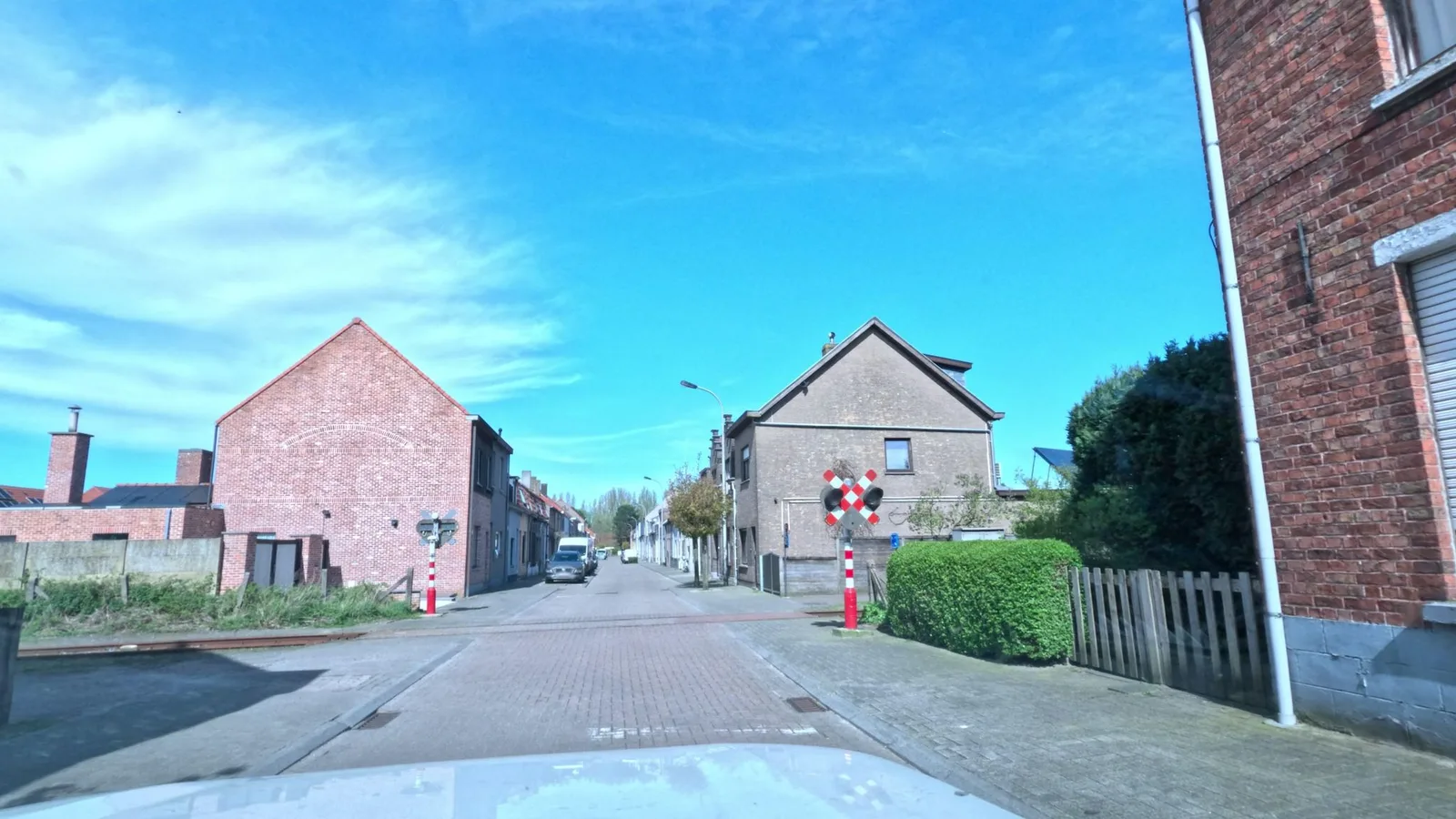
The nine street-level views below show crossings in urban, suburban, rural and industrial contexts on the same network, where local settings vary widely.
2. Infrabel, the SSICF and the investigation unit
Infrabel, the national infrastructure manager, runs the removal and modernisation programme and reports its safety performance each year [2, ↗] [4, ↗].
The SSICF, Belgium's railway safety and interoperability service (Service de Sécurité et d'Interopérabilité des Chemins de Fer) within the Federal Public Service (FPS) Mobility and Transport, is the national safety authority. It oversees the safety and interoperability of the Belgian railway system within the European framework, where the European Union Agency for Railways tracks common safety indicators [8, ↗] [12, ↗] [13, ↗].
The Rail Accident and Incident Investigation Unit, the Organisme d'Enquête, investigates accidents independently. It sits within the FPS Mobility and Transport while staying hierarchically separate from the safety authority and the operators, and it examines the causes of accidents to feed safety learning back [10, ↗] [11, ↗].
SNCB/NMBS, the national railway operator, runs passenger services, and other undertakings run freight on the network. The federal state frames policy and funds the work, while the FPS Mobility and Transport carries the level crossing policy file [1, ↗] [9, ↗].
3. A prioritisation model under development
Belgium's 2023-2032 performance contract asks Infrabel to refine a statistical model to support its level crossing safety strategy [1, ↗]. The model is designed to help determine which crossings should be removed first, or where other safety measures should be taken. Its stated parameters include accidentology, risk occurrence, the impact on road, cycle and pedestrian mobility, and the impact on punctuality [1, ↗].
The full method is still being developed. Beyond those parameters, the road environment, land use and the route the crossing carries between the places on either side belong to a separate reading.
4. Removal, modernisation and awareness
Infrabel describes its strategy as a drieluik, a three-part approach that removes crossings, modernises their protection and raises public awareness [5, ↗] [7, ↗]. Since Infrabel was founded in 2005, more than 442 crossings have been removed, at a recent pace of around ten to fifteen a year [2, ↗].
In 2025, the performance contract directed about 52 million euros to level crossing safety [1, ↗] [2, ↗]. Since 2024, modernisation has added obstacle-detection cameras at seventy crossings, LED lighting on the barriers and computerised controllers in place of the older relay-based systems, while removal replaces a crossing with a bridge or an underpass [2, ↗] [5, ↗].
Removal closes the at-grade interface and moves road users, cyclists and farm traffic onto another route, which brings the road authority and sometimes the landowner into the project alongside Infrabel. A crossing decision is therefore as much an access decision as a safety one.
Infrabel's 2024 safety report records 30 significant accidents on the rail network, including 15 at level crossings, and presents level crossings as one of the network's risk areas [2, ↗] [3, ↗]. In 2024, level crossing accidents rose about 16 percent across the European Union, while Belgium's continued to fall [12, ↗].
5. Comparing crossings on the same reference
The performance contract gives Infrabel a prioritisation frame for level crossing safety, and the strategy moves selected sites toward removal, grade separation, equipment modernisation or awareness measures.
SAMRoute structures that surrounding layer on a common reference, with the same geography, repeatable indicators, a regular refresh and traceable sources. It compares crossings one against another and reads each crossing site by site, beside the railway safety apparatus, for safety prioritisation as much as removal and modernisation decisions.
6. References
National policy and the performance contract
[1] Federal State of Belgium and Infrabel. Performantiecontract Infrabel 2023-2032 (approved by Royal Decree, December 2022). Mandates a new statistical model for level crossing prioritisation, on accident history, risk occurrence, mobility impact and punctuality impact (Art. 29). Read
[9] FPS Mobility and Transport. Overwegen / level crossings (SPF Mobilité, policy portal). Read
Infrastructure manager reporting and strategy
[2] Infrabel. Jaarlijks Veiligheidsverslag 2024 (Infrabel annual safety report, 2025). Crossing counts, active-protection share, fatalities and programme progress. Read
[3] Infrabel. Jaarlijks Veiligheidsverslag 2023 (Infrabel annual safety report, 2024). Read
[4] Infrabel. Geconsolideerd Jaarverslag 2024 (Infrabel consolidated annual report, 2025). Read
[5] Infrabel. Strategie 5HIFT 2024-2032 (Infrabel, 2024). The removal, modernisation and awareness strategy and the equipment renewal programme. Read
[6] Infrabel. Open data, level crossings (geoow) (Infrabel open data portal). Geolocated inventory and removal evolution. Open
[7] Infrabel. Veiligheid aan overwegen (level crossing safety, Infrabel). Read
Safety authority and independent investigation
[8] SSICF / DVIS. National Safety Authority for railways (Service de Sécurité et d'Interopérabilité des Chemins de Fer / Dienst Veiligheid en Interoperabiliteit van de Spoorwegen, Federal Public Service Mobility and Transport). Read
[10] Organisme d'Enquête sur les Accidents et Incidents Ferroviaires. The Investigation Unit (Rail Accident and Incident Investigation Unit, FPS Mobility and Transport). Independent investigator that examines the causes of accidents to improve safety. Read
[11] Organisme d'Enquête sur les Accidents et Incidents Ferroviaires. Annual report 2024 (Rail Accident and Incident Investigation Unit, 2025). Read
European framework and benchmarking
[12] European Union Agency for Railways. Railway Safety Overview 2025 (ERA, data to 2023). Read
[13] European Parliament and Council. Directive (EU) 2016/798 of 11 May 2016 on railway safety (OJ L 138, 26.5.2016). Read
European peer infrastructure managers
[14] SNCF Réseau. Rapport annuel sécurité 2024 (SNCF Réseau, 2024). Read
[15] Network Rail. Control Period 7 (CP7) Strategic Business Plans 2024-2029 (Network Rail). Read
[16] ProRail. Jaarverslag 2024 (ProRail, 2025). Read
[17] DB InfraGO AG. Geschäftsbericht 2024 (Deutsche Bahn, 2025). Read